Megingjörð Myth Meaning & Symbolism
The myth of Thor's magical belt, Megingjörð, a symbol of doubling one's inherent strength through sacred focus and divine will.
The Tale of Megingjörð
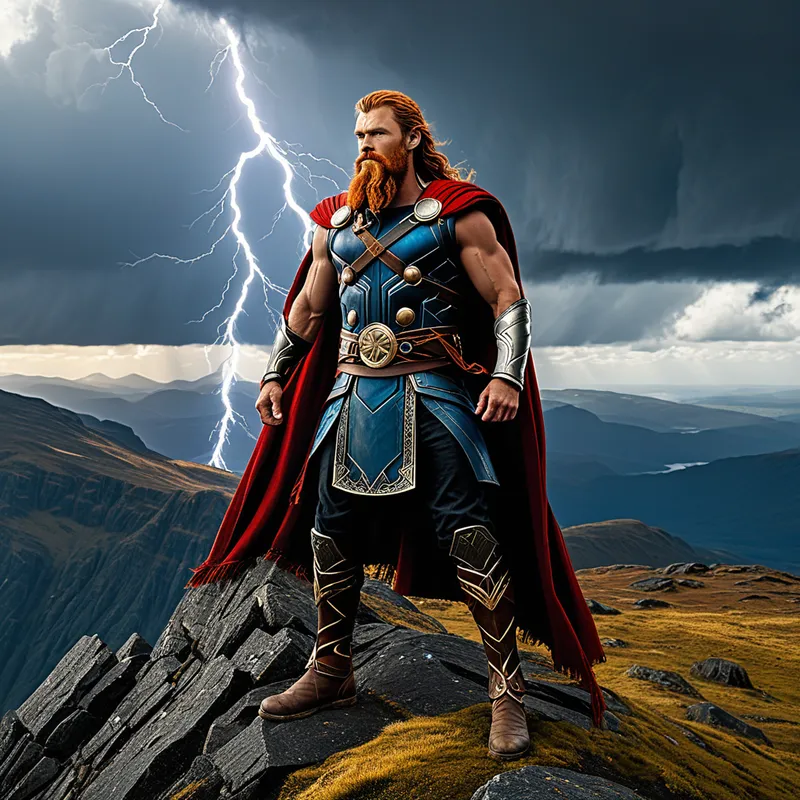
Listen, and hear the tale not of a weapon forged, but of a power bound. In the halls of Asgard, where the mead flows like rivers and the rafters are hung with shields of fallen kings, dwells the Thunderer. Thor, son of Odin, is a storm given flesh. His laughter shakes the pillars; his anger summons the sky’s fury. His hands are broad enough to crush a giant’s skull, and in them rests Mjölnir, the grinder, the lightning-bringer.
Yet, in the deep quiet between wars, when the whispers of the Jötnar creep across the Bifröst, even the Thunderer knows a moment of doubt. The enemies are vast, the walls of Asgard are high, and the weight of guardianship is a mantle heavier than any mountain. It is not a question of courage, but of capacity. How does one contain a hurricane? How does a god ensure that when the final battle comes, his strength will not be a wild flood, but a focused tide?
The answer did not come from a forge’s fire, but from a quieter craft. From the deep places of the earth, from the sinew of beasts that walked the first worlds, and from the cunning of dwarven hands—or perhaps from the will of the Thunderer himself, made manifest—came Megingjörð. It is not a blade, not a spell, but a girdle. A belt of stout leather, worked with care, fastened with a clasp of iron that holds no gemstone, only purpose.
See him now, in his hall Bilskirnir. The feast is done, the boasts are spent. Thor takes the belt in his hands. It feels familiar, like the grip of his hammer’s haft. He wraps it around his waist, over his mail shirt, and pulls the tongue through the buckle. There is no flash of light, no peal of thunder. Only a settling. A grounding. A deep, resonant hum that is felt in the bones, not heard by the ears. It is the sound of potential being gathered, of scattered might being drawn to a center. Where once there was the awesome power of a god, now there is the awesome power of a god, doubled. It is not added from without; it is summoned from within, focused through the sacred circle of the belt. When he next lifts Mjölnir, the world holds its breath. The storm is no longer above him; it is perfectly, terribly, within him.
Cultural Origins & Context
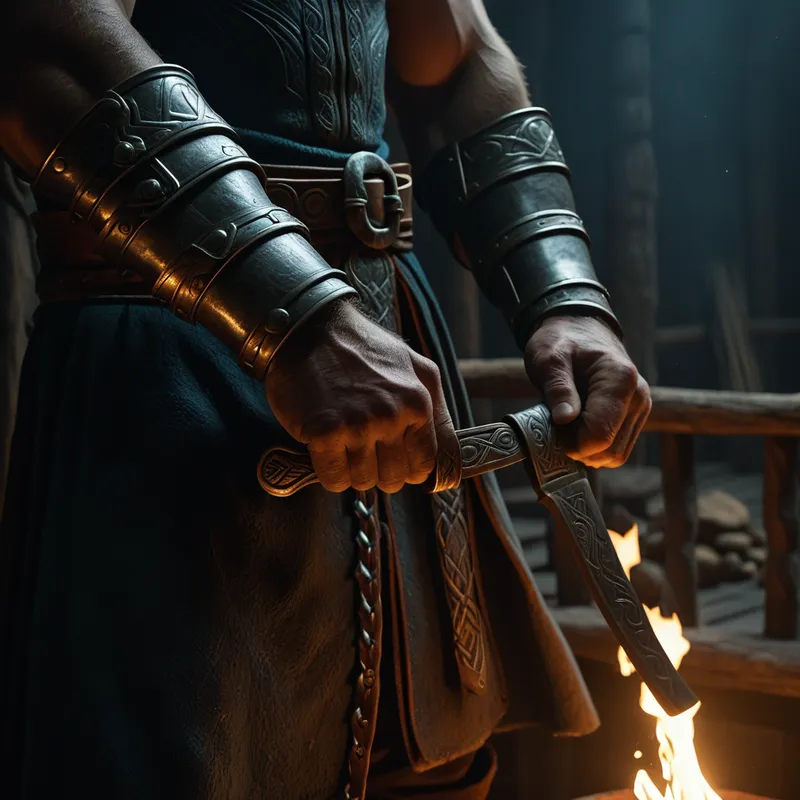
The myth of Megingjörð is woven into the Poetic Edda and reiterated in the Prose Edda. It was not a standalone epic, but a vital piece of Thor’s divine inventory, mentioned alongside his hammer and his iron gloves. In the skalds’ verses, recited in smoky halls to the rhythm of a harp, these items were not mere props; they were extensions of divine identity.
In a culture where physical strength, martial prowess, and the ability to protect one’s kin and community were paramount virtues, Thor was the archetypal defender. Megingjörð’s function—to double his strength—spoke directly to a profound existential anxiety: the fear of not being strong enough. For the Norse, living in a world bounded by the chaotic sea and the hostile wilderness of Jötunheimr, the margin between survival and annihilation was thin. The myth served as a cultural metaphor for the necessity of cultivating and focusing one’s inherent capacities to meet overwhelming challenges. It was a narrative technology for the psyche, teaching that true power is not just possessed, but properly harnessed.
Symbolic Architecture
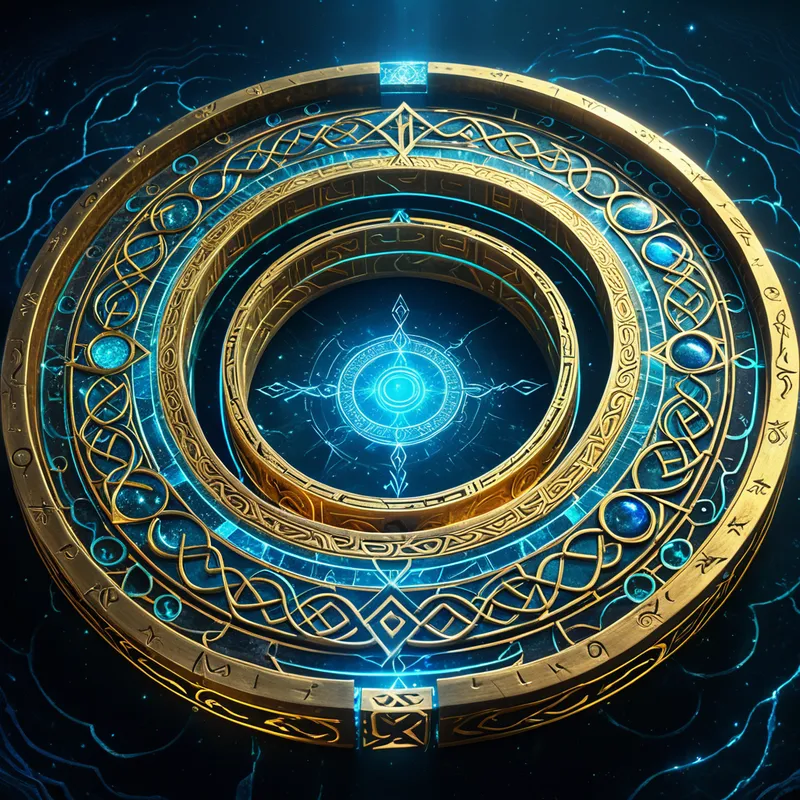
Megingjörð is a master symbol of integration and focused potential. The belt itself is a circle, a universal symbol of wholeness, containment, and sovereignty. To gird oneself is an act of preparation, of defining a center and readying for action.
The might that is scattered is merely energy; the might that is girded becomes will.
Psychologically, Megingjörð represents the conscious act of integrating one’s shadow—the disowned, raw, and often chaotic aspects of the self. Thor’s divine strength is his innate potential, but without the "belt" of consciousness, it can be reactive, unfocused, or even self-destructive. The act of fastening Megingjörð symbolizes bringing this raw power under the aegis of the ego, of making the unconscious strength conscious and available for directed purpose. It is the difference between a tantrum and a decisive blow, between anxiety and focused action. The belt does not grant new strength; it reveals and amplifies the strength that was always there, waiting to be fully claimed and channeled.
The Dreamer's Resonance
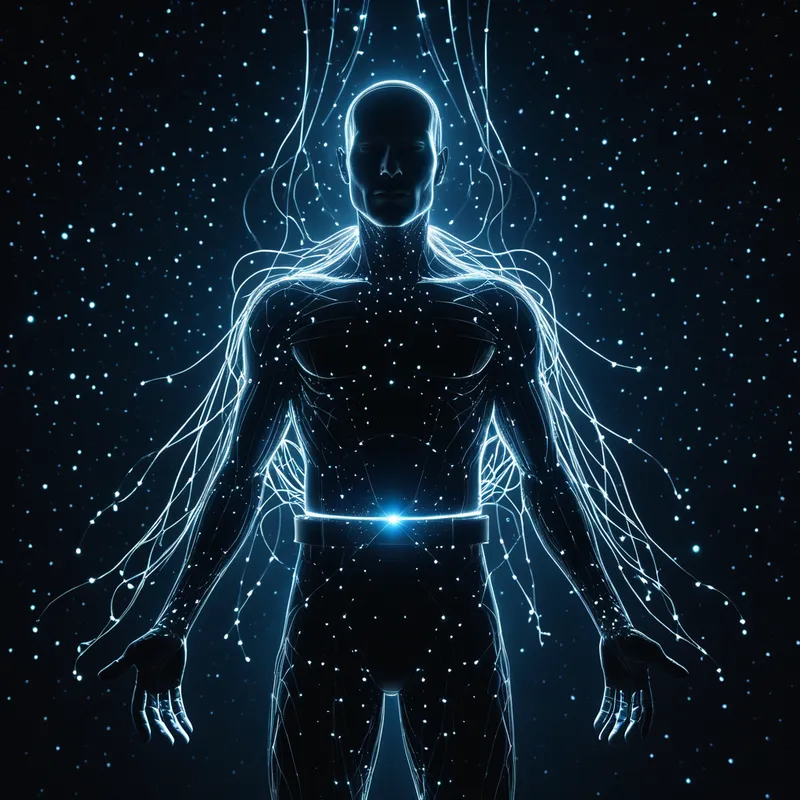
When the symbol of Megingjörð surfaces in modern dreams, it often appears during life phases that demand a consolidation of personal power. The dreamer may not see a Norse belt, but its symbolic equivalents: a tool belt that feels incredibly potent, a piece of jewelry that seems to anchor them, a tight, empowering garment around the waist, or even a feeling of a band of energy coalescing in the solar plexus.
Somatically, this can correlate with a felt sense of "pulling oneself together," of gathering scattered energies. Psychologically, the dreamer is likely confronting a situation that requires them to tap into reserves they fear they lack. It is a dream of self-empowerment, signaling that the resources to meet the challenge are internal. The process involves moving from a state of diffusion and doubt ("I am not enough for this") to one of centered readiness ("I contain what is needed"). The dream is the psyche’s own ritual of fastening the girdle, preparing the Self for its next necessary struggle.
Alchemical Translation
The alchemical journey of individuation is, at its heart, the process of turning base lead (the fragmented, unconscious personality) into spiritual gold (the integrated, conscious Self). The myth of Megingjörð models a crucial stage in this opus: the coagulatio, or coagulation.
In alchemy, coagulatio is the process of giving spirit a body, of making the volatile fixed. It is the condensation of insight into action, of potential into manifest power. Thor, with his boundless but perhaps unruly divine energy, undergoes this process through the belt. The scattered "vapors" of his strength are condensed, fixed, and made solidly available.
The alchemist’s stone is not found; it is formed by the relentless pressure of consciousness upon the soul’s raw matter.
For the modern individual, the "alchemical translation" of this myth is the disciplined practice of self-integration. It is the work of identifying one’s core strengths, often hidden by habit or self-doubt, and consciously "girding" them—through ritual, declaration, therapy, or disciplined practice—so they become reliable instruments of the will. It is moving from knowing you have capacity to embodying that capacity with unwavering focus. The triumph is not an external victory over a giant, but the internal victory of becoming a vessel capable of containing and directing your own thunder. The clasp of Megingjörð, when fastened, is the sound of the Self coming into its full, formidable alignment.
Associated Symbols
Explore related symbols from the CaleaDream lexicon: