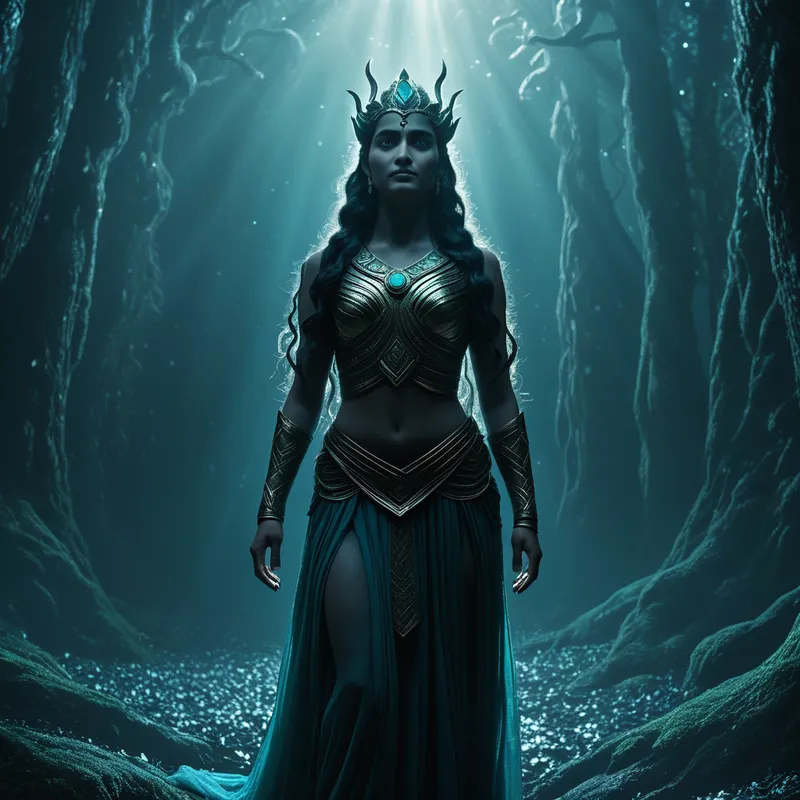
Maui's Fish Hook
The legendary demigod Maui uses a magical fish hook to pull the North Island of New Zealand from the ocean depths, a foundational Maori creation story.
The Tale of Maui's Fish Hook
The world was smaller then, a tighter cradle of known shores. Maui, the youngest and most cunning of his brothers, was often left behind, deemed too small, too troublesome for the great work of fishing. They saw only a trickster, a shape-shifter whose laughter held the edge of a storm. But Maui’s heart burned with a profound and restless ambition—not for himself, but for his people. He saw their canoes returning with meager catches, heard the quiet hunger in the village, and knew the ocean hid greater gifts.
His first act was one of profound secrecy and sacrifice. From the sacred jawbone of his ancestress, Murirangawhenua, he fashioned a weapon of creation. This was no ordinary hook; it was Manaiakalani, “the great fish hook of the heavens,” etched with potent mana and bound with a woven line spun from his sister’s hair. It pulsed with a latent power, a promise waiting beneath the waves.
One morning, when his brothers set out in their great canoe, Maui hid beneath the floorboards, a silent passenger of destiny. Far out to sea, beyond all known fishing grounds where the water turns the color of deep memory, he revealed himself. His brothers were furious, but Maui’s will was a force of nature. From his own nose, he drew blood, smearing it on the bone hook as a potent offering, a karakia humming on his lips. He then cast Manaiakalani into the fathomless blue.
The hook sank deep, past the realm of fish, past the homes of taniwha, into the very foundations of the world. It found purchase on something vast and slumbering. Maui heaved, his muscles straining against a cosmic weight. His brothers, now united in awe and terror, added their strength. The sea began to boil and churn. Land, a colossal creature of earth and stone, was being hauled from its primordial sleep. Up it came, breaking the surface in a cataclysm of spray and groaning rock—Te Ika-a-Maui, the Fish of Maui, which we now call the North Island of Aotearoa.
But the work was not yet complete. In their astonishment, the brothers forgot the sacred nature of the task. They began to hack at the great fish, to claim parts of the land before the karakia of thanks could be given. Their blades, violating the sacred transformation, carved the valleys and mountains we see today. And in that moment of profane haste, the fish, wounded and thrashing, was fixed forever in place. The hook was lost, or perhaps returned to the depths, its great work done. Maui had pulled not just land from the sea, but a new world into being, its very contours shaped by both divine ambition and human flaw.
Cultural Origins & Context
This myth is a pūrākau</abābr> of profound significance to the Māori people, a narrative bedrock for Te Ika-a-Maui (the North Island). It is not merely a story of “how the land came to be,” but a deep map of relationship, responsibility, and origin. The tale is embedded in the practice of wayfinding and fishing, the primary means of sustenance and exploration for the Polynesian ancestors who voyaged to Aotearoa. The ocean was both provider and challenger, a realm of immense mystery and potential.
Maui himself is a complex archetype within Polynesian mythology, a demigod who straddles the human and divine. He is a culture hero who performs feats for humanity—slowing the sun, discovering fire—but often through cunning, trickery, and a defiance of boundaries. His actions are audacious, even reckless, but their fruits are communal. The use of his grandmother’s jawbone connects the act of creation directly to the ancestors (tūpuna), grounding the new land in lineage and mana. The myth encodes vital cultural protocols: the necessity of ritual (karakia) before taking from nature, the dangers of greed and haste, and the understanding that the landscape itself is a living entity, a captured but still-vital being.
Symbolic Architecture
The myth’s power lies in its dense weave of symbols, each layer revealing a psychological and cosmological truth.
The Fish Hook (Manaiakalani) is the ultimate instrument of transformation. It is not a tool of capture for consumption, but for revelation. It symbolizes the focused application of will, craft, and ancestral power to draw the hidden potential of the unconscious (the sea) into the light of consciousness (the land).
The Ocean represents the primal, undifferentiated state of being—the Te Kore, the realm of all possibility. Fishing is thus a metaphor for the human quest to find form and sustenance in the vast unknown.
The act of pulling the land is an act of world-making, mirroring the psychic process of bringing latent talents, truths, or traumas (the submerged contents of the self) into tangible reality, where they can be lived upon and navigated.
The brothers’ subsequent hacking of the fish is a crucial, tragic element. It signifies how human impatience, possessiveness, and failure to observe proper reverence can mar the perfect gift, creating both beauty (the varied landscape) and wounding. The land bears the scars of that unfinished ritual, a permanent reminder of the need for balance between ambition and respect.
The Dreamer's Resonance
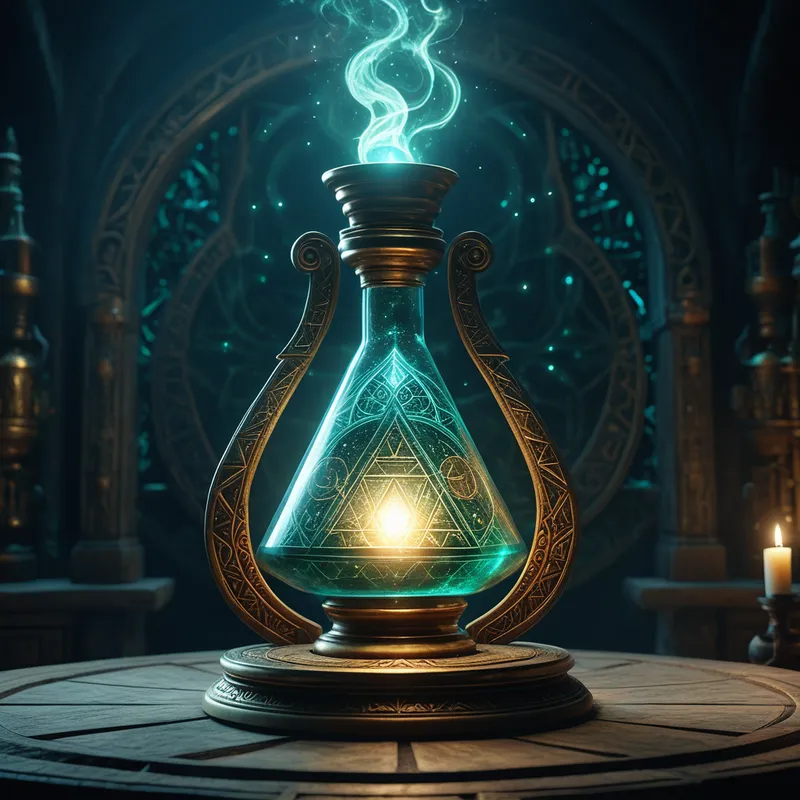
To encounter Maui’s hook in a dream is to be summoned to a creative task of monumental proportions. It speaks to a moment in the psyche when a profound, formless potential—a talent, a love, a life-changing idea—is ready to be drawn up from the depths. The dreamer may feel like Maui, hidden and underestimated, yet holding a secret tool of immense power.
The struggle to haul the land mirrors the immense effort of bringing a dream into waking life: the resistance, the fear, the need for allies, and the sheer strain of creation. The potential for the “brothers” within—the other parts of the self—to mar the creation through haste or greed is a potent warning. This myth resonates with anyone at the precipice of a great endeavor, teaching that the act of drawing forth must be accompanied by patience, gratitude, and sacred attention, lest the new world be born already wounded.
Alchemical Translation
Psychologically, the myth charts the alchemy of the Self. The chaotic sea is the prima materia of the unconscious. Maui’s cunning and will represent the directed ego-consciousness, which must engage with the depths. The jawbone hook is the symbolic tool—perhaps a core insight, a remembered strength, or an ancestral wisdom—that can connect with and secure the Self.
The Nose-Blood offering is a profound symbol of life given for life. It is a psychic sacrifice, a piece of one’s own vital essence (the sanguis spiritualis) offered to sanctify the endeavor and ensure the hook finds its true mark, not just any prize, but the foundational Self.
The resulting land is the emergent, cohesive personality—the lapis philosophorum—pulled into being. It is a new ground of being to inhabit. The brothers’ hacking represents the inevitable imperfections of this process; the Self is never retrieved perfectly, but is shaped and sometimes scarred by the very process of its emergence. The lost hook suggests that the tool of transformation is often consumed by its own success, leaving us to live on the land it provided.
Associated Symbols
Explore related symbols from the CaleaDream lexicon:
- Fish — The latent potential of the deep unconscious, the formless bounty waiting to be given shape and brought to the surface of awareness.
- Ocean — The primordial source, the collective unconscious, the realm of all potential and the unknown from which all forms emerge.
- Hook — The focused intention, craft, or question that can grasp and retrieve something specific from the vast, undifferentiated depths of experience.
- Transformation — The fundamental process of change from one state of being to another, often involving a passage through chaos or the unknown to achieve a new form.
- Ancestor — The foundational presence of those who came before, whose wisdom, strength, and very bones provide the tools and authority for present creation.
- Trickster — The archetypal force that breaks boundaries, challenges order, and uses cunning and audacity to bring about necessary change, often through unorthodox means.
- Journey — The essential voyage from the known to the unknown, undertaken to retrieve a prize, gain wisdom, or fulfill a destiny that transforms the traveler and their world.
- Sacrifice — The necessary offering of something precious—time, comfort, a part of the self—to sanctify an endeavor and establish a reciprocal relationship with greater powers.
- Nature — The living, intelligent, and responsive matrix of all existence, with which humanity is in constant dialogue, and from which we are not separate.
- Fisherman — The archetype of the one who ventures onto the unknown deep, armed with skill and patience, to draw sustenance and mystery from the hidden realms.
- Mountain — The enduring, monumental form that rises from the plain, representing achievement, permanence, and the challenges overcome in the process of creation.
- Ritual — The prescribed set of actions and words that creates a sacred container, aligning human effort with cosmic order to ensure an endeavor's success and right relationship.