Maui and Hine-nui-te-po
The trickster hero Maui attempts to conquer death itself by entering the goddess of the underworld, but his daring plan ends in catastrophic failure.
The Tale of Maui and Hini-nui-te-po
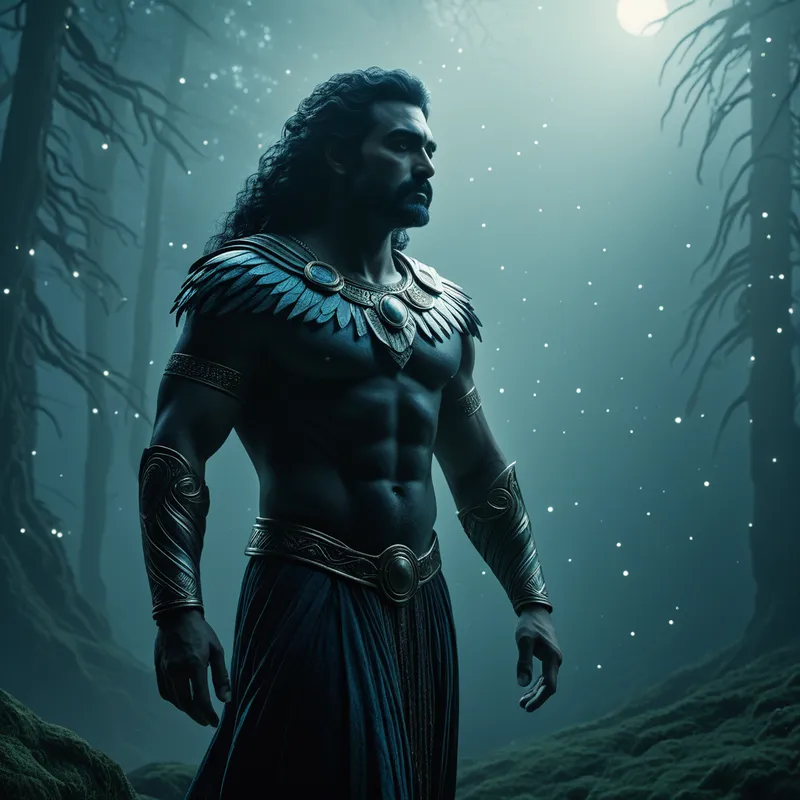
[The world](/myths/the-world “Myth from Tarot culture.”/) was young, and so was Maui, the last and greatest of [the trickster](/myths/the-trickster “Myth from Various culture.”/) heroes. He had fished up islands from the deep, snared the sun to slow its flight, and brought the secret of fire to humanity. Yet, one shadow lay across all his triumphs: the creeping, inevitable shadow of [death](/myths/death “Myth from Tarot culture.”/). He saw it in the aging of his people, in the withering of the great forests, in the final, quiet sleep of every living [thing](/myths/thing “Myth from Norse culture.”/). A great rebellion stirred within him. Why should [Hine-nui-te-po](/myths/hine-nui-te-po “Myth from Maori culture.”/), the Great Lady of Night, the goddess of [death](/myths/death “Myth from Tarot culture.”/), hold such ultimate power? Could her dominion not be challenged, her gates unhinged?
He gathered his brothers, the sons of Makea-tu-tara, and unveiled his most audacious plan. “I have seen the source of our dying,” he declared. “Death is not a final state, but a passage. Hine-nui-te-po sleeps within her dark womb, the pō. I will enter her as a man enters the world at birth, but in reverse. I will pass through her body, from her vagina to her mouth, and in doing so, I will crush the very heart of death. I will destroy her, and immortality will be ours.”
His brothers were terrified. To speak of the goddess in such a way was sacrilege; to attempt such a violation was to invite cosmic ruin. But Maui, shimmering with the confidence of one who had never truly failed, persuaded them. He needed their aid, for he would take the form of a great, crawling lizard, a mokomoko, and they must guard his transformation and his passage with absolute silence. Any sound, any laugh, any gasp of shock would wake the goddess, and all would be lost.
They journeyed to the far western edge of the world, where [the sky](/myths/the-sky “Myth from Persian culture.”/) bleeds into [the earth](/myths/the-earth “Myth from Hindu culture.”/) and the entrance to the pō lies hidden. There they found Hine-nui-te-po, vast as a mountain range in her slumber. Her body was the landscape of night itself: her eyes were gleaming greenstone, her hair the dark sea kelp, and her legs, wide apart in sleep, were like the pillars of a sacred, terrible gateway. Flashes of firelight glimmered from within her, the flickering of the spirits she held.
Maui began his incantation. His human form softened, shifted, and shrunk, until a large, sleek lizard began to crawl toward the sleeping goddess. The air grew thick with dread. Silently, he began his impossible journey, entering the dark portal, intent on moving upward through the cavern of life-in-death. His brothers watched, hands clamped over their mouths, eyes wide with a horror that battled with awe.
For a time, there was only the terrible silence of the act. Then, as the lizard’s tail finally disappeared from view and they imagined him moving within the goddess, one brother saw a leg twitch. A flutter of a fiery eyelid. The sheer, grotesque absurdity of the scene—their mighty brother, the vanquisher of the sun, now a creeping creature inside the body of Death—overwhelmed him. A strangled, helpless giggle escaped his lips.
It was enough. Hine-nui-te-po’s eyes flew open, blazing with a fury that was the fury of nature itself defiled. She understood the violation instantly. With a clap of thunder that was the closing of the world, she brought her thighs together. Her obsidian teeth, the teeth of the pō, ground down.
Inside, Maui was caught, crushed, and broken. The hero who sought to conquer death was devoured by it. His life force, his mauri, was extinguished not in glorious battle, but in a sudden, final compression of darkness. The first man to die, it is said, was Maui. And because he failed, all humanity must follow.
His brothers fled in terror, carrying the news of the ultimate, catastrophic failure. The quest for immortality was over. Death had been given its first and most definitive champion, and its law was sealed forever.
Cultural Origins & Context
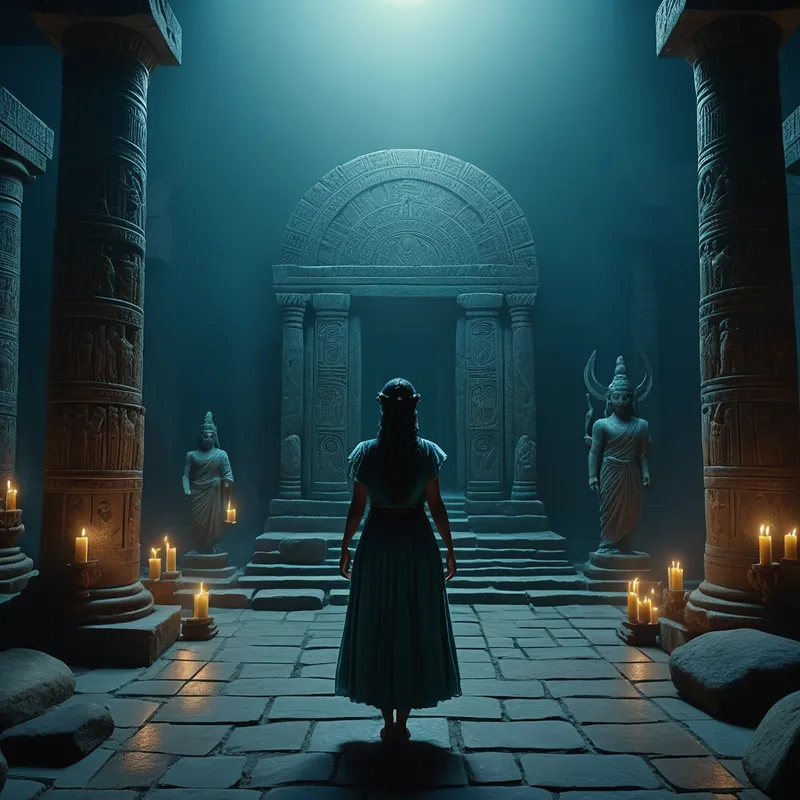
This myth is central to the Māori cosmological narrative, collected and preserved in oral traditions across Aotearoa (New Zealand). It belongs to the cycle of stories about Maui-tikitiki-a-Taranga, whose exploits explain the origins of natural phenomena. While his other deeds—fishing up the North Island, slowing the sun—are creative and largely successful, this final quest is his tragic and defining failure.
The myth is deeply grounded in the Māori understanding of life, death, and the natural order, or tika. Hine-nui-te-po is not a malevolent monster but a foundational deity. She is the daughter of Tāne and [Hine-ahu-one](/myths/hine-ahu-one “Myth from Maori culture.”/), the Earth-Formed Maid. Originally known as Hine-tītama, the Dawn Maid, she fled to [the underworld](/myths/the-underworld “Myth from Greek culture.”/) in shame and transformed into Hine-nui-te-po, the Great Lady of Night, after discovering Tāne was also her father. Thus, she embodies a profound transition: from the innocence of dawn to the wise, terrible sovereignty of night and death. She is the guardian of the boundary between the world of light (ao) and the world of darkness (pō), a boundary that must be respected.
Maui’s attempt is not merely brave; it is a fundamental transgression against tapu (sacred restriction) and the necessary balance of the universe. His failure reinforces a key cultural teaching: that mortality is an intrinsic, non-negotiable part of the human condition. His death establishes the pattern for all human death, moving it from a theoretical concept to a lived reality.
Symbolic Architecture
The myth constructs a powerful symbolic [landscape](/symbols/landscape “Symbol: Landscapes in dreams are powerful symbols representing the dreamer’s emotional state, personal journey, and the broader context of life situations.”/) around the inevitability of [death](/symbols/death “Symbol: Symbolizes transformation, endings, and new beginnings; often associated with fear of the unknown.”/) and the dangers of overreaching [human](/symbols/human “Symbol: The symbol of a human represents individuality, complexity of emotions, and social relationships.”/) ambition.
The journey from vagina to mouth is an inverted birth, a alchemical reversal meant to undo the very process of life. It represents the ultimate trickster’s gamble: to use the mechanism of creation to achieve its opposite—permanence. In failing, Maui confirms that the cycle cannot be reversed; it can only be completed.
The [lizard](/symbols/lizard “Symbol: A lizard symbolizes adaptability, survival instincts, and the ability to shed old skin to embrace new beginnings.”/) form is crucial. In Polynesian tradition, the lizard (mokomoko or ngārara) is often an embodiment of the uncanny, of death, and of the [underworld](/symbols/underworld “Symbol: A symbolic journey into the unconscious, representing exploration of hidden aspects of self, transformation, or confronting repressed material.”/). Maui assumes the guise of the very thing he seeks to defeat, believing he can master it from within. This is the [trickster](/symbols/trickster “Symbol: A boundary-crossing archetype representing chaos, transformation, and the subversion of norms through cunning and humor.”/)’s flaw: he believes his cleverness can transmute the essential [nature](/symbols/nature “Symbol: Nature symbolizes growth, connectivity, and the primal forces of existence.”/) of a cosmic principle. The brothers’ laughter is not merely a narrative [device](/symbols/device “Symbol: A device in dreams often symbolizes the tools or mechanisms that we use to navigate our inner or outer worlds.”/); it is the [eruption](/symbols/eruption “Symbol: A sudden, violent release of pent-up energy or emotion from beneath the surface, often representing transformation or crisis.”/) of the human, the frail and fallible, into a divine and deadly process. It is the crack in the [ritual](/symbols/ritual “Symbol: Rituals signify structured, meaningful actions carried out regularly, reflecting cultural beliefs and emotional needs.”/) through which [fate](/symbols/fate “Symbol: Fate represents the belief in predetermined outcomes, suggesting that some aspects of life are beyond human control.”/) pours.
Hine-nui-te-po’s [body](/symbols/body “Symbol: The body in dreams often symbolizes the dreamer’s self-identity, personal health, and the relationship they have with their physical existence.”/) is the [cosmos](/symbols/cosmos “Symbol: The entire universe as an ordered, harmonious system, often representing the totality of existence, spiritual connection, and the unknown.”/). Her [teeth](/symbols/teeth “Symbol: Teeth in dreams often symbolize personal power, self-image, and the fear of losing control or aging.”/) are the stars of the [Milky Way](/symbols/milky-way “Symbol: The Milky Way represents both the vastness of the universe and the interconnectedness of existence, serving as a metaphor for the journey of life and cosmic consciousness.”/), her [womb](/symbols/womb “Symbol: A symbol of origin, potential, and profound transformation, representing the beginning of life’s journey and the unconscious source of creation.”/) the place of [night](/symbols/night “Symbol: Night often symbolizes the unconscious, mystery, and the unknown, representing the realm of dreams and intuition.”/) and return. To violate her is to attempt to dismantle the [architecture](/symbols/architecture “Symbol: Architecture in dreams often signifies structure, stability, and the framing of personal identity or life’s journey.”/) of [reality](/symbols/reality “Symbol: Reality signifies the state of existence and perception, often reflecting one’s understanding of truth and life experiences.”/) itself.
The Dreamer’s Resonance
This myth speaks to the deepest, most universal human anxiety: the confrontation with our own finitude. In the dreamscape, Maui is the part of the [psyche](/myths/psyche “Myth from Greek culture.”/) that rages against limitation, that cannot accept an end to its own story. He is the heroic ego that has mastered so many external challenges—slowing time (the sun), creating land—and turns finally to master the ultimate internal reality: its own extinction.
His quest is a grand, doomed act of denial. The dream of immortality is seductive; it feels like a logical culmination of all our striving. The myth allows us to witness this fantasy play out to its catastrophic conclusion, providing a profound [catharsis](/myths/catharsis “Myth from Greek culture.”/). We watch our own hubris be devoured, and in that watching, there is a strange, somber relief. [The law](/myths/the-law “Myth from Biblical culture.”/) is affirmed. The tension of rebellion can be released.
Psychologically, Hine-nui-te-po represents not merely death, but the necessary acceptance of the great unknown. She is the transformative mother who ends the childhood of humanity, where heroes might cheat fate, and initiates it into the mature reality of loss, grief, and the sacredness of a limited lifespan. To be swallowed by her is to be integrated into a larger, darker, but ultimately truthful order.
Alchemical Translation
In the alchemy of the soul, this myth describes the fatal error of attempting the opus magnum—[the great work](/myths/the-great-work “Myth from Alchemical culture.”/) of achieving perfection or immortality—through force and cunning alone, bypassing the essential stage of [nigredo](/myths/nigredo “Myth from Alchemical culture.”/), the blackening, or surrender.
Maui seeks to conquer the materia prima of death without first being dissolved by it. True transformation requires that the hero-ego must first die, must be willingly devoured and broken down in the dark womb of the unconscious. Maui’s violent, invasive attempt is the opposite of sacred surrender; it is a psychic rape that guarantees annihilation rather than rebirth.
His failure is the ultimate teaching. The alchemical vessel must be sealed; the brothers’ laughter breaks the seal. Silence—a state of profound receptivity and respect—is the prerequisite for any genuine encounter with the divine feminine, with the mysteries of night and ending. The myth translates as a warning: one cannot trick one’s way into eternity. The path to wisdom leads through the acceptance of death, not around it. The true transformation is not the avoidance of Hine-nui-te-po, but the development of a relationship with her, acknowledging her as the final, great teacher.
Associated Symbols
Explore related symbols from the CaleaDream lexicon:
- Mortality — The central, immutable condition that Maui’s quest seeks to defy, representing the fundamental limit that defines human existence and gives it urgency and meaning.
- Trickster — The archetype embodied by Maui, representing cunning, boundary-crossing, and the chaotic force that challenges the status quo, here meeting its ultimate limit.
- Goddess — Hine-nui-te-po as the sovereign feminine power of night, death, and transformation, an implacable natural force that governs cycles.
- Hero — Maui as the figure of extraordinary ambition and capability, whose defining act becomes a tragic failure that establishes a law for all humanity.
- Death — Not as an event but as a personified, sacred principle, the necessary counterpart to life and the guardian of cosmic balance.
- Journey — The fatal voyage to the western edge of the world, representing the soul’s ultimate quest to confront and understand its own ending.
- Transformation Cocoon — The dark womb of Hine-nui-te-po, which promises metamorphosis but delivers dissolution when approached with violence instead of surrender.
- Door — [The threshold](/myths/the-threshold “Myth from Folklore culture.”/) represented by the goddess’s body, the sacred and terrible portal between the world of the living and the realm of the dead.
- Shadow — The repressed reality of death that Maui consciously engages with, only to be consumed by its totality and power.
- Rebirth — The promised but unattained goal of Maui’s inverted passage, the fantasy of emerging from death renewed and eternal.
- Pride — The fatal hubris that drives the quest, the belief that human cleverness can overturn a divine order.
- Dream — [The immortal](/myths/the-immortal “Myth from Taoist culture.”/) longing itself, the collective human dream of conquering decay, which the myth both expresses and solemnly puts to rest.