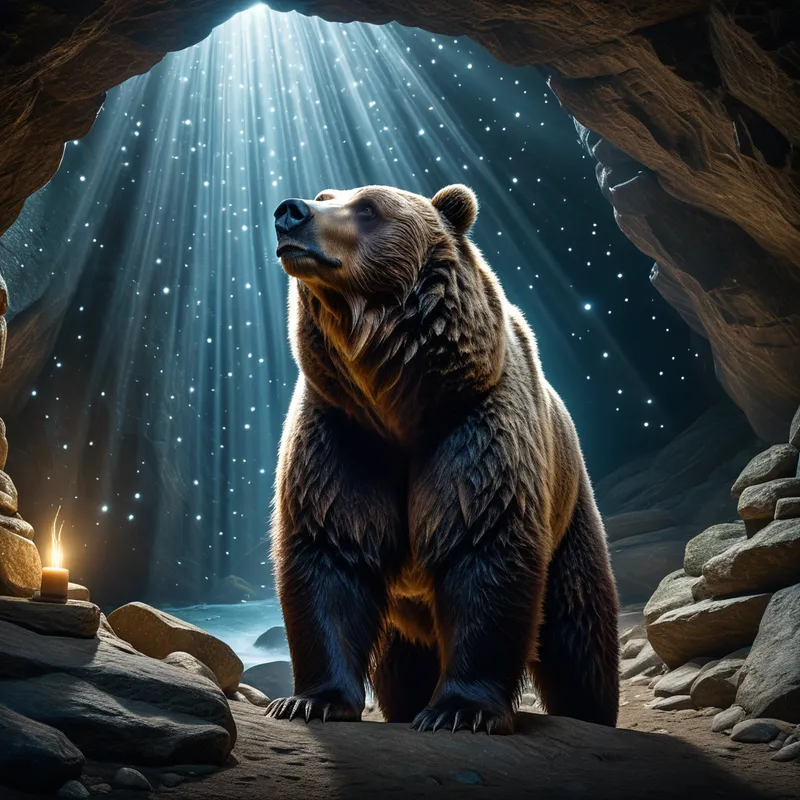
Mato Myth Meaning & Symbolism
A Lakota myth of a hunter who enters the spirit world of the bear, confronting his own nature to gain wisdom and power.
The Tale of Mato
Listen. The wind on the high plains does not just blow; it carries voices from the time before memory. It was in such a wind that a young hunter, strong of arm but restless in his spirit, walked. He was a good hunter, but his heart was a hollow drum, beating with a rhythm he did not understand. The buffalo were plentiful, his people were safe, yet a great emptiness yawned inside him, a silence louder than the thunder in the Paha Sapa.
One day, his pursuit of an elk led him far from the familiar rolling grasslands, into the broken foothills where the pines grew thick and the shadows lay long. The air grew cold and still. There, in the side of a great stone cliff, he saw it: a cave mouth, dark as a night without stars. From its depths came a sound—not a sound of this world, but a low, resonant vibration that shook the pebbles at his feet and echoed in the marrow of his bones. It was the breath of Mato.
Fear, cold and sharp, seized him. But beneath the fear, the hollow place in his spirit echoed back. He could not turn away. Taking a burning pine branch for a torch, he stepped into the throat of the earth. The smell of damp stone, old moss, and something profoundly wild filled his nostrils. The torchlight danced on walls that seemed to pulse. Deeper he went, until the light of the world was a forgotten memory.
Then, the torch guttered and died. In the absolute blackness, the breathing grew louder. He felt a presence, vast and ancient, surround him. Heat radiated from it, and the scent of turned earth and wild honey. Two points of amber light ignited in the dark—eyes that held the patience of mountains.
"You have entered the dream-lodge of Mato," a voice growled, not in his ears, but in his mind. "Why does a man of the open sky seek the darkness under the world?"
The hunter had no answer his tongue could give. But his heart spoke its loneliness. The great bear spirit listened. "To fill a hollow thing, you must first become empty. To find your strength, you must first know your fear. You will stay. You will dream the bear's dream."
And so began his hanbleceya within the mountain itself. In that darkness, time unraveled. He felt the slow turn of seasons in the bear's sleep. He felt the raw power in its limbs, the protective fury for its den, the deep, intuitive knowing of root and herb. He saw the world through the bear's eyes: not as a thing to be taken, but as a sacred relative in a great, breathing circle. He faced his own terror, his arrogance, his smallness, until they were worn smooth like stones in a river.
When the bear spirit finally spoke again, its voice was quieter, a rumble of distant thunder. "You have walked in my skin. You have seen with my eyes. The hollow is filled with the breath of Wakan Tanka. Go now. Carry the bear's heart within your human breast. Be a protector. Be a healer. Know when to act with great force, and when to retreat into wise solitude."
The hunter emerged from the cave, blinking in the sun. He was the same man, yet utterly changed. He returned to his people not just as a hunter, but as a wicasa wakan, one who had touched the spirit world and returned with its medicine. His strength was no longer just in his arm, but in his quiet certainty. He had met Mato, and in doing so, had found himself.
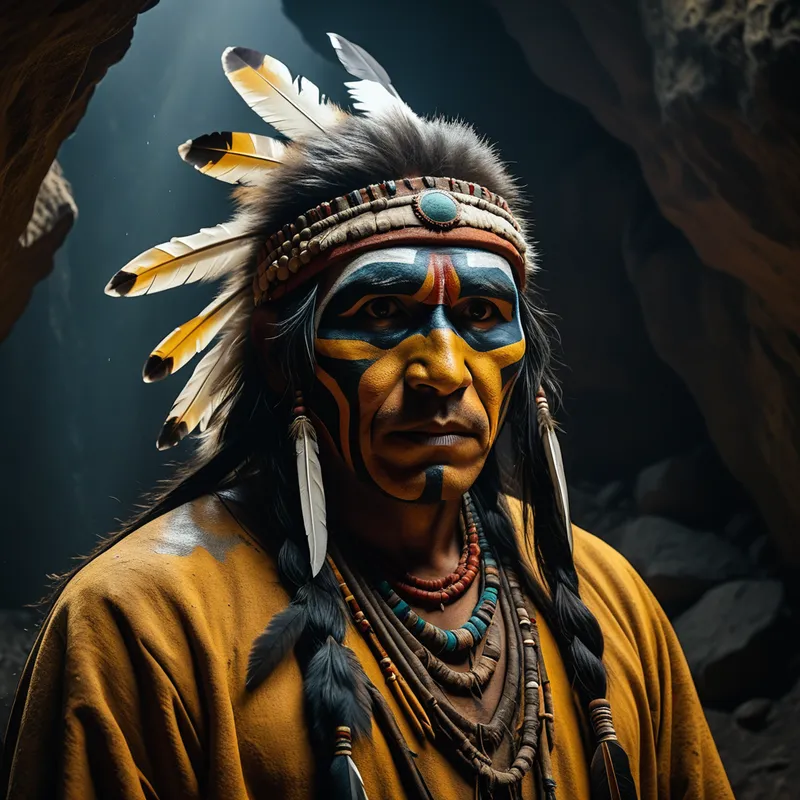
Cultural Origins & Context
The story of Mato is not merely a folktale; it is a living strand in the sacred web of Lakol wicohan. These narratives were the primary vessels of ecological knowledge, ethical instruction, and spiritual understanding, passed down orally through generations by elders and storytellers around winter fires or during communal gatherings. The myth of the hunter and the bear spirit belongs to a rich tradition of animal nagila, where certain creatures are understood as potent manifestations of Wakan Tanka, offering specific powers and lessons.
Functionally, this myth served as a powerful allegory for the vision quest, the hanbleceya. Young individuals, often on the cusp of adulthood, would seek a vision to discover their purpose and receive guidance from the spirit world. The journey into the bear's cave mirrors the solitary ordeal of the quest: leaving the comfort of the known (the sunlit plains), voluntarily entering a state of vulnerability and fear (the dark cave), and undergoing a profound death-and-rebirth experience through communion with a spirit power. The bear, as one of the most physically powerful and spiritually revered beings, represented an ultimate test and a profound gift. This story culturally sanctioned the terrifying, transformative process of initiation, framing it as a necessary descent to attain true strength and wisdom for the benefit of the people.
Symbolic Architecture
At its core, the myth of Mato is a masterful map of the psyche's journey toward wholeness. The hunter represents the conscious ego—competent in the outer world, yet feeling an existential lack, a spiritual hunger. The Paha Sapa and the cave are the unconscious itself: the mysterious, daunting inner landscape we must enter to find what is missing.
The cave is not a prison, but a womb of the soul. One must consent to the darkness to be remade by its hidden light.
Mato, the bear spirit, is the archetypal embodiment of the primal Self and the instinctual realm. It is raw, untamed power, deep intuition, cyclical wisdom (hibernation and awakening), and ferocious protection. The hunter's confrontation is not with an external monster, but with the immense, often frightening, power of his own innate nature. The "hollow" he feels is the ego's separation from this vital, instinctual ground of being.
The transformative process is alchemical: the ego's light (the torch) must extinguish in the face of the unconscious. Only in that total darkness can a new, more integrated consciousness be born. The hunter does not slay the bear; he is instructed by it. He "dreams the bear's dream," symbolizing a radical shift in perspective—from human-centric consciousness to a participatory, relational awareness of the interconnected web of life. The wisdom he gains—knowing when to use force and when to retreat into introspection—is the hallmark of integrated power, where instinct is not suppressed but enlisted in service of conscious purpose.
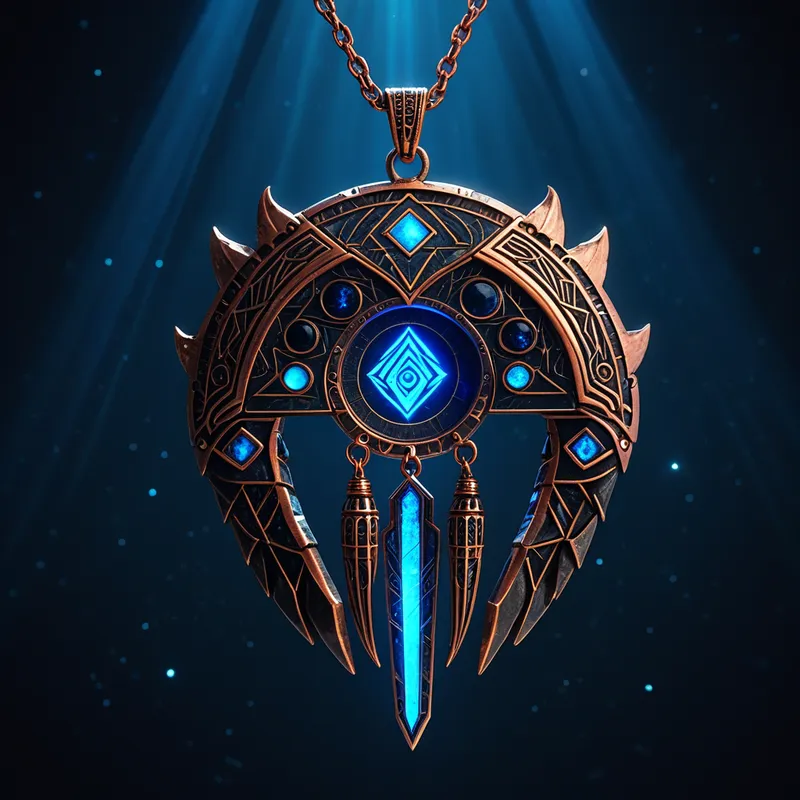
The Dreamer's Resonance
When this mythic pattern stirs in the modern dreamer, it signals a profound call to initiation. To dream of entering a cave, a deep forest, or any liminal, earth-bound space often precedes a necessary descent into the personal unconscious. A dream-bear is rarely just an animal; it is the manifest image of one's own latent power, buried instincts, or a protective, guiding aspect of the deep Self that feels overwhelmingly potent.
Somatically, this process may feel like a heavy pressure, a gravitational pull toward solitude, or a sense of being "in the dark" about one's life direction. Psychologically, it is the psyche's imperative to confront what has been ignored or feared—the repressed anger, the wild creativity, the need for boundaries, or the sheer force of one's authentic will. The bear does not ask for polite negotiation; it demands acknowledgment. Dreaming of this myth means the ego is being summoned to a reckoning, to sit in the dark den of its own being until it understands the language of its instinctual soul. The resolution comes not from escaping the bear, but from learning its ways and carrying its heart back into the waking world.

Alchemical Translation
For the modern individual navigating a world that often prizes constant extroversion and discards introspection as idleness, the myth of Mato provides a sacred blueprint for psychic transmutation. Our "hollow" feeling is the symptom of a life lived only on the surface, cut off from the nourishing darkness of the inner world. The alchemical work is the voluntary descensus ad inferos—the descent into the cave.
The first stage is nigredo, the blackening. This is the hunter stepping into the cave, the ego willingly confronting its own shadow, its fears, and its inadequacies. It is the painful but necessary dissolution of old, hollow identities. The bear spirit represents the prima materia, the chaotic, primal substance of the soul that must be engaged.
Individuation begins not with building a taller tower of the ego, but with digging a deeper well into the soul.
The second stage is albedo, the whitening, symbolized by the hunter "dreaming the bear's dream." This is the illuminating insight, the new perspective gained from integrating the unconscious content. The ego learns the bear's wisdom: the power of restorative solitude (hibernation), the clarity of instinct, the strength that comes from groundedness.
The final stage is the rubedo, the reddening, or the return. The hunter emerges, integrated. The bear's heart within his human breast symbolizes the lapis philosophorum, the philosopher's stone—the achieved state of wholeness where conscious life is infused with the power and wisdom of the instinctual Self. The transformed individual no longer acts from a place of hungry lack or reactive fear, but from a centered, embodied authority. They know, like the bear, when to move through the world with powerful agency and when to withdraw into the sacred cave of the self for renewal and vision. This is the alchemical gold: a personality grounded in its own deep, wild, and compassionate nature.
Associated Symbols
Explore related symbols from the CaleaDream lexicon: