
Maria Cacao
A Filipino goddess of harvest and wealth, Maria Cacao is a mysterious figure whose legend intertwines with themes of prosperity, protection, and hidden treasures.
The Tale of Maria Cacao
In the verdant, rain-drenched mountains of Cebu, where the earth is rich and the rivers sing, there exists a tale whispered with the rustle of cacao leaves. She is known as Maria Cacao, a goddess who dwells not in a distant sky, but within the very heart of the forest, in a magnificent golden house that appears only to those who are meant to see it. Her domain is the river, and her chariot is a vessel of myth: a golden ship, shaped from the hull of a massive cacao pod, that glides upon the waters during fierce storms.
The people of the barangay know the signs. When the skies darken and the rains lash the hillsides, swelling the rivers to a furious brown, they say it is Maria Cacao, traveling. She journeys from her hidden mountain home down to the sea to trade her bounty—cacao beans of such quality they are akin to gold—with other mythical beings in distant lands. The thunder is the sound of her ship’s passage; the lightning, a glimpse of its golden sheen. To witness her directly is a rare and perilous fortune, for her power is immense and her privacy fiercely guarded by her consort, the giant Mandarangan, and her loyal retinue of dwarves, the tumao.
She is a goddess of profound contradiction: a bestower of wealth who remains fiercely hidden, a nurturer who commands the storm. Farmers would find their cacao trees miraculously abundant after a storm, the pods plump and numerous, a silent blessing from the passing deity. Yet, she is also a protector of her secrets. Those who dared to spy on her riverine processions, driven by greed or disbelief, could meet with misfortune—lost, bewildered, or struck by a sudden, clarifying fear that sent them fleeing back to the village. Her myth is not one of simple gift-giving, but of a covenant: prosperity flows from nature’s hidden heart, but only to those who approach with respect, not rapaciousness.
Cultural Origins & Context
Maria Cacao’s legend is rooted deeply in the pre-colonial animist fabric of the Philippines, where every mountain, tree, and river was seen as inhabited by a diwata or spirit. She is a classic diwata, specifically a diwata sa suba (spirit of the river), evolved into a more personalized goddess figure. Her story survived the waves of colonial influence, syncretizing but not surrendering. The Hispanic name “Maria” overlays the indigenous spirit, a common form of cultural resilience where ancient deities adopted Christian guises to continue their worship in secret, a practice scholars call folk Catholicism.
Her connection to cacao is historically significant. The cacao tree (Theobroma cacao, “food of the gods”) is not native to the Philippines but was introduced via the Galleon Trade. The myth of Maria Cacao likely crystallized around the 18th or 19th centuries, a time when cacao became a valuable cash crop. She embodies the spirit of this new source of wealth, but frames it within an ancient, moral ecology. The wealth she brings—the “gold” of cacao beans—is not mined from the earth but grown from it, a product of patience, favorable weather, and unseen natural forces. Her narrative served as a cultural regulator, teaching that true prosperity comes from harmonious relationship with the capricious, powerful spirit of nature, not from its exploitation.
Symbolic Architecture
Maria Cacao’s myth is a symbolic map of the psyche’s relationship with the nourishing yet formidable Great Mother archetype. She represents the source of all sustenance—emotional, spiritual, and physical—that exists in the unconscious, fertile depths of the self.
She is the archetypal Caregiver, but one who demands acknowledgment of her full sovereignty. Her gifts are not unconditional; they are part of a sacred exchange that requires reverence for the mystery from which they spring.
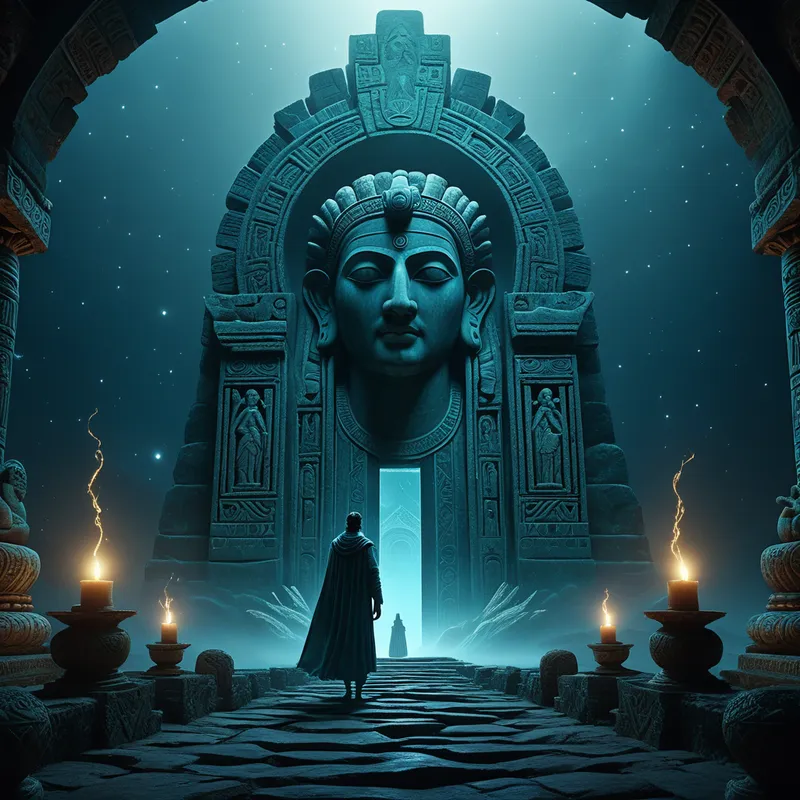
Her golden house, hidden in the mountain, symbolizes the Self—the central, complete, and invaluable core of the personality, concealed within the rugged terrain of the unconscious (the forest). It is a place of immense value (“gold”) and wholeness, but it cannot be found by deliberate searching; one must be “found” by it. The stormy river journey reflects the necessary, often turbulent, process by which the riches of the inner world (insight, creativity, psychic energy) are transported into the realm of conscious life and external trade (relationship, work, community). This process is powerful, disruptive, and not meant for direct scrutiny.
The protective Mandarangan and the tumao (dwarves) represent the instinctual and often intimidating defenses of the psyche. They guard the threshold to the deep feminine mystery, ensuring that only those with the right attitude—not the predatory ego seeking to plunder—can approach its treasures. The misfortune that befalls the greedy spy is a classic psychological truth: the conscious ego, when it attempts to raid the unconscious for power alone, is often overwhelmed, disoriented, or punished by its own guilt and fear.
The Dreamer's Resonance
To encounter Maria Cacao in a dream or active imagination is to confront the dimension of the psyche that holds our potential for growth and abundance. She appears when the dreamer’s life is in a stormy period of transition or fertile creativity. Her golden ship navigating the flood may symbolize the dreamer’s own nascent potential being carried forward by powerful, unconscious forces, even if the conscious mind experiences this as chaos.
She calls for an examination of our relationship to receiving and nurturing. Do we accept the gifts of life—talent, love, opportunity—with humble gratitude, or do we feel entitled to them, seeking to uncover and control their source? The figure of Maria Cacao challenges the modern impulse to demystify and commodify everything. She insists that at the heart of every true source of nourishment—be it a relationship, a vocation, or an artistic inspiration—lies an inviolable mystery. To respect that mystery is to ensure its continued flow. To violate it out of greed or arrogant curiosity is to sever the connection, leaving one spiritually and psychologically impoverished.
Her resonance is particularly potent for those who are caregivers themselves, warning of the shadow of the archetype: resentment. The hidden, stormy journey suggests that the act of giving and sustaining others has its own deep, private, and sometimes turbulent process that must be honored and protected.

Alchemical Translation
In the alchemical vessel of the soul, Maria Cacao presides over the stage of solutio—dissolution in the waters of the unconscious—and coagulatio—the precipitation of tangible value from that solution. The cacao pod itself is a perfect alchemical symbol: a hard, outer vessel (the prima materia, the unrefined self) containing precious, life-giving seeds (the lapis, the gold of the Self).
The storm is the necessary nigredo, the darkening and putrefaction that precedes transformation. The river, a blend of rainwater and mountain soil, is the aqua permanens, the divine water that dissolves old forms so new life can emerge.
Her myth teaches a profound alchemical truth: the opus (the great work of individuation) requires a submission to processes beyond egoic control. We cannot command the storm or force the golden house to appear. We can only tend to our own “cacao trees”—our daily practices, our respect for nature and psyche—and remain open to the blessing that comes on the tempest’s wind. The “trade” she conducts is the psyche’s innate drive to integrate the inner gold with the outer world, to bring the value of the Self into communion with the collective. This exchange, however, is always mediated by the great, mysterious rhythms of life and death, storm and calm, hiding and revelation.
Associated Symbols
Explore related symbols from the CaleaDream lexicon:
- River — The flowing, life-giving, and sometimes destructive boundary between the hidden inner world and the manifest outer world, carrying the vessels of transformation.
- Mountain — The enduring, rugged container of hidden treasures and the elevated realm where the divine or the fully realized Self makes its home.
- Forest — The dense, fertile, and often perilous realm of the unconscious, where instinct rules and mysteries are protected from the harsh light of rational scrutiny.
- Storm — The chaotic, purifying, and energizing force of upheaval that precedes revelation and the transport of psychic wealth.
- Gold — The incorruptible value of the achieved Self, the ultimate prize of the psychological and spiritual journey, often hidden in plain sight.
- Cacao Pod — The vessel of potential sweetness and bitterness, a natural treasury that protects its precious seeds until they are ready for transformation.
- Door — The threshold between the known world and the hidden realm of Maria Cacao’s golden house, guarded by powerful forces and requiring the right key of attitude to open.
- Goddess — The manifest face of the archetypal feminine as a sovereign bestower of life, wealth, and natural law, demanding reverence and relationship.
- Mystery — The essential, unknowable core at the heart of the sacred, which must be honored and protected for its gifts to continue flowing.
- Trade — The sacred exchange between the inner and outer worlds, the psyche and the collective, which enriches both when conducted with respect.
- Seed — The latent potential for immense growth and future abundance, contained and protected until the conditions for its nurturing are right.
- Shadow — The protective, often fearsome guardians (like Mandarangan) that serve the greater whole by defending the vulnerable mystery from conscious exploitation.