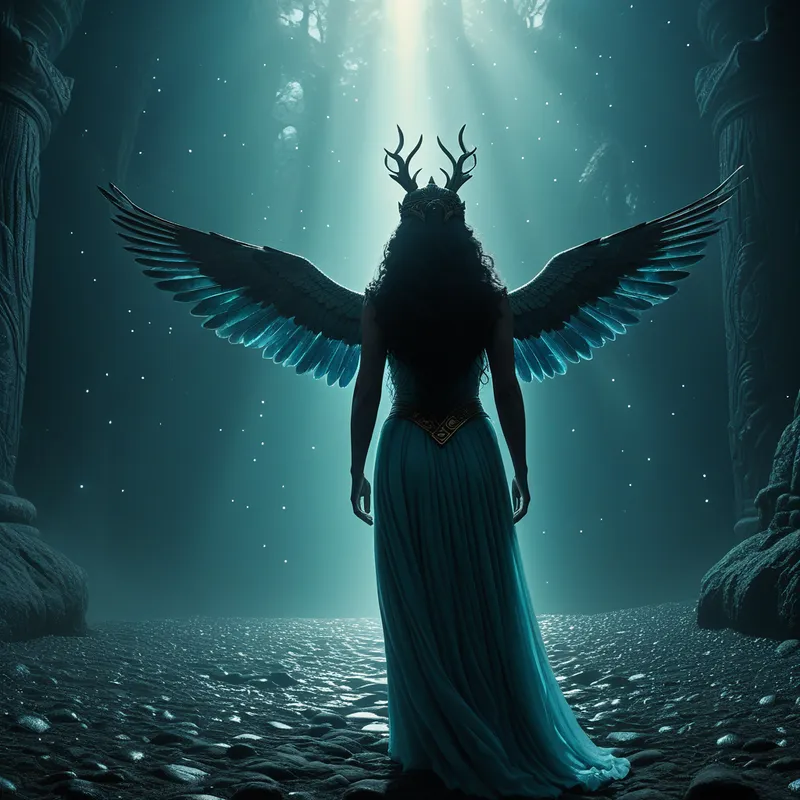
Marduk Forty Nine Names
The Babylonian god Marduk's forty-nine names reveal his supreme authority, cosmic functions, and the intricate theology of ancient Mesopotamia.
The Tale of Marduk Forty Nine Names
The cosmos was a roiling, formless sea of chaos, Tiamat, and her consort, the sweet waters of Apsu. From their mingling, the generations of gods were born. But their divine clamor disturbed the ancient quiet, and Apsu plotted their destruction. The wise god Ea struck first, weaving a spell of sleep upon Apsu and slaying him, establishing his abode upon the slain god’s stilled waters. There, in the sacred deeps, Ea and his consort Damkina conceived a son. He was born with double radiance in his eyes, mighty of limb, and from his first breath, he was clothed in the terrifying aura of ten gods. They named him Marduk.
The peace was brittle. Grieving and enraged by the death of Apsu and the hubris of the younger gods, Tiamat spawned a legion of monstrous serpents, vipers, and demons, placing the fearsome Kingu at their head and granting him the cosmic Tablets of Destiny. The divine assembly trembled. No elder god dared face her primordial wrath. Then, Ea spoke of his son. Marduk was brought before the gathered gods. He agreed to be their champion, but his price was absolute: “If I am to be your avenger, if I am to vanquish Tiamat and grant you life, let my word, not yours, fix destinies. Let all that I create remain unaltered. Let my command be supreme.”
The gods, desperate, feasted him in a mighty assembly. They bestowed upon him a royal robe, a scepter, and a throne. They gave him the invincible weapons: a bow, a mace, and a net held by the four winds. Then, they spoke his name—not once, but forty-nine times. Each name was not merely a title; it was a function of the cosmos granted, a facet of his being revealed and ratified. They named him Marukka and Maruttuk; they called him Barashakushu and Lugal-dimmer-ankia. With each utterance, his power solidified, his destiny was woven into the fabric of all that would be. Armed with their spoken sovereignty, he rode forth in his storm-chariot to meet the Mother of All.
The battle was the first act of true creation. He challenged Tiamat alone. As she opened her maw to consume him, he drove the evil winds into her belly, distending her. He shot an arrow that split her heart. He stood upon her monstrous form. From her divided carcass, he crafted the universe: her skull became the vault of heaven, her weeping eyes the sources of the Tigris and Euphrates, her tail the band of the Milky Way. He established the stations of the stars, the rhythms of the moon, the dominion of the sun. He took the Tablets of Destiny from the defeated Kingu and fastened them upon his own breast. From Kingu’s blood and the dust of the earth, he fashioned humanity to serve the gods, freeing them from toil. In gratitude, the gods built him Babylon, his “Gate of the Gods,” and within it, the ziggurat Etemenanki. There, in the Esagila, they gathered once more. And for a second time, they proclaimed his forty-nine names, cementing his rule over the ordered cosmos they now inhabited. The names were no longer a plea for a savior; they were the liturgy of a sovereign.
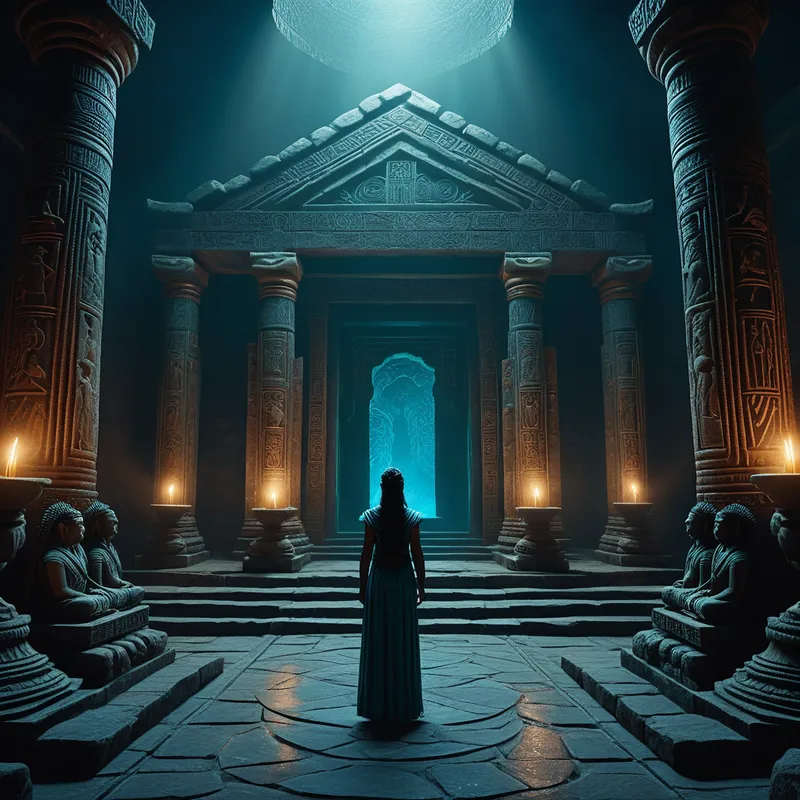
Cultural Origins & Context
The myth of Marduk and his forty-nine names is the theological and political heart of the Babylonian creation epic, the Enuma Elish. Composed likely during the Second Dynasty of Isin or the early Old Babylonian period (circa 12th-11th centuries BCE), it is not a folk tale but a state-sponsored sacred text. Its primary function was to legitimize Babylon’s sudden ascendancy from a minor city to the imperial capital of Mesopotamia, and to elevate its patron god, Marduk, to the head of the entire pantheon, supplanting older Sumerian deities like Enlil.
The forty-nine names are the mechanism of this theological coup. In Mesopotamian thought, to know the true name of a thing or a god was to understand its essence and exert influence over it. By having the entire divine assembly—the very pantheon he was joining—recite and thus acknowledge his names, Marduk’s authority is made consensual and total. Each name encapsulates a specific role: creator, judge, shepherd, storm god, agricultural bestower, lord of wisdom, and king of the netherworld. This comprehensive portfolio absorbs the functions of older gods (Enlil’s kingship, Ea’s wisdom, Shamash’s justice, Adad’s storms) into a single, Babylonian figure. The recitation of the names during the Akitu festival was an act of cosmic and political renewal, reaffirming the bond between the god, his city, his king, and the stability of the created order against the ever-lurking threat of chaos.
Symbolic Architecture
The forty-nine names are not a random list but a symbolic architecture of consciousness itself, mapping the journey from latent potential to manifest order. Marduk begins as a son in the deep (the unconscious, the Apsu), is empowered by the collective (the assembly of psychic forces), and confronts the primal, undifferentiated Mother (the chaotic, devouring aspect of the unconscious, Tiamat). His victory is not annihilation but transformation; he structures the chaos into a habitable cosmos (the conscious ego and a coherent world).
The names are the bricks of the ziggurat of the self. Each one is a specific function—the Judge, the Shepherd, the Storm—that must be integrated for sovereign consciousness to reign. To recite them is to perform an inner ordering, placing each psychic force under the directive of a central, meaning-making authority.
The number forty-nine is itself profound: seven times seven. In Mesopotamian numerology, seven was the number of totality and divine perfection (the seven planetary bodies, the seven winds, the seven gates of the underworld). Squaring it amplifies its completeness, suggesting a perfect, all-encompassing system of divine attributes. The names are the complete software for running a cosmos.
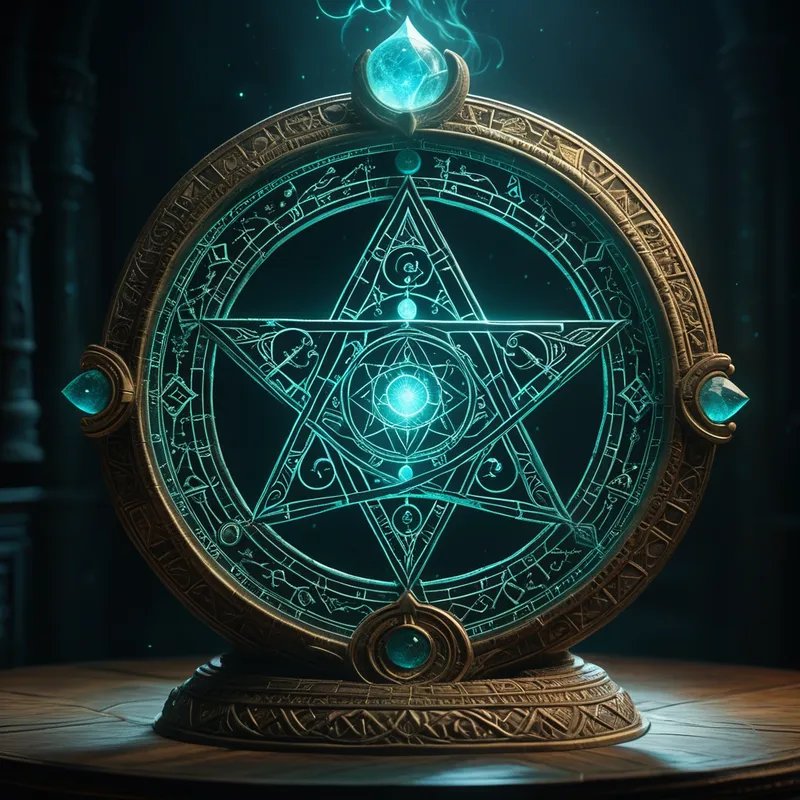
The Dreamer's Resonance
For the modern psyche, the tale of the forty-nine names resonates with the fundamental human task of integration and self-naming. We all contain inner chaos—the formless Tiamat of unprocessed emotion, instinct, and trauma. We also contain an assembly of inner “gods”: competing voices, talents, fears, and desires that clamor in confusion. The crisis comes when this inner chaos threatens to overwhelm us.
The Marduk process is the heroic, yet terrifying, act of ego consolidation. It is the moment one decides to face the inner abyss, not as a scattered multitude, but as a unified will. The “names” we claim in therapy, in introspection, in art—I am the Resilient One, the Creative One, the Nurturer, the Disciplined One—are these facets of power. We grant ourselves sovereignty over our inner realm by consciously acknowledging and organizing these parts. The danger, the shadow of Marduk, is inflation: believing the conscious ego is the only reality, becoming a tyrannical ruler who denies the deep waters (Ea/Apsu) and the primal matrix (Tiamat) from which it was born. True psychic sovereignty remembers its origins.
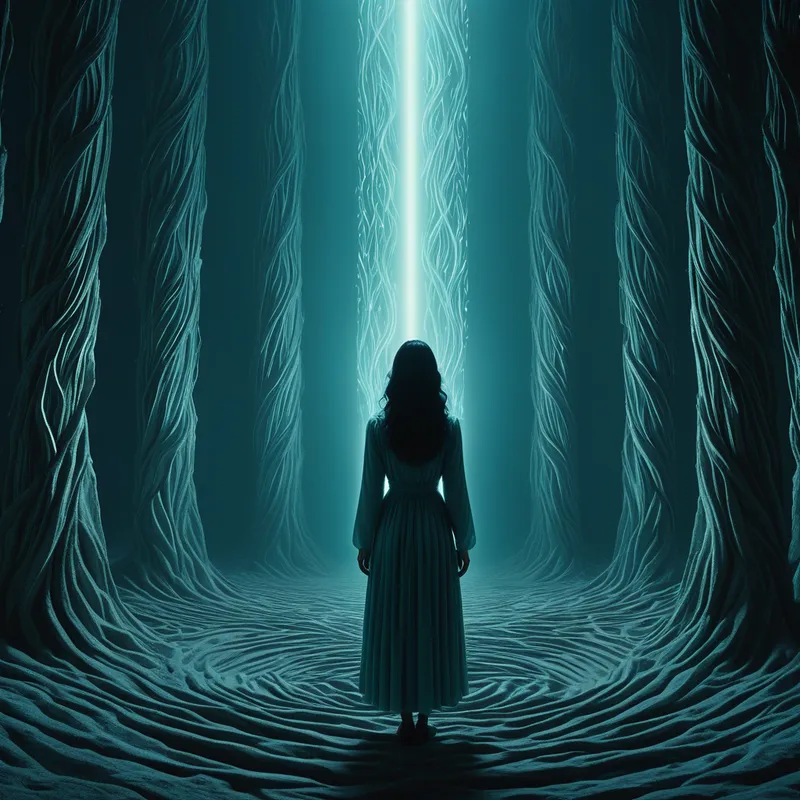
Alchemical Translation
The myth describes the alchemy of solve et coagula: the dissolution of the old, undifferentiated unity (Tiamat’s watery chaos) and the coagulation into a new, complex, and hierarchical order (the structured cosmos). Marduk is the lapis philosophorum, the philosopher’s stone—the agent and result of the transformation. His weapons are the tools of the alchemist: the net (to capture elusive spirits), the winds (the pneumatic principle), the arrow (focused intention).
The blood of Kingu, mixed with clay to form humanity, symbolizes the inextricable mix of divine spark (consciousness, the stolen destiny) and earthly matter (the body, mortality). Humanity is born from the guilt of a slain god, carrying both the burden of service and the potential for a destiny once reserved for the divine.
The forty-nine names are the final, perfected formula. To know them all is to possess the complete secret of creation, to hold the power to order reality through utterance. In psychological alchemy, this is the stage of rubedo, the reddening, where the integrated self speaks its truth with full authority, its many complex parts now functioning as a harmonious whole, capable of creating and sustaining a world of meaning.
Associated Symbols
Explore related symbols from the CaleaDream lexicon:
- Name — The essence and power of a being, captured and conferred through utterance; to know the true name is to hold sovereignty over its nature.
- Order — The cosmic principle established from chaos, manifest as law, hierarchy, and predictable rhythm, defended by the sovereign.
- Chaos — The primal, undifferentiated, and potentially devouring matrix from which all form emerges and to which it may return.
- Thunder — The audible manifestation of divine power and wrath, the weapon of the storm god, heralding both destruction and fertilizing rain.
- Crown — The visible emblem of hard-won sovereignty and the mandate to rule, bestowed by the collective upon the one who confronts the collective terror.
- Temple — The axis mundi where heaven and earth meet, the ordered house for the divine, built in gratitude for the establishment of cosmos.
- Destiny — The fixed decrees of fate, originally held by the powers of chaos, won and now administered by the victor to structure time and life.
- Hero — The champion who answers the call of the terrified collective, faces the ultimate monster, and returns with the boon of a new world.
- Sacrifice — The necessary death (of Apsu, of Tiamat, of Kingu) from which new life, structure, and consciousness are fashioned.
- Circle — The symbol of totality, wholeness, and the heavens themselves, reflected in the complete, circular set of forty-nine names encompassing all divine functions.
- River — The life-giving waters born from the tears of the slain primal mother, structuring the land and enabling civilization, the arteries of the ordered world.
- Mountain — The ziggurat (Etemenanki) as the artificial mountain, the meeting point of divine and human, the foundation of the new cosmic order.