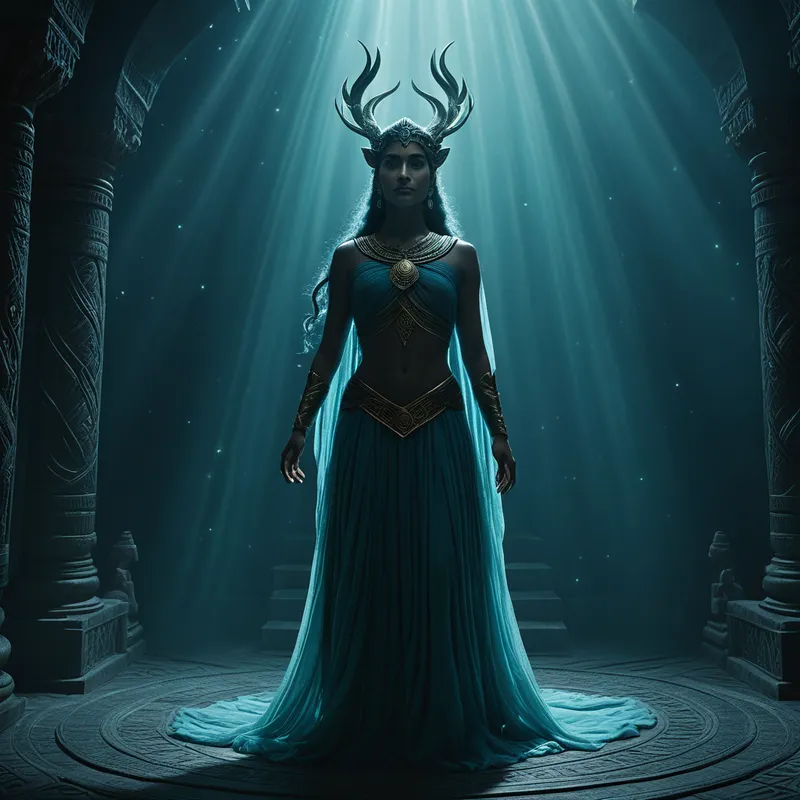
Mami Wata Sea Spirit
A powerful African water spirit known for her beauty and danger, Mami Wata embodies both prosperity and peril in coastal folklore.
The Tale of Mami Wata Sea Spirit
She rises from the shimmering deep, where sunlight fractures into liquid diamonds and the abyss holds its breath. Her skin is the color of polished river stones, or sometimes the deep, unfathomable black of midnight water. Her hair is a living cascade, a torrent of black coils that can cradle a man or drag him to the silty floor. She is Mami Wata, and her beauty is a weapon, a lure, a promise that carries the salt-taste of both ecstasy and oblivion.
The tales whisper of fishermen who see her, seated on a rock, combing her impossible hair with a golden comb. Her gaze is hypnotic, a mirror of the sea’s own captivating, treacherous surface. She may smile, revealing perfect teeth, and in that moment, a bargain is struck in the silent language of desire. A man might be drawn to her, forsaking his village, his family, the solid earth. He enters her realm, a world of sensual wonders and untold wealth. Time loses its meaning in her underwater palaces of coral and pearl. He is her husband, her consort, showered with gold coins that seem to spill from her very touch.
But the air-breathing soul cannot live forever in a water-breathing dream. A longing for the sun, for the smell of woodsmoke and the sound of human voices, will eventually stir. This is the moment of peril. To leave is to break the covenant. Mami Wata does not relinquish her possessions lightly. The returning man may find himself cursed with madness, his body wasting away from a longing that can never be quenched on land. The wealth she bestowed turns to sea-foam or brings a corrosive misfortune. She is the lover who blesses with one hand and drowns with the other.
Yet her duality is not solely for men. She is a fierce patroness of market women, of those who navigate the currents of trade and desire. To those who honor her with gifts—sweet perfumes, mirrors, gourds of palm wine—she may grant uncanny business acumen, the ability to draw customers like a tide, and prosperity that flows as steadily as a river. She is the spirit of the threshold where the fluid economy of the sea meets the fixed commerce of the land, a goddess of circulation who demands her share.
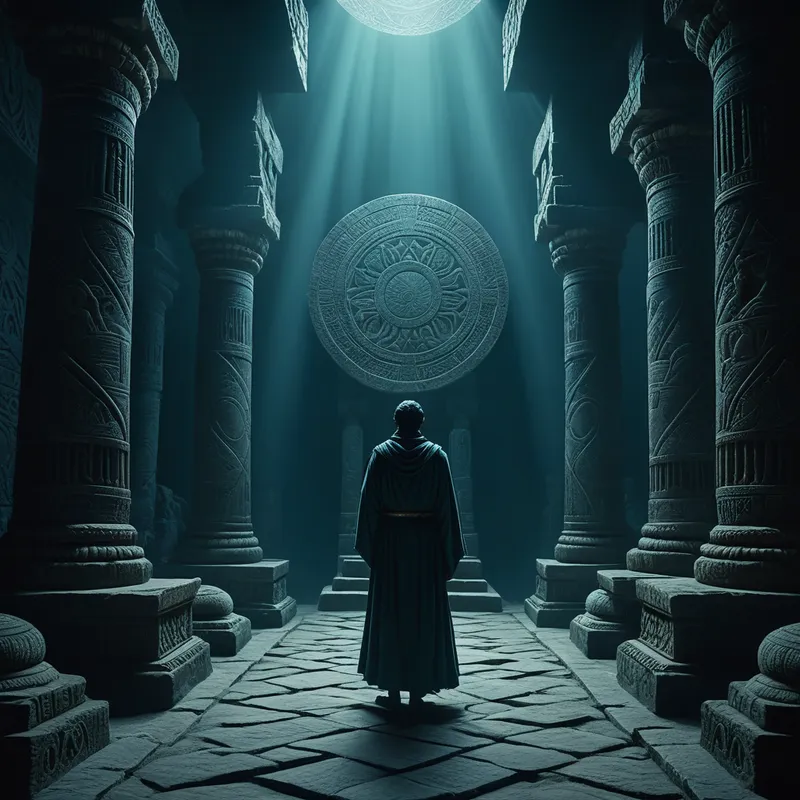
Cultural Origins & Context
Mami Wata is a syncretic spirit, a powerful confluence of indigenous African water deity veneration and imagery encountered through centuries of coastal trade. Her name itself is a pidgin English rendering of “Mother Water” or “Mammy Water,” speaking to her birth in the dynamic, liminal spaces of the African Atlantic coast. Her roots dig deep into pre-colonial traditions honoring river goddesses and ocean spirits found among the Igbo, Edo, Fon, and many other peoples, who saw divine feminine power in life-giving and life-taking waters.
The iconic visual of Mami Wata—a beautiful, often mermaid-like woman with a snake coiled around her body—was catalyzed by encounters. Indian and European trade goods, such as lithographs of Hindu deities or posters of snake charmers, circulated along the coast. These images were absorbed, interpreted, and radically repurposed by local spiritual imaginations, grafting foreign iconography onto a profoundly African spiritual rootstock. She is thus a quintessential spirit of the syncretic age, born from cultural exchange, resilience, and the enduring human need to personify the mysterious, generative, and dangerous power of the water.
Symbolic Architecture
Mami Wata’s entire being is a symbolic architecture built upon the principle of the threshold. She is the embodied tension between opposites, refusing easy categorization.
She is the ultimate coniunctio oppositorum—the conjunction of opposites. In her, wealth and ruin, fertility and barrenness, salvation and possession are not separate, but different currents in the same deep water.
Her primary symbols are her Mirror and her Snake. The mirror represents not just vanity, but profound self-reflection, the captivating surface that conceals infinite depth. To gaze into Mami Wata’s mirror is to gaze into one’s own deepest desires and fears, often indistinguishable from one another. The snake, often a python, coiled around her or held in her hands, is a symbol of transformation, healing, and potent, earth-bound wisdom. It also signifies her dangerous, hypnotic power—the ability to enthrall and constrict. Together, mirror and snake speak of a consciousness that is both reflective and instinctual, alluring and deadly.
She rules the space between: between saltwater and freshwater, between the human world and the spirit world, between prosperity and destitution. She is the spirit of the coastline itself—a place of arrival, departure, exchange, and often, irreversible change.
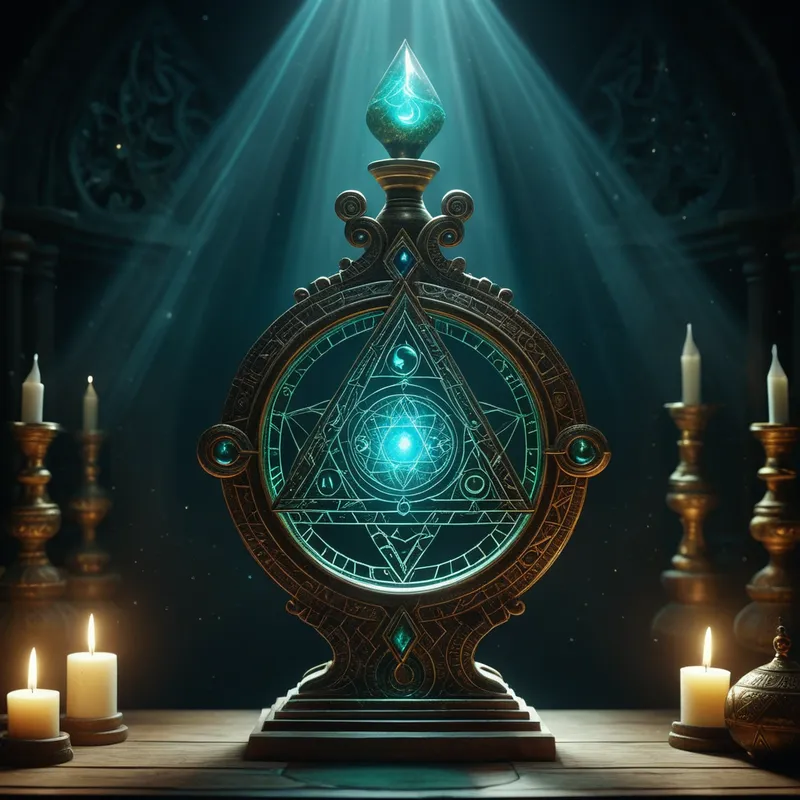
The Dreamer's Resonance
To encounter Mami Wata in the psychic landscape—whether in dream, vision, or the metaphors of a life—is to encounter the archetypal force of irresistible allure that promises wholeness at a terrible price. Psychologically, she represents the pull of the unconscious itself: dazzling, rich with creative potential and archaic wisdom, but perilous to the ego that wishes to remain intact and in control.
She manifests when an individual is at a crossroads of desire and identity. The promise she offers is one of radical transformation through immersion in the unknown—a dissolution of the old self for a glittering, potent new existence. This could mirror the seduction of a consuming passion, a creative obsession, or a spiritual path that demands total surrender. The “curse” upon return is the psychological truth that once the depths have been tasted, the ordinary world can feel barren and meaningless. One is haunted by a beauty they can neither fully possess nor fully leave behind, a classic symptom of a profound encounter with the numinous that has not been integrated.
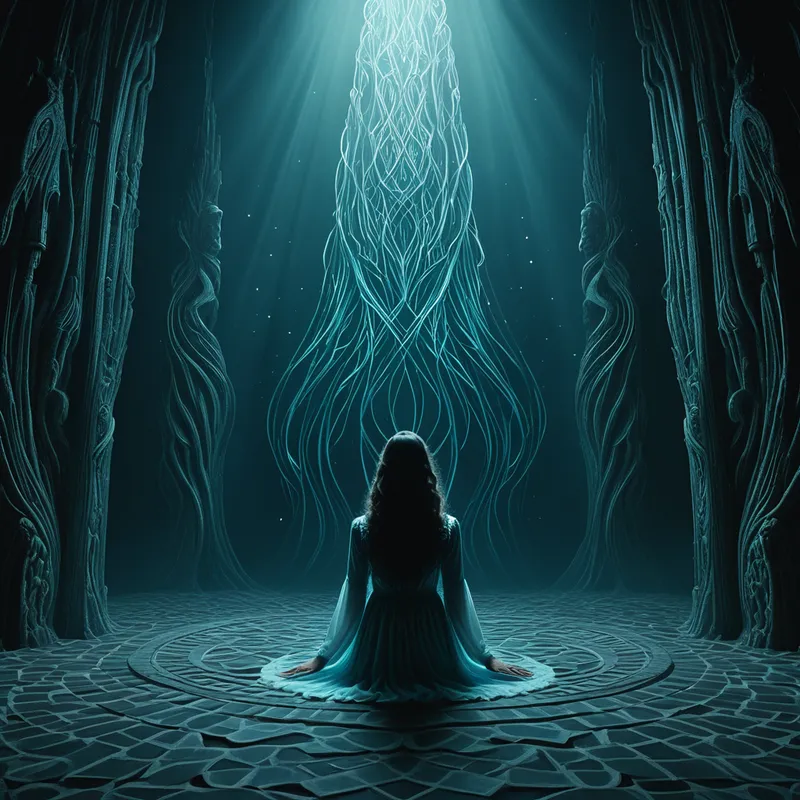
Alchemical Translation
In the alchemical vessel of the soul, Mami Wata presides over the stage of solutio—dissolution. Her medium is not fire, but water. She dissolves the rigid structures of the conscious personality, the “dry land” of egoic certainty, returning it to a fluid, primal state.
The alchemical marriage she proposes is not with a human partner, but with the unconscious ocean. The gold she gives is the aurum non vulgi—the non-vulgar gold of spiritual insight—which, if misused by the unintegrated ego, turns to the lead of addiction, madness, or sterile nostalgia.
The work, for one who has encountered her and returned, is the alchemical coagulatio: the slow, painful process of solidifying the insights gained in the fluid state back into a new form of earthly life. The wealth must be translated, the visions given form in art, in relationship, in service. One must build an altar to her on the shore—a conscious recognition of her power—without attempting to live forever in her palace. To honor her is to acknowledge the necessary, cyclical rhythm between immersion in the deep and return to the structured world, carrying the salt of that wisdom within.
Associated Symbols
Explore related symbols from the CaleaDream lexicon:
- Ocean — The vast, unknown realm of the unconscious, source of life and hidden treasures, yet holding depths of terror and oblivion.
- Snake — A symbol of transformation, healing, and primal wisdom; its coiled form represents latent power and the cyclical nature of life, death, and rebirth.
- Mirror — Represents self-reflection, truth, and illusion; the surface that shows the self, yet is a gateway to other realms and deeper layers of identity.
- Duality Mask — The archetypal face that embodies two opposing natures, concealing the true, unified spirit behind a play of blessings and curses.
- Goddess — The divine feminine principle in its potent, sovereign form, commanding respect and devotion as a source of both creation and destruction.
- Wealth — Not merely material riches, but the abundant flow of life force, creativity, and spiritual insight that comes from alignment with deep, often dangerous, sources.
- Threshold — The liminal space between worlds—land and sea, conscious and unconscious—where transformation is possible and rules are suspended.
- Desire — The magnetic pull toward union, completion, or possession, a fundamental force that can lead to transcendence or ensnarement.
- Transformation Cocoon — The immersive, isolating state of profound change, where the old self dissolves in a liquid medium before a new form can emerge.
- Cyclic Nature — The eternal rhythm of immersion and emergence, capture and release, blessing and curse that defines the relationship with the deep.