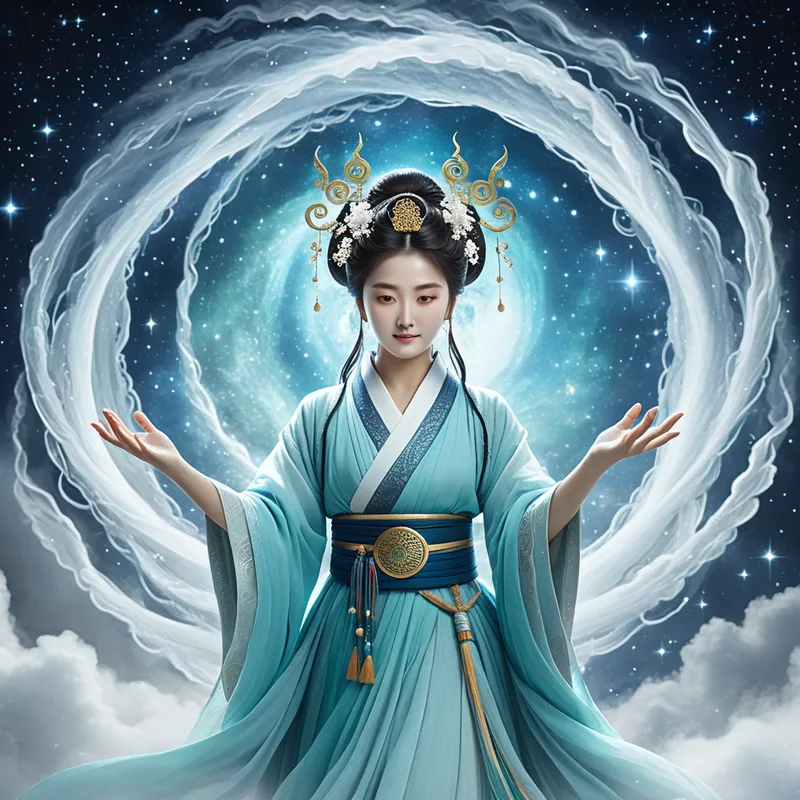
Mago Primordial Goddess Myth Meaning & Symbolism
A myth of cosmic genesis where the goddess Mago births the world from her own being, establishing a sacred, maternal order of existence.
The Tale of Mago Primordial Goddess
In the time before time, there was only the great, silent breath of the Primordial Chaos. No sky arched above, no earth lay below, no sun burned. There was only a deep, potent stillness, a womb of pure potential. And within that womb, she stirred.
She was Mago. Not born, but simply being, the source from which all being would flow. Her consciousness was the first light in the eternal dark, a thought that became a presence. From her own sovereign essence, she brought forth the world. Not with a word, but with a sigh of becoming. The heavens unfolded like a vast, dark silk from her exhale. The earth coalesced from the substance of her own body, rising as a great, sacred mountain—the axis of all reality.
She was the mountain, and the mountain was her throne. From its peak, she gazed upon the formless potential and began to sing. Her song was not of notes, but of principles: separation and union, movement and rest, light and shadow. As she sang, her breath took form. From her divine essence emerged four radiant sovereigns: Cheong-gung, Hwang-gung, Heuk-gung, and Baek-gung. They were her first children, emanations of her will to order.
To them, she gave a sacred charge. "Go forth," her voice echoed like stone upon stone. "Take of my body, of this holy earth, and shape it. Bring forth valleys from my folds, rivers from my veins, forests from my hair. Let life stir in the warm hollows." The sovereigns bowed, their hearts filled with the awe of their task. They descended from her presence and began the great work.
And so, the world was made not from conflict, but from sacred, maternal instruction. The rivers carved paths of silver. The mountains rose as altars to the sky. Trees rooted deeply, drinking from the memory of her essence. Mago watched, a profound stillness at the center of all becoming. She established the Order of the seasons, the cycles of growth and decay, the dance of the celestial bodies. Her law was the law of natural harmony, a web of life where every creature, every stone, every stream remembered its origin in her.
Finally, when the world breathed with its own rhythm, Mago did not depart. She withdrew, sinking deep into the heart of the first mountain, into the very Earth she had become. She became the dreaming heart of the world, the silent, potent presence within every stone, every root, every source of water. To be born into the world was to be born from her. To live was to walk upon her body. To die was to return to her silent, waiting embrace. The tale of her making was not a story of a distant past, but the ever-present truth of the ground beneath one's feet and the sky above one's head.
Cultural Origins & Context
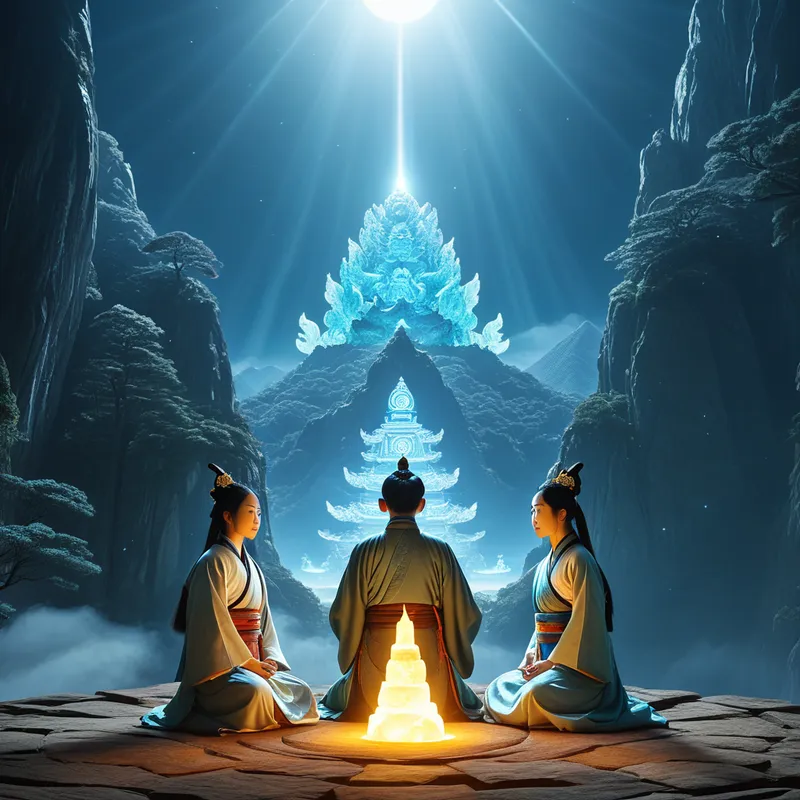
The myth of Mago is preserved primarily in the Budoji ("Chronicle of the Emblem of Heaven") and other ancient Korean texts. Unlike the state-sanctioned foundation myths that focus on dynastic heroes, the Mago narrative represents a deeper, indigenous stratum of Korean spirituality—a cosmogony centered on a feminine, autogenetic creatrix. It is a myth of the land itself, belonging more to the realm of shamanic (Mugyo) cosmology and folk memory than to court historiography.
This myth was likely carried and tended by Mudang, the shamans who served as the living memory of the people. In their rituals, they connected to the sinmyeong, or divine light, a concept that resonates with Mago's initial creative consciousness. The myth functioned as a sacred map of reality, explaining not just how the world came to be, but what it is: a sacred, embodied emanation of a maternal divine. It established a worldview where humanity is not lord over nature, but a child within a living, maternal cosmos. This provided a profound sense of belonging, order, and ethical responsibility rooted in reverence for the source of all life.
Symbolic Architecture
Mago is the ultimate archetype of the self-creating source. She is not fashioned by another but emerges from the void as consciousness itself, representing the psyche's own ground of being before the formation of the ego.
The primordial goddess does not build a world outside herself; she becomes the world. This is the symbolic truth of individuation: the Self is not found, it is unfolded from within.
The four sovereigns symbolize the ordering principles of the psyche—the four functions of consciousness (thinking, feeling, sensation, intuition) or the four directions that give structure to the inner world. They are not separate from Mago; they are her active agents, translating her unitary being into the diverse, harmonious forms of existence. The sacred mountain is the Axis Mundi, the connection between the unconscious depths (Mago within the earth) and the conscious heights (the ordered world). Her withdrawal into the mountain signifies the movement of the creative source from conscious myth into the unconscious foundation, where it continues to operate as the invisible, guiding matrix of life.
The Dreamer's Resonance
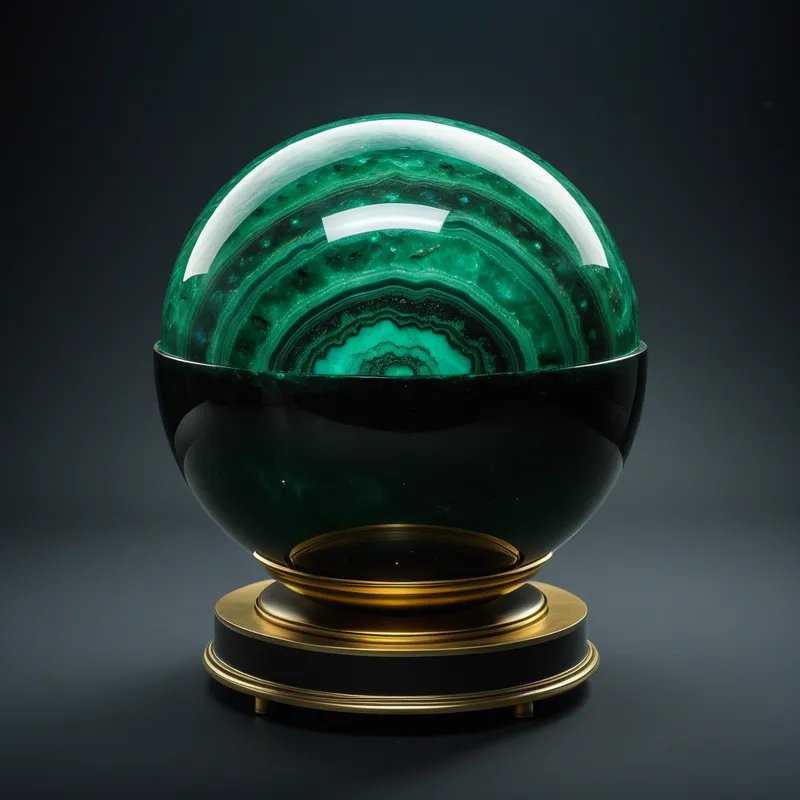
When this myth stirs in the modern Dream, it often manifests not as a literal narrative, but as profound somatic and spatial experiences. One may dream of discovering a vast, subterranean chamber that feels deeply familiar and sacred—the heart of the inner mountain. One might dream of giving birth to landscapes, of feeling one's own body transform into a terrain of forests and rivers. These are dreams of profound self-creation and reconnection to the foundational Mother archetype within.
Such dreams signal a process of returning to one's own psychic origins. The dreamer is often in a state of dissolution or confusion, where old identities have crumbled. The emergence of the Mago pattern is the unconscious affirming the existence of an indestructible, creative core beneath the chaos. It is the psyche's way of saying, "You are not broken; you are at the beginning. You contain your own world." The feeling is often one of awe, deep peace, and a terrifying yet exhilarating responsibility: the call to participate in one's own becoming.
Alchemical Translation
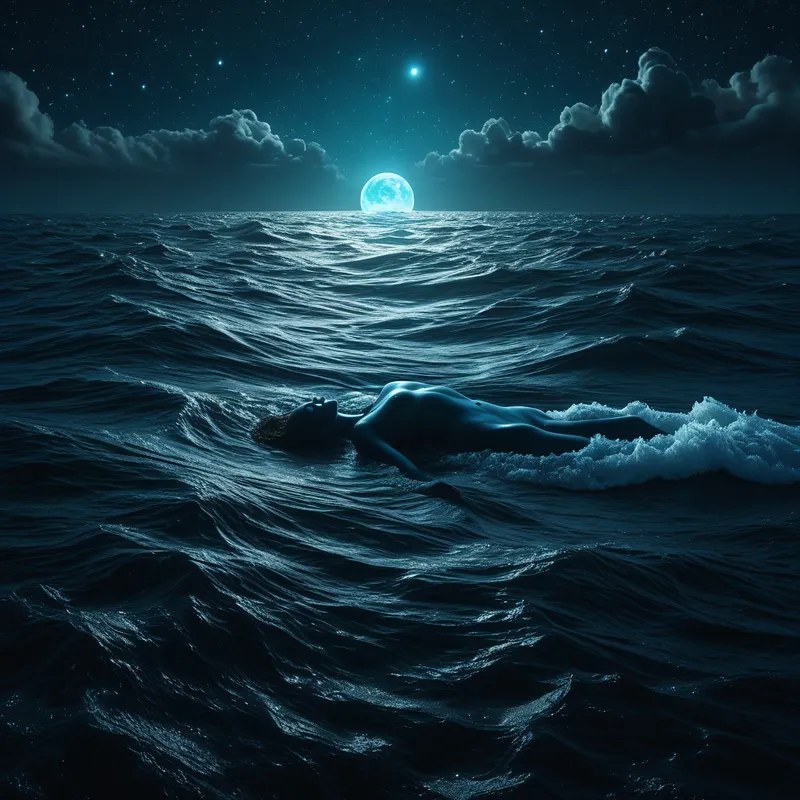
The alchemical journey modeled by Mago is the opus contra naturam in its purest form: the work of bringing order from one's own primordial nature. For the modern individual, the "Primordial Chaos" is the undifferentiated state of the unconscious—a swirl of potentials, traumas, talents, and instincts. Mago represents the first act of consciousness within that chaos: the act of turning attention inward and declaring, "I am."
The first stage of the Great Work is not to seek the philosopher's stone, but to become the mountain that contains it.
The individual's "four sovereigns" are the capacities we must cultivate to shape our inner world: discernment (north/water), passion (south/fire), structure (west/metal), and growth (east/wood). The work is to send these sovereigns—these aspects of our will and consciousness—into the raw material of our psyche to build valleys of compassion, rivers of insight, and forests of connection. Mago's final withdrawal is the critical stage of interiorization. It is the moment when the driving force of transformation ceases to be an ego-driven "quest" and becomes an integrated, autonomous process. The creative source is no longer an object of seeking; it is the very ground we stand on. The goal of this psychic transmutation is not to become a god, but to realize with utter conviction that one's life is a legitimate, authentic expression of the world-creating principle itself.
Associated Symbols
Explore related symbols from the CaleaDream lexicon:
- Goddess — The archetypal feminine as autogenetic source and sovereign, representing the psyche's inherent capacity for self-creation and nurturing order.
- Earth — The manifested body of the divine, symbolizing the grounded, tangible reality that emerges from and contains the spiritual source.
- Mountain — The axis mundi, the central pillar connecting heaven and earth, representing the individual's core Self and the sacred site of revelation.
- Primordial Chaos — The undifferentiated state of pure potential before consciousness, the necessary void from which all creative acts must emerge.
- Order — The harmonious structure imposed by consciousness upon chaos, representing the innate human drive to find meaning, pattern, and balance.
- Mother — The generative, containing, and nourishing principle, the first relationship and the foundational ground of all being.
- Seed — The latent potential within the source, the compressed totality of a world yet to be unfolded, symbolizing innate destiny and possibility.
- Tree — The living symbol of growth connecting root (unconscious source) to branch (conscious manifestation), a child of the earth-body of Mago.
- River — The flowing, life-giving energy emanating from the source, symbolizing the processes of emotion, time, and psychic movement.
- Circle — The symbol of wholeness, completion, and the cyclical nature of all existence as governed by the primordial goddess's law.
- Temple — The world itself as a sacred space built from divine substance, implying that to exist within reality is to dwell within a holy architecture.
- Dream — The medium through which the primordial, creative layer of the unconscious communicates its formative patterns to the modern conscious mind.