Limen Myth Meaning & Symbolism
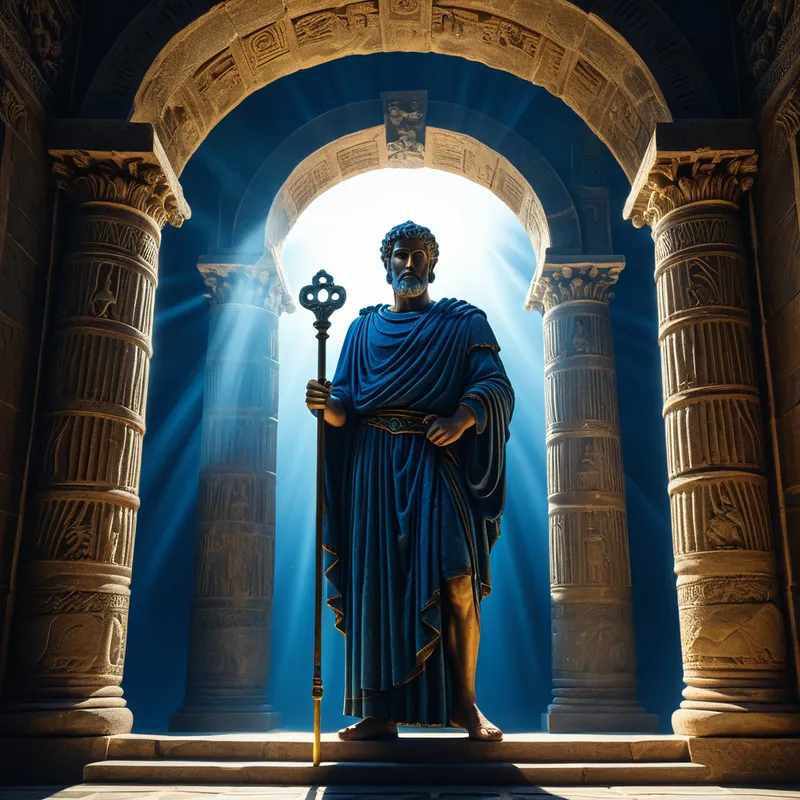
The story of Limen, the Roman deity of thresholds, embodies the sacred tension of crossing from one state of being into another, guarding the moment of transformation.
The Tale of Limen
Listen, and hear the whisper in the stone, the sigh in the hinge. Before the great roads were laid, before the legions marched, there was the space between. Not the home, not the road. The moment of neither and both. This is the domain of Limen.
He was not born of thunder like Jupiter, nor of the sea’s foam like Venus. He emerged from the first hesitation, the first breath held before a step. His form is the shadow cast by a doorframe at dawn, his voice the creak of aged wood and the final click of a latch falling home. He stands where the hearth’s warmth meets the unknown chill of the street, where the sacred interior of the atrium yields to the public world.
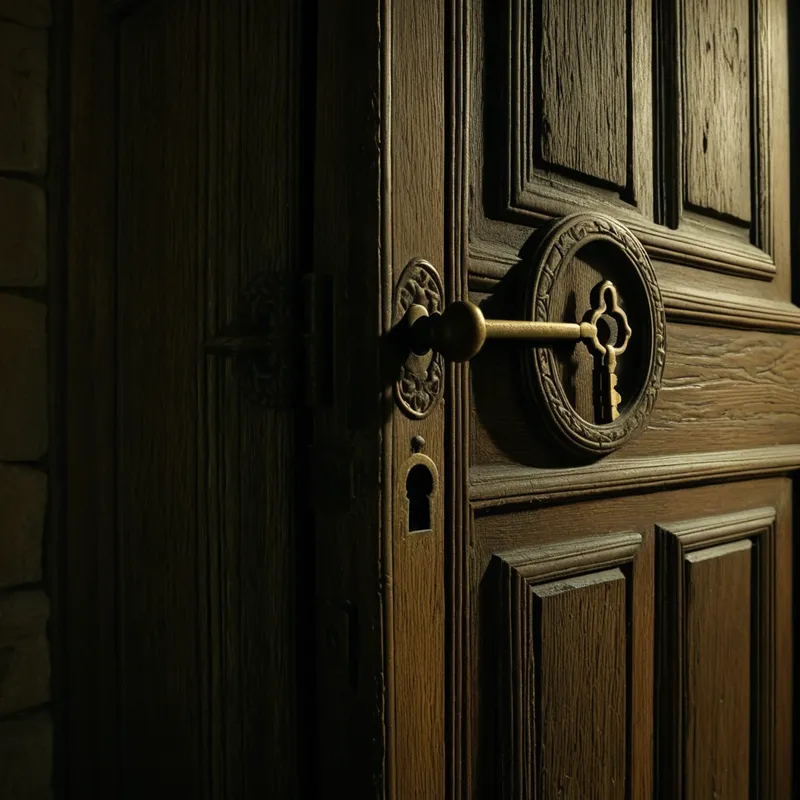
In the oldest times, when a family raised the posts of their new home, they did not first honor the gods of the field or the forge. They called to Limen. With oil and salt, they anointed the wooden beam above the entrance—the limen superum. They traced their fingers along the raised sill beneath—the limen inferum. And in that sacred, narrow space between, they invited his presence. “Limen,” they whispered, “guardian of our crossing, bless our coming in and our going out. Let only good enter; let only peace depart.”
He is a silent witness. He sees the bride, veiled and trembling, carried over the threshold to symbolize her passage from maiden to matron, her old life left literally beneath her feet. He feels the shudder as the father carries out the body of his child, crossing from the world of the living into the memory of the home. He hears the earnest prayers of the merchant touching his amulet before stepping out to seek his fortune, and the weary sigh of the soldier returning, his spirit still lingering on distant battlefields.
His greatest test comes not in war, but in stillness. A soul stands at the ultimate doorway, the passage from life to the shores of the Acheron. The Di Manes call, but Limen holds the space. He does not open the door; he is the door. The soul must recognize itself, must integrate its life’s journey, before the inner latch—the limen cordis—releases. Only then does the threshold become a passage, and the guardian, a guide. The final crossing is not an escape, but a profound arrival at one’s own completed truth.
Cultural Origins & Context
The figure of Limen belongs not to the grand, Hellenized pantheon of state myth, but to the ancient, intimate world of Roman numina—the countless spirits of place and function that animated the everyday world. He was a fundamental part of Roman religio, the binding sense of sacred obligation that governed the relationship between the human and the divine in the domestic sphere.
His worship was embedded in the very architecture of the Roman home. The threshold was a sacred boundary, purified regularly with offerings. To stumble on the threshold was a dire omen; to cross it with the left foot first was considered unlucky. This was not mere superstition, but a ritual technology for managing life’s constant transitions. The myth was passed down not by epic poets, but by the paterfamilias performing the household rites, and by the matrona anointing the doorposts during the Terminalia and the Kalends of March.
Societally, Limen functioned as a psychological and social regulator. He formalized the anxiety of change into ritual, providing a sacred container for the stress of life’s passages: birth, marriage, departure, death. By honoring Limen, the Roman psyche acknowledged that transformation is a dangerous, sacred act that requires a moment of pause, respect, and conscious intention.
Symbolic Architecture
Limen is the archetypal embodiment of the threshold itself—a symbol so profound it structures our understanding of reality. He represents the critical, often overlooked process of transition, not just its start or end points.
The threshold is not a barrier, but the embodiment of the decision to transform. It is the solidified moment of potential, where every past converges and every future is born.
Psychologically, Limen maps onto the liminal space in any rite of passage—the “betwixt and between” identified by anthropologists like van Gennep. This is the stage of separation from an old identity, before incorporation into a new one. It is the therapist’s office between crisis and insight, the silent pause between question and answer, the dark night of the soul before dawn. Limen guards this vulnerable, fertile void where the old self dissolves so the new can coalesce. He is the personification of resistance, hesitation, and the necessary containment that prevents a premature or chaotic transformation.
The key he holds is not for others, but for the one who stands at the door. It symbolizes the internal realization, the insight or acceptance that unlocks the next phase of life. The door that is both entrance and exit represents the paradoxical nature of all profound change: to gain something new, something old must be left behind. You cannot bring the entirety of your former world across the threshold; you must be edited, refined, made ready.
The Dreamer's Resonance
When the archetype of Limen stirs in the modern unconscious, it manifests in dreams of potent in-betweenness. The dreamer may find themselves:
- Standing before a magnificent, intimidating door, unable to find the key or muster the courage to turn the handle.
- Wandering an endless corridor or airport terminal, a place designed for passage where they are stuck in perpetual transit.
- Attempting to cross a bridge that seems to lengthen or become insubstantial as they walk.
- Hovering in a doorway, one foot in a brightly lit room, the other in darkness, feeling paralyzed.
Somatically, this can correlate with feelings of “stuckness,” anxiety in the chest or throat (the body’s own “passageways”), or a sense of suspension. Psychologically, these dreams signal that the dreamer is in an active liminal state. An old identity—a job, a relationship, a self-concept—has died, but the new one has not yet been born. The psyche is in the workshop of transformation, and the dream imagery of Limen is both a reflection of this disorienting process and a reassurance: this state has a guardian. The tension is not a flaw; it is the sacred mechanism of change itself.

Alchemical Translation
In the alchemy of the soul, or individuation, Limen models the mortificatio and separatio stages—the dissolution of outmoded psychic structures and the separation of essence from dross. The threshold is the crucible.
The modern individual’s “hero’s journey” is often not about slaying dragons, but about having the courage to stand in the unbearable tension of the doorway. It is the decision to leave a secure but soul-deadening career, to end a familiar but toxic relationship, to finally feel the grief one has spent years avoiding. Limen presides over this internal ceremony.
To cross the threshold is to perform an act of psychic surgery on oneself. You must decide what parts of your history you will carry forward as wisdom, and what parts you will leave behind as ballast.
The alchemical work is to befriend this guardian of the in-between. It involves consciously entering liminal spaces: through meditation, journaling in the ambiguous state between sleep and wakefulness, or simply allowing oneself to dwell in “not knowing.” The triumph is not the arrival on the other side, but the achievement of a liminal consciousness—the ability to hold the tension of opposites, to tolerate ambiguity, and to recognize that the most profound growth happens not in the light of certainty, but in the sacred twilight of the threshold.
In honoring Limen, we learn that every ending is a threshold, and every true beginning requires a respectful, conscious pause at the door. He reminds us that we are forever in passage, and that the courage to cross is born in the quiet, guarded moment of hesitation.
Associated Symbols
Explore related symbols from the CaleaDream lexicon: