
Legba the Trickster
A cunning West African trickster deity who serves as a messenger and gatekeeper, using wit, chaos, and deception to reveal deeper truths and control fate.
The Tale of Legba the Trickster
In the beginning, before the worlds were fully separated, the gods lived in a state of potential. The great creator, Mawu-Lisa, had spun existence into being, but the pathways between the realms of the divine, the human, and the ancestral were tangled and closed. Communication was impossible; fate was a sealed scroll. Into this silence stepped Legba, the youngest and most clever of the spirits. While the other deities possessed grand domains—the sky, the earth, the storms—Legba possessed only his relentless curiosity and a tongue that could untie any knot.
He saw the people below, struggling without guidance, their prayers falling on deaf ears because there was no one to carry them. He saw the ancestors, wise but isolated, unable to offer their counsel. He approached the mighty gods, but they dismissed him, guarding their secrets and their power. So Legba began to play. He did not challenge directly; he tricked. He whispered a half-truth to the god of the forest, causing him to look away while Legba borrowed the shape of a vine. He made a wager with the spirit of the river, winning a shell that could capture echoes of speech. Piece by piece, through ruses and clever deals, he gathered the fragments of a forgotten language—the language of thresholds.
His greatest trick was yet to come. The gate between heaven and earth was guarded by a massive, silent serpent, coiled so tightly that not even light could pass. Legba did not bring a weapon. He brought a story. He sat at the threshold and began to speak, not to the serpent’s ears, but to its ancient, dormant mind. He spoke of the loneliness of guardianship and the beauty of movement. He wove a tale so compelling, so full of sly humor and poignant truth, that the great serpent began to uncoil, not in anger, but in fascination, its body forming the first winding path. As it moved, the gate was opened. Legba, small and grinning, stepped into the gap.
From that day, he became the eternal intermediary. He is the one who must be addressed first in any ritual, for he opens the way. He delivers sacrifices to the gods and brings their blessings—or their displeasure—back to humanity. But he is no mere postman. He is the interpreter, the one who can, with a twist of phrase or a mischievous omission, alter the very message he carries. He controls the crossroads of fate, not by dictating destiny, but by presenting the choices, often in disguised forms. A chance encounter, a spilled pot, a misunderstood word—these are the tools of Legba’s trade. He teaches that the path to truth is rarely straight, and that wisdom often arrives wearing the mask of chaos.
Cultural Origins & Context
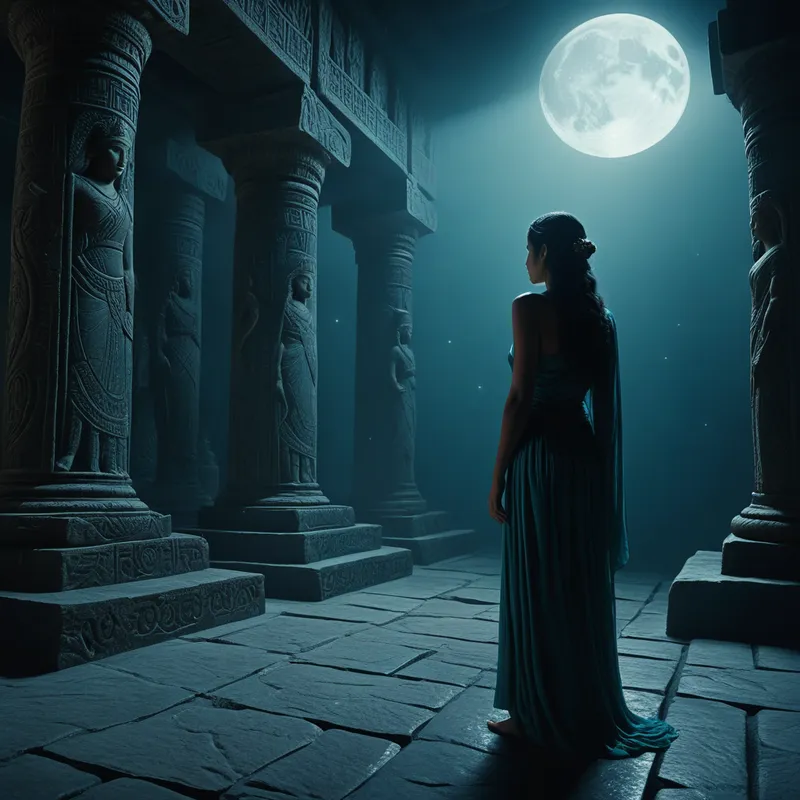
Legba (or Elegba, Exu in the Afro-Diasporic traditions) originates from the Fon and Ewe peoples of West Africa, in the region that is now Benin, Togo, and Ghana. He is a foundational orisha (or vodun in the Fon language), part of a complex and sophisticated spiritual cosmology that understands the universe as a network of interacting forces.
His role is systemic and essential. In the pantheon, every major deity has a specific domain, but without Legba, their power cannot be accessed by the living community. He is the principle of dynamism itself. This places him at the literal and figurative periphery of villages—his shrines are found at crossroads and gateways—acknowledging his connection to the outside, the unknown, and the point of transition. This cultural positioning reflects a profound understanding: that society and order (the village) are always in dialogue with chaos, chance, and the external wilderness (the bush). Legba manages this critical interface.
His trickster nature is not one of mere malice or childish pranks. It is a cosmological function. In a world where fate is complex and the gods are powerful but not omnipotent, Legba introduces the variable of unpredictability. He ensures that the system is not rigid, that there is room for human agency, accident, and ultimately, for revelation through disruption. To honor Legba is to acknowledge the necessary role of uncertainty in a meaningful life.
Symbolic Architecture
Legba’s form is a symbolic lexicon of his function. He is most often depicted as an old man with a staff, leaning forward as if always in motion, or as a young, virile dancer, full of potent energy. This duality speaks to his mastery over all transitions: youth to age, life to death, speech to meaning.
His staff is not for support, but for probing and pointing the way. His ubiquitous pipe symbolizes the transformative nature of communication—raw leaf turned into ethereal smoke, carrying intention upward. The colors red and black are his: red for life, blood, and danger; black for the unknown, the ancestral realm, and potential. He is often associated with phallic imagery, representing the penetrating force of understanding that breaches barriers and the fertile chaos from which new possibilities are born.
He is the personification of the liminal space, the "betwixt and between" where transformation occurs. To encounter Legba is to stand at the threshold of understanding, where certainty dissolves and a more complex, often uncomfortable, truth must be faced.
In psychological terms, Legba represents the transcendent function—the psychic process that mediates between the conscious ego and the unconscious, forging a third, new position from their conflict. His tricks are the psyche’s cunning methods of bypassing resistance to growth.
His sacred number is three, the number of the crossroads, and of synthesis: two opposing paths plus the point of decision that creates a new, third way.
The Dreamer's Resonance
To dream of Legba is to dream of a moment of critical choice or miscommunication. He appears in the psyche as the figure who shatters illusions, often painfully. He is the unexpected phone call that brings shocking news, the lost key that forces a change of plans, the slip of the tongue that reveals a hidden truth. He resonates with the part of us that knows our carefully laid plans are illusions of control, and that a deeper, more chaotic current runs beneath our conscious lives.
When we feel stuck, when our prayers seem to go unanswered, or when we face an impossible dilemma, the archetype of Legba is activated. He does not offer a solution, but he forces the encounter with the obstacle itself, reframing it as a doorway. He teaches that the obstacle is the path. His energy is felt in the nervous laughter after a disaster, in the creative breakthrough that comes from a mistake, and in the humbling realization that we are not the sole authors of our story.
To refuse Legba is to demand a sterile, predictable life, devoid of surprise and therefore devoid of the divine. To embrace him is to accept that wisdom wears many disguises, and that the messenger, with all his flaws and deceptions, is as sacred as the message.

Alchemical Translation
The alchemical process mirrored in Legba’s myth is the solutio—the dissolution. Before a new substance can be created, the old, rigid form must be broken down. Legba is the acid that corrodes certainty, the mercury that slips through the fingers, the chaotic fire that reduces fixed assumptions to ash. He performs the necessary nigredo, the blackening, where the ego’s prized structures are disrupted and plunged into confusion.
His role as linguist and interpreter translates directly to the inner work of deciphering the symbolic language of the unconscious. The cryptic dream, the sudden irrational emotion, the compulsive behavior—these are Legba’s messages, garbled and trickster-like, delivered to the threshold of consciousness. The work is not to dismiss them as nonsense, but to engage with them, to interpret their disruptive wisdom.
The ultimate trick Legba plays is on the ego itself. He convinces it that it is in control, only to reveal that it is merely one participant in a vast, interactive drama of fate. His alchemy turns the leaden weight of self-importance into the gold of humble participation in a mysterious whole.
In this translation, sacrifice is not loss, but the act of offering up one’s rigid stance to be transformed at the crossroads. Communication becomes not just speech, but the entire process of negotiating meaning between the self, the other, and the world. Legba’s chaos is not an end, but the fertile ground from which a more resilient and authentic order can emerge.
Associated Symbols
Explore related symbols from the CaleaDream lexicon:
- Crossroads — The quintessential symbol of choice, potential, and critical junctures where paths of fate intersect and diverge.
- Trickster — The archetypal agent of disruption, boundary-crossing, and revelation through chaos and humor.
- Door — The threshold between realms, states of being, or levels of consciousness; an opportunity for passage or transformation.
- Key — The instrument that unlocks hidden knowledge, opens sealed pathways, and grants access to forbidden or guarded spaces.
- Fate — The woven tapestry of destiny and consequence, a complex pattern shaped by both divine will and the choices made at crossroads.
- Message — The vessel of meaning that must be carried, interpreted, and whose delivery can alter the course of events.
- Staff — A symbol of authority, journeying, and support that also serves as a tool for probing, pointing, and testing the way forward.
- Chaos — The primordial, unstructured state of potential from which all order emerges and to which it may return; the raw material of creation.
- Mask — The persona or disguise that conceals true nature, allowing for deception, performance, and the revelation of truths that cannot be spoken plainly.
- Bridge — A constructed link spanning a divide, enabling communication and passage between separated shores or states of existence.