
La Sirene Myth Meaning & Symbolism
A Vodou spirit of the sea, La Sirene embodies the allure of the deep unconscious, the price of forbidden knowledge, and the soul's longing for home.
The Tale of La Sirene
Listen. The story begins not on the shore, but in the deep, where the light of the sun surrenders to the pressure of eternity. There, in the palace of coral and pearl, ruled La Sirene, mistress of the ocean’s heart. Her hair was the black of the abyss, woven with the songs of whales and the sighs of drowned sailors. Her eyes held the calm of the doldrums and the fury of the hurricane. She was wealth, she was beauty, she was the deep, unknowable mystery.
But palaces, even those of jade and amber, grow lonely. From her throne, she watched the surface world—a world of frantic movement, of burning sun and fleeting laughter. She watched the ships, like insects on a pond, and heard the music that drifted down from the islands: the beat of the drum, the call of the conch, the human heart laid bare in song. A longing, sharp as a shark’s tooth, pierced her. It was a longing for the other half of creation, for the dry, dusty, mortal world ruled by her counterpart, Erzulie Freda.
One night, under a moon so full it seemed to bleed silver onto the waves, she rose. She did not break the surface with a splash, but with the silent grace of a rising bubble. There, on a crescent of white sand, she saw him. A fisherman, not young, not old, but with hands that knew the weight of nets and eyes that had seen storms pass. He was singing a simple, weary song to the stars. It was not a beautiful song, but it was true. It was a human song.
La Sirene, moved by a force older than the continents, drew from the folds of the sea a asson made of a giant conch shell. She shook it, and the sound was not a rattle, but the very rhythm of the tides, the pulse of the planet’s blood. The fisherman fell silent, enchanted. She beckoned. He stepped into the water, not feeling its chill. She took his hand, and her touch was cool silk. “I offer you a kingdom,” she whispered, her voice the sound of waves in a seashell. “I offer you the treasures of forgotten galleons, the wisdom of ancient currents, love that does not age. But you must leave the sun behind. You must come with me, and never look back.”
The man, his soul already half-drowned in her gaze, nodded. He took her other hand. Together, they walked into the deepening water. The sand fell away beneath his feet. The air grew thin. The moonlight above became a distant coin. He felt the pressure of the deep embrace him, and for a moment, he knew peace deeper than sleep.
But then, a memory surfaced—a stubborn, human thing. The taste of mango warmed by the sun. The rough bark of the tree beneath his childhood home. The sound of his mother’s voice calling him in for supper. A panic, hot and desperate, flared in his chest. Never look back. The command echoed. Yet his heart, that traitorous, yearning muscle, turned his head. He looked back toward the vanishing light, toward the world of taste and touch and time.
The spell shattered. La Sirene’s beautiful face contorted in a sorrow so vast it created a cold current. Her hand slipped from his. The ocean, once a welcoming womb, became a crushing fist. He was expelled, violently, upwards—a cork from the deep. He broke the surface, gasping, alone, in the middle of the empty sea. The moon was gone. The sand was gone. Only the salt of his tears and the salt of the sea remained, indistinguishable. And from the depths, forever after, the sailors say you can hear her song—not of anger, but of a love so profound its only echo is infinite, blue loneliness.

Cultural Origins & Context
The myth of La Sirene is a profound creation of the African Diaspora, specifically rooted in the syncretic spiritual traditions of Haitian Vodou. She is a lwa, one of the divine forces that govern the universe and human fate. Her origins are a tapestry woven from threads of West and Central African water spirits (like Mami Wata), the harsh realities of the Middle Passage, and the symbolic language of European maritime lore encountered in the Caribbean.
She was not a story told merely for entertainment, but a living myth carried in the bone memory of a people forcibly displaced across an ocean. The sea, for the enslaved, was not a romantic vista but a place of profound trauma—the Middle Passage—and of potential freedom. Thus, La Sirene embodies this profound duality. She is called upon in rituals for healing, for attracting love and wealth, and for safe passage across waters. Her songs, heard in the crash of waves and the whistle of the wind, are the echoes of ancestors and the call of a homeland both lost and remembered. The myth was passed down through houngans and mambos, in ceremonies where drumbeats became waves and dancers became possessed by her fluid, yearning spirit.
Symbolic Architecture
La Sirene is the archetypal symbol of the Deep Unconscious. Her ocean kingdom represents the vast, unseen realm of the psyche—teeming with life, holding forgotten treasures (repressed memories, innate potentials), and inhabited by creatures of immense power and mystery. She is the anima figure in its most elemental form: the soul-image that draws the conscious ego (the fisherman) away from the familiar daylight world of logic and routine into the depths of feeling, intuition, and primal connection.
The call of La Sirene is the call of the soul itself, promising wholeness at the price of the known self.
The fisherman’s fatal glance backward is the quintessential human failure of nerve. It represents the ego’s inability to fully surrender to the transformative process. He is offered a chance at psychic integration—to marry the conscious and unconscious—but his attachment to the personal, the temporal, and the sensory (his childhood memories) breaks the trance. The result is not death, but a cruel kind of awakening: he is returned to the surface world, now forever conscious of the paradise he glimpsed but failed to enter, forever haunted by the depth of what he lost. He is condemned to live in the shallows.
The Dreamer's Resonance
To dream of La Sirene is to be at a critical threshold in one’s psychological life. The dreamer may find themselves on a shore, drawn to a mesmerizing figure in the water, or perhaps already submerged, exploring a beautiful yet terrifying underwater landscape. Somatic sensations are key: the feeling of weightlessness, the pressure in the ears, the struggle to breathe, or an eerie, peaceful acceptance of liquid respiration.
This dream pattern signals a powerful summons from the unconscious. The dreamer is being invited—or compelled—to engage with material that is both alluring and dangerous. It often occurs during times of deep emotional flux, creative blockage, or spiritual yearning. The figure of La Sirene may appear as a captivating stranger, a lost love, or even as a aspect of the dreamer’s own self. The conflict in the dream mirrors the internal conflict: a profound pull toward dissolution into feeling, intuition, or a new way of being, fiercely resisted by the part of the self that clings to identity, control, and the safety of the familiar “shore.”

Alchemical Translation
The myth of La Sirene is a precise map of the alchemical stage of solutio. In psychological terms, this is the necessary, terrifying process of dissolving the rigid structures of the conscious personality (the fisherman’s life on land) so that a new, more integrated consciousness can be formed. The call to the deep is the call to this dissolution.
Individuation requires not just a journey to the deep, but the courage to be dissolved by it.
The triumph in the myth is not the fisherman’s, but the process itself. For the modern individual, the “alchemical translation” lies in recognizing La Sirene’s call within—the deep yearning for something more authentic, even if it feels like a kind of death. The work is to cultivate the courage the fisherman lacked: to follow the call of the soul (the song) without the guarantee of return, to surrender the ego’s need for control and memory, and to endure the nigredo—the dark, drowning phase—with faith. Success does not mean literally living underwater, but emerging, reborn, with the salt of the deep still in one’s veins, having internalized its treasures. One becomes a person who can walk on land but carries the ocean within, no longer haunted by its song because they have, in part, become the song.
Associated Symbols
Explore related symbols from the CaleaDream lexicon:
- Ocean — The vast, primal symbol of the collective unconscious, the source of all life and the realm of La Sirene’s absolute power and mystery.
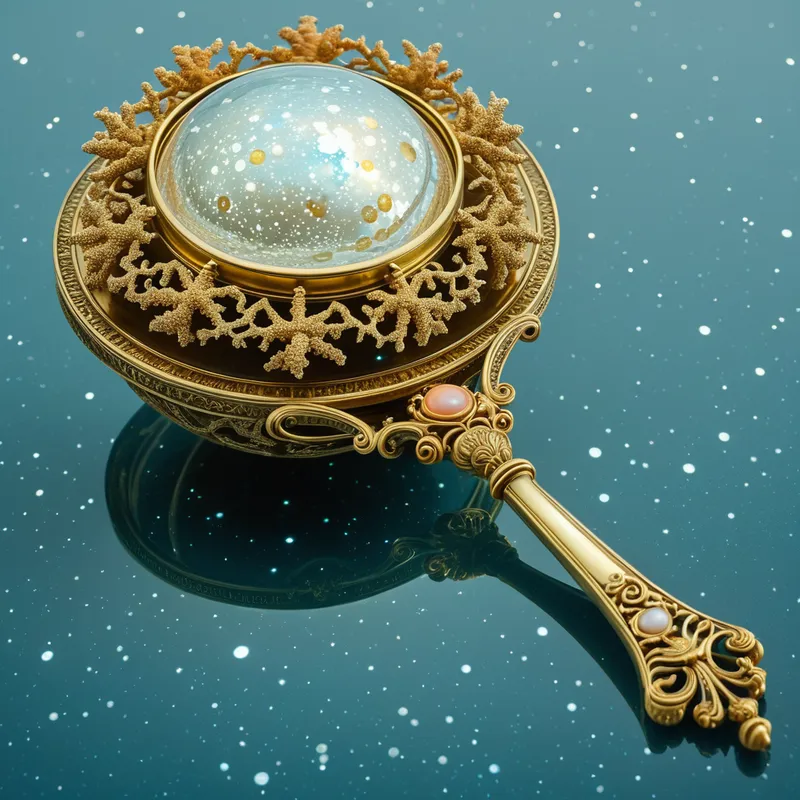
- Mirror — Represents La Sirene’s tool of divination and allure, reflecting not just surface appearance but the soul’s deepest truths and desires.
- Fish — Embodies the inhabitants of the unconscious realm, creatures of instinct, adaptability, and silent wisdom that serve La Sirene.
- Love — The driving force of the myth; La Sirene’s offer is one of divine, possessive love that seeks to merge two realms, soul and ego.
- Dream — The medium through which La Sirene’s call often travels, a liminal space between the conscious world and her watery domain.
- Journey — The central narrative action, representing the perilous psychic voyage from conscious awareness into the depths of the self.
- Sacrifice — The required price for transformation; the fisherman must sacrifice his surface-world identity, but fails to sacrifice his attachment to it.
- Siren — The core archetype of irresistible, often dangerous allure that calls one away from safety toward a transformative or destructive fate.
- Moon — Governs the tides and La Sirene’s power; symbolizes the reflective, intuitive, feminine principle that rules the nocturnal and emotional depths.
- Treasure — The promised reward in the deep—the psychological gold of wholeness, self-knowledge, and integrated power that lies within the unconscious.
- Song — The enchanting, rhythmic call of the unconscious, bypassing logic to speak directly to the soul’s deepest longings.