Kodansu Myth Meaning & Symbolism
A myth of a household chest that holds the spirits of memories, guarding the threshold between the mundane and the ancestral world.
The Tale of Kodansu
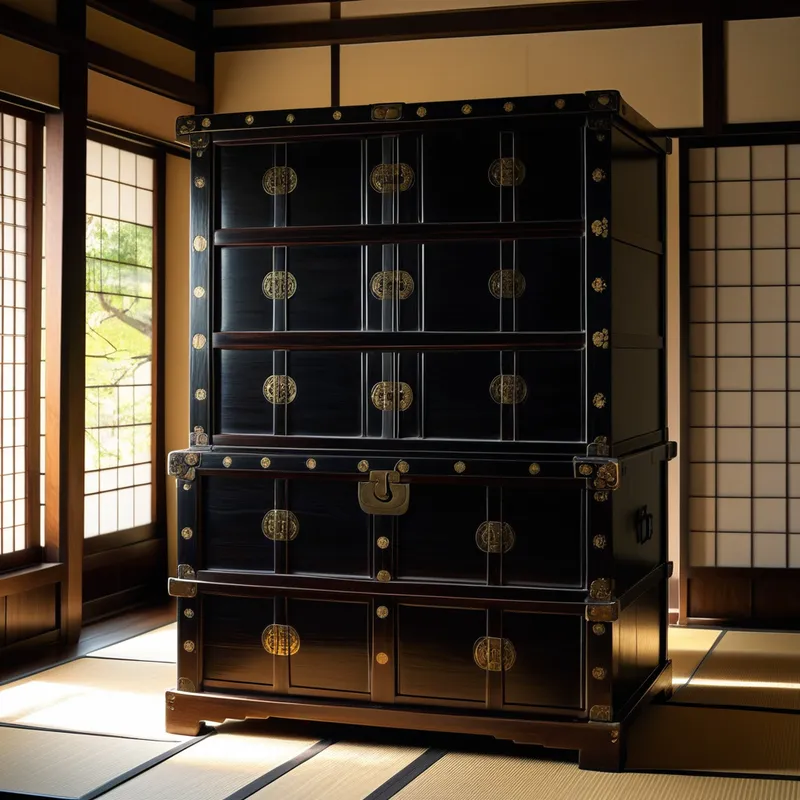
In the deep quiet of an old house, where the scent of aged cedar and tatami mingles with dust and memory, there stood a chest. It was no ordinary piece of furniture, this tansu, but the heart of the home. They called it Kodansu.
Long ago, in a time when the veil between the world of the living and the world of the kami was thin as rice paper, a master carpenter named Takeo was commissioned. His task was not to build a chest for silks or tea, but for a family’s soul. The matriarch, Lady Ayame, had felt the weight of generations pressing upon her. The laughter of children long grown, the whispered secrets of her grandmother, the silent grief of her father—all these memories swirled in the house like restless spirits, with no home to settle in.
Takeo worked not with plans, but with prayer. He selected wood from a single, ancient cedar that had watched over the family land for centuries. As he planed and joined, he did not merely craft drawers; he fashioned chambers. Into the iron of the ornate fittings, he hammered not just patterns, but silent invocations. When the final lacquer dried to a deep, mirror-like black, the chest did not sit empty. It waited.
Lady Ayame approached it on the night of the new moon. Into its top drawer, she placed a lock of her infant daughter’s hair, a pressed camellia from her wedding day, and a faded letter. As she closed the drawer, a soft sigh seemed to echo from within the wood, not of sadness, but of relief. The memory had found its shrine. One by one, the family brought their treasures: a son’s first calligraphy brush, a warrior’s broken tanto, a mother’s favorite hairpin. Each object, charged with emotion, was received. The Kodansu did not merely store them; it listened. It absorbed the joy, the pride, the love, and the sorrow.
Years turned. The house saw births and deaths, celebrations and silences. The Kodansu stood constant in the zashiki, its presence a quiet comfort. It was said that on still nights, one could hear faint echoes—a child’s giggle from the third drawer, a somber chant from the deep bottom one. It became the family’s silent confessor and their most sacred heirloom, a physical threshold where the past was not dead, but resting, honored, and alive.
Cultural Origins & Context
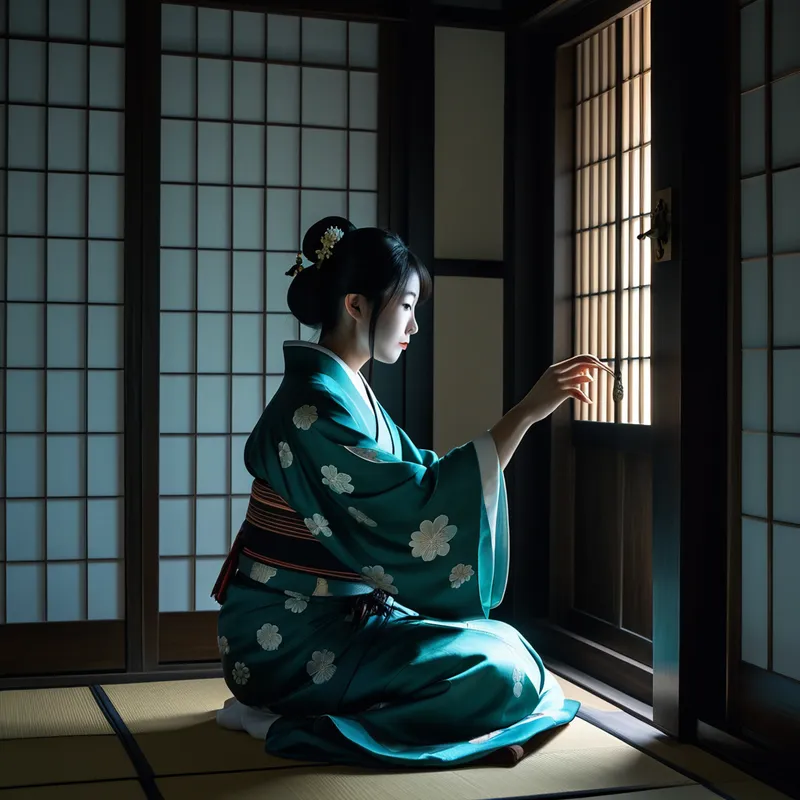
The myth of Kodansu springs from the profound Japanese relationship with objects, ancestors, and liminal space. While not a canonical tale from the Kojiki or Nihon Shoki, it is a mukashibanashi—a “tale of long ago”—that embodies core cultural principles. It was likely a story told within households, by grandparents to grandchildren, explaining the respectful, almost animistic presence felt in old family homes.
Its societal function was multifaceted. It served as an etiological myth, explaining why certain heirlooms were treated not as mere property, but as yorishiro, temporary vessels for spiritual presence. It reinforced the value of wabi-sabi—finding depth and beauty in the worn lacquer and patina of time. Most importantly, it codified the practice of ancestor veneration (sosen sūhai) into the domestic sphere. The Kodansu became a household yashiro, a private altar for memories, teaching that the past must be actively curated and ceremonially housed, lest its spirits become lost and mournful.
Symbolic Architecture
At its core, the Kodansu is a symbol of the psychic container. It represents the human psyche’s need—and ability—to create ordered, sacred space for the contents of experience. The chaotic flood of memory, emotion, and ancestral influence is given structure, compartmentalized into drawers of the soul.
The chest is not a prison for the past, but a sanctuary where memory is transformed from haunting ghost into guiding ancestor.
The tategu-shi, Takeo, symbolizes the conscious ego or the Self in its role as craftsman of this inner container. His deliberate, prayerful work mirrors the psychological labor of building a stable identity capable of holding complex histories. The objects placed inside are not neutral; they are tama—vessels of soul-stuff. A lock of hair holds the essence of a person; a broken sword holds a narrative of conflict and honor. To place them in the Kodansu is to perform a ritual of integration, acknowledging these fragments as part of the whole.
The chest itself, as a threshold, embodies the liminal. It stands between the mundane world of daily life (the tatami room) and the numinous world of the ancestors (the space within). Its closed drawers represent the unconscious, its contents known but not always visible. The act of opening a drawer is an act of conscious recollection, a deliberate dialogue with the inner world.

The Dreamer's Resonance
When the pattern of the Kodansu appears in modern dreams, it signals a profound process of psychic sorting and ancestral reckoning. The dreamer may find themselves in a familiar yet strange house, drawn to a specific cabinet or closet. The somatic sensation is often one of magnetic pull mixed with trepidation—a tightness in the chest, a quickening pulse.
To dream of a Kodansu overflowing, with drawers that won’t close or that spill strange contents, suggests a psyche overwhelmed by unprocessed memories or familial burdens. The unconscious is reporting that its container is strained. Conversely, dreaming of a locked or inaccessible Kodansu points to repressed history, a sealed chamber in the soul that holds potent, perhaps painful, material that the conscious mind is not yet ready to integrate. The dream may present the task of finding a key, or the anxiety of hearing whispers from behind the locked wood.
The most potent dream is opening a drawer and finding an object that resonates with deep, wordless meaning—a stone, a mirror, a threadbare cloth. This is the unconscious presenting a specific “memory-complex” for conscious attention. The psychological process is one of retrieval and acknowledgment. The dream-Kodansu functions as the psyche’s own archive, and the dream-ego is being tasked with the curatorial work of the soul.

Alchemical Translation
The myth of Kodansu models the alchemical process of coagulatio—the making solid, the creation of a vessel, and the sacred ordering of the prima materia of lived experience. For the modern individual, the “hero’s journey” is internal. We are all Lady Ayame, burdened by the swirling ghosts of personal and inherited past, and we are all Takeo, tasked with building a structure to hold it all.
The first stage is the recognition of chaos: the uncontained memories, the unresolved griefs, the silent expectations of lineage that float unattached in our inner space. The second is the conscious, prayerful construction of the container. This is the discipline of therapy, journaling, art, or ritual—any practice that creates a bounded, respectful space to hold psychic content. The third is the ritual deposition. We must consciously “place” our experiences inside. This is not repression, but sacred storage. We name our griefs, honor our joys, and acknowledge our ancestors’ stories as part of our matter.
Individuation is not about discarding the past, but about building a Kodansu sturdy enough to hold it all, thereby transforming ancestral weight into foundational wisdom.
The final triumph is not an empty chest, but a full one that sits in quiet resonance. The integrated individual carries their Kodansu within. The drawers may sometimes stick; certain memories may be visited less often than others. But there is no haunting, only presence. The past becomes a settled ancestor within, its voice not a shout from the shadows, but a whisper of guidance from a honored chamber. The psyche, like the old house, finds its quietude, its center held firm by the sacred, silent chest of the soul.
Associated Symbols
Explore related symbols from the CaleaDream lexicon: