Khosadam the Evil Mother Myth Meaning & Symbolism
A Siberian myth of a devouring maternal spirit, embodying the untamed wilderness and the shadow side of creation, challenged by shamanic courage.
The Tale of Khosadam the Evil Mother
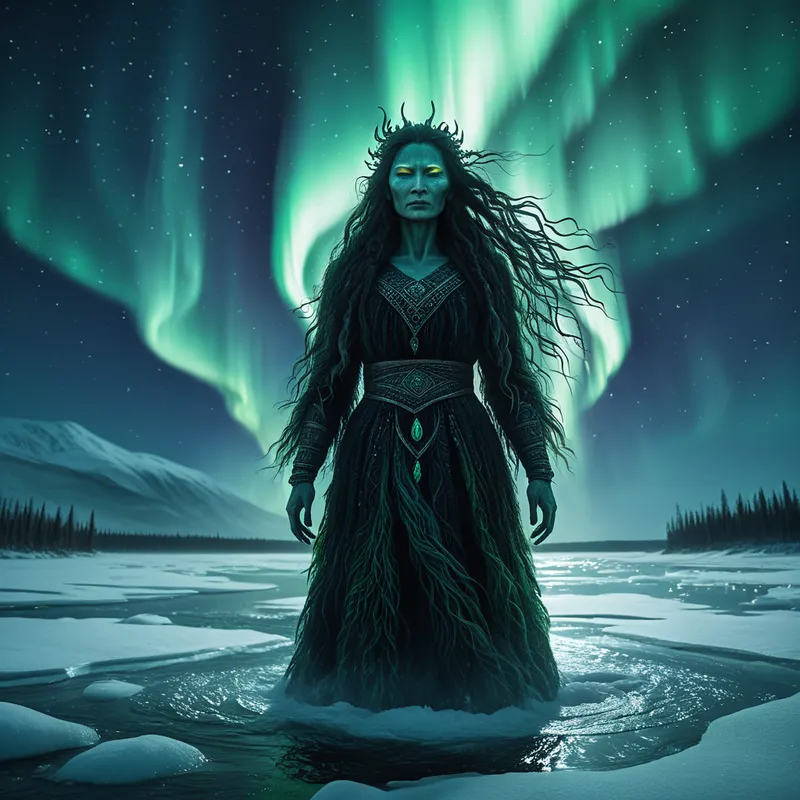
Listen, and let the fire’s crackle become the whisper of the taiga. In the time when the world was raw spirit and animals spoke in human tongues, there lived a force as ancient as the permafrost. She was not born but simply was, a presence in the deep woods where light dares not linger. They called her Khosadam.
Her realm was the threshold places: the bank of the river that runs black at midnight, the hollow at the base of the world-tree where snow never melts, the silent clearing where the northern lights drip their cold fire. She was the mother of absence, the womb that births hunger. To the people of the forest, she was a whispered warning. She craved not flesh, but the warm, bright essence of life itself—the soul’s vitality. She would appear as a woman of impossible beauty or a hag of profound sorrow, her voice the sound of ice cracking over a deep lake, luring the lonely, the arrogant, the grief-stricken away from the hearth’s circle.
One winter, when the sun was a memory and the cold bit to the bone, a young hunter, bold and full of pride, boasted he would bring back game from the forbidden valley—Khosadam’s own hunting ground. He ventured deep, past the warnings carved on trees. The forest grew silent, the very air thickening like sap. At the shore of a river that flowed without sound, he saw her. She was weaving a net from shadows and her own long, flowing hair, singing a lullaby that promised an end to all striving, an eternal, dreamless sleep.
He felt his strength seep into the frozen ground, his thoughts slowing. This was her embrace: not destruction, but a final, chilling consolation. But in his heart, a spark remained—a memory of his own true mother’s song, a tune of struggle and warmth. With a cry that was part terror, part defiance, he struck his shaman’s drum, not in complex ritual, but in a raw, pounding rhythm of life refusing to be stilled.
The sound was a shock in that silent realm. Khosadam recoiled, not in pain, but in recognition. The drum’s pulse was the heartbeat she had long ago forsaken, the rhythm of the living world outside her stagnant dominion. A bargain, unspoken, passed between them. He offered not his life, but his respect—an acknowledgment of her power, her place in the order of things. In return, she loosened her psychic grip. The river’s flow became audible again, a rush of water over stone. She did not vanish, but receded into the deeper woods, a watchful presence once more. The hunter stumbled home, forever chilled, forever wiser, carrying a truth as heavy as a stone: some mothers do not nurture, but test; some love is a hunger that must be faced, not fed.

Cultural Origins & Context
The myth of Khosadam springs from the rich, animistic tapestry of indigenous Siberian peoples, particularly the Yakut (Sakha) and other Paleo-Siberian cultures. In a world defined by an immense, often inhospitable landscape, the psychological and spiritual ecology is complex. Myths were not mere stories but living maps of the unseen world, transmitted orally by shamans and elders around campfires during the long, dark winters.
Khosadam belongs to a class of spirits known as Abasy or similar malevolent entities. Her specific role as a "mother" figure is crucial. In societies where survival was precarious, the archetype of the nurturing mother (Umai, etc.) was paramount. Khosadam represents the terrifying inverse—the mother who consumes, the wilderness that gives life but also takes it indiscriminately. This myth served as a societal safeguard, teaching boundaries, humility, and respect for the destructive potentials of the natural (and psychological) world. It explained unexplained deaths, mental afflictions, and the very real danger of getting lost, both physically and spiritually.
Symbolic Architecture
Khosadam is the ultimate Shadow aspect of the Great Mother archetype. She is not evil in a simplistic sense, but a representation of nature’s and the psyche’s impersonal, devouring side.
The Evil Mother is the psychic truth that the womb is also a tomb, that the source of life is inextricably linked to the pull of dissolution.
She symbolizes the unconscious in its raw, untransformed state—a seductive, enveloping force that promises peace through annihilation of the ego. The black, silent river is her domain, representing the psychic underworld, the flow of unconscious contents that can drown individual consciousness. The hunter’s journey is the ego’s foray into this unknown depth, often prompted by hubris or necessity. His salvation through the drum—the rhythmic, focused pulse—symbolizes the necessity of bringing a conscious, structuring principle (the Logos) to bear against the formless, all-assimilating pull of the unconscious (the Eros of death).
The Dreamer's Resonance
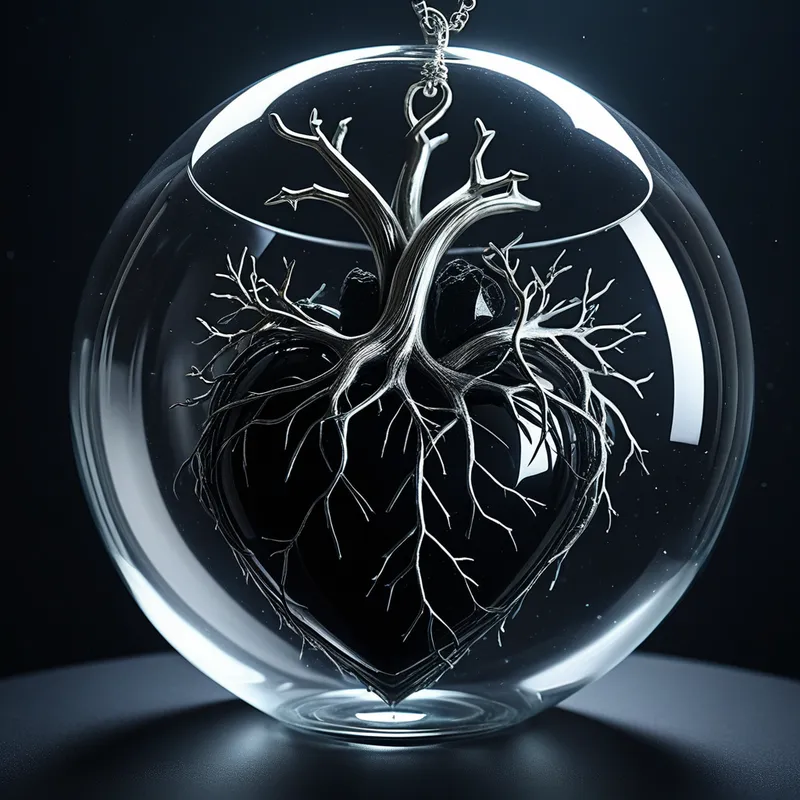
When the pattern of Khosadam stirs in modern dreams, it often manifests as encounters with a powerfully feminine figure who is simultaneously alluring and terrifying. She may appear as a suffocating mother, a seductive lover who drains vitality, or a majestic but cold natural force (a storm, an ocean). The dreamer typically experiences a somatic pull—a feeling of being paralyzed, drained of energy, or irresistibly drawn into a deep body of water, quicksand, or a dark forest.
Psychologically, this signals a profound encounter with the personal and collective shadow of the maternal. It may point to enmeshment, a "smothering" relationship dynamic, or more deeply, a struggle with passive nihilism, depression, or an addiction that promises solace but consumes life. The dream is an alarm from the psyche: a part of the soul is being lured into a state of psychic entropy. The crucial element is the feeling of consolation within the annihilation—the danger is not perceived as a monster, but as a release. The dreamer is at the threshold of surrendering their individuation journey to the comfort of unconsciousness.
Alchemical Translation
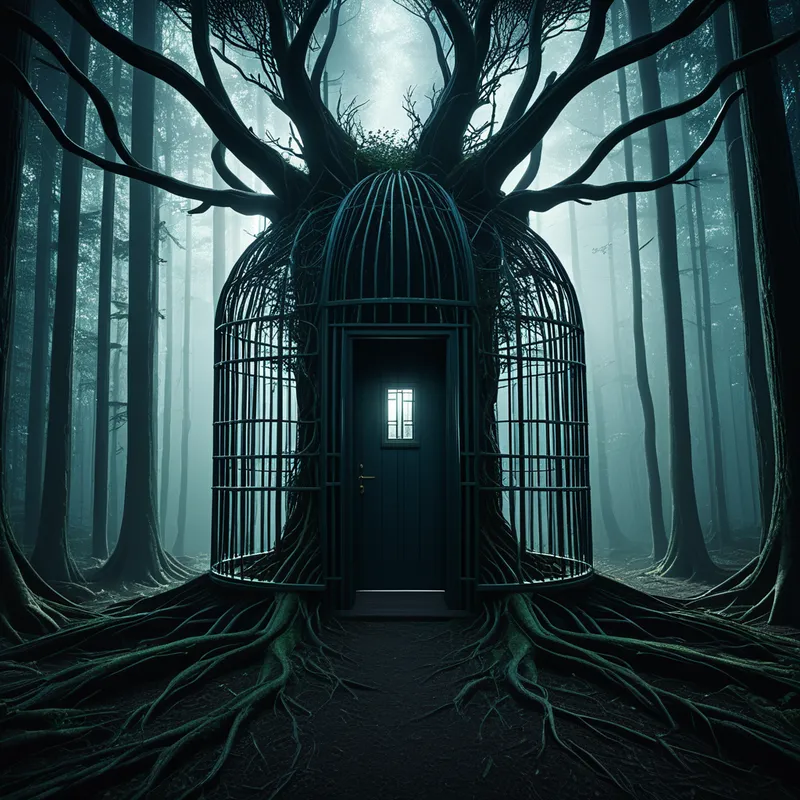
The myth of Khosadam models the nigredo phase of psychic transmutation—the confrontation with the black, chaotic prima materia of the soul. The hero’s task is not to slay the Evil Mother, but to face her, acknowledge her power, and establish a boundary.
Individuation requires not the death of the Great Mother, but the differentiation of the Self from her encompassing embrace. One must be devoured in symbol to avoid being consumed in reality.
The alchemical operation here is separatio—the separation of the living spark of consciousness from the undifferentiated mass of the unconscious. The drumbeat is the rhythmic, persevering work of consciousness—therapy, creative expression, ritual, disciplined introspection—that provides a container for this terrifying encounter. By offering "respect" (conscious recognition) instead of his life (total identification), the hunter performs a sacred transaction. He integrates the knowledge of this shadow without being identified with it. Khosadam, contained and recognized, loses her autonomous, possessive power and becomes part of the psychic ecology—a respected but bounded force. The cold he carries home is the enduring awareness of mortality and the shadow, the necessary price for a consciousness that is truly one’s own.
Associated Symbols
Explore related symbols from the CaleaDream lexicon:
- Mother — The foundational archetype of which Khosadam is the shadow aspect, representing the source of life that also holds the potential for psychic engulfment and dissolution.
- Shadow — Khosadam is a quintessential embodiment of the Shadow, the repressed, terrifying, and often seductive aspects of the unconscious self that must be confronted.
- Water — The black, silent river of her domain symbolizes the deep, unconscious psyche, a fluid realm of emotion and instinct that can nourish or drown the individual ego.
- Forest — Represents the dense, untamed wilderness of the unconscious mind, a place of both potential resources and profound danger where one can easily become lost.
- Door — The threshold the hunter crosses into Khosadam's realm, symbolizing the conscious decision to enter into a confrontation with the shadowy contents of the psyche.
- Drum — The shaman's instrument represents the rhythmic, grounding pulse of consciousness and will, the tool that structures chaos and defends the ego's integrity.
- Wound — The psychic injury of hubris or deep need that often compels the journey to the shadow mother, and the lasting mark of wisdom left by the encounter.
- Journey — The essential narrative structure of the myth, mapping the descent into the unconscious, the confrontation, and the return with hard-won knowledge.
- Death — Not literal death, but the symbolic death of ego-inflation or naive innocence that is offered by Khosadam's embrace, a prerequisite for transformation.
- Rebirth — The potential outcome of surviving the encounter, where the individual is "reborn" with a stronger, more bounded sense of self, having integrated the shadow.
- Mother Complex — The modern psychological pattern directly related to Khosadam, where an individual's relationship to the maternal is characterized by engulfment, fear, and a loss of autonomy.
- Smothering — The specific action of the Khosadam archetype, depicting a love or care that extinguishes individuality and vitality under the guise of protection or consolation.