Kartikeya Myth Meaning & Symbolism
The story of the celestial warrior born from divine fire to vanquish chaos, embodying the integration of opposites and the triumph of focused will.
The Tale of Kartikeya
Listen, and hear the tale of the one born of fire, the unifier of the shattered, the slayer of the unassailable.
The cosmos groaned under a tyranny of thought. A demon, Taraka, had won a boon: he could be killed only by a son of Shiva. But Shiva, lost in the infinite depths of meditation, was beyond the reach of creation. The world was paralyzed; desire, action, and order were stifled. The gods, their light dimming, wept in desperation. Their lament reached the ear of Vishnu, who decreed a solution as terrible as it was necessary: only the seed of Shiva, ignited by the fire of passion, could produce the savior.
The task fell to Agni. He transformed into a dove and flew into the icy, silent mountain where Shiva sat unmoving. He could not stir the god. It was Parvati, Shiva’s eternal consort, whose love and longing became the catalyst. Her tapas (fervent austerity) was a heat that matched Agni’s own. In a moment of cosmic union, Shiva’s potent seed was released. It was a force so fierce it threatened to burn the world. Agni, in his dove form, caught it, but its brilliance and heat were unbearable even for the fire god. He cast it into the sacred waters of the Ganga.
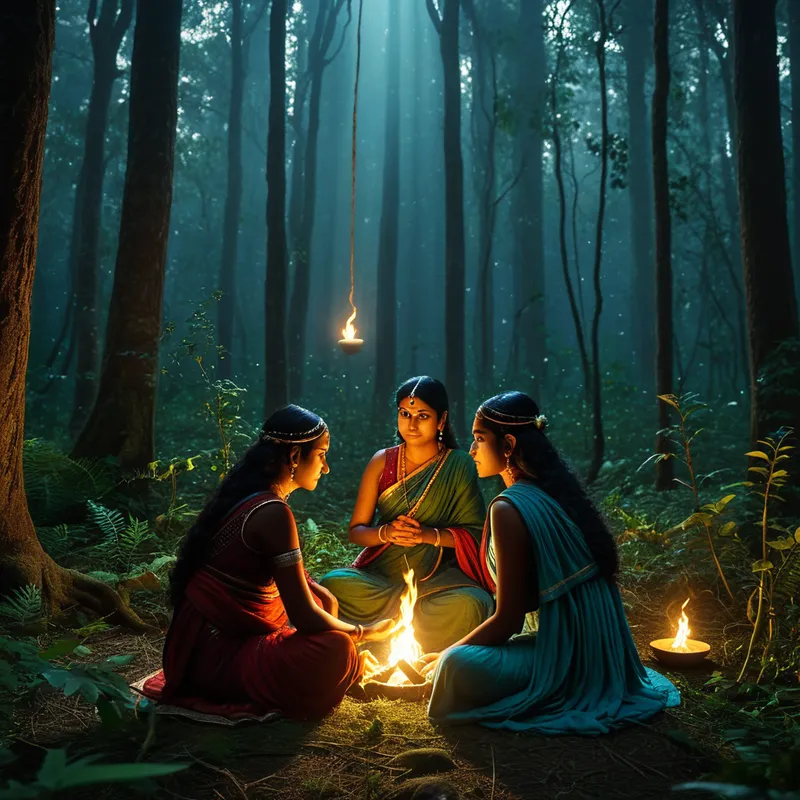
The river, too, could not hold it. The seed, now a blazing embryo, was carried by Ganga’s currents until it came to rest in a forest of reeds by a lake. There, in a bed of soft, golden shara grass, it incubated. From this fiery seed, six sparks emerged, each glowing with divine life. They were found by the six Krittikas, who each longed for a child. With maternal fervor, each star-mother nursed one spark.
And then, a miracle of synthesis. The six radiant infants, nurtured by six mothers, fused into one magnificent being with six heads and twelve arms—a single consciousness born of multiple origins. He was Kartikeya</abikeya, “son of the Krittikas,” and Shanmukha, “the six-faced one.”
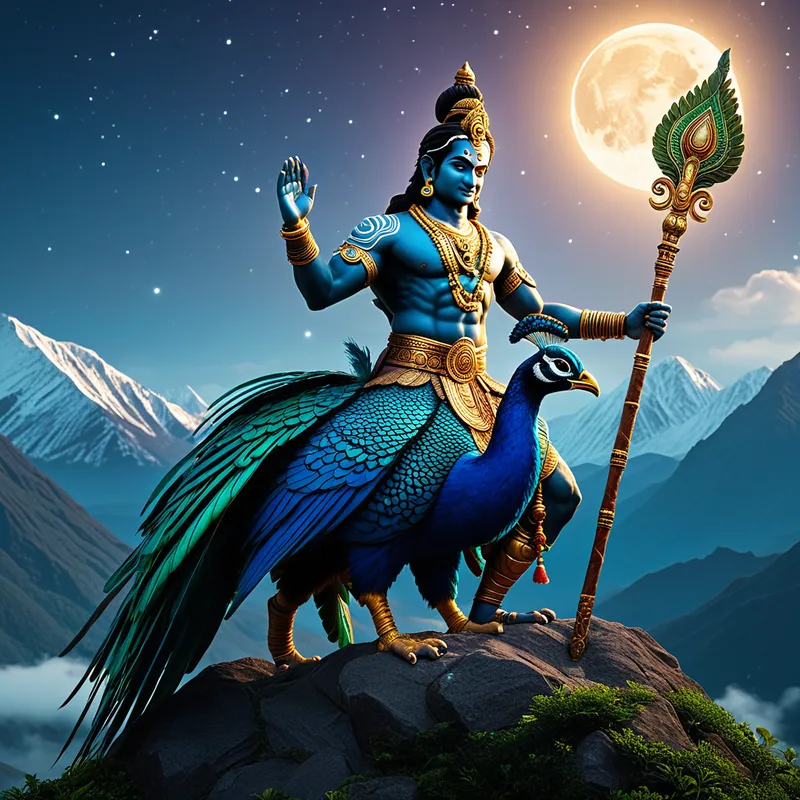
He grew in an instant, a youth of unbearable beauty and power. The gods presented him with his weapons: a radiant spear, the Vel, given by his mother Parvati, which was the very embodiment of her shakti (power). Mounted on a peacock, a creature that transmutes poison into the splendor of its feathers, Kartikeya led the celestial armies. The battle with Taraka was not merely physical. Taraka was the demon of scattering, of obsessive, divisive thought. Kartikeya, the integrated one, the child of fire, water, earth, and star-mothers, raised his Vel. It flew, a beam of pure, focused intent, and pierced the heart of the demon. The tyranny of fractured mind was ended. The cosmos breathed again, and order was restored by the one who was himself the resolution of all contradiction.
Cultural Origins & Context
The myth of Kartikeya is ancient, with roots stretching back to the Vedic corpus where a god named Skanda is mentioned. His story crystallized in the later Puranic literature, particularly the Shiva Purana and the Tirumurukāṟṟuppaṭai. In the Tamil tradition of South India, he is ardently worshipped as Murugan, a deity of such intimate devotion that his myths are sung in street processions and whispered in hilltop temples.
This was not merely a story for priests. It was a societal narrative for warriors, kings, and seekers. It functioned as a charter myth for valor and just rule, but also, profoundly, for the reconciliation of diverse cultural streams—the Sanskritic traditions of the north and the vibrant Dravidian traditions of the south. Kartikeya/Murugan became the unifying symbol, a divine son claimed by multiple mothers, nourished by different landscapes, yet singular in his purpose. His myth provided a template for understanding how a coherent identity and mission can emerge from a complex, even chaotic, origin.
Symbolic Architecture
Kartikeya’s birth is not a simple nativity; it is an alchemical procedure for producing consciousness. Shiva represents pure, undifferentiated awareness. Parvati represents the dynamic force of desire and relationship. Their union is the necessary tension between transcendence and immanence. The seed is the latent potential for a new psychic reality, but it is too raw, too potent to enter the world directly.
The hero is not born from convention, but from the dangerous and sacred fusion of opposites that the conventional world cannot hold.
Agni, the transformative fire, and Ganga, the purifying flow of consciousness, are the first vessels that temper this seed. The six Krittikas represent the stellar, archetypal patterns—the multiple influences, “mothers,” and facets of experience that nurture the nascent self. The fusion into a six-headed form is the ultimate symbol of integration. He is not a fragmented being, but a unified one with a panoramic consciousness, able to see in all directions, to hold multiple perspectives within one will.
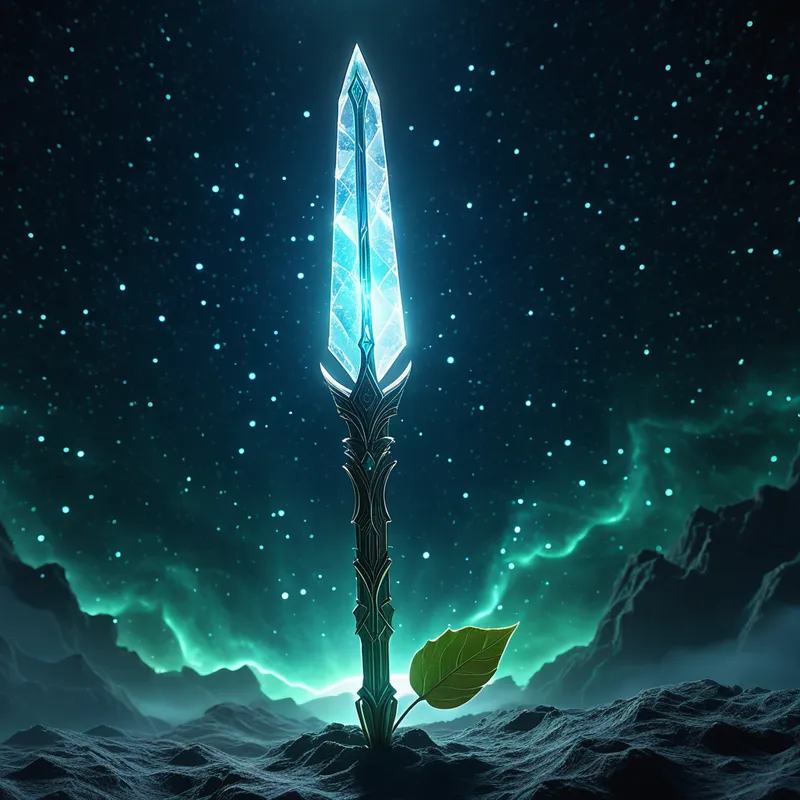
His mount, the peacock, is a master symbol of alchemy. It thrives on snakes (symbols of primal, instinctual energy) and transforms their venom into the breathtaking beauty of its plumage. This mirrors Kartikeya’s role: he does not destroy the demonic (the unconscious, chaotic forces) out of hatred, but in order to transmute their energy into the order and beauty of a conscious life. The Vel is the piercing instrument of this transformation—it is not a sword that slashes, but a spear that penetrates to the core. It is focused insight, the sharp point of a fully integrated will that can cut through confusion and illusion.
The Dreamer's Resonance
When the pattern of Kartikeya stirs in the modern psyche, it often manifests in dreams of powerful synthesis or urgent, focused mission. One might dream of a radiant, unignorable child appearing in a place of natural elements—a forest, a riverbank. This child feels intensely one’s own, yet also profoundly other, representing a nascent, potent aspect of the self demanding recognition and integration.
Alternatively, the dream may feature the search for, or the wielding of, a singular tool or weapon—a key, a laser, a pen that writes with light. This is the Vel archetype: the discovery of one’s unique instrument of purpose. Somaticly, this process can feel like a gathering of scattered energies, a centering in the solar plexus, followed by a sensation of piercing clarity in the forehead or mind. The psychological process is the move from a state of being “Taraka-possessed”—scattered, paralyzed by over-analysis or conflicting inner voices—toward a consolidated, operational self. The dreamer is undergoing the birth of a conscious will capable of decisive action.

Alchemical Translation
The myth of Kartikeya is a precise map for the Jungian process of individuation. The starting point is the “Shiva state”: a psychic condition of detached, unconscious potential, where one is entranced by the inner void but incapable of worldly creation or action. The “Parvati principle”—the longing for relationship, for manifestation, for life—must engage in its own tapas to initiate the process.
Individuation is the fiery birth of a conscious agent from the marriage of our deepest stillness and our most potent desire.
The ensuing journey—the seed passing through Agni and Ganga—is the necessary suffering and purification of this new potential. Our latent talents or callings are often “too hot to handle” and must be tempered by life’s trials (fire) and the flow of experience (water). The nurturing by the “six Krittikas” symbolizes integrating the diverse, often contradictory, influences from our personal history, culture, and inner archetypes. We are raised by many mothers: our ancestors, our teachers, our wounds, our joys.
The fusion into Shanmukha is the critical act of psychic integration. It is the moment we stop seeing our multiple selves as warring factions and begin to see them as facets of a single, multifaceted consciousness. From this integrated center, we receive our Vel—our focused vocation, our clarified intent. The final battle is internal. We must identify and confront our personal “Taraka”—the demon of procrastination, of fear, of addictive distraction, of incoherence—and pierce it with the spear of our synthesized will. The peacock mount reveals the outcome: the chaotic energies we once feared are now the very substance that fuels our unique beauty and expression in the world. We ride upon what we have transformed.
Associated Symbols
Explore related symbols from the CaleaDream lexicon: