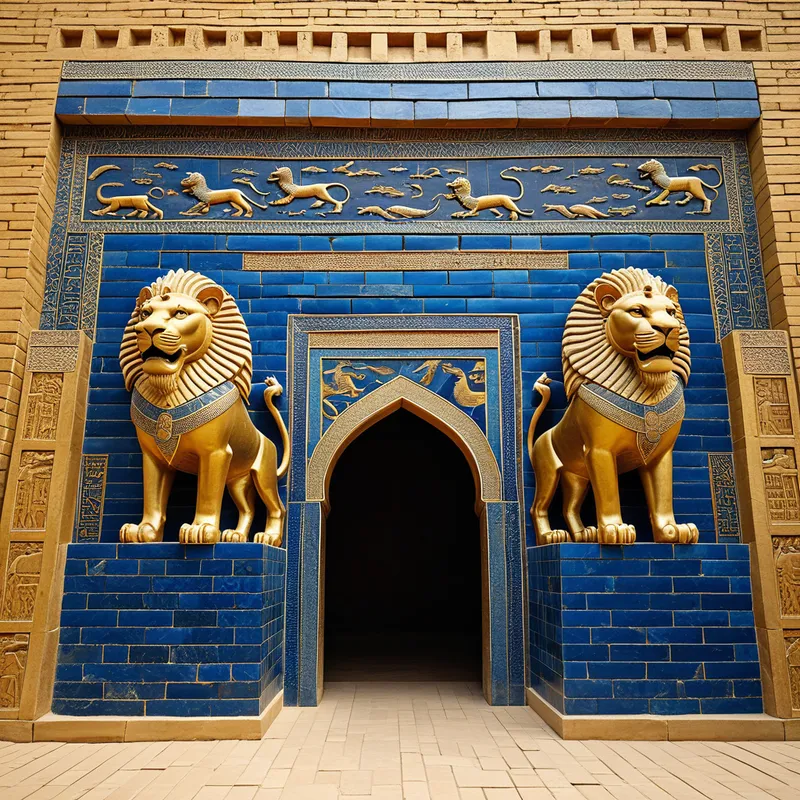
Ishtar Gate Myth Meaning & Symbolism
The story of a goddess's descent through a celestial gate, a myth of sovereignty, loss, and triumphant return that shaped the soul of Babylon.
The Tale of the Ishtar Gate
Hear now the tale of the threshold where heaven met earth, the story sung when the twin rivers ran high and the scent of cedar filled the royal courts. It begins not with stone and glaze, but with a silence in the world.
The Great Goddess Ishtar, she of the morning and evening star, she whose voice was the battle-cry and the lover’s sigh, turned her gaze from the high places. The songs in the temples grew faint; the fire in the hearths burned low. A stillness, cold and deep, settled over the land. For Ishtar’s heart had been pierced by a thorn only the depths could provide: her beloved, the shepherd-king Tammuz, lay lifeless in the dusty embrace of Kur.
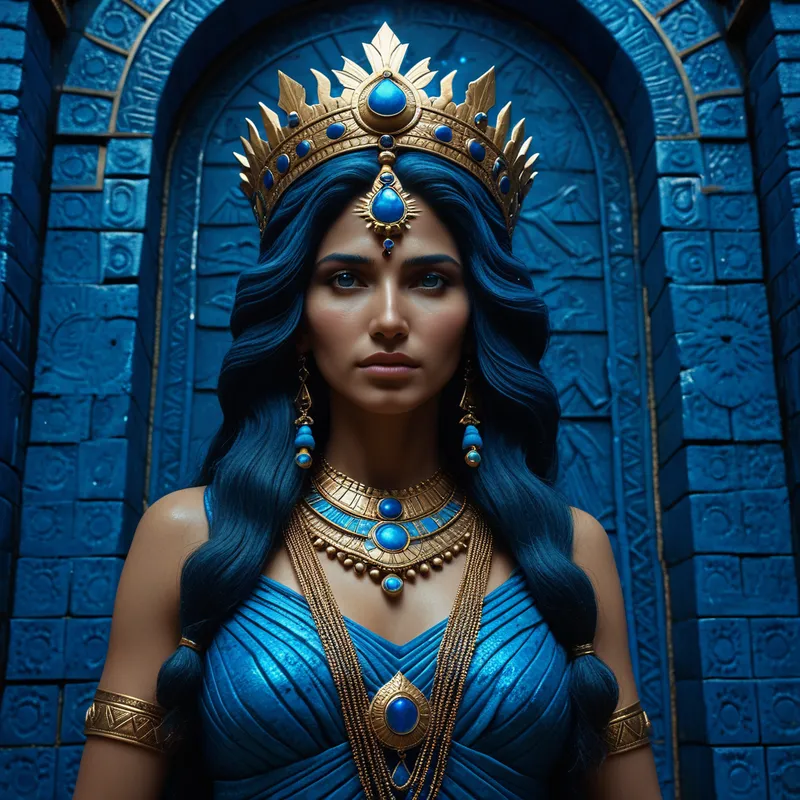
Donning her robes of sovereignty and her crown of the seven celestial spheres, she fastened her girdle of power—each stone a story, each jewel a law. Her resolve was a furnace. She would descend. She would pass the gate that no one passes lightly, the gate that swings only inward for the living.
To the foundation of the world she went, to the place where the blue-glazed bricks of heaven give way to the sunless clay of the underworld. Before her stood the Gate of Ishtar, not as men would later build it in mimicry, but as it exists in the realm of archetypes: immense, terrifying, and beautiful. Its lintel was carved with the forms of her sacred beasts—the lion of her war, the bull of her storm, the Mushhushshu-dragon of her primordial might. They were not mere decorations; they were the guardians of the threshold, the living sigils of her own power, now turned to face her.
The gatekeeper, Neti, with eyes like cold river stones, challenged her. “Strip yourself,” he intoned, the voice of the deep earth. “For nothing of the upper world may enter here unchanged.” At each of the seven gates, she obeyed. The crown of heaven was lifted from her brow. The lapis necklace of the firmament was unclasped. The girdle of her sovereignty was undone. Robe, bracelet, anklet—each emblem of her divine identity was taken, until she stood in the naked, shivering truth of her being: a goddess stripped of her domains, a queen without her kingdom, a soul facing its own essence.
She entered the land of dust and silence, where Ereshkigal ruled from a throne of despair. The confrontation was not of swords, but of mirrored desolation. Ishtar’s rage met Ereshkigal’s bottomless grief. In that clash, the goddess of life was struck down, hung upon a hook, a lifeless lump of clay. And above, all creation ceased. The bull did not mount the cow, the man did not touch his wife, the seed did not break its shell. The world was a painted relief, beautiful and utterly still.
But the story does not end in the dust. The gods, feeling the paralysis of a world without desire or conflict, fashioned a being of pure cunning, Asushunamir. This creature descended, speaking words of honeyed sympathy to Ereshkigal, tricking her into granting the waters of life. Sprinkled upon Ishtar, the goddess stirred. And gate by gate, her adornments were returned. The crown, the necklace, the girdle—each was restored, but now they were different. They had known the dark. They carried the memory of the hook.
She emerged, and with her came Tammuz, reborn for a season. The gates of Babylon, when built, were painted that brilliant, sacred blue—the color of the restored heavens, the color of depth remembered. The lions upon them now walked with the knowledge of the abyss they guarded. The Gate was no longer just an entrance; it was the story of a return.
Cultural Origins & Context
This myth, part of the epic known as The Descent of Ishtar, was not mere entertainment. It was the psychic and theological bedrock of Babylonian civilization, recited during the sacred Akitu festival. This ritual, centered on the king’s symbolic humiliation and re-investiture, directly mirrored Ishtar’s descent and return, ensuring the fertility of the land and the legitimacy of the ruler.
The physical Ishtar Gate, built by Nebuchadnezzar II in the 6th century BCE, was a monumental act of mythic architecture. It was a theophany—a showing-forth of the divine story in brick and glaze. Every citizen, priest, foreign envoy, and soldier who passed through its towering blue bulk was re-enacting the goddess’s journey, moving from the profane world into the sacred heart of the city, under the gaze of the very powers that governed life, death, and renewal. The myth was the soul; the gate was its body, ensuring the cosmic order was literally built into the city’s foundations.
Symbolic Architecture
The myth’s power lies in its stark architecture of the soul. The Ishtar Gate is the ultimate symbol of the threshold. It represents the boundary between known and unknown, conscious and unconscious, persona and shadow.
To gain true sovereignty, one must first consent to be stripped of all its symbols.
Ishtar’s adornments are not just jewelry; they are the complex identities we clothe ourselves in—our roles as professional, parent, hero, victim. The seven gates are the successive layers of ego-defence and self-image that must be surrendered to confront the raw, often terrifying, reality of the inner self (Ereshkigal). The underworld is not a place of punishment, but the realm of the un-lived, the repressed, the forgotten—and the source of all genuine renewal.
Her confrontation with Ereshkigal is the psyche’s civil war, where the bright, striving consciousness meets its own buried anguish and nihilism. The stasis that follows is a necessary death, a psychic winter. The rescue, facilitated by the cunning, genderless Asushunamir, signifies that redemption comes not from brute force, but from a new kind of intelligence—a trickster’s wisdom that can negotiate with our own darkness.
The Dreamer's Resonance
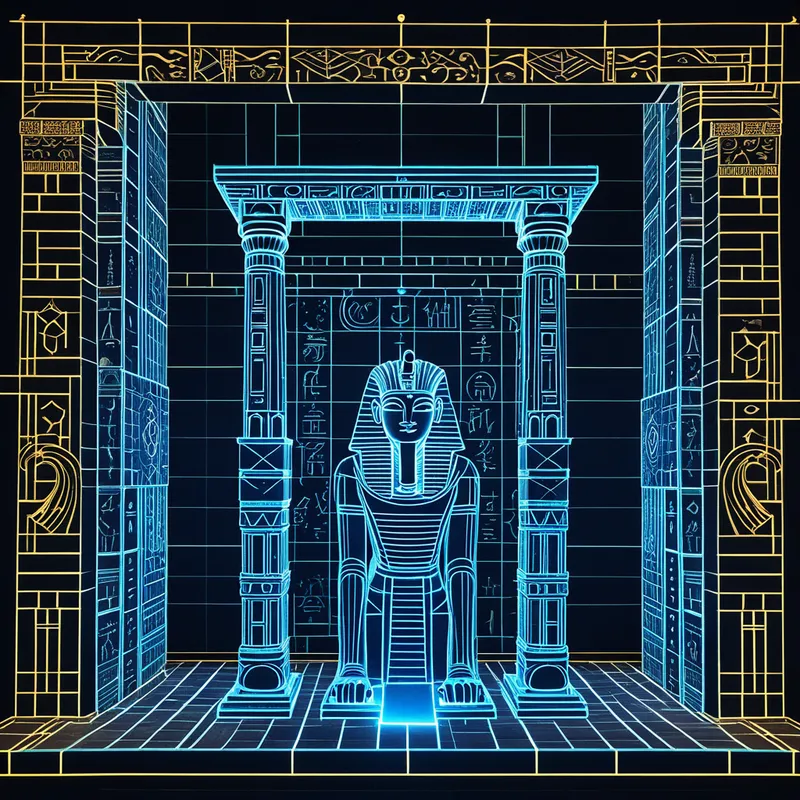
When this myth stirs in the modern dreamer, it announces a profound initiation. To dream of a magnificent, imposing gate—especially one of blue stone or with animal guardians—is to stand at a psychic threshold. The somatic feeling is often one of awe mixed with dread, a tightening in the chest before a passage one both desires and fears.
Dreams of being stripped, of losing badges of office, wedding rings, or familiar clothing, echo Ishtar’s ordeal. This is the psyche preparing for a descent, forcing a confrontation with what lies beneath the social self. A dream of being paralyzed or turned to stone mirrors the cosmic stasis, indicating a life where growth has stopped because a deep, perhaps painful, part of the self has been walled off in the personal “Kur.” The return journey, the re-clothing, often manifests as dreams of finding lost heirlooms or receiving new, significant garments—symbols of a self being reintegrated at a higher level of complexity.
Alchemical Translation
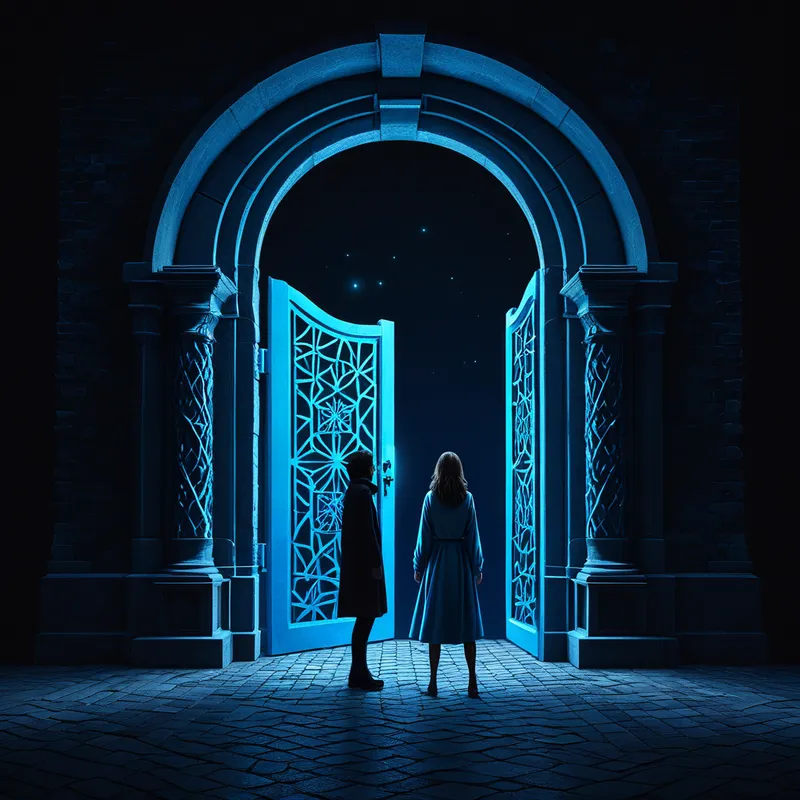
For the individual, the Ishtar Gate myth is a precise map of individuation. The alchemical process begins with the nigredo—the blackening. This is the descent: the voluntary or involuntary collapse of our cherished identities (job loss, relationship end, crisis of meaning). We are stripped at the gates of our own despair.
The gold of the spirit is only found by first consenting to the dissolution of all that is merely gilt.
The confrontation with the inner Ereshkigal is the mortificatio—the killing. It is facing our fundamental loneliness, rage, or grief without the usual buffers. This death is essential. The stillness that follows is not failure, but the albedo—the whitening, a purification in the void.
The cunning rescue represents the emergence of a new psychic function, often the inferior function in Jungian terms, which can navigate where the dominant ego cannot. Finally, the return and re-investiture are the rubedo—the reddening, the achievement of the Philosopher’s Stone. The reclaimed crown is no longer a symbol of naive power-over, but of hard-won sovereignty-of-self. The individual who has passed this gate does not simply return to the old world; they transform it. They build their own “Babylon,” a conscious life structure where the threshold between light and dark is acknowledged, sacred, and built right into the foundation. They become, in essence, a living gate.
Associated Symbols
Explore related symbols from the CaleaDream lexicon: