Ilya Muromets and Nightingale the Robber
A legendary Slavic hero battles a monstrous bandit whose whistle can kill, in a tale of strength, cunning, and the triumph of good over evil.
The Tale of Ilya Muromets and Nightingale the Robber
For thirty-three years, [Ilya Muromets](/myths/ilya-muromets “Myth from Slavic culture.”/) sat motionless on the stove in his peasant hut, his legs refusing to bear him. He was a vessel of potential strength, waiting to be filled. His transformation began not with a quest, but with a visitation: three ancient wanderers, figures of profound and dusty wisdom, who gave him a draught of honey-wine. With that sip, the paralysis shattered. He rose, his newfound strength humming in his bones like a plucked bowstring, and received a blessing and a warning: he was to serve the city of Kyiv and its prince, Vladimir the Fair Sun, but he must never shed the blood of a fellow Christian.
Thus began his journey, a pilgrimage of power seeking its purpose. He rode his faithful steed, a shaggy-maned hero of a horse, toward Kyiv. But the direct road, the straight path of good intention, was barred. It was held by a terror that had frozen the land. In the cursed marshes of the Bryansk forests, where the road crossed the Smorodina River—a name whispering of putrescence and decay—dwelt Solovei-Razboynik, the Nightingale the Robber.
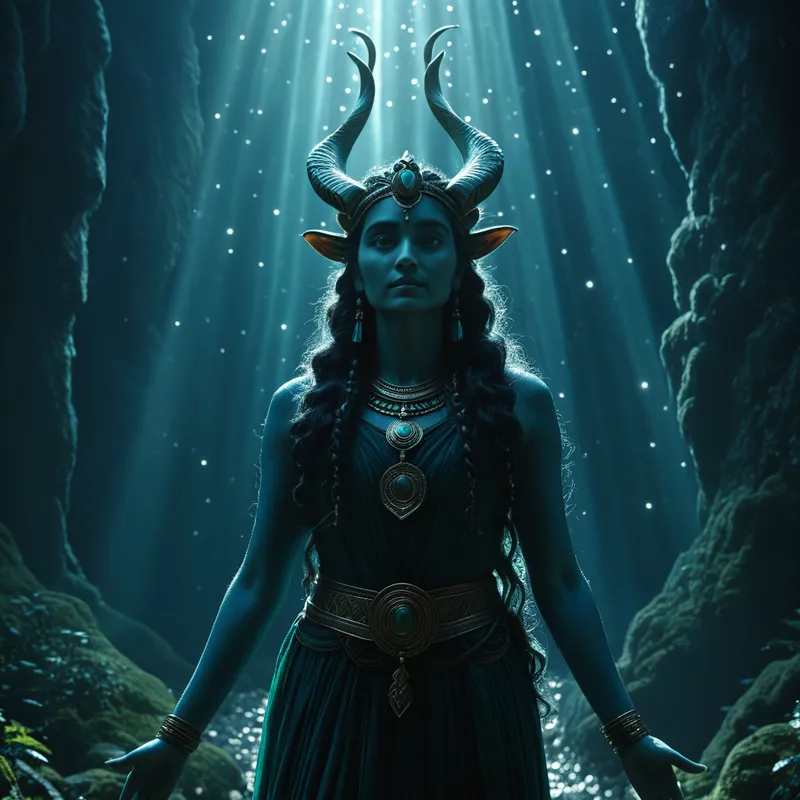
Nightingale was no ordinary bandit. He was a creature of the liminal wilds, part man, part bird, perhaps part ancient chthonic spirit cast out from an older order. His power resided not in a sword, but in a whistle. From his nest, built high in seven oak trees, he could unleash a sonic devastation. His first whistle would stun a man, his second would rip the life from his body, and a third would level the forest itself. He was the embodiment of paralyzing fear, the monstrous guardian of a threshold that kept the land fragmented and the people isolated.
Ilya, undaunted, approached [the river](/myths/the-river “Myth from Buddhist culture.”/) crossing. He ignored the pleas of local folk who warned him of certain [death](/myths/death “Myth from Tarot culture.”/). When Nightingale saw the lone rider, he filled his lungs and loosed his terrible whistle. [The force](/myths/the-force “Myth from Science Fiction culture.”/) of it bent the grass and shook the trees, but Ilya Muromets only swayed in his saddle, his heart steady. The second, soul-rending whistle came, but Ilya’s spirit, forged in thirty-three years of stillness, did not flinch. Enraged, Nightingale prepared a third blast, but Ilya was done listening. He fitted a red-hot arrow to his mighty bow, a weapon of sun-fire against bird-cry, and let it fly. It struck true, tearing through the monster’s eye and tumbling him from his arboreal throne.
Ilya did not kill him there. Instead, he bound the wounded creature to his stirrup, a living trophy and a testament to broken terror. He dragged the whimpering monster to the golden-domed halls of Kyiv. Before Prince Vladimir and his doubting court, Ilya commanded Nightingale to whistle, to prove the truth of his tale. The courtiers scoffed, until Ilya, with a wisdom beyond brute force, told the monster to whistle at half-strength. Even then, the scaled-down blast shattered windows, shook the palace foundations, and sent the nobles sprawling. Only Ilya and the prince, protected by the hero’s unwavering presence, remained standing. With the monster’s power proven and thus fully mastered, Ilya Muromets took him to the courtyard and ended his reign of sonic terror, beheading him with a single stroke. The straight road to Kyiv was cleared, and the hero’s legend was sealed in the collective breath of a relieved people.
Cultural Origins & Context
The tale of Ilya and Nightingale is a foundational bylina, an oral epic song that crystallized between the 11th and 16th centuries in Kievan Rus’ and later in Muscovite Russia. Ilya Muromets is the central figure of the Kievan cycle, a bogatyr, but uniquely, he is a peasant hero. His origins are not princely; his authority comes from a divine blessing and his own immeasurable strength applied in service to the community.
The myth operates on a historical-geographical axis. The “straight road to Kyiv” was more than a path; it was a metaphor for political unity and safe passage in a fractured landscape of principalities and wild frontiers. Nightingale the Robber represents the very real dangers that severed these connections—banditry, hostile tribes, and the untamed, animistic power of the deep forests that resisted Christianization and princely control. His dwelling at the Smorodina River is deeply significant; this “Filthy River” is a recurring threshold in Slavic folklore, often the border between [the world](/myths/the-world “Myth from Tarot culture.”/) of the living and the world of the dead (Nav’). Nightingale is thus a guardian of a psychic and physical borderland.
Symbolic Architecture
The confrontation is a masterful depiction of different orders of power clashing. Nightingale’s power is chaotic, natural, and psychological. It is the scream of unchecked instinct, the panic attack that freezes the [body](/symbols/body “Symbol: The body in dreams often symbolizes the dreamer’s self-identity, personal health, and the relationship they have with their physical existence.”/), the propaganda or rumor that paralyzes a [community](/symbols/community “Symbol: Community in dreams symbolizes connection, support, and the need for belonging.”/). It is sound without substance, [terror](/symbols/terror “Symbol: An overwhelming, primal fear that paralyzes and signals extreme threat, often linked to survival instincts or deep psychological trauma.”/) without form.
Ilya’s power is of a different [archetype](/symbols/archetype “Symbol: A universal, primordial pattern or prototype in the collective unconscious that shapes human experience, behavior, and creative expression.”/). It is silent, focused, and embodied. His thirty-three years of [stillness](/symbols/stillness “Symbol: A profound absence of motion or sound, often representing inner peace, creative potential, or existential pause in artistic contexts.”/) are not a void, but a [gestation](/symbols/gestation “Symbol: A period of development and preparation before a significant birth or emergence, symbolizing potential, transformation, and the journey toward manifestation.”/). His [strength](/symbols/strength “Symbol: ‘Strength’ symbolizes resilience, courage, and the ability to overcome challenges.”/) is not merely physical; it is the strength of immense patience and a will that has been compressed into [diamond](/symbols/diamond “Symbol: Diamonds symbolize purity, strength, and unyielding love, often representing wealth and high status.”/)-like [density](/symbols/density “Symbol: Represents the concentration of matter, energy, or meaning in a given space, often symbolizing complexity, weight, or substance.”/). His [weapon](/symbols/weapon “Symbol: A weapon in dreams often symbolizes power, aggression, and the need for protection or defense.”/) of [choice](/symbols/choice “Symbol: The concept of choice often embodies decision-making, freedom, and the multitude of paths available in life.”/) is telling: the [arrow](/symbols/arrow “Symbol: An arrow often symbolizes direction, purpose, and the pursuit of goals, representing both the journey and the destination.”/). It is directed [intention](/symbols/intention “Symbol: Intention represents the clarity of purpose and direction in one’s life and can symbolize motivation and commitment within a dream context.”/), a focused point of [consciousness](/symbols/consciousness “Symbol: Consciousness represents the state of awareness and perception, encompassing thoughts, feelings, and experiences.”/) and force that travels silently to pierce the [source](/symbols/source “Symbol: The origin point of something, often representing beginnings, nourishment, or the fundamental cause behind phenomena.”/) of noisy [chaos](/symbols/chaos “Symbol: In Arts & Music, chaos represents raw creative potential, uncontrolled expression, and the breakdown of order to forge new artistic forms.”/).
The hero does not shout down the monster’s whistle; he transfixes it. This is the eternal dynamic: diffuse, paralyzing fear is ultimately vulnerable to a single, precisely aimed act of conscious courage.
Their [journey](/symbols/journey “Symbol: A journey in dreams typically signifies adventure, growth, or a significant life transition.”/) to Kyiv is a crucial symbolic act. Ilya does not simply kill the [monster](/symbols/monster “Symbol: Monsters in dreams often symbolize fears, anxieties, or challenges that feel overwhelming.”/) in its [swamp](/symbols/swamp “Symbol: Represents the subconscious mind, emotions, and the complexities of personal issues.”/). He must drag it into the center of civilized order, the court, so that the [nature](/symbols/nature “Symbol: Nature symbolizes growth, connectivity, and the primal forces of existence.”/) of the terror can be witnessed, comprehended, and formally judged. The monster’s power must be made a public spectacle before it can be truly annihilated.
The Dreamer’s Resonance
For the individual [psyche](/myths/psyche “Myth from Greek culture.”/), this myth maps the journey from paralysis to empowered action. Ilya’s initial weakness resonates with anyone who has felt stuck, unable to move forward in life—whether by illness, depression, or circumstance. The “three wanderers” represent that mysterious, often unexpected, inner or outer intervention that catalyzes change—a therapy, a book, a conversation—that allows life force to flow again.
Nightingale the Robber is the internal saboteur. He is the voice of anxiety whose “whistle” stops us at [the threshold](/myths/the-threshold “Myth from Folklore culture.”/) of any new endeavor. He is the catastrophic thinking that predicts failure, the fear of judgment that paralyzes expression, the addiction that holds us in the swamp of repetition. He nests at our personal Smorodina River, the foul, stagnant place where we cross from old patterns into new potential.
Ilya’s victory teaches that we cannot negotiate with this inner terror. We cannot reason with the paralyzing whistle. We must develop the “arrow” of focused will—a clear intention, a disciplined practice, a commitment to truth—and aim it directly at the source of the noise. And we must then drag that defeated fear into the light of our own awareness (“the court”) to see it for what it is, before we can finally sever its hold on us.

Alchemical Translation
In the alchemy of the soul, Ilya represents the Philosopher’s Stone—the latent divine power within the base matter of human existence (the peasant on the stove). His paralysis is the [nigredo](/myths/nigredo “Myth from Alchemical culture.”/), the blackening, the initial state of confusion and heaviness. The wanderers’ potion is the first agent of transformation, initiating the [albedo](/myths/albedo “Myth from Alchemical culture.”/), the whitening, where potential is awakened.
The journey is the arduous process of citrinitas, the yellowing or illumination, where the awakened spirit faces its shadows. Nightingale the Robber is the personification of the caput corvi, the “head of the [raven](/myths/raven “Myth from Haida culture.”/)”—a volatile, corrosive, and terrifying stage of the work where psychic toxins rise to the surface. His whistle is the corrosive doubt that threatens to dissolve the work.
The arrow is the application of the Secret Fire, the disciplined, penetrating will of the alchemist that fixes the volatile and renders the chaotic into a form that can be integrated. Binding Nightingale and bringing him to court is the rubedo, the reddening, where the conquered shadow is integrated into the totality of the self, not as a ruler, but as a witnessed and neutralized force, leading to the final stage of wholeness.
Associated Symbols
Explore related symbols from the CaleaDream lexicon:
- Hero — The awakened individual who journeys from a state of lack or paralysis to confront and integrate the monstrous shadows that block the path to wholeness.
- Forest — The dense, untamed realm of the unconscious, instinct, and latent danger, where thresholds are guarded and transformations are initiated.
- Bridge — The crucial crossing point, often perilous, that connects separated realms—the conscious and unconscious, paralysis and action, fragmentation and unity.
- Wound — The source of both weakness and power; Ilya’s initial paralysis and Nightingale’s arrow-struck eye are wounds that define and transform their bearers.
- Horse — The instinctual, bodily energy and stamina that carries the conscious will (the rider) faithfully through the trials of the journey.
- Arrow — Focused intention, directed will, and the silent, penetrating truth that strikes at the heart of diffuse [chaos](/myths/chaos “Myth from Greek culture.”/) and noise.
- Journey — The fundamental process of moving from a state of stasis, through a confrontation with shadow, toward a center of order and recognition.
- Threshold — The liminal space, like the Smorodina River, where one state of being ends and another begins, fiercely guarded by psychic sentinels.
- Shadow — The monstrous, rejected, or feared aspect of [the self](/myths/the-self “Myth from Jungian culture.”/) or the world that must be faced, bound, and brought to consciousness to be mastered.
- Strength — Not merely physical power, but the fortified will and patient endurance that is forged in stillness and proven in decisive action.
- Sound — The destructive, paralyzing power of unchecked fear or propaganda, contrasted with the potent silence of focused intent.
- Road — The path of destiny or purpose, which must be cleared of obstructive forces to allow for connection, unity, and the free flow of life.