Ibalon Myth Meaning & Symbolism
An epic Bikolano myth of three heroes who tame a primordial land, battling monstrous forces to establish a new world of order and civilization.
The Tale of Ibalon
Listen. Before the first rice terraces carved the mountainsides, before the first song was sung to the moon, there was Ibalon. A land of impossible green, where trees whispered secrets older than time and rivers ran with the blood of the earth. It was a world untamed, a canvas of pure, roaring potential—and it was monstrous.
From this green deepness came the first terror: Tandayag. It was a mountain of rage and tusks, a force of pure appetite that leveled forests and churned the fertile soil into mud. The people despaired, for the land they wished to call home was being devoured by its own wild heart.
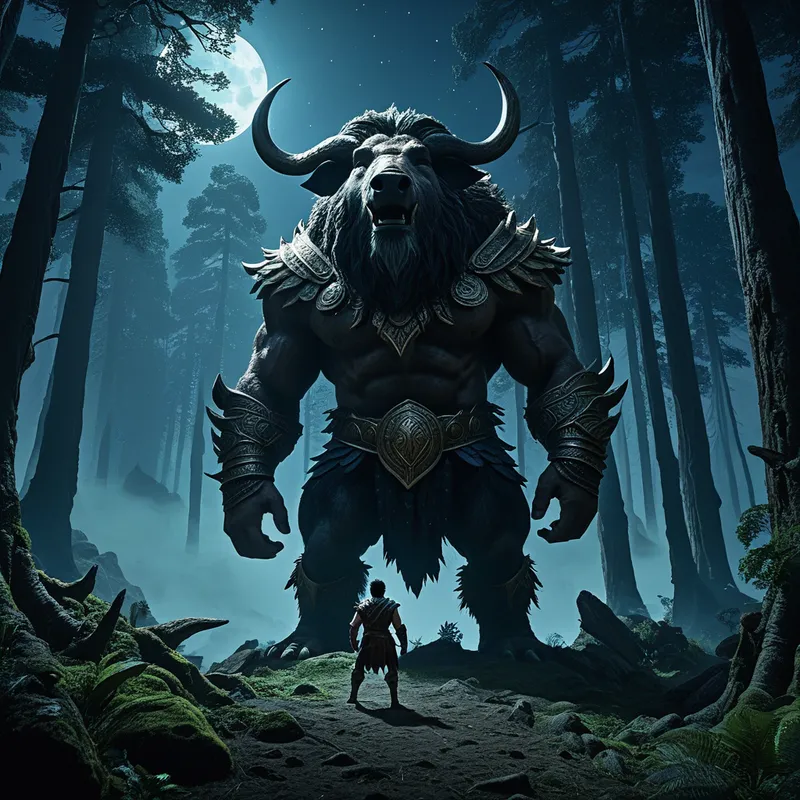
Then came the first hero, Baltog. A man of another shore, of mighty lineage, he saw the beast not as a god to be worshipped, but a problem to be solved. He did not raise an army. He walked alone into the trampled clearing where Tandayag feasted. The air was thick with the smell of crushed vegetation and hot breath. In a contest of sheer, primal strength, a titanic struggle under a cold, watching moon, Baltog wrestled the beast. With a final, earth-shaking groan, he broke its jaw, then its neck. He planted the boar’s own tusks into the soil—a grim marker of the first human order imposed upon the wild.
But Ibalon was not so easily tamed. With the boar’s fall, the land birthed a new nightmare: a legion of monsters. Crocodiles as large as boats. Flying fish with razor fins. And most cunning of all, the serpent Oryol, whose voice could weave spells and whose body could crush whole villages.
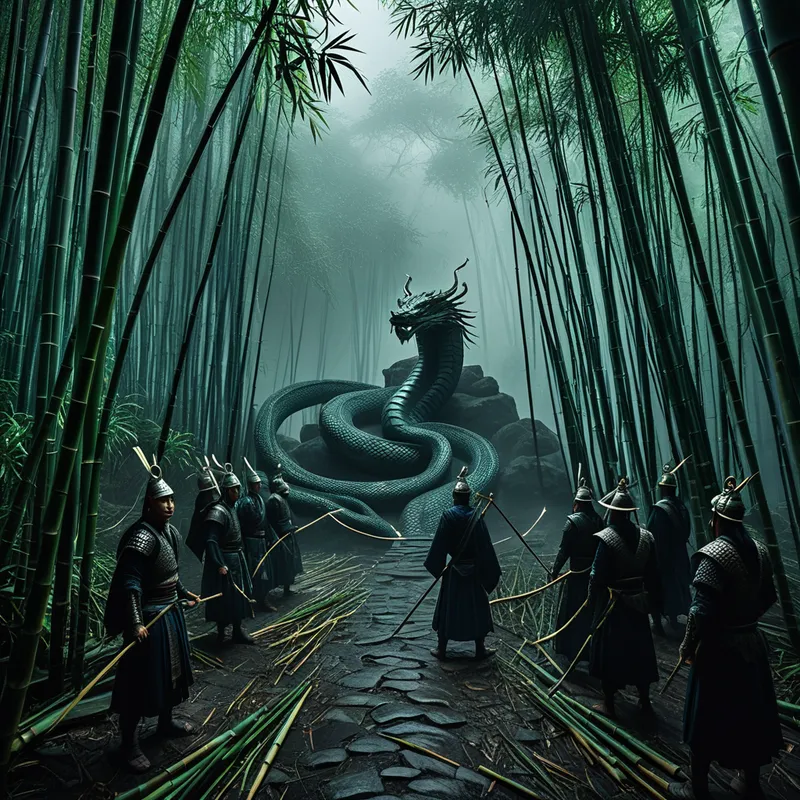
Then arrived the second hero, Handiong. Where Baltog was strength, Handiong was strategy and civilization. For ten moons, he and his warriors waged a war of order against chaos. They diverted rivers to drown the giant crocodiles. They wove nets of vine to snare the flying terrors. But Oryol eluded them, her song leading men into treacherous ravines, her form vanishing into the bamboo thickets.
The final confrontation was not one of brute force, but of wit and strange alliance. Handiong, in his relentless pursuit, cornered Oryol. Yet, in that moment, a recognition passed between hunter and hunted. He saw not just a monster, but the very spirit of the untamed land itself. Some say he bested her in a battle of wills. Others whisper she saw in his order a new kind of power, a destiny for the land. From their encounter, an accord was struck. Oryol, using her ancient knowledge of the wild, helped Handiong defeat the remaining monsters. The chaotic spirit of the land was not destroyed, but integrated. With the wilderness pacified, Handiong taught the people the arts of civilization: farming, building, weaving, and law.
In the time of peace that followed, a final hero arose: Bantong. His test was a single, slumbering giant named Rabad. While an army trembled at a distance, Bantong moved with the silence of a shadow. He observed the giant’s deep, rumbling sleep, found the rhythm of its breath, and with one precise, merciful strike, ended the last echo of the primordial age. No grand battle, only a necessary, quiet closing of an era.
Cultural Origins & Context
The epic of Ibalon originates from the Bikol region in the southeastern part of Luzon in the Philippines. It is an oral tradition, a living story that was historically chanted by native bards or likan. Its first known transcription was by the Spanish priest Father Bernardino de Melendreras in the 19th century, and later popularized by the writer and folklorist Merito B. Espinas.
Its function was multifaceted. It was a foundational myth, explaining how the Bikolano people’s homeland came to be ordered and habitable. It served as a historical record, encoding memories of migration, environmental challenges, and societal development. Most importantly, it was a moral and pedagogical compass. The three heroes model different but complementary virtues: Baltog’s raw courage and foundational strength, Handiong’s intelligent leadership and cultural ingenuity, and Bantong’s discerning patience and efficient action. The epic taught that civilization is not a given, but a hard-won achievement against both external chaos and the internal temptation to succumb to fear.
Symbolic Architecture
At its core, Ibalon is a grand allegory for the psyche’s journey from undifferentiated chaos to organized consciousness. The land of Ibalon itself represents the nascent, potential-filled, but terrifyingly disordered Self.
The monster is not an external enemy, but the unintegrated, autonomous complex of the primal psyche—a force of nature that must be confronted, not ignored.
Tandayag symbolizes the brute, devouring aspect of the unconscious—blind instinct, untamed rage, and sheer materiality that consumes all efforts at growth. Baltog’s victory represents the essential first step in individuation: the ego’s assertion of its will to exist, to say “I am” against the overwhelming pressure of primal, undifferentiated nature.
The legion of monsters and the serpent Oryol represent the more complex and nuanced contents of the shadow—the repressed talents, cunning, wild wisdom, and creative-destructive forces. Handiong’s campaign is the long, arduous process of analysis and engagement with these shadow aspects. Crucially, Oryol is not slain; she is allied with. This is the myth’s profound psychological insight: integration, not annihilation. The wild, instinctual wisdom (Oryol) must be reconciled with the ordering principle of consciousness (Handiong) to build a functioning psyche (the civilized Ibalon).
Rabad, the sleeping giant, symbolizes the final, dormant, and often colossal resistance to change—deep-seated inertia, archaic guilt, or a monolithic complex. Bantong’s quiet, observant, and precise action models the final stage of this psychic work: the conscious, deliberate resolution of a core issue that no longer requires a grand, heroic battle, but rather insightful, timely intervention.
The Dreamer's Resonance
When the myth of Ibalon resonates in modern dreams, it often signals a profound process of inner restructuring. To dream of a monstrous boar ravaging a landscape may connect to somatic feelings of being consumed by anger, unchecked appetite, or a situation that feels brutally oppressive. The dream ego is being called to its “Baltog moment”—to find the strength to confront a devouring force in one’s life.
Dreams of serpents, especially those with captivating or deceptive qualities, echo the Handiong-Oryol dynamic. The dreamer may be in a phase of confronting seductive but destructive habits, manipulative relationships, or their own “friendly” shadow—aspects of themselves that are intelligent, powerful, but misaligned. The somatic sense might be one of being coiled, constrained, or enchanted. The dream asks: Can you face this cunning part of yourself not with sheer force, but with strategic awareness, leading to a potential alliance and integration?
A dream of a sleeping giant signifies a looming, dormant issue the dreamer knows must eventually be faced—a latent talent, a repressed trauma, or a massive life decision. The somatic feeling is one of heavy anticipation. The myth advises the Bantong approach: patient observation, waiting for the right moment in the cycle, and then acting with decisive clarity.
Alchemical Translation
The alchemical process mirrored in Ibalon is the opus of transforming the prima materia—the chaotic, unconscious contents—into the ordered, conscious lapis or gold of the individuated Self.
The wilderness is the raw soul-stuff; the hero’s labor is the fire of attention that transmutes it into the art of a lived life.
The first stage, nigredo (the blackening), is represented by the initial state of Ibalon and the ravages of Tandayag. It is the chaotic, painful, and confusing confrontation with the shadow. Baltog’s victory is the first coagulation, the separation of a conscious standpoint from the swirling dark.
Handiong’s long campaign is the stage of albedo (the whitening) and citrinitas (the yellowing)—the washing, purification, and intricate sorting of complex psychic elements. Engaging with the myriad “monsters” is analysis. The alliance with Oryol is the crucial conjunction (coniunctio) of opposites: conscious and unconscious, order and wildness, human and instinctual. This union generates the creative power to “build civilization” within—to establish inner laws, cultivate talents (farming, weaving), and structure the personality.
Bantong’s slaying of Rabad is the final rubedo (the reddening). It is the resolution of the last major impurity, the integration complete enough that the final act is one of serene mastery rather than struggle. The result is the “peopled and peaceful Ibalon”—a psyche where consciousness is firmly established, the instincts are harnessed, and the individual can live in a self-created world of meaning, order, and fertile potential. The cycle may begin again with new challenges, but the foundational template for transformation is now etched into the soul’s landscape.
Associated Symbols
Explore related symbols from the CaleaDream lexicon:
- Hero — The tripartite hero (Baltog, Handiong, Bantong) models the complete arc of the individuation journey: confrontation, integration, and resolution.
- Serpent — Represents the cunning, ancient, and transformative wisdom of the unconscious, as embodied by Oryol, which must be allied with, not destroyed.
- Forest — Symbolizes the dense, untamed, and fertile wilderness of the primal unconscious psyche, the prima materia from which consciousness must emerge.
- Order — The central goal of the epic, representing the hard-won structure of consciousness, law, and civilization built upon conquered chaos.
- Journey — The entire myth is a foundational journey narrative, mapping the psyche’s passage from a state of nature to a state of cultured self-awareness.
- Monster — Embodies the autonomous, terrifying, and powerful complexes of the shadow that block the development of the individual and community.
- Earth — The land of Ibalon itself, representing the foundational Self, the ground of being that is both fertile and monstrous before cultivation.
- Mountain — Symbolizes the colossal, immovable challenges (like the giant Rabad) that represent the final, dormant obstacles to psychic wholeness.
- River — Represents the flow of life force and instinct, which Handiong must divert and control as part of establishing order over chaotic nature.
- Seed — The latent potential within the chaotic land of Ibalon, which can only germinate and grow after the heroic labor of clearing and taming.