Iamblichus Myth Meaning & Symbolism
The story of a philosopher who mastered theurgy, communing with gods to guide souls from the material world back to the divine One.
The Tale of Iamblichus
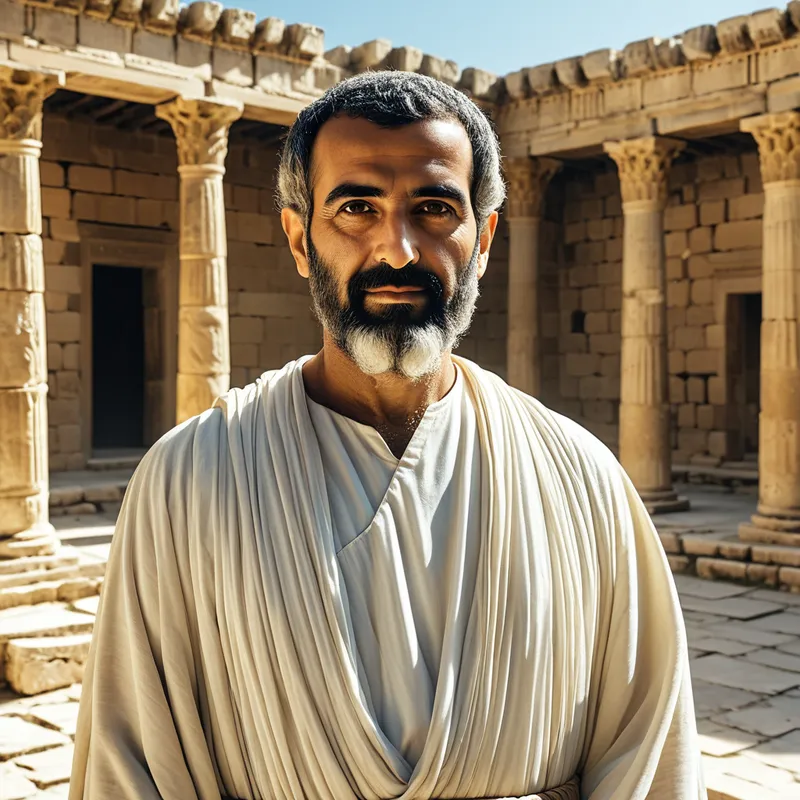
Listen, and hear the tale not of a hero who conquers armies, but of a soul who navigated the cosmos itself. In the fading light of the ancient world, when Rome’s shadow grew long and brittle, there lived a man in the sun-baked city of Apamea. His name was Iamblichus. He was a vessel of silence in a clamorous age.
He did not seek the throne or the forum. His kingdom was the space between a breath and a prayer. His students, seekers with dust on their sandals and fire in their minds, gathered in the colonnaded shade. They spoke of the One, a presence so vast it was an absence, a sun so bright it cast no shadow. But how, they wept, could a soul mired in the heavy clay of the body, tangled in the vines of passion and grief, ever return to that dazzling source? The path was a riddle written in starlight on dark water.
Iamblichus listened to their despair. He felt the weight of the world—not as a burden, but as a chord in a great harmony. He saw the cosmos not as a prison, but as a living temple, every stone and star an embodiment of divine thought. The gods were not distant monarchs; they were the very architecture of reality, pulsing in the rhythm of the seasons, the logic of mathematics, the yearning of the heart.
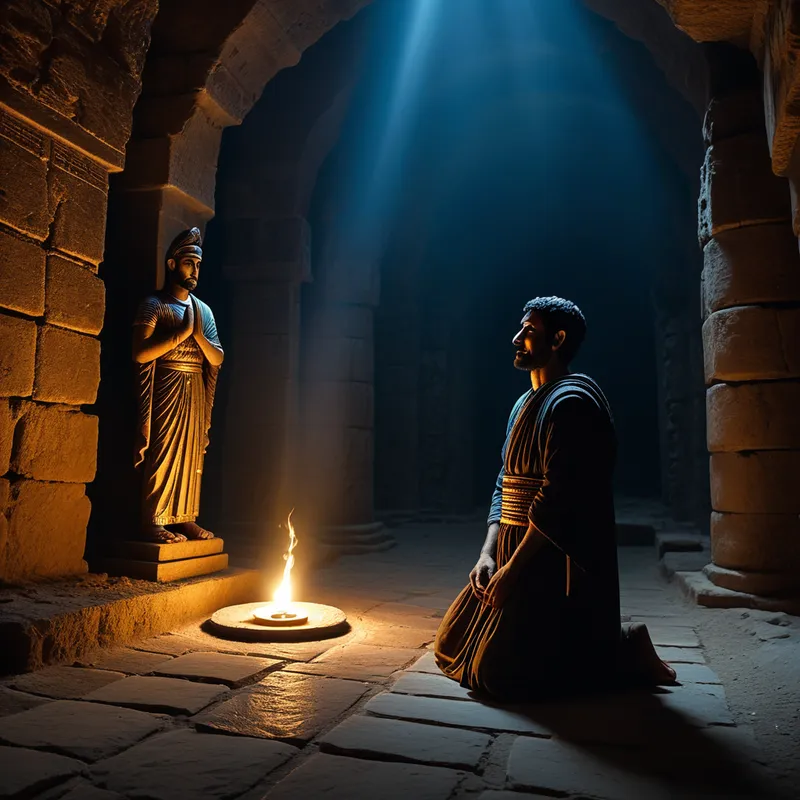
One evening, as the scent of jasmine hung thick in the air, he led his disciples not to the library, but to a simple chamber below the earth. The air was cool and still. At its center stood an unadorned statue of Apollo. “We do not merely contemplate the divine,” Iamblichus said, his voice a low murmur that seemed to come from the stones themselves. “We must invite it to descend.”
He began the rites—the precise gestures, the chants in archaic tongues, the burning of rare resins that smelled of forgotten forests. This was theurgy, the god-work. At first, nothing. Only the flicker of torchlight on unmoving stone. Doubt, that cold serpent, coiled in the hearts of the watchers.
Then, a warmth filled the chamber, a warmth without source. The statue of Apollo began, not to move, but to be. Light, not reflecting but emanating, bloomed from its form. The air hummed with a silent music. The disciples felt not fear, but an overwhelming, compassionate presence—a intelligence so vast it comprehended their every thought, a love so pure it burned away their shame. In that luminous moment, the boundary between heaven and earth dissolved. Iamblichus, his face illuminated by the divine radiance, stood as a bridge. He showed them the path was not an escape from the world, but a sacred activation of it. The journey home began by recognizing the guest already at the door.
Cultural Origins & Context
This is not a myth from the misty Bronze Age, but a living narrative from the twilight of Classical antiquity, circa the 3rd and 4th centuries CE. Iamblichus was a historical Syrian philosopher, a pivotal figure in the school of thought we call Neoplatonism. The "myth" of Iamblichus is woven from the accounts of his students and later followers, particularly the philosopher Proclus.
In a world where traditional pagan religion was being challenged by the rise of Christianity, Iamblichus and his peers sought to articulate a sophisticated, intellectually rigorous spirituality. The story of his theurgical mastery served a critical societal function: it was a defense of the old ways, reconceived. It argued that the ancient rituals and gods were not superstition, but a precise technology of the soul, a necessary response to a profound human problem—the soul's tragic, yet purposeful, fall into matter. The tale was passed down in philosophical circles, a secret history for those who believed the cosmos was still enchanted, awaiting only the correct key to unlock its divinity.
Symbolic Architecture
At its core, the myth of Iamblichus is a map of the soul's journey through the great chain of being. Iamblichus himself symbolizes the awakened human intellect—the nous—that has remembered its origin and purpose. He is not the destination (the One), but the essential guide who knows the terrain of descent and ascent.
Theurgy is the art of turning the soul inside out, so that its inner divinity recognizes and calls to the outer divinity that permeates all things.
The heavy, material world is not evil, but the furthest emanation from the source, a state of profound forgetfulness. The gods represent the ordered levels of reality between the human and the absolute—the Henads. The miraculous animation of the statue is the central symbol: it represents the reversal of perception. The divine is not "out there" to be found, but is the fundamental substance of reality, which can be made manifest through resonant, ritualized intention. The myth dismantles the dichotomy of transcendence and immanence, proposing instead a universe where every level is sacred and accessible.
The Dreamer's Resonance
When this myth stirs in the modern unconscious, it often manifests not as a dream of flying, but of discovering hidden rooms, forgotten staircases, or functional yet mysterious machinery in the basement of one’s own home. It is the dream of finding an ancient, still-operational control panel within a derelict building.
Somatically, the dreamer may experience a sensation of warmth flooding the chest or a humming vibration, a feeling of "activation." Psychologically, this signals a process of re-enchantment. The dreamer is grappling with a felt sense of alienation—from their work, their body, or a fragmented world—and the psyche is presenting a solution: the possibility of reconnection. The figure of Iamblichus in the dream may appear as a quiet teacher, a skilled craftsman, or even as the dreamer themselves performing a simple, potent action that causes their mundane environment to glow with significance. The process is one of moving from intellectual understanding (gnosis) to embodied, experiential knowing (praxis).
Alchemical Translation
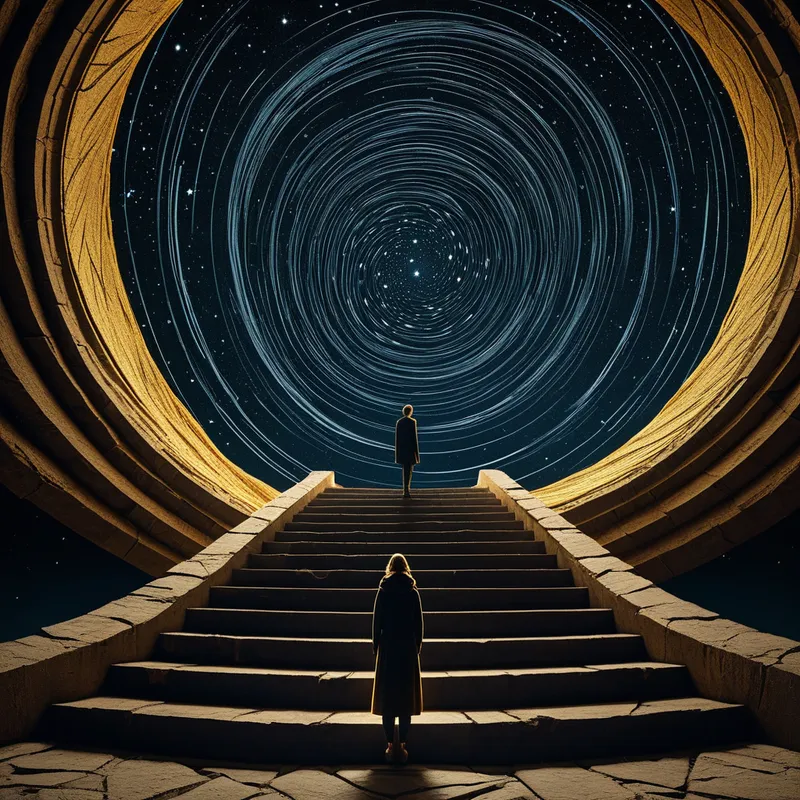
For the modern individual, the Iamblichean myth models the alchemical stage of sublimation. Our "base matter" is the raw data of our lives: our daily routines, our relationships, our pains and joys. The common temptation is to reject this matter as impure, to seek escape into spiritual abstraction or consumerist distraction—a false ascent.
Iamblichus teaches the opposite path: the descent into the particulars. The alchemical work is to take the lead of our lived experience and, through the focused fire of conscious attention (the theurgic rite), transmute it into gold. This means engaging with life not passively, but actively as a ritual. Listening deeply becomes an invocation of the Sophia in another. Creative work becomes a summoning of the Demiurge. Even suffering, held with compassionate awareness, can become a statue that unexpectedly fills with light—revealing a hidden meaning, a previously unseen connection to a larger pattern.
Individuation is not the soul fleeing the world, but the world, through the soul, remembering it is divine.
The triumph is not an escape to a far-off heaven, but the realization that the bridge was here all along, built from the very stones of our earthly existence. We become, like Iamblichus, mediators—not between ourselves and a distant god, but between the divine spark within and the divine symphony that is the universe. We complete the circuit, and the light turns on.
Associated Symbols
Explore related symbols from the CaleaDream lexicon: