The Dream of Philosophy: Questioning the Unquestioned
The Somatic Echo
It begins not as a thought, but as a tremor in the foundation. A subtle, unsettling vibration in the gut, a feeling of profound disorientation that has no immediate cause. The world looks the same, but it feels different, as if the gravity has shifted by a single, critical degree. This is the somatic echo of a philosophical dream—a deep, bodily knowing that the operating system of your reality is running on an outdated, unquestioned code. It’s the vertigo of standing on a floor you suddenly realize is made of glass, suspended over an abyss of “why?” and “what if?”. The mind scrambles to rationalize, but the body already knows: a fundamental axiom of your being is under review.
The Dreamer's Log
I am in a vast, silent hall. On a polished obsidian floor lies a single, open book. Its pages are made of light, and the text is a flowing, liquid script I cannot read. I know, with absolute certainty, that this book contains the First Principle of my life, the core assumption upon which everything else is built. And I know, with equal certainty, that I must choose to either memorize its contents forever or set it alight.
Alchemical Interpretation: The dream presents the ultimate confrontation between the security of a received dogma and the terrifying, liberating fire of creating your own.

The False Lead
This theme is not about intellectual curiosity or a passing interest in big ideas. It is not a dream suggesting you should simply “read more” or “be smarter.” To mistake it for such is to commit the very error it seeks to correct: treating the surface symptom as the root cause. A dream of philosophy is not an invitation to decorate your mind with new thoughts; it is a mandate to tear down the walls of your existing ones. It is the difference between rearranging the furniture in a prison cell and discovering the door was never locked.
Psychological Architecture
Here, Shadow work is not about confronting a monster in the dark, but about confronting the very light by which you see. The individuation process at play is one of deconstruction. You are called to audit the internal family of beliefs—the unquestioned “shoulds,” the inherited “truths,” the comforting narratives held by your inner Orphan, your inner Ruler. Which of these are truly yours, born of lived experience? Which are hand-me-downs, adopted for safety or belonging? The process is intensely disorienting. To question the foundation is to feel the whole structure sway. Grief arises not for a person, but for a version of yourself that must be relinquished—the self that was built upon sand you mistook for stone. This is the grief of the known, sacrificed at the altar of the true.
Mythic Resonance
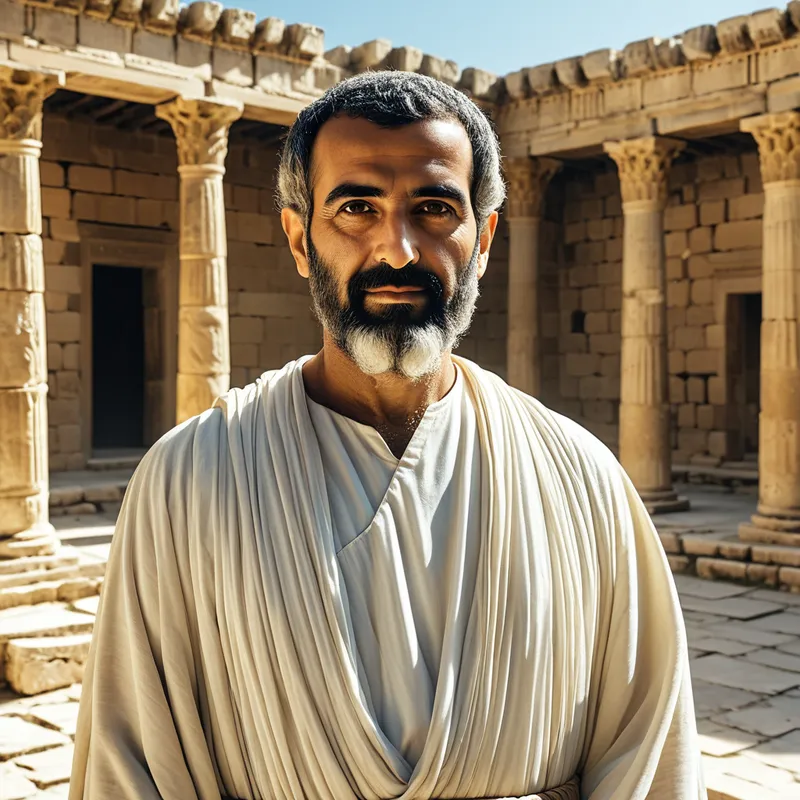
We see this in the story of the Buddha beneath the Bodhi tree. His quest was not for a new god or a better ritual, but for the First Cause of suffering itself. He deconstructed the entire edifice of worldly reality—pleasure, pain, self, other—not through rebellion, but through relentless, grounded inquiry. He sat with the question until the answer arose not as a thought, but as a fundamental shift in perception. Similarly, in the Greek myth, Socrates was the gadfly of Athens, not by providing answers, but by exposing the rot in the city’s foundational beliefs through simple, devastating questions. His poison was not hemlock, but the unbearable light of examined truth. These are not tales of acquiring knowledge, but of dismantling illusion.
Symbolic Nodes
- Unreadable or Shifting Text: The limits of your current language or logic to contain a new truth.
- Empty Halls/Libraries/Vast Spaces: The psyche clearing a workspace for a new foundational structure.
- A Single, Isolated Object (a book, a stone, a key): The core, unquestioned axiom of your personal reality.
- Teachers or Figures Who Speak in Riddles or Silence: The inner Sage refusing to give easy answers, forcing you to generate your own.
- Foundations Cracking or Transforming: The somatic echo made visible—the old structure cannot hold the new consciousness.
Archetypal Resonance
The Sage Archetype is the sovereign energy of this theme. Its core drive is not to know facts, but to understand the architecture of truth itself. The somatic echo of disorientation is the Sage’s signal that your current map no longer matches the territory of your soul. Its alchemical potential lies in its ruthless commitment to the question over the answer, to the process over the conclusion. The Shadow Sage—the Dogmatic Judge—is what you are moving from: the part that clings to a rigid, inherited philosophy for a false sense of stability and superiority. The activated Sage is the internal philosopher who dissolves dogma in the solvent of direct experience, forging a wisdom that is lived, not merely learned.
The Alchemical Process
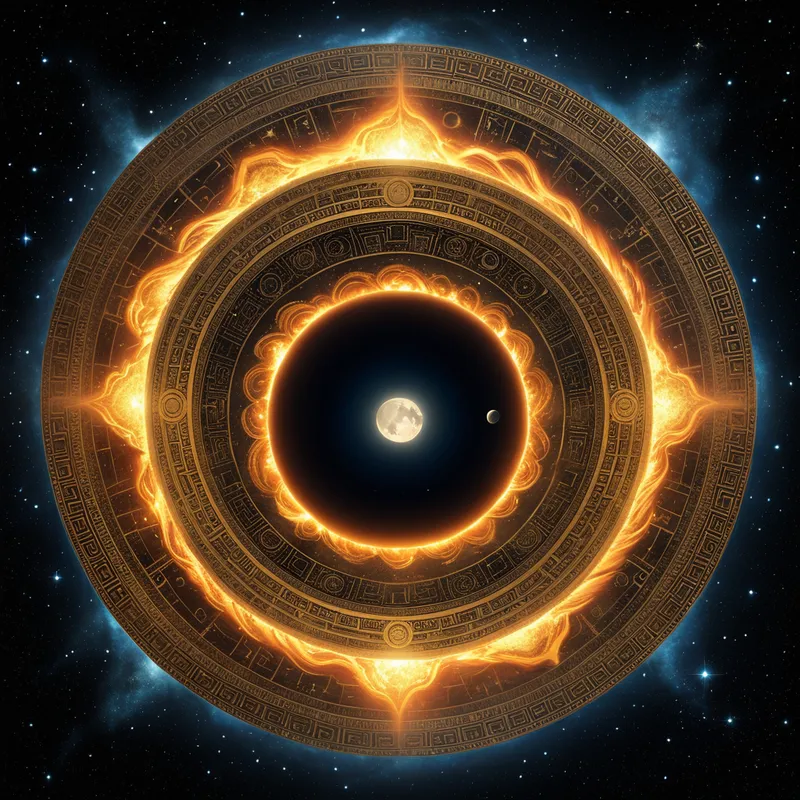
The alchemical vessel here is the conscious mind itself, and the prima materia is your foundational belief system. The required heat is the sustained, uncomfortable pressure of radical doubt. This is not cynical nihilism, but a disciplined, fiery inquiry: “What if the opposite of my deepest assumption is also true?” The pressure is the grief of disillusionment, the feeling of being spiritually homeless as old temples crumble. The transmutation occurs when this heat cooks away the dross of borrowed ideology, leaving behind only the irreducible, experiential gold of your own perception. The leaden weight of “This is just how things are” becomes the sovereign gold of “This is what I have found to be true, for me, here, now.” The Philosopher’s Stone is not an answer, but the capacity to generate authentic questions.

The Integration Protocol
Question 1: What is one "truth" I have never seriously questioned, that feels as solid and unquestionable as gravity? What would my world look like if, for just one day, I acted as if it were not true?
Question 2: Where in my life do I feel a subtle, persistent friction or disorientation that has no obvious external cause? Can I trace this sensation back to a conflict between an inherited belief and a whispering, deeper knowing?
Question 3: If I had to write the single, core principle of my personal philosophy—not what I was taught, but what I have lived—what one sentence would it be?
Action 1 (The Axiom Audit): In a journal, write down three fundamental beliefs about life, success, relationships, or your own nature. For each, ask: "Where did I learn this? Does it feel like mine, or like a hand-me-down? What evidence from my direct experience supports or contradicts it?"
Action 2 (Creative Deconstruction): Using any medium—collage, digital art, clay—create a visual representation of your "foundation." Then, deliberately alter it. Smudge the paint, tear the paper, crack the clay. Do not make something new yet. Simply witness and document the process of deconstruction without the immediate need to rebuild.
Action 3 (The Ritual of the Unanswered Question): Go to a threshold space—a doorway, a shore, the edge of a park. Formulate a single, profound question about your existence. Speak it aloud to the horizon. Then, turn and walk away. Do not seek an answer. Carry the living weight of the question with you for the day, letting it work on you from the inside.
Final Validation
To dream of philosophy is to be called to the most arduous labor of the soul: the work of becoming your own primary source. It is a lonely and dizzying path, to voluntarily dissolve the ground beneath your own feet. This difficulty is not a sign of failure, but of the magnitude of the transformation underway. The terror is real. The grief for the simple, unquestioning self is valid. And yet, on the other side of this fire lies a sovereignty that cannot be given or taken—a self-authored life, built upon the bedrock of truth you have mined from the depths of your own experience. You are not losing your mind. You are, at long last, coming to your senses.