Huracán the Heart of Sky
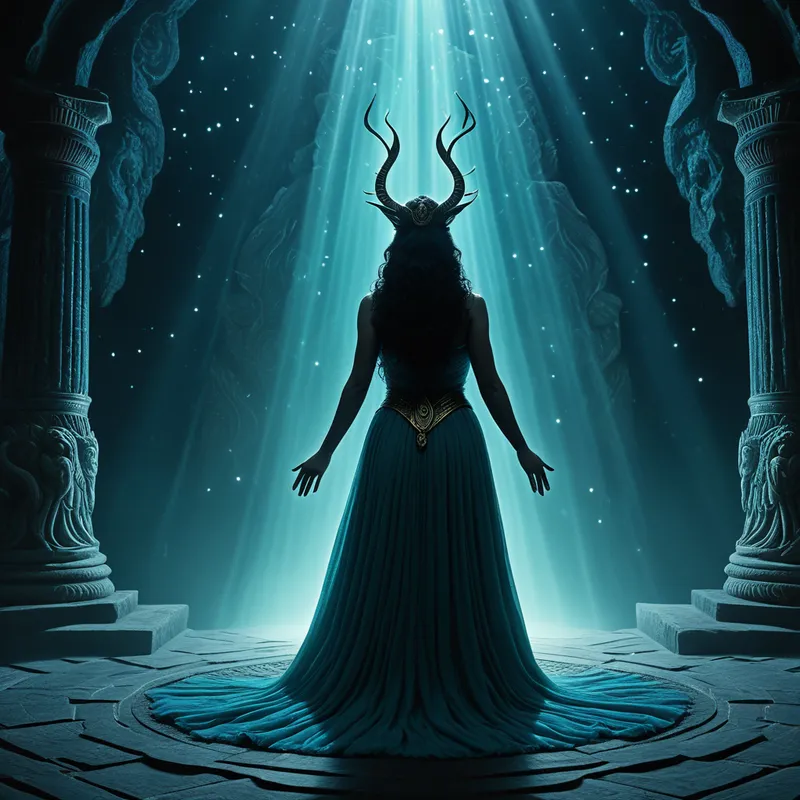
Huracán, the Maya Heart of Sky, is a primordial storm deity whose chaotic winds and thunder shaped creation, embodying both destructive force and creative power in Mesoamerican mythology.
The Tale of Huracán the Heart of Sky
In the beginning, there was only the placid, empty sea beneath a sky yet unborn. Silence was the only inhabitant of this potential. Then, from the vast nothingness, a presence gathered—a concentration of will and sound that was the first thought of creation. This was Huracán, the Heart of Sky. He was not a being with form, but a force: the gathering thunderhead, the first exhalation of wind, the crackle of energy seeking a path into being.
With Huracán were his companions, the other aspects of the sky’s essence: Caculhá Huracán (Lightning Bolt), Chipi Caculhá (Younger Lightning), and Raxa Caculhá (Green/ Sudden Lightning). Together, they were the Sky’s Heart, a single pulsing intention with multiple voices. Their first words were not words, but the roar of the hurricane and the flash that illuminates the void. “Earth!” they called into the abyss. And the waters stirred.
Their first attempts at creation were acts of pure, untamed essence. They spoke life into the animals of the mountain and forest—the deer, birds, jaguars, and snakes. But these creatures could only squawk, howl, and hiss. They could not speak the names of their makers; they could not lift their heads in worship. They were beautiful, but silent. Seeing this, the Heart of Sky was dissatisfied. “You shall be changed because you could not name us. Your flesh shall be torn, your homes shall be the thicket and the ravine. You shall serve those who are to come.”
Then began the great labor of fashioning beings of substance. The gods molded figures from earth and mud. These first humans were soft, incoherent. They dissolved in water, their faces lopsided, their speech muddled. They could not stand, and they melted back into the earth from which they were formed. Huracán’s winds washed them away. Next, they carved figures from wood. These manikins walked and multiplied, but they had no hearts, no minds, no memory of their framers. They were empty vessels. They forgot the Heart of Sky. In his righteous fury, Huracán unleashed his primordial nature. A great resinous rain fell from the sky, followed by a flood sent by the earth gods. The wooden people were battered, torn apart, and crushed. The few survivors were set upon by their own tools and animals, transformed into the monkeys that chatter in the treetops—a perpetual, chattering reminder of failure.
Finally, after council and sacrifice, the creators found the sacred substance: white and yellow corn, ground into meal, mixed with water to form the very flesh of humanity. This time, the work held. From this dough were formed the first true people, the Ja’ab’. They had sight, wisdom, and language. They could see to the edges of the universe and name the gods. And seeing this, Huracán and the other sky gods felt a tremor of fear. “They have become as gods, knowing all. What if they too seek to rival us?” So the Heart of Sky breathed a mist over their eyes, clouding their perfect vision, limiting their understanding to that which is near. Thus, humanity was perfected in its power and made humble in its scope, a creation born from the storm’s chaos and tempered by the creator’s caution.
Cultural Origins & Context
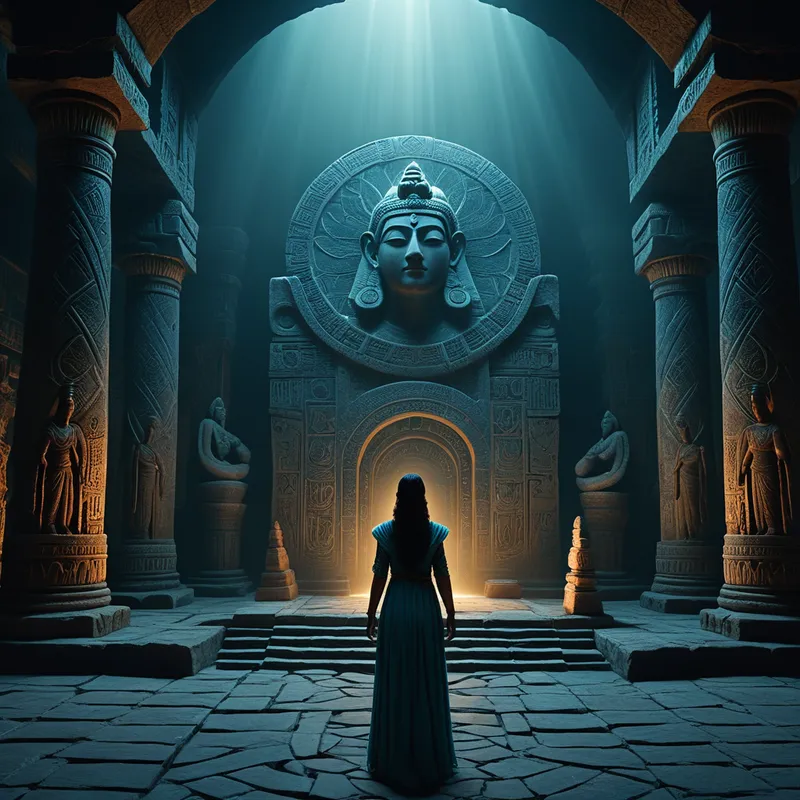
Huracán’s primary narrative home is the Popol Vuh, the epic of the K’iche’ Maya. His name itself is a linguistic root of profound power, giving the world the word “hurricane.” He is not merely a weather phenomenon personified but is the U K’ux Kaj, the “Heart of Sky.” In Maya cosmology, the heart (k’ux) was the seat of life, memory, and essence. To be the heart of the sky is to be the animating, pulsating core of the entire upper world, the source of its vitality and its most violent expressions.
He exists in a pantheon where creator gods are often plural and collective, a council of energies rather than a solitary patriarch. His partnership with the various aspects of lightning underscores a fundamental Mesoamerican view of creation as a dynamic, often violent, electrical process. The storm is not an agent of mere destruction; it is the atmosphere’s creative act—clearing, fertilizing, and shocking life into being. Huracán’s story is inextricably linked to the central Mesoamerican preoccupation with the substance of humanity. The mythic progression from animals to mud to wood to maize is a profound meditation on what constitutes a being capable of relationship with the divine: it requires a foundation both sacred (corn, the literal body of the gods) and fragile (the breath-clouded vision).
Symbolic Architecture
Huracán represents the paradoxical unity of chaos and order. He is the necessary disorder that precedes and enables new form. His winds do not merely destroy; they scatter seeds, clear deadwood, and reshape the landscape for a new genesis. He is the archetypal force that dismantles inadequate structures—be they mud figures or wooden manikins—to make way for a more authentic creation.
He is the divine breath that is also a gale, the creative word that arrives as a thunderclap. In psychological terms, Huracán embodies the eruptive, often terrifying power of the unconscious that shatters rigid ego-structures (the failed creations) to force a more conscious, embodied existence (the maize people).
His final act—blurring humanity’s perfect vision—is a masterstroke of mythic wisdom. It establishes the fundamental human condition: gifted with consciousness and language, yet forever separated from omniscience. This “veiling” is not a punishment but a definition. It creates the space for seeking, for ritual, for the very relationship with the divine that the gods desired. We are made to yearn for what we once saw, to listen for the echo of the Heart of Sky in every storm.
The Dreamer's Resonance
To encounter Huracán in the inner landscape is to experience a profound creative crisis. He is the force that arises when a life has become like the wooden people—hollow, repetitive, and forgetful of its own source. The hurricane of the psyche may manifest as a sudden loss, a crushing depression, or a furious burst of insight that dismantles one’s worldview. This is not meaningless destruction; it is the Heart of Sky demanding a more authentic substance for the self.
The dreamer may feel themselves dissolving like mud or splintering like wood, old identities unable to hold. Huracán’s resonance calls for a return to the nourishing, golden core—the “corn” of one’s true nature. It asks: What have you been fashioned from? The brittle material of expectation, or the sacred sustenance of your own experience? Furthermore, his mist upon our eyes speaks to the necessary humility of consciousness. We are not meant to see all ends; our power lies in navigating the mystery, in hearing the divine in the limited but resonant field of our perception. The storm clears the air, leaving not perfect clarity, but a fresh, charged space in which to begin again.
Alchemical Translation
In the alchemical vessel of the soul, Huracán is the stage of nigredo—the blackening, the dissolution, the chaotic prima materia. He is the necessary rupture of the old, compacted self. The howling wind is the ventus, the fierce air that stirs the stagnant elements of the psyche, forcing them to interact, to conflict, and ultimately to transform.
The mythic sequence is an alchemical recipe: the solve (dissolving the mud, smashing the wood) followed by the coagula (forming the maize body). Huracán provides the catastrophic fire and air that purifies the base materials, burning away what cannot endure to reveal the precious gold within the ore of potential.
His creative act is one of dynamic imbalance. True creation, the myth insists, is not a gentle molding but a violent infusion of energy. The stable, worshipful human finally emerges not from peace, but from the tumultuous interaction of sky’s heart and earth’s body, of divine dissatisfaction and sacred grain. To integrate Huracán is to accept that one’s most authentic becoming may be preceded by a season of devastating, yet purposeful, storm.
Associated Symbols
Explore related symbols from the CaleaDream lexicon:
- Primordial Chaos — The unformed, potential state from which all creation emerges, the silent sea that first felt the pulse of Huracán’s will.
- Thunder — The voice of the sky’s heart, the audible manifestation of divine power and announcement that shakes the foundations of the world.
- Lightning — The sudden, illuminating flash of insight or divine action that cuts through darkness, represented by Huracán’s companion deities.
- Maize — The sacred substance of ultimate creation, the golden flesh from which true, conscious life is formed, representing sustenance and divine essence.
- Flood — The cleansing, punitive, and transformative deluge sent to wash away failed creations, a liquid aspect of the storm’s purifying power.
- Heart — The central, animating core of both sky and being, the seat of life and creative force from which all power pulses.
- Wind — The invisible, shaping breath of the deity, carrying both the seeds of new life and the power to scour the old away.
- Mist — The veil of limited perception placed over humanity’s eyes, creating the necessary mystery and humility that defines the human condition.
- Tree — The failed wooden people and their descendants, the monkeys, representing an incomplete creation that lacks soul and memory.
- Dream — The state of potential and vision from which the gods operate, and the clouded realm through which humans now seek understanding.
- Fires of Creation — The explosive, energetic aspect of genesis, the sacred conflagration that forges rather than consumes, embodied in the storm’s fury.
- Cyclic Nature — The recurring pattern of destruction and creation, failure and success, that defines Huracán’s mythic actions and the natural world he rules.