
Hong Gildong Myth Meaning & Symbolism
The epic of a brilliant but illegitimate son who masters magic, leads a righteous rebellion, and forges a utopian kingdom beyond the rigid social order of Joseon Korea.
The Tale of Hong Gildong
Listen, and hear the tale that stirs in the soul of the mountains and whispers through the bamboo groves. It begins not with a king, but with a secret. In the heart of the Joseon court, a high minister, Hong, lies with a concubine of captivating beauty. From this union of privilege and position comes a son, Gildong—a child of brilliant light and profound shadow. He enters the world gifted with supernatural intellect and the spark of sinmyeong, yet his birth is stamped with the indelible mark: seoeol. Illegitimate. A child of the shadows, denied his father’s name, barred from the ancestral rites, and treated as a ghost within his own home.
He grows like a wild orchid in a manicured garden—too vibrant, too potent to be contained. His half-brothers, the rightful heirs, look upon him with fear and contempt. His father, bound by the unyielding yangban order, can offer only guilty, distant affection. Gildong’s very existence is a crack in the perfect porcelain of social order. He feels the injustice not as an idea, but as a fire in his blood and a stone in his heart. One day, the fire speaks. He confronts his father, his words sharp as broken jade: “What use is a son who cannot call his father ‘Father’?” The plea hangs in the air, unanswered. The stone grows heavier.
So, he turns away. He walks into the wilderness, into the realm of the sansin and wandering sinseon. In the deep forests and high peaks, he does not hide; he transforms. He masters the mystic arts, learning to summon fog and clone his form, to command the elements with a flick of his bujeok. But this power is not for mere vanity. The stone of injustice has become a whetstone, sharpening his purpose. He gathers others like him—the dispossessed, the taxed-into-destitution farmers, the talented but low-born scholars—and becomes the hwalbindang, the leader of a righteous rebellion.
He is a storm of principle. He raids corrupt magistrates not for personal wealth, but to redistribute it to the poor. He humiliates arrogant generals with clever tricks, not cruelty. He is a ghost to the state, a legend to the people. The court trembles, sending armies that stumble through magical mists and fight illusory doubles. Finally, the king himself is forced to negotiate. Gildong’s demand is not for a title or land within Joseon. It is for a space beyond. He asks for ships, for his people, and sails into the vast southern sea.
And there, on an island untouched by the old world’s rigid laws, he performs his ultimate act of creation. He builds Yuldo, the Land of Reason and Law. Here, he is no longer seoeol, no longer outlaw. He is King Hong, the wise and just ruler, founding a kingdom where merit, not birth, defines a person. He creates a new lineage, a new order, a new self. The tale ends not with his death, but with his transcendence. Some say he ascended to the heavens, a sinseon at last, having mastered his fate and forged his own destiny, leaving a legend that forever questions the walls the world builds around a human soul.
Cultural Origins & Context
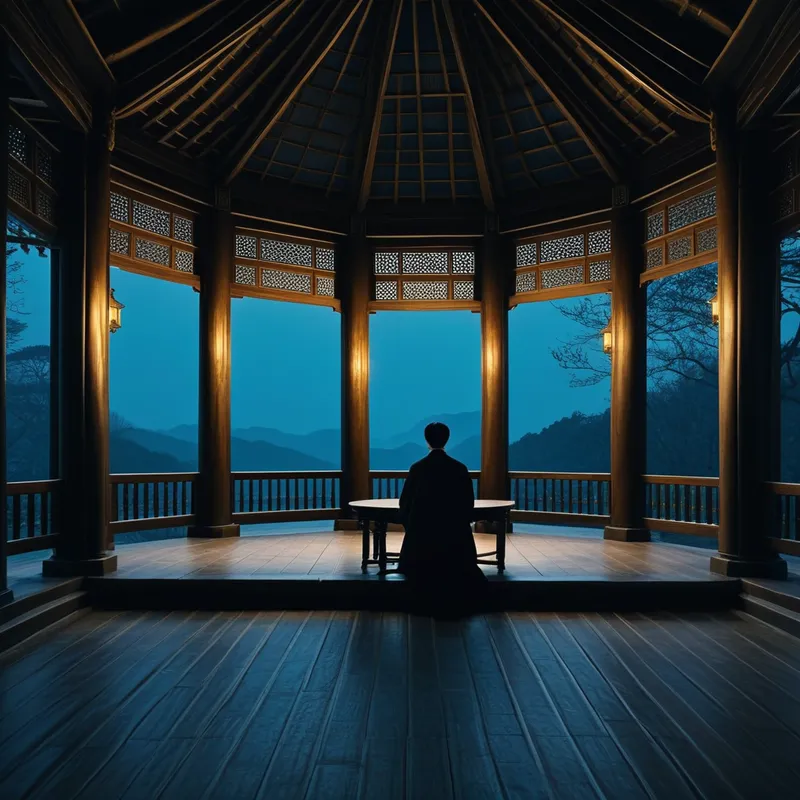
The story of Hong Gildong is a seismic crack in the polished surface of Joseon Korea’s Neo-Confucian society. While often attributed to the scholar Heo Gyun in the early 17th century, the tale is a folk epic at its core, a narrative that coalesced from centuries of social tension. It was born in the space between the official histories of the court and the oral traditions of the common people. Told in hanja by scholars but dreamed of in the vernacular by the masses, it gave voice to a profound collective frustration.
Its societal function was multifaceted. For the oppressed and low-born, it was a fantasy of cosmic justice—a psychic revenge against an immutable hierarchy. For the disaffected yangban scholar, it was a subversive critique of a system that could waste genius on a technicality of birth. The myth served as a cultural pressure valve, allowing the imagination to go where the body could not: to a place where the brilliant but marginalized son not only escapes his shame but returns to found a better, more equitable world. It transformed the social “problem” of the illegitimate child into the epic hero, making Hong Gildong one of Korea’s most enduring and beloved archetypes.
Symbolic Architecture
Hong Gildong is not merely a rebel; he is the embodied psyche in revolt against a false or oppressive logos. His illegitimacy is the primal psychological wound of being told, “You do not belong. Your essence is invalid.” This is the core trauma of the marginalized self.
The hero’s journey does not begin with a call to adventure, but with a call to existence. Hong Gildong’s first act of magic is to insist, “I am.”
His flight to the mountains symbolizes a necessary descent into the unconscious—the wild, untamed chaos beyond society’s walls. Here, he does not languish; he apprentices himself to the deeper, older laws of nature and spirit (do). His magical powers represent the latent psychic abilities that only activate when one separates from the collective identity: intuition (summoning fog), adaptability (creating clones), and the power of mind over matter. His band of outlaws is the gathering of disowned parts of the self—the shadow aspects of talent, rage, and desire for justice—into a cohesive, purposeful force.
The founding of Yuldo is the ultimate symbolic act: the conscious creation of a new psychic structure. It is the individuated kingdom of the self, built on one’s own authentic laws after the old internalized regime has been overthrown. He doesn’t reform Joseon; he builds a new world entirely. This is the myth of psychological sovereignty.

The Dreamer's Resonance
When the pattern of Hong Gildong stirs in modern dreams, it signals a profound somatic rebellion against an internalized “illegitimacy.” The dreamer may be contending with a felt sense of fraudulence (“imposter syndrome”), of being an outsider in their family, career, or social sphere, or of carrying a talent or truth that feels forbidden.
Somatically, this can manifest as dreams of being trapped in ornate but cold buildings (the rigid super-ego), of possessing a secret object of power one must hide, or of leading a group of unfamiliar yet loyal companions through a wilderness. There may be intense frustration directed at dream figures of authority who are blind to the dreamer’s value. The psychological process is the withdrawal of projection and the reclamation of energy. The dream-ego is beginning to stop seeking validation from the external “court” and is turning inward to the “mountain”—the instinctual and spiritual self—to find its true authority and power.
Alchemical Translation
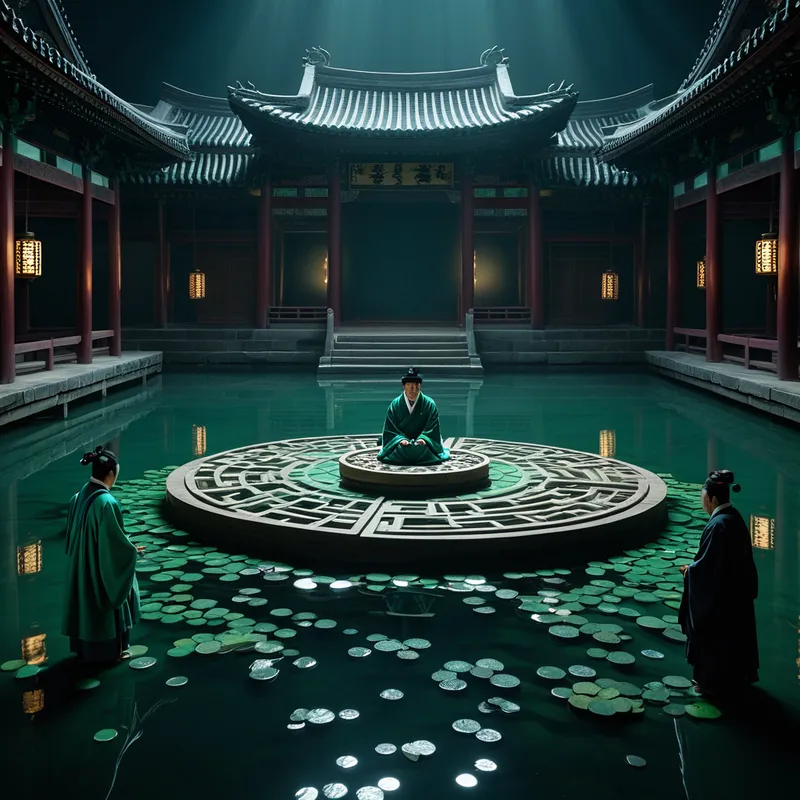
The alchemy of Hong Gildong is a three-stage process of psychic transmutation: Recognition, Retreat, and Reign.
First, the Nigredo: the blackening, the recognition of the wound. The leaden weight of the label (seoeol, “illegitimate”) must be fully felt as a poisoning of the spirit. This is not self-pity, but the clear-eyed acknowledgment of the false identity imposed by the collective. The fire of righteous anger is the alchemical fire that begins to cook this raw, heavy material.
Second, the Albedo: the whitening, the retreat to the mountain. This is the essential, often misunderstood phase of non-action in the world’s eyes. It is not escapism, but the dedicated inner work of distillation. Here, in solitude, one learns the “magic”—the unique skills, insights, and self-knowledge that are native to one’s own soul, not borrowed from the family or cultural complex. The old ego, identified with the wound, dissolves in the mountain mists.
The utopia is not found; it is built from the bricks of endured injustice and the mortar of hard-won self-knowledge.
Finally, the Rubedo: the reddening, the reign in Yuldo. This is the culmination—the creation of a life structured according to the soul’s own laws. The redeemed outcast becomes the benevolent ruler of their own psyche. The energy once spent on resentment or assimilation is now directed toward conscious creation. The kingdom founded is one’s authentic life, work, and relationships. The myth thus models the ultimate alchemical goal: not just to transform base metal into gold, but to become the philosopher-king of one’s own redeemed and sovereign territory.
Associated Symbols
Explore related symbols from the CaleaDream lexicon:
- Mountain — The place of retreat, ascetic training, and connection to primal spirit; where the old social self is stripped away and the magical, true self is forged.
- Shadow — The collective of outlaws and dispossessed ones Gildong leads, representing the rejected, talented, and angry parts of the psyche that must be integrated, not suppressed.
- Mask — The social identity of the illegitimate son (seoeol) that Gildong is forced to wear, and which he must ultimately shatter to reveal his true kingly nature.
- Key — Gildong’s mastery of Taoist magic, which unlocks his potential and opens the door to a destiny beyond the locked gates of Joseon society.
- Journey — The essential movement from the constrained world of the court, through the transformative wilderness, to the creative act of building a new kingdom across the sea.
- Order — The rigid Neo-Confucian hierarchy of Joseon that defines Gildong as flawed, which he must internally overthrow to establish his own more authentic order in Yuldo.
- Rebirth — The founding of Yuldo and the title "King Hong"; this is not a reform but a total psychic death and rebirth into a self-authored identity.
- Hero — The archetype Gildong embodies, but in its rebel form, defined by challenging unjust authority to establish a new standard of justice and belonging.
- Fate — The destiny written by his birth status, which he actively rewrites through will, magic, and action, transforming a cursed fate into a chosen destiny.
- Trickster — His use of cunning and illusion to humiliate corrupt officials, representing the intelligence of the marginalized that subverts rigid power structures.
- Thunder — The disruptive, awe-inspiring force of his rebellion, which shakes the foundations of the established order and heralds a coming storm of change.