Heracles/Hercules Myth Meaning & Symbolism
A demigod's epic struggle against fate, his own rage, and impossible labors, forging a monster-slayer into a god through suffering and sacred duty.
The Tale of Heracles/Hercules
Hear now the tale of the strongest man who ever lived, a story written in sweat, blood, and stars. It begins not with glory, but with a god’s lust and a queen’s wrath. Zeus, in the guise of her husband, lay with the mortal queen Alcmene, and from that union sprang a son of divine might and mortal frailty. His name was Heracles, “Glory of Hera,” a name that was both a hope and a cruel joke, for the goddess Hera, ever jealous, marked the child from his first breath as her eternal enemy.
She sent serpents to his crib, which the infant strangled with hands like vises. Thus his destiny was announced: a life of monstrous opposition. He grew to a size that strained the beams of his home, his laughter shaking the rafters, his grief causing storms. But Hera’s vengeance was patient. When Heracles, now a man with a wife and children, sought to make a sacrifice, the goddess cast a madness upon him. In a red mist of delusion, he saw not his beloved family, but the shapes of his enemies. When the fog lifted, he stood amidst unspeakable carnage, his hands stained with the blood of all he held dear.
To purify this defilement, the oracle at Delphi spoke: he must enter the service of his weak cousin, King Eurystheus, and perform ten labors—a number later stretched to twelve by treachery and technicality. This was his path to atonement, a road paved with impossible things.
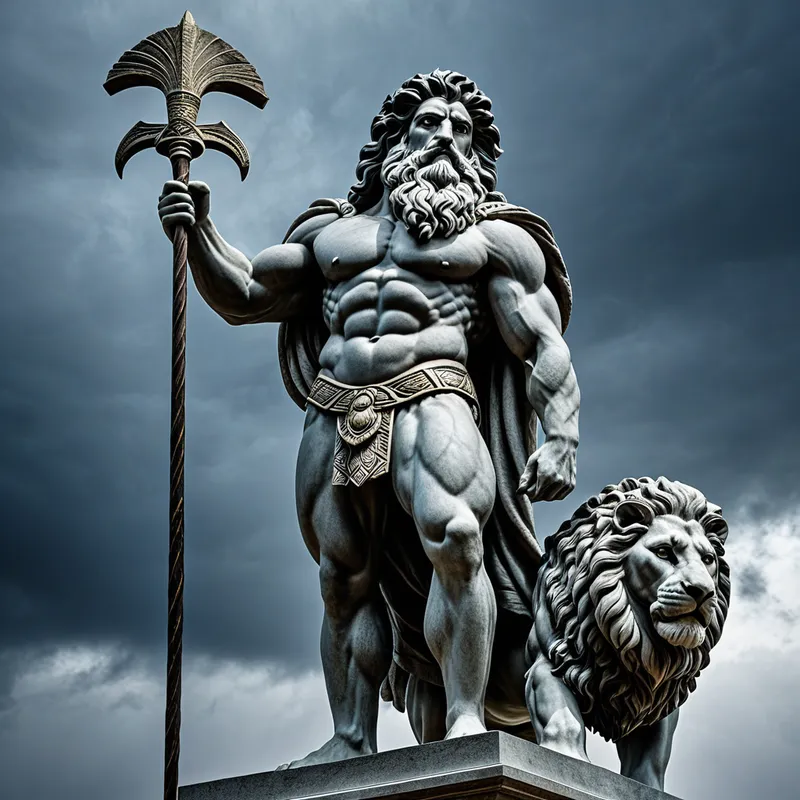
He faced the Nemean Lion, its hide impervious to bronze and iron, and learned to strangle it with his own arms, then skin it with its own razor claws. He hunted the nine-headed Hydra in its sulfurous swamp, discovering that for each head he severed, two more grew, until with fire and cunning he seared the necks and buried the one immortal head beneath a stone. He chased the Ceryneian Hind for a year, a pursuit of elusive grace. He cleaned the Augean Stables not with a shovel, but by diverting two rivers, a lesson in cleansing through elemental force.
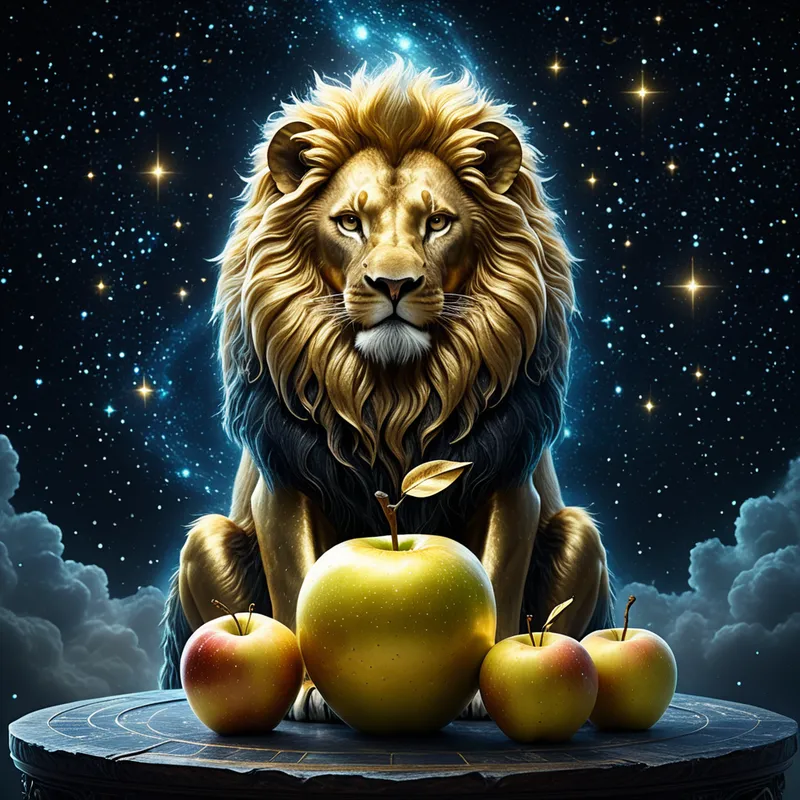
He drove away the Stymphalian Birds with deafening bronze rattles. He captured the Cretan Bull by the horns, and subdued the Mares of Diomedes. He journeyed to the land of the fierce Amazons to retrieve a magical girdle, and to the edge of the world to steal the red cattle of the monster Geryon. He descended into the very Underworld to leash Cerberus, the hound of hell, and bring it, slavering and raging, into the light of day. His final task was to pluck the golden apples from the garden of the Hesperides, which required him to trick the Titan Atlas himself into bearing the heavens once more.
Through fire, water, earth, and the realm of death, he labored. His body was a map of scars, his soul a vessel of grief. Yet, upon completion, there was no simple peace. His mortal life ended in agony, poisoned by a shirt soaked in the blood of the centaur Nessus. As his flesh burned away on a funeral pyre, his immortal part, purified by suffering, ascended to Olympus. There, reconciled at last with Hera, he was granted divinity and married to Hebe, Youth herself. The monster-slayer became a god.

Cultural Origins & Context
The myth of Heracles is not a single, fixed story but a vast, living tapestry woven over centuries. Its threads are found in the epic poetry of Homer and Hesiod, elaborated in the tragedies of Sophocles and Eurastides, and depicted on countless vases and temple metopes. He was a pan-Hellenic hero, claimed by every city-state yet belonging to none, a common cultural anchor in a fragmented world. Bards and playwrights told his tales in symposia and theaters, each rendition adapting to its time—sometimes emphasizing the brutal strongman, other times the suffering philosopher, or the divine protector.
Societally, Heracles functioned as a paradox. He was the ultimate model of arete (excellence) and kratos (power), the ideal of masculine strength protecting civilization from chaos. Simultaneously, he was a cautionary figure, demonstrating the terrifying, tragic consequences of unchecked rage (lyssa) and the heavy price of divine favor. His cults were widespread, often serving as protectors of gymnasia (where the human body was perfected) and of travelers, marking boundaries and dangerous passages. He embodied the Greek understanding that greatness and suffering are inextricably linked, and that even the most glorious life is subject to the cruel whims of moira and the envy of the gods.
Symbolic Architecture
The myth of Heracles is the psyche’s blueprint for confronting the unconscious. He is not a hero who seeks adventure, but one who is driven into it by a catastrophic failure of consciousness—his madness. The labors are not random trials but a prescribed, ritualized journey into the shadowlands of the soul, assigned by a feeble ego (Eurystheus) but demanded by a higher, if ruthless, authority (the oracle, fate itself).
The hero’s path is laid not on open roads, but through the swamps, forests, and caverns of the self. Each monster is a complex to be integrated, a psychic toxin to be transformed.
The Nemean Lion represents the raw, untamed, and seemingly invulnerable power of the instinctual self—it can only be mastered by embracing it (strangling it) and making its strength your own (wearing its skin). The Hydra is the problem of neurosis or trauma: attacking it directly (cutting off heads) only causes it to multiply; it requires the illuminating fire of awareness to cauterize the roots. Cleaning the Augean Stables symbolizes the monumental, often repressed, task of cleansing a lifetime of accumulated psychic “filth”—neglect, shame, or corruption—which cannot be done piecemeal but requires a cathartic, elemental flood. The final apotheosis signifies that the ego, having consciously endured and integrated these overwhelming contents of the unconscious, is no longer merely mortal; it achieves a new, transcendent relationship to the psyche’s totality.
The Dreamer's Resonance
When the pattern of Heracles stirs in modern dreams, it signals a profound, often forced, initiation into a process of atonement and heavy responsibility. The dreamer may not see a demigod, but they will feel the myth’s architecture: an overwhelming sense of being given an “impossible task” by a weak or foolish authority (a boss, a parent, an internal critic). They may dream of being in a labyrinthine bureaucracy (the Labyrinth), chasing an elusive animal (the Hind), or trying to clean a vast, filthy space that keeps refilling.
Somatically, this can manifest as a feeling of immense burden—aching shoulders, as if holding up the sky (Atlas’s task), or a clenched jaw, the body armoring itself for a fight. Psychologically, it is the process of confronting a “hydra-headed” problem: a relationship issue, an addiction, or a deep-seated fear that seems to grow new facets the moment one aspect is addressed. The dreamer is in the grip of what the labors represent: a non-negotiable, grueling, but ultimately structuring journey through their own underworld. The madness of Heracles is the disintegrating panic that precedes this journey, the old ego-structure breaking down so a new one can be built.

Alchemical Translation
The alchemical process mirrored in Heracles’s saga is the nigredo—the blackening, the descent into utter despair and fragmentation (the murder of his family)—followed by the long, arduous albedo—the whitening, the purification through relentless labor. Each labor is a specific operation on a different aspect of the prima materia, the base matter of the unrefined soul.
Individuation is the labor of carrying the heavens for a time, so that one might retrieve the golden apples of self-knowledge from the garden at the edge of the world.
The modern individual undertaking this “Herculean” work is not slaying literal monsters, but engaging in the equivalent psychic labor. Confronting the “Nemean Lion” might be facing a deep-seated anger or pride that feels invulnerable to reason. Battling the “Hydra” is the therapy work where addressing one memory triggers three more. “Cleaning the Augean Stables” is the committed, often revolting, work of processing childhood trauma or breaking family curses. The key is that these tasks are not chosen from a place of whim, but are laid upon the individual by life itself—a crisis, a loss, a diagnosis—that acts as the Oracle, dictating the path of atonement and growth.
The ultimate transmutation is not becoming a literal god, but achieving a state of psychological wholeness where one’s greatest wounds and weaknesses, having been consciously borne and worked through, become the source of one’s strength and resilience. The mortal ego that identified only with its power and its pain dies on the pyre, and what rises is a consciousness capable of bearing the contradictions of life—the divine and the bestial, glory and shame—without being torn apart. One becomes, in a psychological sense, a citizen of Olympus, able to see one’s personal Hera not only as a persecutor, but as the ruthless, necessary force that drove the entire transformative ordeal.
Associated Symbols
Explore related symbols from the CaleaDream lexicon: