Heiðrún Myth Meaning & Symbolism
A goat who feeds on the World Tree's leaves and produces an endless river of mead for the warriors of Valhalla, symbolizing eternal nourishment from cosmic sacrifice.
The Tale of Heiðrún
Listen, and hear the tale of the one who feeds the fallen. Not with bread or flesh, but with the golden memory of summer and the fire of forgotten suns.
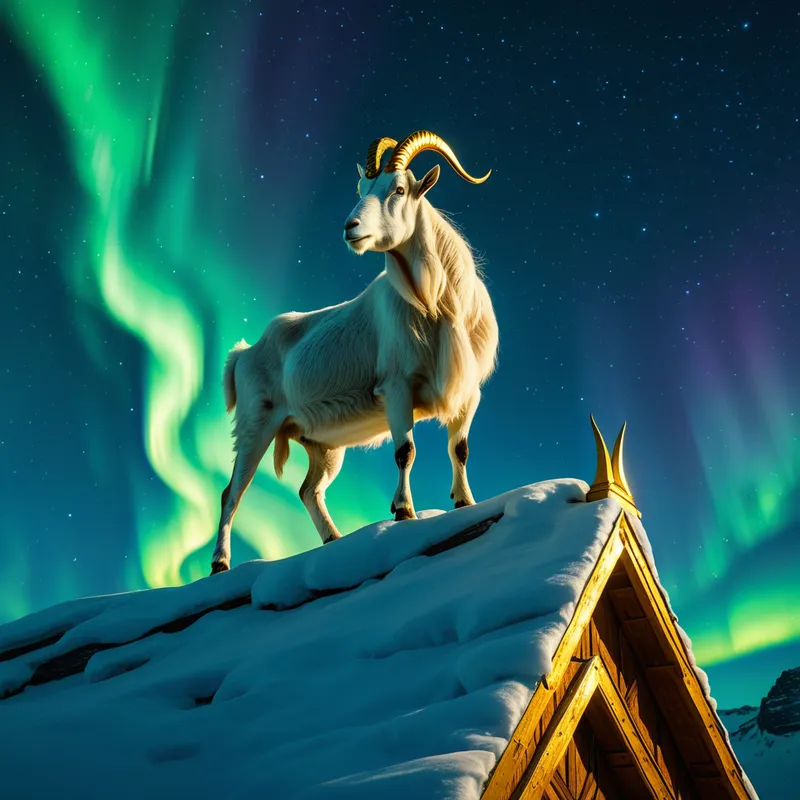
High above the clamor of Valhalla, where the roof is thatched with golden shields, there stands a creature of quiet grace. Her name is Heiðrún. She is no ordinary beast of field or forest. Her coat is the grey of mountain mist at dawn, and her horns curve like the crescent moon, tipped with a light that is not of this world. She stands, patient and eternal, upon the very roof of the hall of heroes.
Beneath her, in the vast courtyard, the Einherjar clash in daily battle, their shouts and the ring of steel a thunderous hymn to Odin. They fight, they fall, and they rise again, their wounds healed, their spirits fierce with the hunger for glory and the deeper hunger for remembrance. And from this hunger, a silence grows as the sun sinks.
Then comes the keeper, the gentle Andhrímnir. He does not call to the goat on the roof. He simply brings forth the great vat, Eldhrímnir, and places it beneath her. And Heiðrún turns her head. She does not look down at the hall or the warriors. She looks out, beyond the walls of Ásgarðr, to where the great limbs of the Yggdrasil stretch into the void.
There, growing from the World Tree itself, is the tree Laerad. Its leaves are not green, but shimmer with a metallic, verdant light, each one holding a droplet of cosmic dew. Heiðrún stretches her neck, and with a soft, tearing sound, she begins to feed. She consumes the leaves of the World Tree—the very fabric of reality, the memory of all that has grown and been.
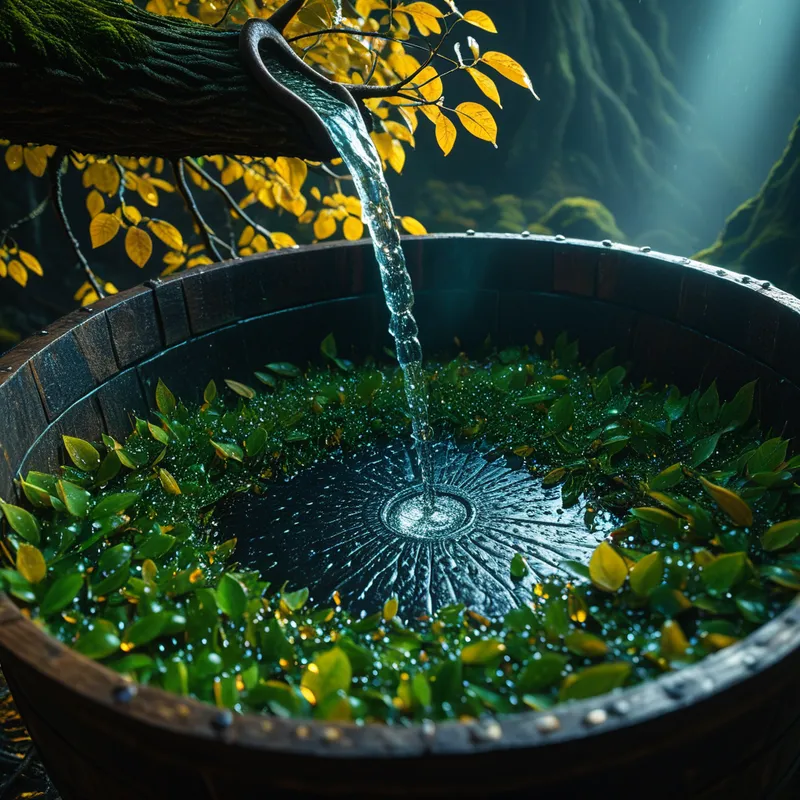
And then, the miracle. From her udders flows not milk, but mead. A torrent of liquid gold, foaming and bright, richer than any honey-wine of Midgard. It streams in an unending river into the waiting vat below. The sound is a gentle, perpetual cascade, a counterpoint to the day's violence. This is the mead that fills the cups of every Einherjar. This is the drink that quenches not thirst, but soul-deep yearning. It is the taste of life remembered, of courage distilled, of purpose renewed. She feeds, and they drink, and the cycle holds. She is the silent heart atop the roaring hall, the giver who asks for nothing but the leaves of eternity.
Cultural Origins & Context
The myth of Heiðrún is preserved primarily in the Grímnismál, spoken by the disguised Odin himself. It is a piece of cosmological detail, a brushstroke in the vast mural of Norse myth that explains the mechanics of the afterlife. Unlike the grand narratives of theft and betrayal surrounding the Mead of Poetry, Heiðrún's story is one of serene, dependable function.
This was not a myth for public festival, but for the skaldic poet and the discerning listener around a longfire. It answered a profound, practical question about the mythic world: how do the warriors sustain their eternal vigil? The answer was not magic conjured from nothing, but a perfect, closed system of sacrifice and reciprocity. Heiðrún’s existence provided a model of cosmic economy. Her nourishment came from Yggdrasil, the axis of all worlds, and her product sustained the army of the gods. It framed the afterlife of the heroic dead not as static reward, but as participation in an eternal cycle of consumption and regeneration, mirroring the agricultural and pastoral cycles critical to Norse survival.
Symbolic Architecture
Heiðrún is the archetype of the ultimate nourisher, but her symbolism is far more complex than simple provision. She operates at the intersection of several profound cosmic principles.
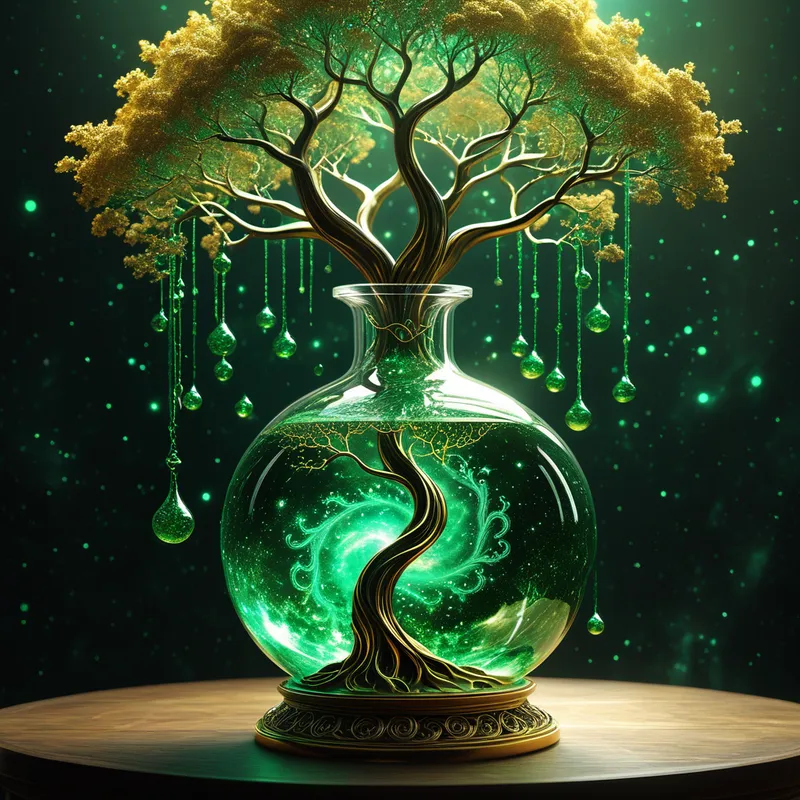
First, she embodies the concept of transmutation. She consumes one sacred substance (the leaves of the World Tree) and produces another (the mead of Valhalla). She is a living alembic, a biological vessel for alchemical change. The leaves represent raw, undifferentiated cosmic matter—the "all-potential" of Yggdrasil. The mead represents distilled spirit, refined essence, the "inspiration" or "life-force" ready for consumption.
The true nourisher does not create from void, but transforms what is given, making the inedible edible, the potential actual.
Second, she represents silent, foundational sacrifice. The Einherjar are the celebrated heroes; Odin is the wise ruler; Andhrímnir is the active preparer. Heiðrún is the quiet source, often overlooked but utterly indispensable. Her sacrifice is perpetual and self-renewing, asking for no glory. She is the psychological foundation upon which the ego's battles are fought—the unconscious, nourishing psyche that supports conscious heroic endeavor.
Finally, she is a symbol of cyclicality and interconnection. She forms a direct link between Yggdrasil (the structure of reality) and Valhalla (a specific domain within it). Her body is the conduit. This illustrates a core Norse—and deeply psychological—belief: nothing exists in isolation. The sustenance of the highest hall is drawn directly from the roots of existence.
The Dreamer's Resonance
To dream of Heiðrún is to dream of a deep, somatic process of psychic nourishment. The dreamer may not see a goat, but may experience symbols of silent, automatic giving: a tree that bleeds honey, a tap that never runs dry, a quiet animal that provides exactly what is needed.
Such dreams often surface during periods of intense output or "warriorship" in waking life—times of career battles, creative marathons, or emotional conflicts where the dreamer feels like an Einherjar, constantly fighting and expending energy. The dream of the nourisher asks: What is feeding you? It points to a fear that the inner well is running dry. The appearance of the Heiðrún archetype in dreams is the psyche's reassurance. It indicates the existence of an inner resource, a connection to a personal "World Tree"—perhaps one's core values, ancestral strength, or the unconscious itself—that can be "consumed" and transmuted into the needed energy.
The somatic feeling accompanying such a dream is often one of profound relief, a release of tension in the chest or gut, as if a deep, unacknowledged hunger is suddenly being met by an unknown source.
Alchemical Translation
For the modern individual, the myth of Heiðrún models the process of building a sustainable inner economy. Our conscious mind is the hall of Valhalla, filled with competing thoughts, desires, and internal "warriors" (responsibilities, ambitions, conflicts). These aspects consume vast amounts of psychic energy. Individuation requires that this hall be nourished not by plundering the external world, but by establishing a sacred, internal source.
The Alchemical Operation here is Sublimation—the conversion of a lower substance into a higher one. The "Leaves of Laerad" are the raw data of our existence: our daily experiences, our memories, our pains, our mundane thoughts. Most leave them to wither. The integrated psyche, following Heiðrún's example, learns to "consume" them. This is the practice of mindful reflection, of journaling, of therapy, of artistic expression—the chewing over of life's foliage.
The mead of meaning is not found; it is distilled from the bitter and sweet leaves of lived experience through the patient alembic of reflection.
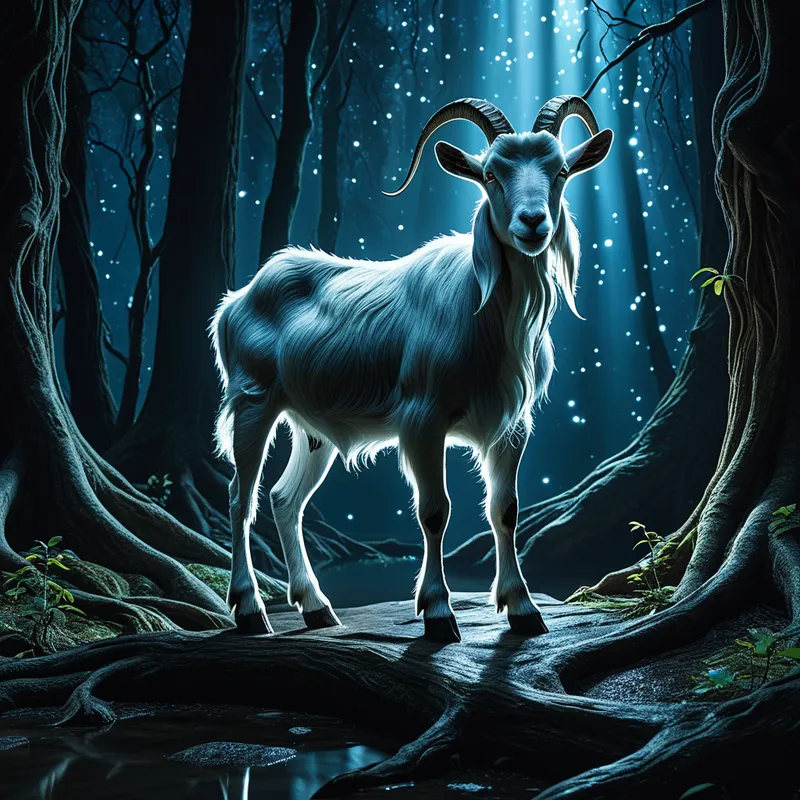
The Heiðrún Within is that psychic function that performs this transmutation automatically, in the background. It is the part of us that turns grief into compassion, failure into wisdom, and simple observation into insight. To cultivate her is to trust that we are connected to our own Yggdrasil—the deep, rooted structure of the Self. We must ascend to the "roof" of our own awareness, step back from the battlefield of daily drama, and turn toward the nourishing tree of the unconscious. From there, what flows is not mere reaction, but a distilled, potent essence—the mead that truly sustains the journey, drop by golden drop, forever.
Associated Symbols
Explore related symbols from the CaleaDream lexicon: