Hawaiian Creation Myth Myth Meaning & Symbolism
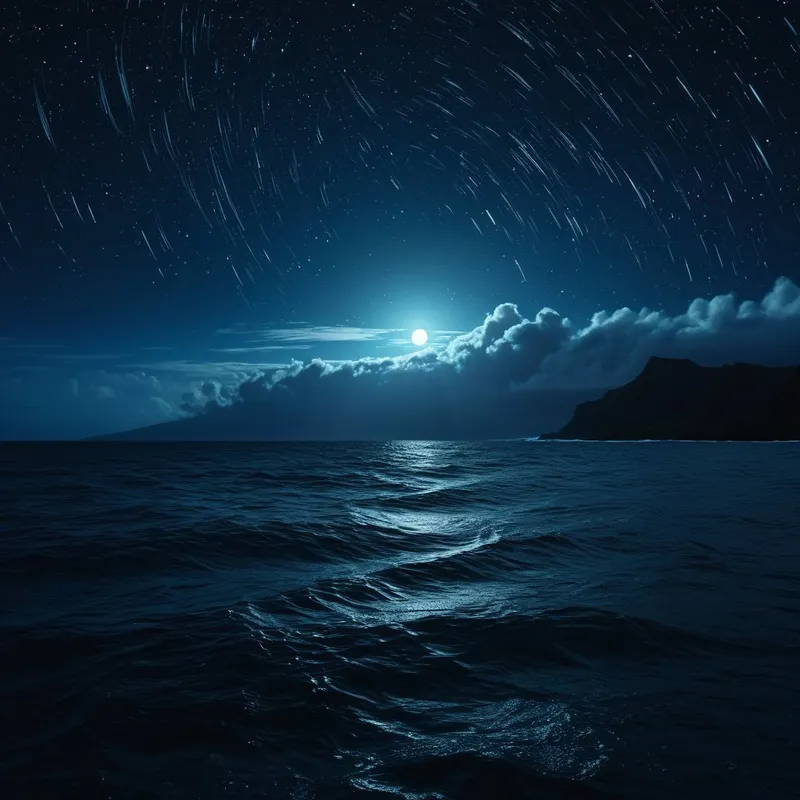
From primordial darkness, the Kumulipo chant weaves a genealogy of life, where gods, humans, and all beings emerge from the deep, sacred night.
The Tale of Hawaiian Creation Myth
Listen. Before the sun knew its path, before the wind had a name, there was Pō. Not an empty void, but a deep, potent, and pregnant darkness. A darkness that was alive, a darkness that was the first ancestor. From within this warm, boundless Pō, the chant of creation began—not with a bang, but with a vibration, a whispered genealogy. This is the Kumulipo.
The chant speaks. It tells of the first life, the koʻa, emerging from the rock of the deep ocean. It was a slow, deliberate awakening. The sea pulsed with potential. From the coral came the sea cucumber, the jellyfish, creatures of softness and drift. The night, Pō, was their womb and their world. The chant weaves on, a rhythmic, unspooling thread connecting each new form to the last. The fish of the dark depths, then the fish of the shallow reefs. Life was climbing a ladder of complexity, but it was all still held in the embrace of the night.
Then, a turning. The creatures of the sea began to look toward the surface, toward a new darkness—the dark of the land. The Kumulipo names them: the grub, the moth, the caterpillar. Life now crawled upon the earth, still in the age of Pō. The chant is meticulous, a genealogist of the cosmos. It brings forth the small creatures, then the great: the rat, the dog, the pig. The forest grows dense in the telling.
And then… a new quality of being stirs. The gods themselves are born from this same genealogical stream. Wākea, the vast sky, and Papa, the fertile earth, emerge. Their union is the archetype of all union. From them comes the taro plant, Haloa, whose heart-shaped leaf beats with green life. And from them, too, comes the first human, also named Haloa, the long stalk, connecting the heavens to the earth. The darkness, Pō, has not been defeated; it has been fulfilled. The first light of Ao dawns because the night gave it birth. The chant does not end, but opens like a blossom, its final verses tying this cosmic genealogy directly to the lineage of the chiefs, affirming that every human, every creature, every rock and star, is kin, born from the same sacred, dark source.
Cultural Origins & Context
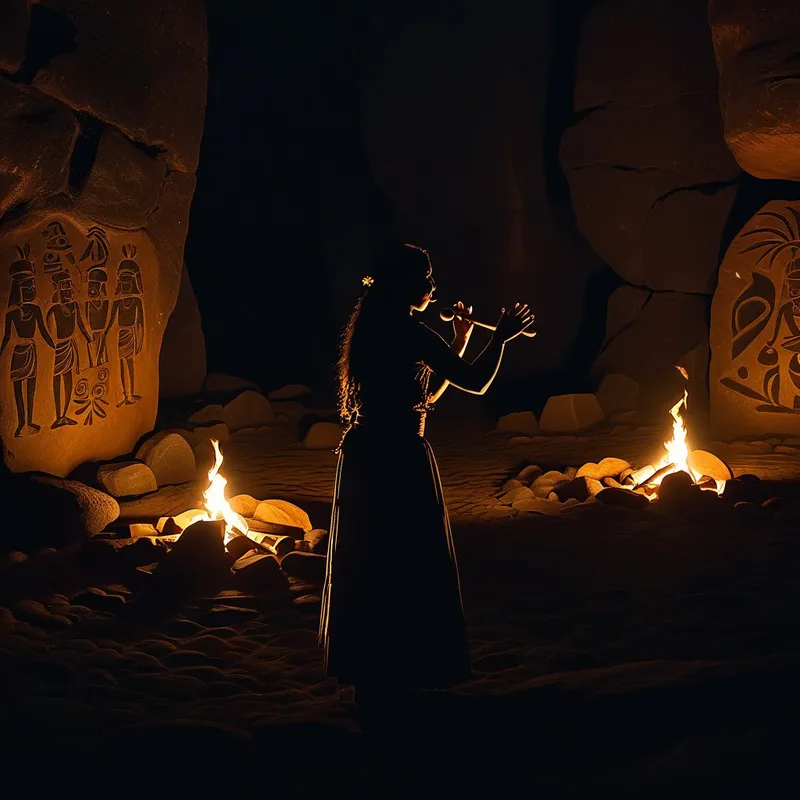
The Kumulipo is not merely a story; it is a mana-filled chant, a two-thousand-line epic of origins. It was preserved and recited by specially trained kahuna and chanters, often during the sacred Makahiki season or at the birth of a high-ranking aliʻi (chief). Its primary function was genealogical and legitimizing. By tracing the lineage of a chief back through generations of gods to the very first life forms in Pō, the chant established their divine right to rule and their intimate, familial connection to the entire cosmos.
This oral scripture was a living map of the Hawaiian worldview, where everything—the land (Papa), the sky (Wākea), the plants, animals, and people—was interconnected and alive with familial responsibility, or pilina. To recite the Kumulipo was to re-activate the bonds of creation, to remind the community of their place in a sacred order that began in darkness and culminated in their collective life.
Symbolic Architecture
The Kumulipo presents a profound symbolic architecture centered on emergence, relationship, and the primacy of the dark.
Creation is not an act of separation from a void, but a process of differentiation within a fertile unity. The night is not the absence of light, but the presence of all potential.
The central symbol is Pō. Psychologically, this represents the unconscious—not as a chaotic junk drawer, but as the fecund, intelligent ground of being from which consciousness (Ao) slowly and organically emerges. The sequential birth of life forms—from simple coral to complex human—mirrors the psyche's development: first come the primitive, instinctual structures (the marine life of the deep self), then the more complex emotional and social capacities (the land creatures), and finally, the birth of the divine parents (Wākea and Papa) who symbolize the archetypal principles of spirit and matter, whose union makes conscious individuality possible.
The Haloa narrative is equally critical. The firstborn is the taro plant, the food source; the second is the human child. This establishes an ethic of elder sibling/younger sibling reciprocity. The human is not master of nature, but its younger sibling, dependent upon and responsible for it. This symbolizes the ego's relationship to the instinctual, nourishing base of the psyche from which it sprang.
The Dreamer's Resonance
When the pattern of the Kumulipo resonates in modern dreams, it often signals a profound period of psychic gestation and emergence. The dreamer may experience:
- Dreams of Deep, Warm Oceans or Caves: These are landscapes of Pō. The somatic feeling is one of weightless suspension, safety, and potential. There is no urgency, only a slow, cellular unfolding.
- Dreams of Genealogical Searching or Meeting Ancestral Figures: This reflects the chant's core function. The psyche is actively connecting the dreamer's current consciousness to its deeper, ancestral layers—not just family lineage, but the lineage of one's own psychological structures.
- Dreams of Simple, Primordial Life Forms: Seeing coral, amoebas, or unformed creatures suggests a return to the foundational "code" of the self. It is a reset, a reconnection with the most basic patterns of one's being before the complexities of persona and trauma took shape.
The process is one of re-sourcing. The psyche, perhaps feeling fragmented or alienated in the bright, busy world of Ao, returns to the nourishing darkness of Pō to remember its origins and be re-knit into its own intrinsic wholeness.
Alchemical Translation
The alchemical journey modeled by the Kumulipo is the opus contra naturam—the work against one's current, fractured nature—by working with one's deepest, oldest nature. It is the path of individuation through genealogical integration.
The goal is not to escape the dark, but to honor it as the source, and in doing so, bring its unifying wisdom into the light of day.
The first stage, the nigredo, is not a despairing blackness but the willing immersion into one's personal Pō. This is the introspective work of therapy, meditation, or creative incubation—dwelling in the unknown parts of the self without forcing light upon them. From this respectful dwelling, the first forms of new life emerge: simple insights, raw emotions, forgotten memories (the coral and grubs of the psyche).
The sequential, genealogical progression of the chant is the blueprint for integration. One does not jump to "enlightenment." One patiently connects each newly emerged psychic content to the last, building a coherent inner lineage. "This anger is born from that childhood wound, which is related to this ancestral pattern, which has its roots in a basic survival instinct." This is the chanting of one's personal Kumulipo.
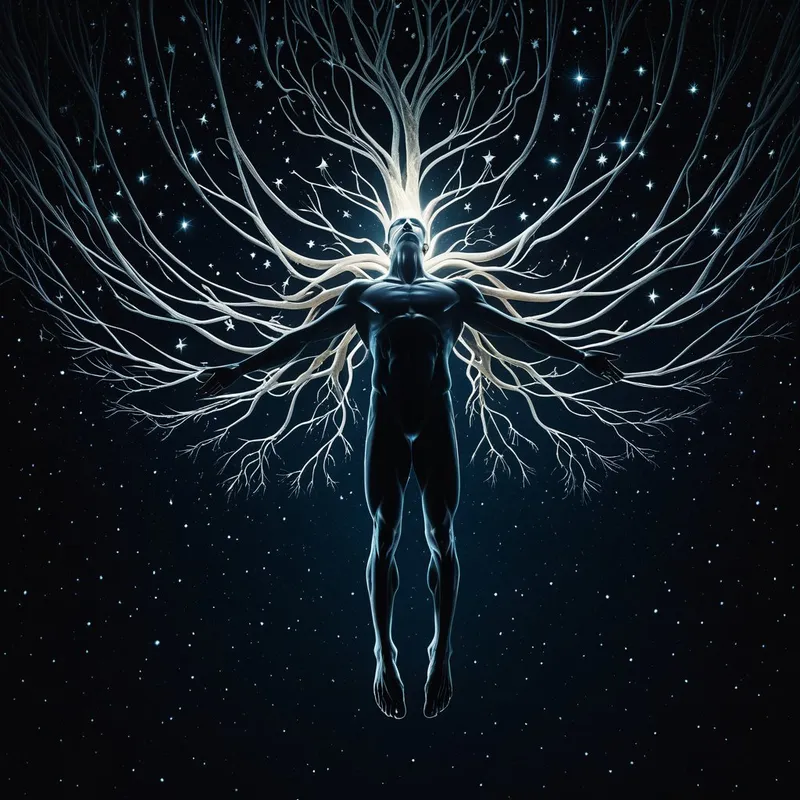
The birth of the inner Wākea and Papa represents the crystallization of enduring inner principles—perhaps a stable sense of meaning (sky) and a grounded, embodied presence (earth). Their union births the Haloa within: a conscious self that recognizes its elder sibling, the nourishing, instinctual body of the unconscious. The individual is no longer at war with their depths but in a relationship of sacred reciprocity. The light of conscious life (Ao) dawns, not by banishing the night, but because it has fully honored and incorporated the night's creative power. The individual becomes a living chant, a bridge between the deep, ancestral darkness and the illuminated world of action and relationship.
Associated Symbols
Explore related symbols from the CaleaDream lexicon: