
Haumea Goddess of Childbirth Myth Meaning & Symbolism
The story of Haumea, the primordial Hawaiian goddess of childbirth who embodies the unending cycle of creation, transformation, and the sacred power of the feminine.
The Tale of Haumea Goddess of Childbirth
Listen. Before the great canoes, before the first fires were lit on the shore, the land itself was born from a dream of the deep. And in that dream walked Haumea. She was not a goddess of distant heavens, but of the rich, red soil of Hawaiʻi itself. Her breath was the mist on the kupukupu fern, her voice the whisper in the kukui grove. She was the womb of the world.
She walked among the first people not as a distant spirit, but as a woman. She took a mortal husband, and from their union sprang a great and tangled lineage—chiefs and farmers, fishermen and healers. But Haumea was not bound by a single lifetime. When age would creep into her bones, she would simply walk into the forest, or step into a sacred spring. She would shed her skin like the ʻōhiʻa lehua sheds its bark, and emerge anew, a young maiden once more, to marry again and extend her family line. She was the perpetual mother, the cycle of birth and death made flesh.
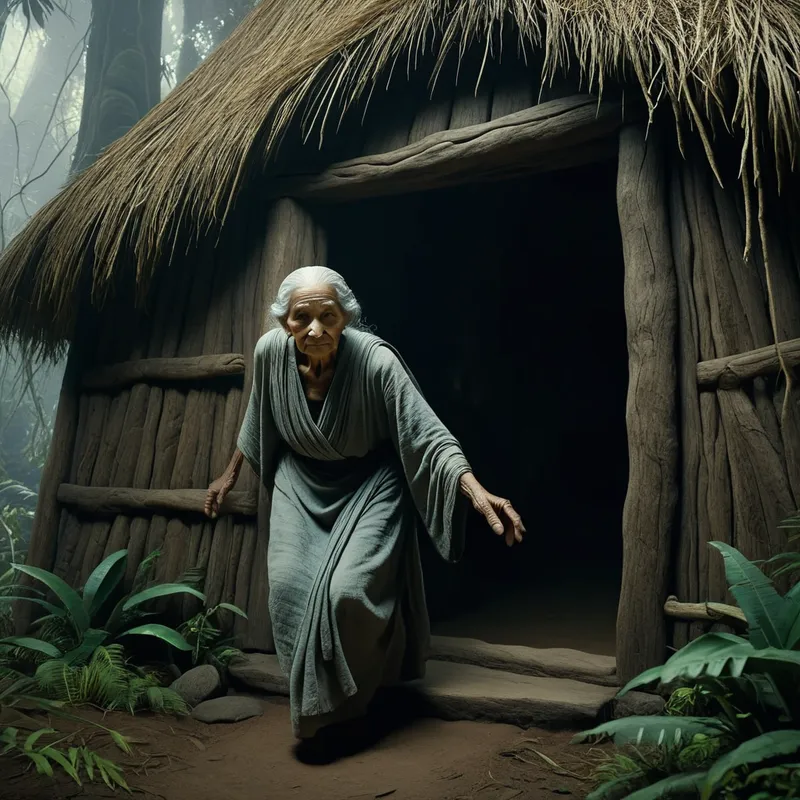
The people knew her magic. They saw how she could cause a barren breadfruit tree to swell with fruit by striking its trunk with a wand. They witnessed her take the form of different women throughout the generations, always there at the moment of greatest need—the moment of birth. In the dim, sacred space of the hale peʻa, the birthing hut, her presence was palpable. A laboring woman, gripping the ʻaha cord, might see an old, wrinkled crone enter. The crone’s hands, gnarled like kī roots, would touch her belly. And as the touch spread warmth, those hands would smooth, becoming young and strong, guiding the new life into the world. Haumea did not just deliver babies; she delivered the future itself, one sacred, screaming breath at a time.
Her greatest conflict was not with a monster, but with the very order of the world her children built. As her descendants multiplied, establishing the rigid kapu system, the direct, wild, and transformative magic of the mother became contained by the rules of the father. The story tells of a time when the god Kū demanded separation, order, and distinct roles. Haumea’s magic—the magic of spontaneous creation, of changing form, of women eating alongside men—was seen as chaotic, a threat to the new mana of structure.
And so, in many tellings, she receded. Not in defeat, but in transformation. She did not die; she returned to the essence of the land. She became the wao nahele, the deep forest where all life begins. She became the ʻāina, the land that feeds. Her body was the fertile soil, her bones the volcanic rock, her blood the rivers that ran to the sea to begin the cycle again. She became not a story of the past, but the very ground of being, waiting in the dark, fertile earth of every potential beginning.
Cultural Origins & Context
The myth of Haumea is woven into the kumulipo, the Hawaiian creation chant, which traces the lineage of the cosmos and the aliʻi (chiefs) back to the primordial night. She is among the earliest beings to emerge from the chaos of Po (darkness). These stories were not mere entertainment; they were the sacred texts and historical records of the Hawaiian people, recited by trained kāhuna during important rituals, births, and ascensions to chiefly rank.
Her myth served a profound societal function. It established the divine right of the aliʻi, who could trace their lineage directly back to her, grounding their mana in the very source of creation. For common people, Haumea was the intimate goddess of the most critical and dangerous human event: childbirth. She embodied the hope for survival, for the continuation of the family line (ʻohana), and for the fertility of the land that sustained them. Her presence in the mythic corpus affirmed that the processes of life—birth, growth, decay, and rebirth—were not biological accidents but sacred, divine patterns.
Symbolic Architecture
Haumea is the archetype of the Magn Mater who is not static, but inherently transformational. She symbolizes the creative principle itself, which must continually die to its old form to give birth to the new.
The true creator does not merely make; she becomes the process of making, and in being consumed by it, is endlessly renewed.
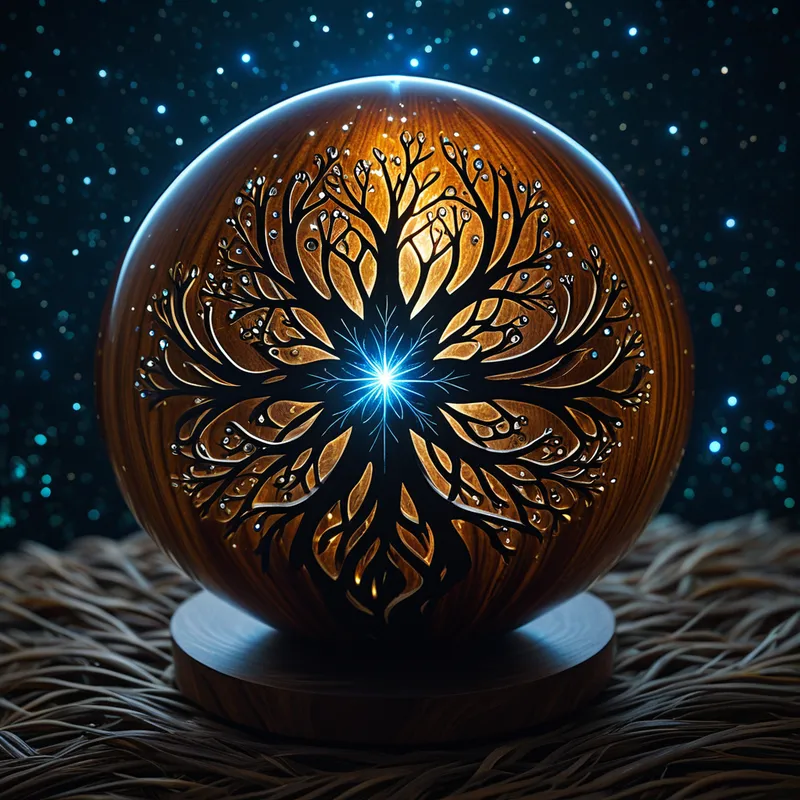
Her cyclical rejuvenation—from crone to maiden—shatters the linear perception of time. It represents the psychological truth that within the psyche, archetypes are not fixed entities but dynamic potentials. The "mother" within is not only the nurturer but also the transformer; the "old age" within is not an end but a state of potent wisdom ready to be shed for a new chapter. Her conflict with the kapu system mirrors the eternal tension between the unstructured, fertile chaos of the unconscious (the feminine principle as prima materia) and the conscious ego's need for order, structure, and control (the masculine principle as logos).
The Dreamer's Resonance
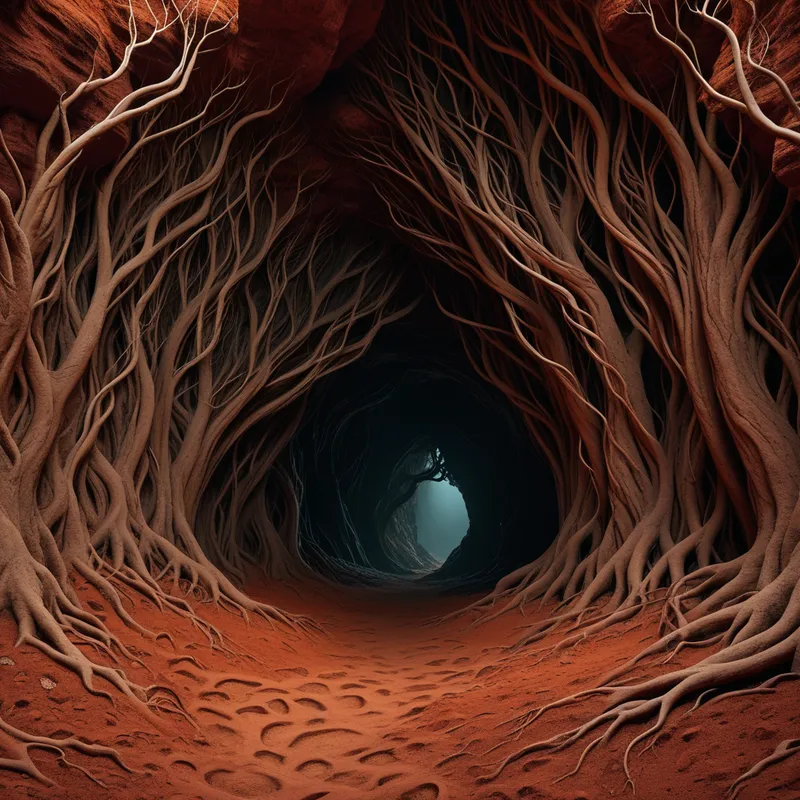
To dream in the pattern of Haumea is to dream of profound inner fertility and the labor pains of psychic birth. One might dream of ancient, wise women who transform into young girls; of finding secret, fruit-laden trees in a barren landscape; or of being in a dark, earthy cave where the walls themselves pulse with life.
Somatically, this can correlate with sensations in the pelvic bowl or solar plexus—a deep, rhythmic pressure or warmth. Psychologically, the dreamer is likely at a threshold where an old identity, a long-held role, or a completed phase of life is ready to be shed so a new potential can be born. There is often a mixture of awe and terror, the dual sensations of creation and dissolution. The dream is an announcement from the deep Self: the transformative, life-giving force within is active. You are pregnant with your own future.
Alchemical Translation
The individuation process modeled by Haumea is the alchemy of perpetual self-creation. It is not a journey with a single goal, but a commitment to the cycle itself.
Individuation is not about becoming someone new once, but about consenting to be the vessel for an endless series of rebirths.
The first step is recognizing the prima materia within—the raw, unformed creative urge or life force (Haumea as the fertile earth). The "labor" is the conscious engagement with this material: the suffering, effort, and focus required to bring an idea, a feeling, or a new aspect of personality to light. Haumea’s rejuvenation is the crucial final stage often missed: the transmutation of the creator by the creation. After giving birth to a new skill, a reconciled complex, or a creative work, you are not the same person. Part of the old you has been sacrificed, shed like a skin. You must consciously integrate this death to fully inhabit the new life. The modern individual must learn to be both the enduring earth and the cyclical tree that grows, flowers, seeds, dies back, and grows again from its own roots.
Associated Symbols
Explore related symbols from the CaleaDream lexicon:
- Goddess — The divine feminine principle as an active, transformative force of nature, embodying both creation and the cyclical law of change that governs it.
- Earth — The primordial body of Haumea, representing the fertile, receptive, and sustaining ground from which all life emerges and to which it returns.
- Birth — The core sacred act Haumea presides over, symbolizing any moment of painful, necessary, and miraculous emergence from potential into manifest reality.
- Transformation — The essential nature of Haumea’s being, representing the psyche’s capacity to shed outworn identities and structures for renewal.
- Tree — A symbol of Haumea’s connection to the forest and her life-giving magic, representing lineage, growth, and the link between the underworld, earth, and heavens.
- Blood — The sacred fluid of life and lineage, tying directly to childbirth, fertility, and the visceral, physical reality of Haumea’s domain.
- Mother — The archetypal nurturing and generative force, which in Haumea’s myth expands to include the mother as the agent of her own perpetual rebirth.
- Root — The hidden, anchoring source of life and identity, connecting to Haumea’s ultimate return to and existence as the foundational earth itself.
- Seed — The encapsulated potential for an entire world, representing the unmanifest future that Haumea guards and midwives into being.
- Rebirth — The cyclical outcome of Haumea’s journey, symbolizing the psychological process where an ending is simultaneously the precondition for a new beginning.
- Ritual — The sacred framework, like the practices in the birthing hut, through which the raw power of creation is safely channeled and honored.
- Circle — The perfect geometric representation of Haumea’s eternal cycle of aging and rejuvenation, with no true beginning or end, only perpetual motion.