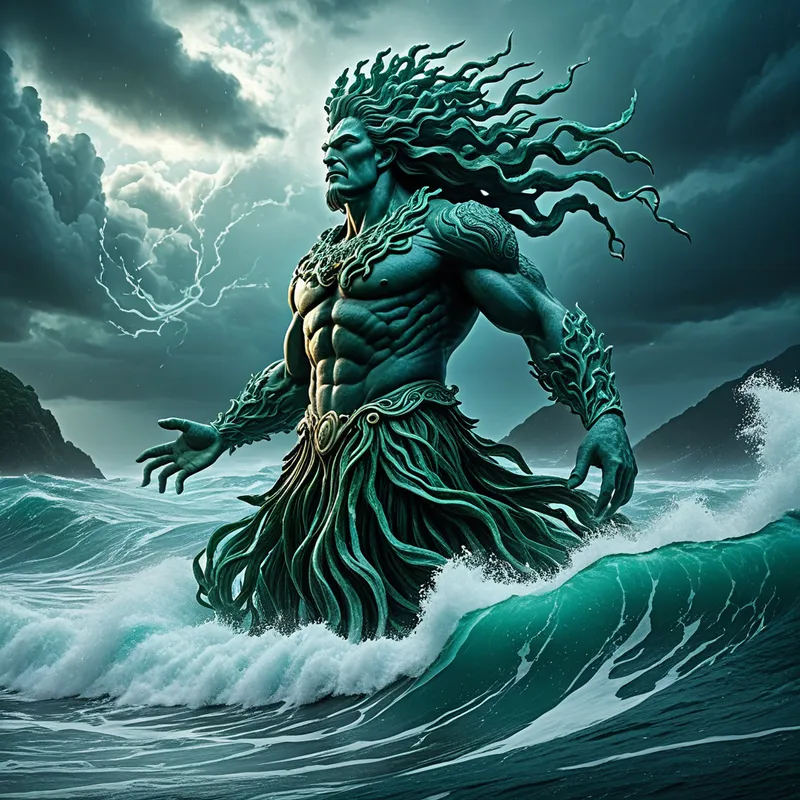
Haik God of the Sea Myth Meaning & Symbolism
A myth of a sea god's wrathful battle against a land god, symbolizing the primal clash and necessary union of opposing psychic forces.
The Tale of Haik God of the Sea
Listen. Before the islands were scattered like jewels, the world was a simpler, more violent place. The great Haik ruled the boundless, salt-churned deep. His palace was in the crushing dark where no sun dared reach, and his court was the leviathans and the shimmering schools of fish that moved as one mind. His was the realm of the unfathomable, the tidal pulse, the womb of all life. And he was content.
But across the foaming line of the shore, another power held sway. Ubbog, the god of the dry land, whose bones were the mountains and whose breath was the wind through the tall grass. His domain was the fixed, the rooted, the known. Where Haik was fluid and deep, Ubbog was solid and high. For an age, they kept a tense peace, the whisper of the surf their only conversation.
Then came the offense. The stories whisper it was a matter of pride, a stolen treasure, a boundary crossed. Some say Ubbog’s people built their fires too close to the sacred tideline, their smoke insulting the sea’s mist. Others murmur that Haik’s creatures ventured too far into the river mouths, claiming what was not theirs. The reason is lost to the roar of what followed. All that is known is that a fury colder than the abyss awoke in Haik.
He did not merely grow angry. The ocean became his anger. From his palace of gloom, he summoned his power. The waters, once nurturing, drew back in a monstrous inhalation, exposing the continental shelf like a wet wound. Then, with a sound that cracked the sky, he hurled it all forward. This was no mere wave. It was the sea itself standing up to walk, a wall of liquid mountain taller than the clouds, crowned with lightning and the screams of uprooted storms. It was the Great Deluge given a face and a will.
Ubbog saw the annihilation coming. He planted his feet, driving them deep into the bedrock of the world. As the cataclysm struck, he did not yield. Instead, he raised the land to meet it. The collision was not of two armies, but of two concepts—Fluidity against Solidity, Depth against Height, Chaos against Order. The sound was the world ending and being remade in the same instant.
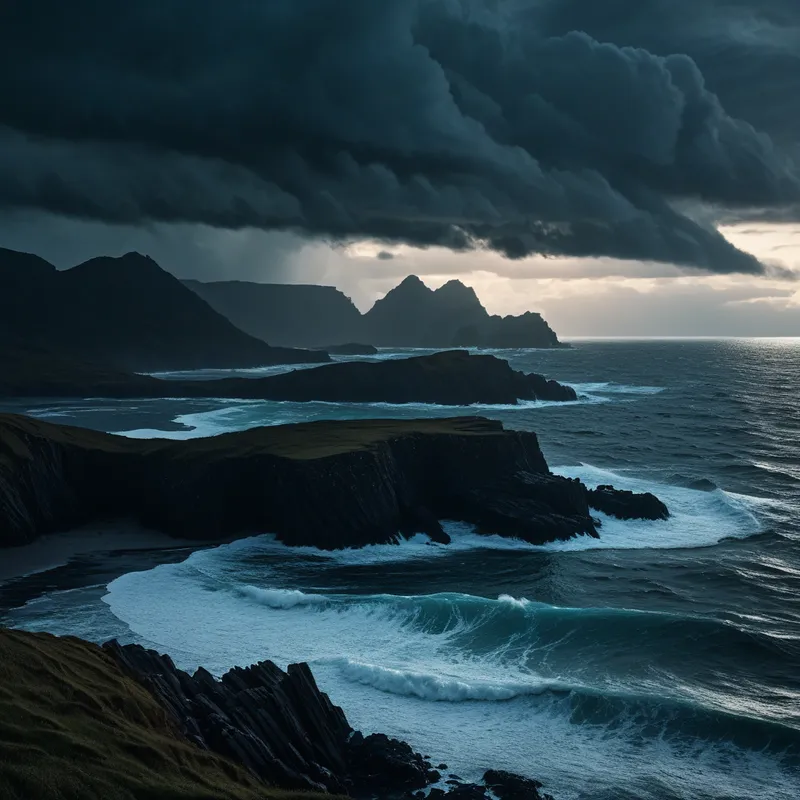
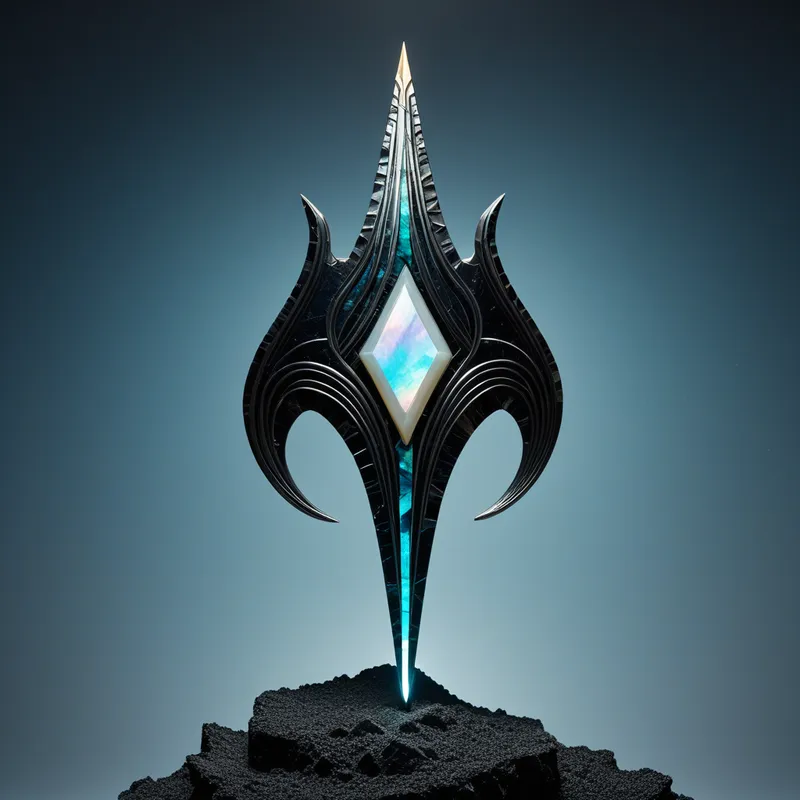
Where Haik’s trident struck Ubbog’s raised shield of earth, the land did not simply break; it shattered. Great chunks of the continent were torn free, sent spinning and sinking into the furious sea. But Ubbog held firm, and these shattered pieces did not vanish. They became anchored, rising from the foam as rugged islands, their cliffs the scars of the divine battle. The Philippine archipelago was born not from gentle creation, but from this titanic, wrathful clash. The battle subsided, not with a treaty, but with exhaustion. A new, fractured, and breathtaking order emerged from the chaos—a mosaic of land and sea forever intertwined, a permanent testament to their conflict. Haik, his wrath spent, returned to his deep, but his trident’s marks were now the very shape of the world.
Cultural Origins & Context
The myth of Haik finds its roots in the pre-colonial animist and anito-worshipping traditions of the various ethnic groups in the Philippine archipelago. It is not a singular, canonical text but a narrative pattern—a mythologem—that surfaces in different forms, particularly among northern Luzon groups like the Igorot. Passed down orally by community elders, shamans (babaylan or mumbaki), and epic chanters, this story functioned as more than entertainment.
In a world defined by the ocean’s bounty and its terrifying power, the myth served a vital cosmological and sociological purpose. It explained the most fundamental feature of the Filipino environment: the archipelago itself. The story provided a sacred reason for the fragmented, island-dotted landscape, transforming geography into divine drama. It also codified a profound respect for natural forces. Haik’s wrath was a narrative container for the very real dangers of typhoons, storm surges, and tsunamis—reminders that humanity lives at the mercy of, and in the space between, colossal powers. The myth taught balance, caution, and the understanding that the line between the nurturing sea and the destructive flood is drawn by the whims of a god.
Symbolic Architecture
At its core, the myth of Haik is a profound allegory of psychic forces. Haik represents the anima, the unconscious, chaotic, and emotional depths. He is the realm of feeling, intuition, the primal urge, and the collective unconscious—vast, creative, and potentially annihilating. Ubbog symbolizes the animus, the conscious ego, structure, rationality, and order—the part of us that seeks to define, build, and hold firm.
The birth of consciousness is not a peaceful event, but a catastrophic separation from the unconscious sea, leaving a landscape of fragmented islands of identity.
Their battle is the eternal internal conflict between these poles: between the flood of emotion that threatens to overwhelm rational thought and the rigid ego that attempts to repress the deep, instinctual self. The resulting archipelago is the psyche itself—not a unified continent, but a complex, fragmented self where islands of consciousness (ego-identities) rise from and are perpetually surrounded by the vast, unknown sea of the unconscious. The myth does not champion one god over the other; it portrays the creation of a livable world—a functional psyche—as the direct result of their titanic and necessary struggle.
The Dreamer's Resonance
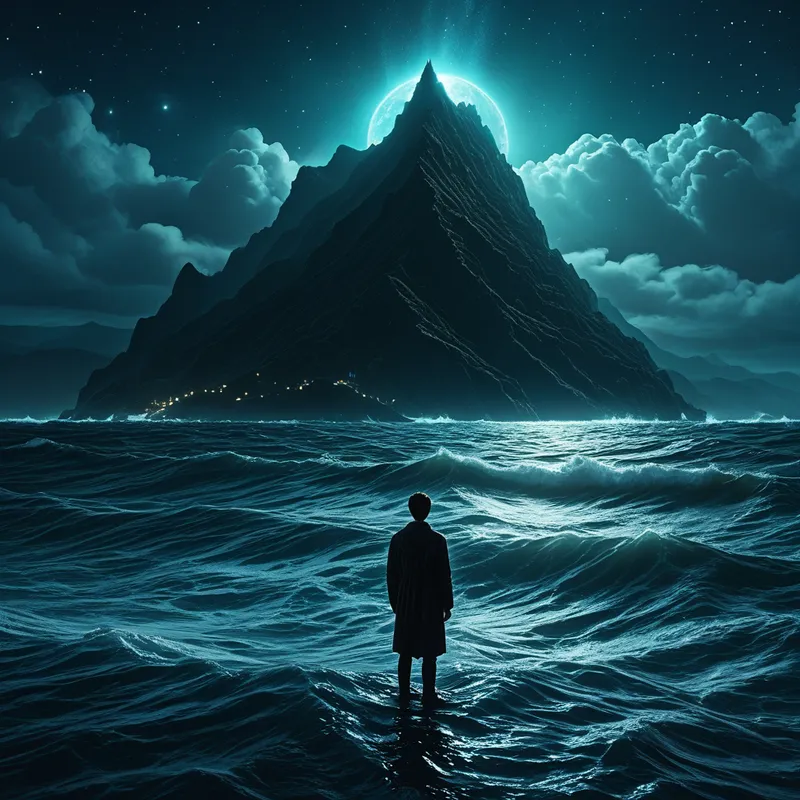
When this mythic pattern stirs in the modern dreamer, it often manifests as dreams of overwhelming natural disasters. Dreaming of a colossal wave, a terrifying flood, or the ground cracking open signifies that a long-contained depth of unconscious material—a Shadow aspect, a tidal wave of grief, a repressed rage—is breaking against the shores of conscious awareness. The somatic experience is one of profound vulnerability and awe; the dreamer may wake with a racing heart, a sense of breathlessness, or the visceral memory of shaking ground.
Conversely, dreams of steadfastly holding back such a deluge, or of finding refuge on a newly formed island in the chaos, point to the ego’s defensive mobilization. The psyche is in the active, often painful, process of restructuring. The old, solid continent of the personality is being shattered by an upwelling from the depths, forcing the dreamer to build a new sense of self on emerging, unfamiliar ground. This is the psyche’s innate healing impulse, using the iconography of the myth to enact a necessary, if terrifying, transformation.
Alchemical Translation
The alchemical journey of individuation mirrors Haik’s battle precisely. The initial state is one of unconscious unity (unio naturalis), where the ego is submerged in the sea of the unconscious. The first step is separatio—the violent emergence of the ego (Ubbog) asserting itself against the primal mass. This is a necessary inflation, even an arrogance, which invites the unconscious’s furious response (nigredo, the blackening, the flood).
The goal is not to drain the sea or level the mountains, but to learn to sail the straits between them and build harbors on their shores.
The cataclysmic clash is the coniunctio oppositorum—the conjunction of opposites—but in its most violent, preliminary form. The true alchemical marriage occurs not in the battle itself, but in its result: the archipelago. The fragmented islands represent the nascent, differentiated parts of the Self. The ongoing relationship between land and sea—the tides eroding the cliffs, the rain nourishing the land from the sea’s evaporation—models the lifelong process of conscious engagement with the unconscious. The modern individual’s task is to become the navigator and cartographer of this inner archipelago, recognizing that their wholeness lies in the dynamic, often tense, relationship between the deep, creative, emotional Haik and the firm, structured, purposeful Ubbog within.
Associated Symbols
Explore related symbols from the CaleaDream lexicon:
- Ocean — The vast, unconscious psyche, the source of all life and potential annihilation, representing the domain and essence of Haik.
- Mountain — The conscious ego, steadfastness, and rational structure, symbolizing Ubbog's domain and the resistance to the unconscious flood.
- Chaos — The primal, formless state of the unconscious when enraged, embodied by Haik's cataclysmic deluge.
- Order — The principle of structure, boundary, and identity asserted by Ubbog to create a habitable world from the chaos.
- Transformation — The fundamental process depicted by the myth, where violent conflict irrevocably changes the shape of the world and the psyche.
- Journey — The new necessity born from the shattered landscape, representing the internal journey of navigating between islands of consciousness in the sea of the unconscious.
- God — The personification of immense, impersonal natural and psychic forces beyond human control, as seen in both Haik and Ubbog.
- Earth — The grounded, material aspect of existence and identity, which is fractured and reshaped by the encounter with the watery depths.
- Rage — The raw, divine energy that fuels the transformative clash, a force that must be expressed and integrated, not merely suppressed.
- Rebirth — The creation of the new archipelago, symbolizing the emergence of a more complex and resilient psychic structure from the ruins of the old.