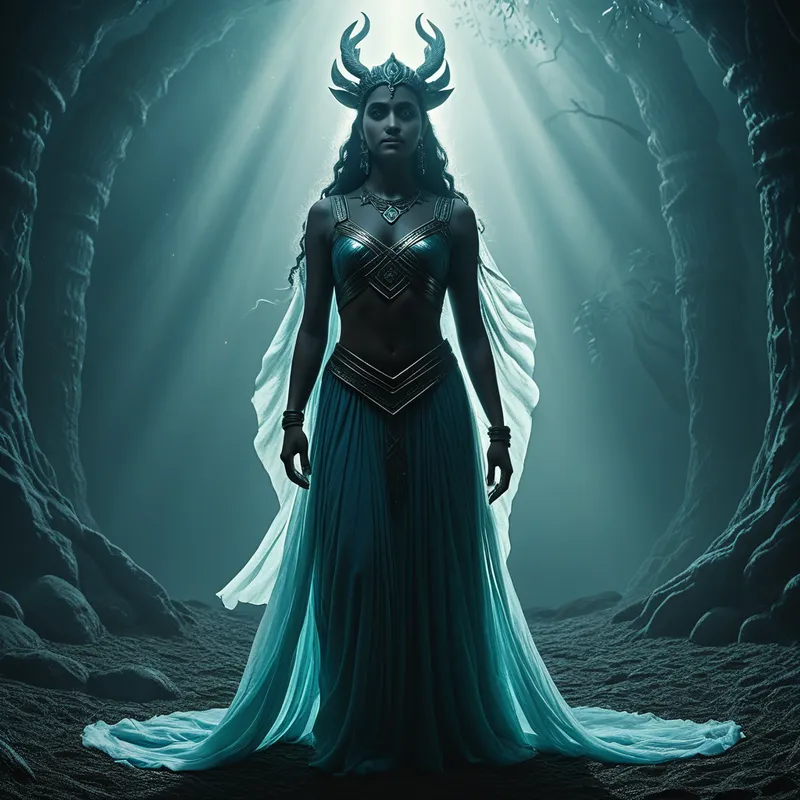
Grandmother Mago
Grandmother Mago is the primordial creator goddess in Korean mythology who formed the world from chaos and established the sacred mountains.
The Tale of Grandmother Mago
In the time before time, there was only the swirling, formless Chaos. From this boundless potential, Grandmother Mago awoke. She was not born; she simply was, the first consciousness in the void, a vast and maternal presence whose body was the substance of possibility itself. With a breath that was both a song and a command, she began to separate the elements. The lighter essences rose, becoming the heavens—the Sky and the first Stars. The heavier, more substantial essences sank, coalescing into the body of the Earth.
But this Earth was soft, formless, and adrift. Seeing this, Grandmother Mago took the bones of the cosmos—the enduring, foundational principles—and from them, she fashioned the first mountains. These were not mere geological features; they were pillars driven deep into the heart of the nascent world, anchors to hold the land steady and sacred vertebrae for the spine of creation. Among them, Mount T’aebaek was foremost, a primordial axis mundi where heaven and earth met. Upon its slopes and within its valleys, life began to stir at her behest. Rivers carved their paths from her tears of joy and determination; forests grew from the green of her thoughts. She populated the land with creatures, and from the clay of the first riverbanks, imbued with her own breath, the first people were shaped. She did not rule over them from a distant throne but was immanent within the very soil, the stone, and the wind, a grandmother in whose lap the world was cradled into being.
Cultural Origins & Context
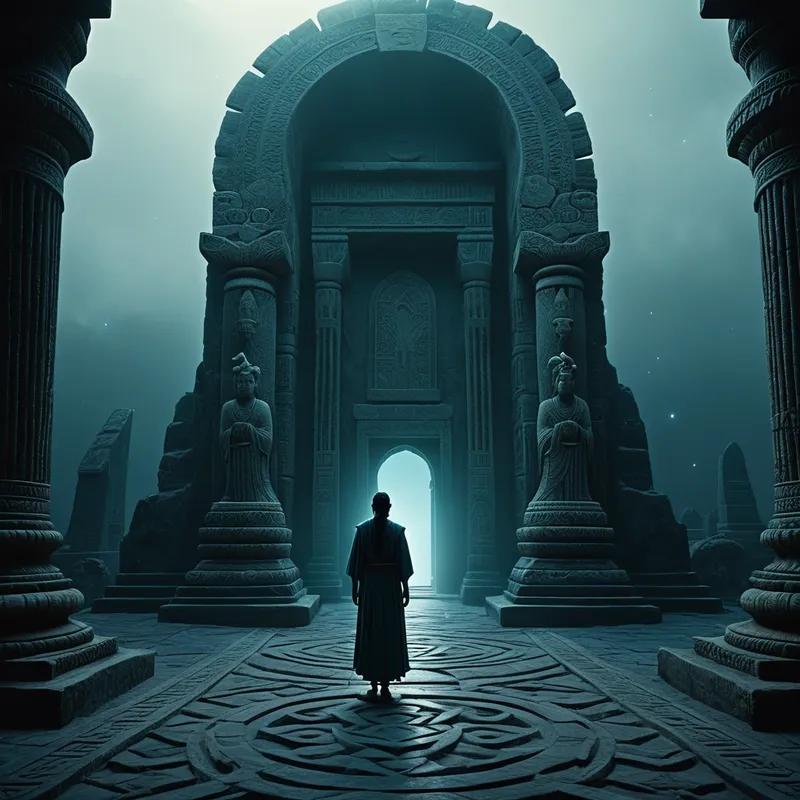
Grandmother Mago’s roots delve into the oldest strata of Korean spiritual thought, predating the systematized influences of Buddhism, Confucianism, and Taoism. She is a central figure in the Muism, or Korean shamanic tradition, where the cosmos is understood as a living, interconnected whole. Her mythology is primarily preserved in texts like the Budoji (Chronicle of the Emblem City), a work that seeks to articulate a uniquely Korean cosmogony.
In a cultural context where ancestor veneration forms a critical pillar of social and spiritual life, Mago is the ultimate ancestor. She is not a remote, patriarchal sky god, but a generative, embodied feminine source. This reflects a matrifocal undercurrent in ancient Korean society, where the creative and sustaining power of the feminine was revered. Her identity as a grandmother is profoundly significant; it speaks of wisdom earned through cycles of creation, of a nurturing authority, and of a direct, familial connection to all that exists. She establishes not through conquest, but through care and foundational action, mirroring the traditional role of the matriarch as the anchor of the family and the keeper of its hearth and history.
Symbolic Architecture
Grandmother Mago’s myth constructs a world where creation is an act of compassionate ordering and embodied presence. The chaos she works with is not an enemy to be slain, but the raw material of potential, suggesting that within every disorder lies the seed of a new world.
Her primary act is not speaking things into being from a void, but shaping and anchoring a world that already exists in potential. This positions her as the archetypal midwife of reality, facilitating a birth from the womb of chaos.
The sacred mountains are the core of her symbolic architecture. They are not just her creation; they are her enduring body and will. They represent stability, eternity, and the sacred centers that connect the human realm to the divine. They are the bones of the earth, providing structure and resilience. In psychological terms, these mountains symbolize the foundational, non-negotiable aspects of the Self—the core values, traumas, and strengths that give our psyche its enduring shape amidst the chaos of lived experience.
To live in a land anchored by Mago’s mountains is to inhabit a psyche grounded in deep, ancestral truth. The mountain is the symbol of the Self in its most complete and enduring form, as postulated by Jung, and Mago is the conscious force that installs this central, orienting peak within the soul’s landscape.
The Dreamer's Resonance
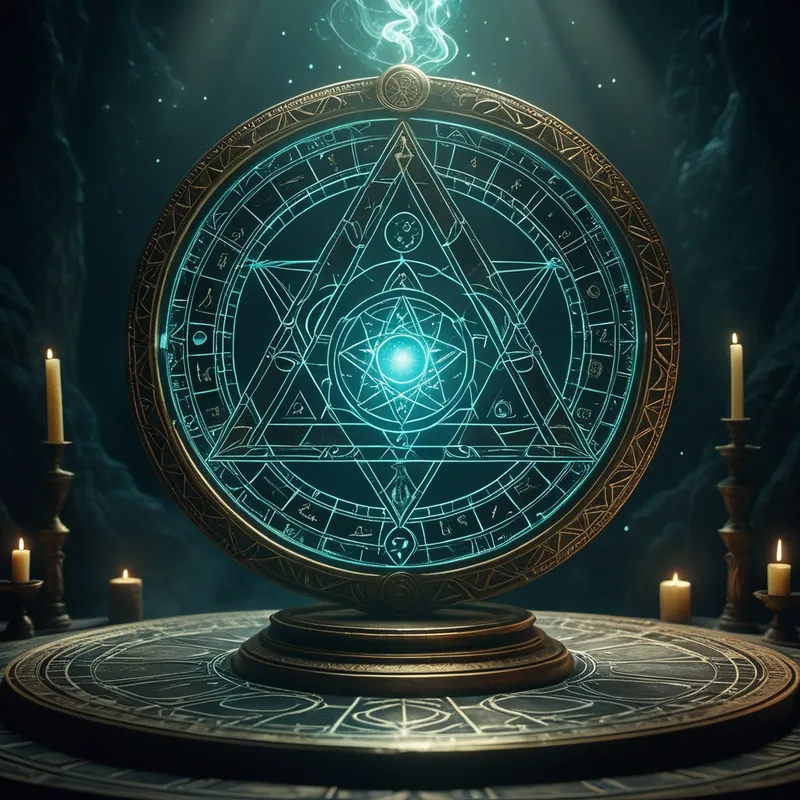
To encounter Grandmother Mago in dream or active imagination is to meet the source of one’s own being. She is the dream image of the primal, creative matrix from which individual consciousness emerges. She does not represent the personal mother or grandmother, but the archetypal Great Mother in her specifically creative, world-forming aspect.
Her resonance is one of profound grounding and origination. For a dreamer feeling adrift, lost in personal or psychic chaos, Mago offers the mythic template for creating inner order—not by rigid control, but by identifying and honoring one’s own "sacred mountains," the inner truths that provide stability. She calls the dreamer to remember their own creative potency, their ability to shape a world from the raw materials of their life. Furthermore, as the grandmother ancestor, she connects the individual to a lineage that transcends the personal family, linking them to the ancient, impersonal stream of life itself. She answers the deep, often unconscious yearning for a return to origin, for a reassurance that we are not accidental, but are born from intentional, sacred craftsmanship.
Alchemical Translation
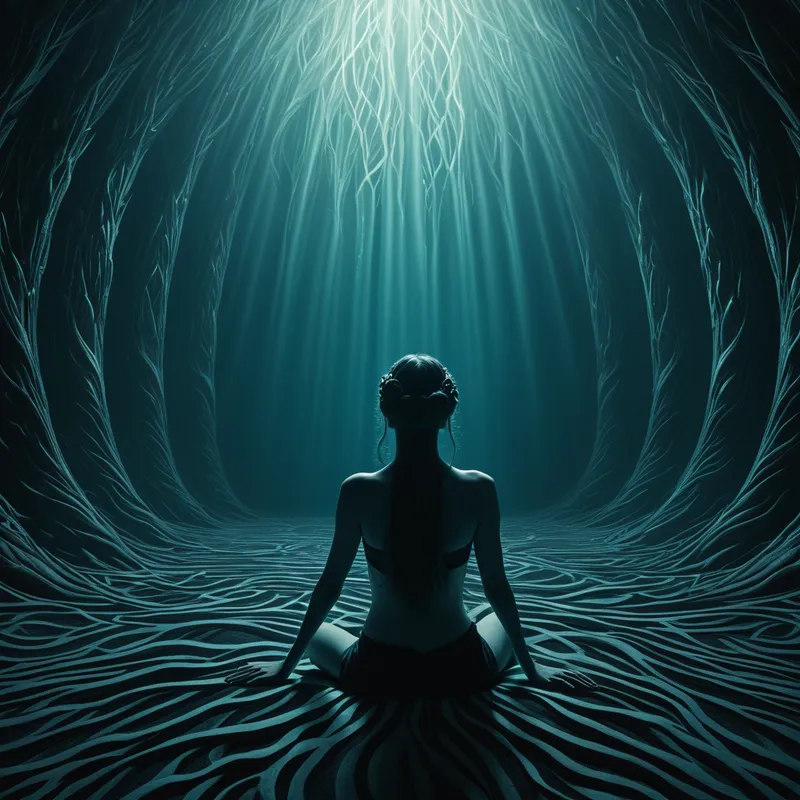
The alchemical process mirrored in Mago’s myth is the opus of coagulatio—the making solid, the embodiment of spirit. The prima materia is the primal Chaos, the nigredo state of undifferentiated potential and darkness. Grandmother Mago, as the alchemist’s conscious spirit (animus mundi), performs the separation of the elements (the separatio) and their recombination into a stable, enduring form (the coagulatio).
This is the alchemy of soul-making: taking the diffuse, chaotic matter of our unlived life, our impulses and potentials, and giving them enduring form. The mountains are the philosopher’s stone of this myth—not a stone that turns lead to gold, but one that turns chaos into cosmos, anxiety into anchored being.
The work is never a rejection of the primal matter but a transformative engagement with it. We do not defeat our inner chaos; we learn, like Mago, to listen to its song and shape it into the pillars of our character. The ultimate goal is the creation of the lapis, the sacred mountain of the integrated Self, which stands unshakable at the center of one’s world. It is a process of becoming one’s own ancestor, of building a psychic structure so solid it can serve as a sanctuary for future generations of the soul.
Associated Symbols
Explore related symbols from the CaleaDream lexicon:
- Mountain — The primordial anchor and enduring bone-structure of the world, representing the stable, eternal core of the Self and the sacred axis connecting heaven and earth.
- Chaos — The undifferentiated, swirling potential that precedes all form, the essential raw material from which Grandmother Mago crafts the ordered cosmos.
- Grandmother — The archetype of ancestral wisdom, nurturing authority, and generative origin, representing a lineage of care that precedes and grounds all existence.
- Earth — The substantiated body of the goddess, the realized world born from her shaping will, symbolizing embodied reality, fertility, and the grounded home.
- Creation — The fundamental act of bringing form from formlessness, imbuing substance with spirit, and establishing order through intentional, compassionate shaping.
- Circle — The wholeness of the cosmos she creates, the cyclical nature of her generative power, and the enclosed, complete system of a world anchored and sustained.
- Root — The deep, ancient, and hidden source of life and tradition, connecting all beings back to the primordial moment of shaping and the foundational act of anchoring.
- Stone — The essential, unyielding material of the sacred mountains, representing permanence, foundation, and the crystallized intention of the creator.
- Nature — The total, living manifestation of Grandmother Mago’s being, an immanent divinity where every forest, river, and creature is an expression of her creative breath.
- Fires of Creation — The transformative, energetic will that drives the separation of elements and the forging of a world from chaos, symbolizing the passionate, catalytic force behind genesis.