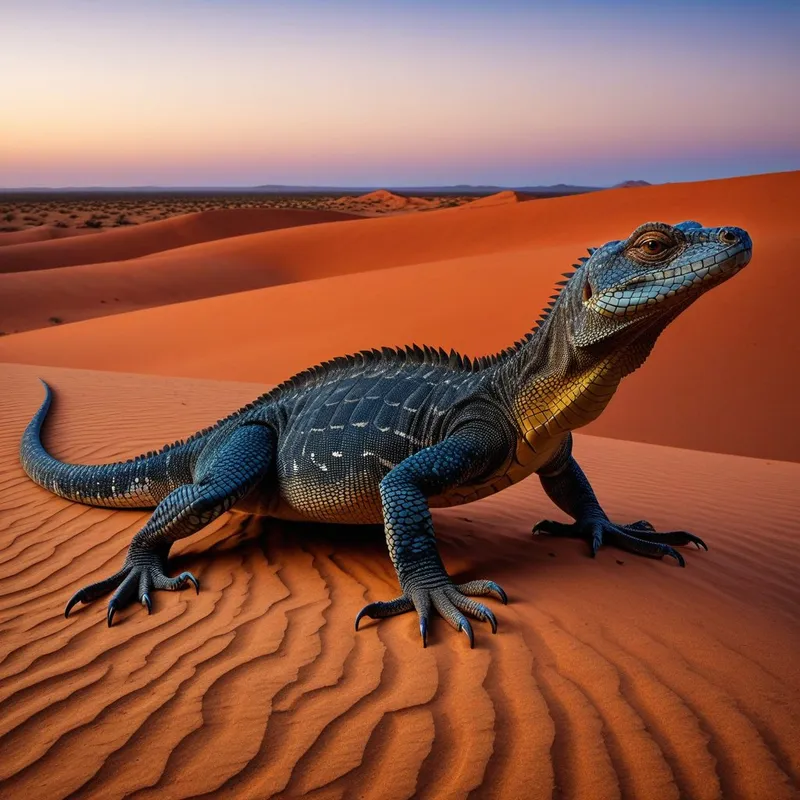
Goanna Myth Meaning & Symbolism
A myth of the great Goanna who carved the land, teaching survival, resilience, and the sacred connection between body, spirit, and earth.
The Tale of Goanna
In the time before time, in the shimmering heat of the Dreaming, the land was young and soft. The great ancestor, Goanna, awoke from the deep earth. His body was a continent of scales, each one holding the memory of a star. He was hungry, a hollow burning that echoed the empty plains. The sun was a fierce eye, and the ground was hard, promising nothing.
He journeyed, his heavy tail dragging a valley, his claws scoring lines that would become rivers. He sniffed the wind—dry, empty, carrying only dust. Then, a scent. Water. Not on the surface, but deep, deep down, singing a silent song beneath the stone and clay. He found the place, a flat expanse under a ghost gum tree. With a purpose as old as thirst itself, he began to dig.
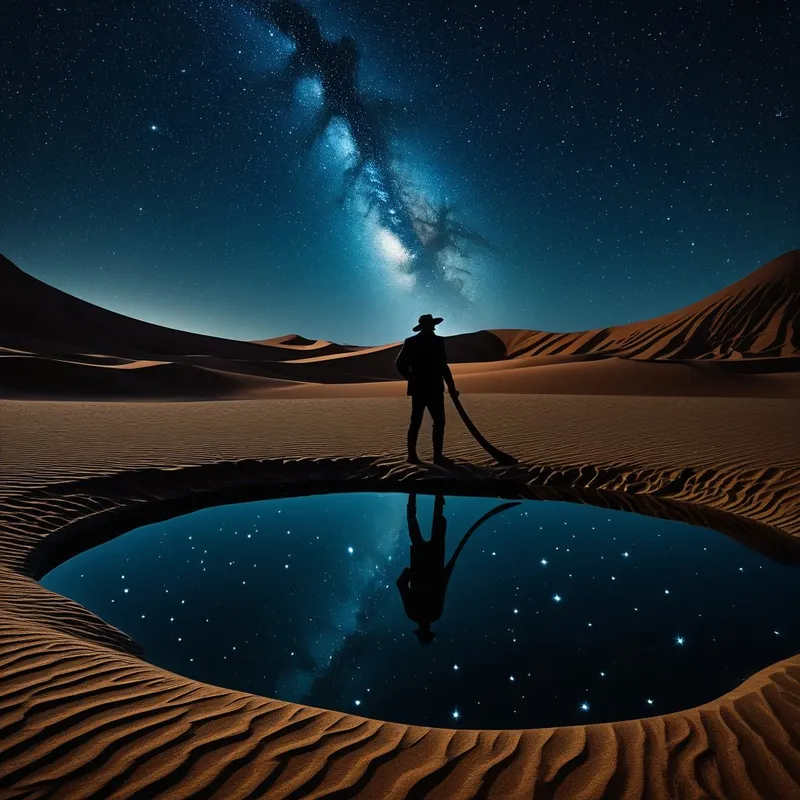
His foreclaws were shovels of bone and will. The earth resisted, then gave way—first dust, then clay, then cool, dark soil. He dug as the sun arced overhead. He dug as the evening star appeared. The hole grew deep, his body a piston of primal need. Finally, with a sound like a sigh from the world’s heart, his claw broke through. Clear, cold water surged, filling the hole, reflecting the moon now risen in the sky.
Goanna drank, and the land drank with him. The water did not stay contained. It spilled over, following the grooves his journey had made, filling the riverbeds, giving birth to creeks and waterholes. Where he rested, depressions became lakes. Where he scratched his back, mountains rose. His hunger had not just found sustenance; it had sculpted the very arteries of life. His journey became the law: to seek, to persevere, to draw life from the depths, and in doing so, to create the world for those who would follow.
Cultural Origins & Context
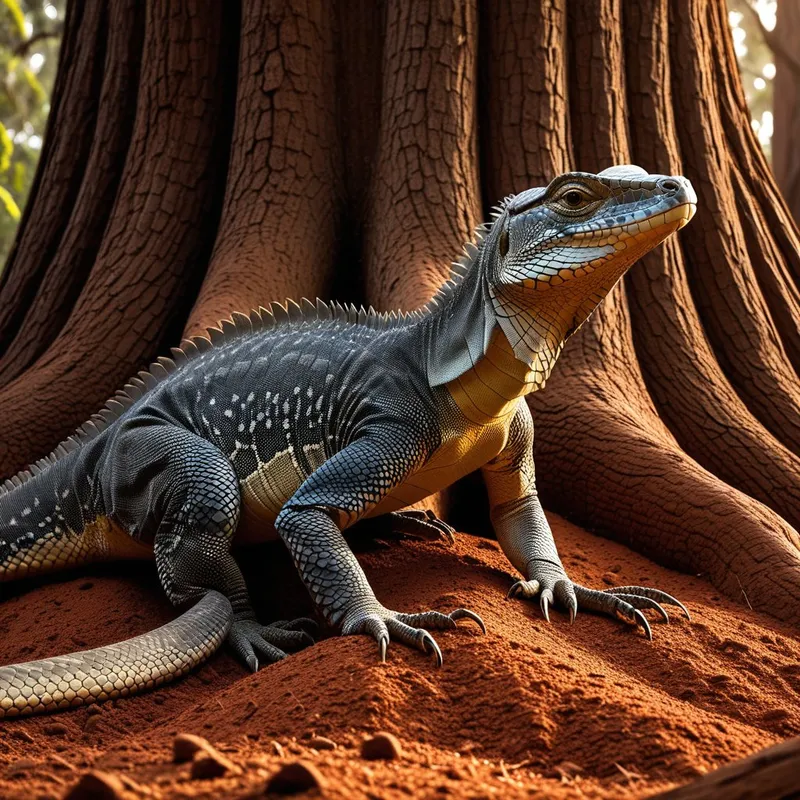
This is not a story from a book, but a living songline etched into the land itself. For the many Aboriginal language groups across Australia, the Goanna ancestor is a fundamental Creator Being. The myth is held and transmitted by custodians of that specific tract of country—the landforms, water sources, and ecosystems the Goanna shaped. It is passed down through ceremonial song, dance, intricate dot paintings that map his journey, and oral narration that is both an act of remembrance and a legal deed, detailing the creation and ownership of country.
Its societal function is multifaceted. It is a geological and ecological map, explaining why water is found in certain places and how the landscape was formed. It is a survival manual, encoding the knowledge of finding water and food in arid environments. Most profoundly, it is a sacred law, binding people to the land through the actions of the ancestor. To sing the Goanna’s journey is to maintain the world, to participate in the ongoing Alcheringa, and to accept the responsibility of stewardship his creation bestowed.
Symbolic Architecture
At its core, the Goanna myth is a profound allegory for the life force itself—the primal drive that simultaneously sustains the self and creates the world. Goanna is not a detached god, but an embodied, hungry being. His creation is not an act of abstract thought, but a direct, physical consequence of addressing a fundamental need.
The greatest creation often springs not from plenty, but from a sacred, driving hunger.
Symbolically, Goanna represents instinctual intelligence. His knowledge is not cognitive; he sniffs the water, he feels its call through the earth. He is the embodiment of the body’s wisdom, the gut-knowing that guides us to what we truly need, not just what we superficially want. The water he seeks is the psychic libido, the deep, nourishing essence of the unconscious. The hard, resistant earth is the crust of our conscious attitudes, our defenses, and the dry spells of the soul.
The act of digging is the central symbol. It is the effortful, often frustrating work of introspection, of delving beneath the surface of our persona to reach the authentic, life-giving self. The landscape Goanna creates—the rivers, the waterholes—symbolizes the psychic structure that results from this inner work: a fertile, sustainable inner ecology where life can flow.
The Dreamer's Resonance
When the figure of Goanna enters modern dreams, it often signals a confrontation with a deep, instinctual need that has been ignored. The dreamer may feel a parching "thirst" in their life—a lack of creativity, emotional nourishment, or vital energy. Goanna’s appearance is a call from the somatic unconscious, urging a return to the body’s wisdom.
Dreaming of digging, especially with a sense of urgent purpose, mirrors Goanna’s quest. This is not random anxiety; it is the psyche mobilizing its resources to excavate. The dreamer may be unearthing buried trauma, latent talent, or repressed desire. The process can feel slow, laborious, and dirty. There may be resistance—the "hard earth" of ingrained habits or fear. The somatic resonance is often felt as a tightness in the hands and arms, a grounding pressure in the feet, or a literal thirst upon waking. The dream-Goanna teaches that the answer is never on the surface; it requires a committed, physical descent into one’s own depths.
Alchemical Translation
The Goanna’s journey is a perfect model for the alchemical process of individuation. It begins with the nigredo, the blackening: the arid, sun-scorched landscape of spiritual or psychological drought. This is a state of meaninglessness, where the old ways no longer nourish. The hunger of Goanna is the awakening of the Self, the central archetype, which will tolerate this deprivation no longer.
The long, arduous dig is the albedo, the whitening, the labor of conscious introspection. Here, the ego aligns itself with the instinctual drive of the Self. It must commit to the work, scraping away the persona (the topsoil) and confronting the shadow (the dense clay). This stage requires patience and trust in a direction sensed, not seen.
The water that floods forth is the rubedo, the reddening—the transcendent function, the sacred marriage of conscious and unconscious.
The breakthrough to water is the moment of psychic integration. The liberated libido—the life-water—floods into awareness, not merely to quench the initial thirst but to irrigate the entire personality. The old, barren landscape of the psyche is transformed. Rivers of new feeling flow; waterholes of reflection form. The individual, like the land after Goanna’s passing, is permanently altered. They have not just found a resource; they have become a source. Their very being now sustains a richer, more complex inner and outer world. The myth concludes not with Goanna’s rest, but with the enduring, life-filled landscape—a testament that the true goal of the heroic, creative struggle is not just personal salvation, but the creation of a legacy of fertility for all one’s being touches.
Associated Symbols
Explore related symbols from the CaleaDream lexicon: