Gáe Bulg Myth Meaning & Symbolism
The story of Cú Chulainn's cursed spear, born from a sea monster's bone, a weapon of last resort that seals a hero's fate with its terrible price.
The Tale of Gáe Bulg
Hear now the tale of the Cú Chulainn, the Hound of Ulster, and the weapon that was both his doom and his glory. It begins not in the halls of kings, but in the cold, churning womb of the sea.
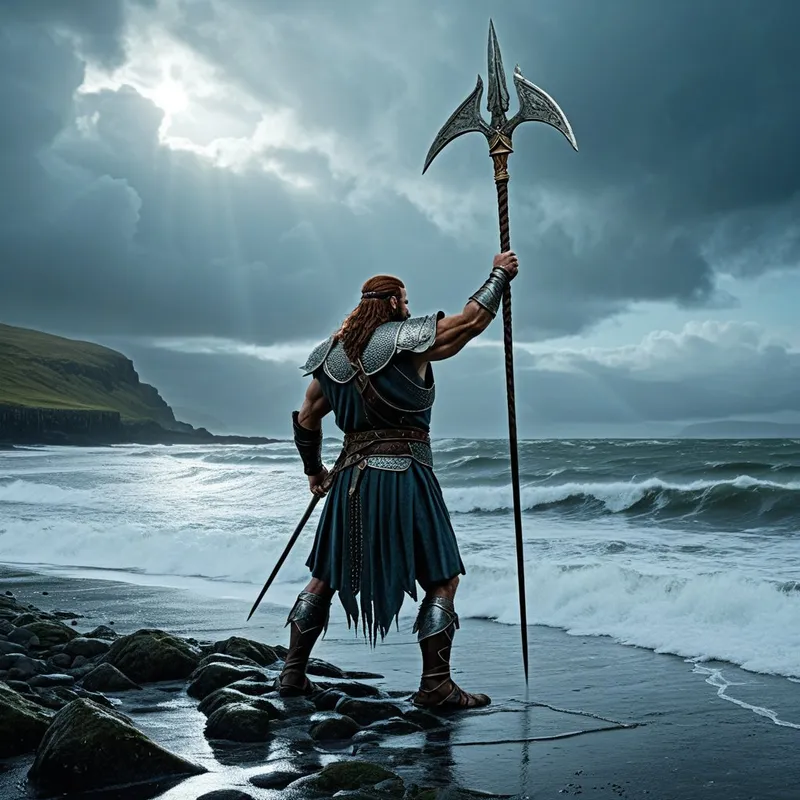
In the grey dawn of the world, the warrior-woman Scáthach dwelled on the Isle of Shadows. To her, the young hero came, seeking the arts of war beyond mortal ken. She taught him the salmon-leap, the thunder-feat, and the secrets of the Gáe Bulg. But the spear itself was not of her making. She told him of its birthing: a great sea-monster, a creature of the deep and forgotten dark, had died in the cove of her island. From its massive, curving bone—a spine that remembered the pressure of abyssal trenches—the smiths of the Tuatha Dé Danann had forged a single spear.
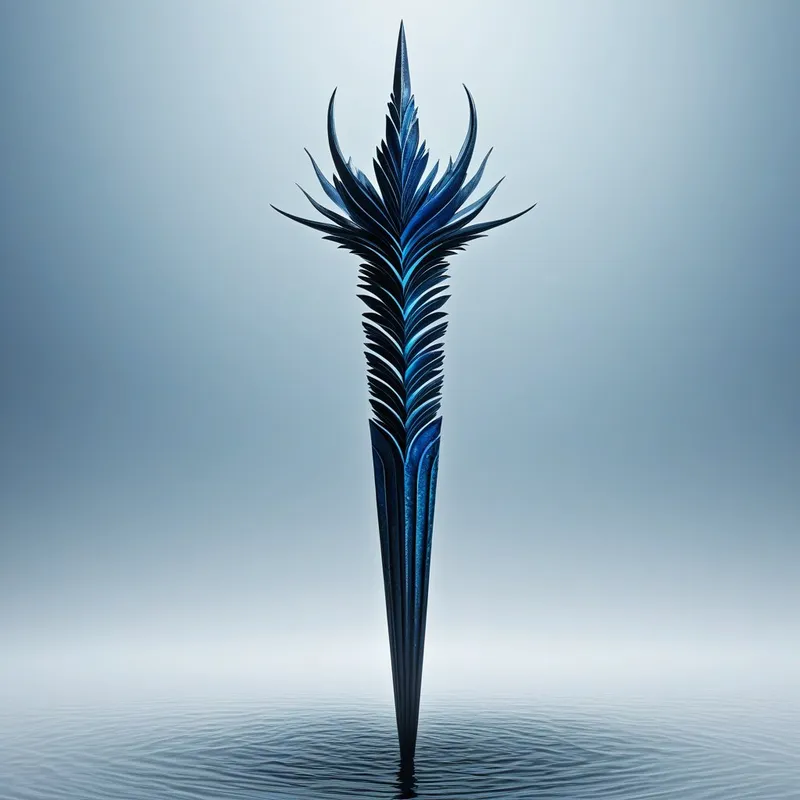
It was a weapon of terrible geometry. Its head was barbed, not to be withdrawn. To wield it was a ritual of last resort, a craft of specific and gruesome magic. It must be cast from the fork of the foot, sent up the stream of a river against its current, so that water itself would open a path for it. It would enter a man as a single point of ruin and then unfold inside him, filling his body with a forest of bone-thorns. It did not merely kill; it unraveled a life from within.
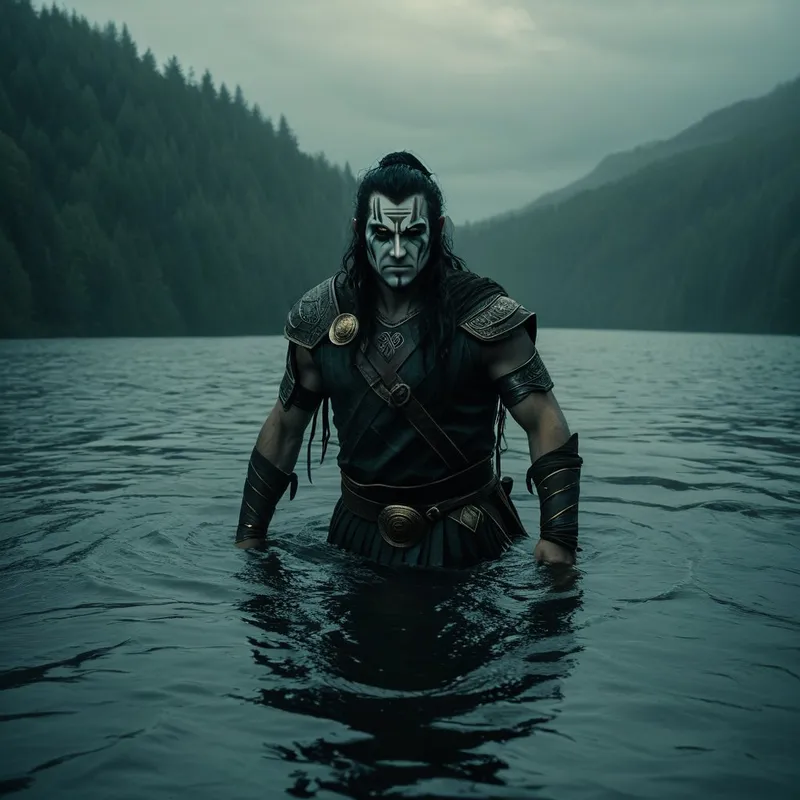
Years passed. The fate of the spear lay dormant until the great war, the Táin Bó Cúailnge. There, on the ford of a river stained by days of combat, Cú Chulainn faced his foster-brother and deepest friend, Ferdiad. Bound by oaths to opposing queens, they fought for three days and three nights. Sword and shield, feat and counter-feat. They were mirrors of each other’s skill, their blows speaking a language of shared youth and inevitable sorrow. On the third day, wounded and weary to his soul, Cú Chulainn saw no path to victory that would not cost his own life. The shadow of the Gáe Bulg fell across his heart.
He called for his charioteer, Láeg, to bring the spear. The air grew cold. The river’s murmur hushed. Cú Chulainn set the pale bone in the fork of his foot, his body contorted in the sacred, awful posture. He did not cast it at Ferdiad, but into the water at his feet. The current seized it, reversed it, and the river itself became the weapon’s artery. It surged upstream, against all nature, and found the gap in Ferdiad’s armor beneath the water’s surface.
It entered. And it unfolded.
Ferdiad fell, not with a cry, but with a sigh that carried the weight of a broken oath. Cú Chulainn waded to him, cradled his dying brother, and wept so bitterly that the river rose with his tears. The Gáe Bulg had done its work. It had secured a victory that tasted of ashes, and in that moment, the Hound of Ulster felt the first cold touch of his own prophesied death. The spear had claimed two lives that day: one of flesh, one of innocence.
Cultural Origins & Context
This myth is the dark, beating heart of the Ulster Cycle, preserved in manuscripts like the Book of Leinster. It is not a tale of straightforward heroism, but a complex tragedy from a warrior culture that held paradox in high regard. The bards and filí (poet-seers) who recited these stories did so to explore the limits of the heroic code. What happens when fír fer (the truth of men, or fair play) shatters against geis (a sacred taboo or bond) and fate?
The Gáe Bulg exists at this intersection. It is a weapon of the Otherworld, a hallowed treasure that operates by its own alien logic. Its transmission—from sea-monster, to Otherworld smiths, to the goddess-like Scáthach, to the half-divine Cú Chulainn—marks it as an object outside normal human combat. Its use was not celebrated as a feat of strength, but recounted as a moment of profound cultural and spiritual crisis. It served as a narrative device to probe the cost of glory and the inescapable entanglement of kinship and duty in a tribal society. The story asks: What must be sacrificed to defend the tribe? And when that sacrifice is a piece of one’s own soul, has the tribe truly been saved?
Symbolic Architecture
The Gáe Bulg is far more than a magical weapon. It is a perfect symbol of the inescapable consequence. Its method of use—cast against the current—is an act of symbolic reversal, forcing nature and fate to flow backwards to achieve a specific, devastating end.
The weapon that must travel upstream is the choice that goes against the flow of one’s own being, creating a wound that expands from a single point of decision into a lifetime of internal fragmentation.
Psychologically, it represents the shadow weapon—that part of our own capability we keep sheathed because we know its cost is ruinous. It is the cruel word that ends a relationship, the ruthless business decision that secures success at the price of integrity, the repressed rage that finally erupts. It is effective. It solves the immediate problem. But it does so by opening a fatal wound within the relational or psychic body, filling it with the barbs of guilt, regret, and self-alienation. Cú Chulainn, the archetypal Hero, must here become the instrument of a fate darker than any foe: the fate of becoming the destroyer of what he loves most, and in doing so, destroying a part of himself.
The Dreamer's Resonance
When this myth pattern stirs in the modern unconscious, it rarely appears as a literal spear. The dreamer may find themselves in a situation of impossible conflict, often with someone they deeply care for—a sibling, a partner, a close friend. The setting is frequently a liminal space: a ford, a bridge, a hallway, representing a critical point of decision.
The somatic sensation is one of a cold, hard, and irrevocable object in their possession. They know its use will end the struggle but at a terrible, intimate price. To dream of deploying such a “weapon” (which could manifest as speaking a harsh truth, exposing a secret, or making a final break) and witnessing its “unfolding” effect is to experience the psyche rehearsing the consequences of a profound shadow-act. The dream is not necessarily a warning, but a deep, felt recognition of a looming existential choice where all outcomes involve sacrifice. The anguish of Cú Chulainn holding the dying Ferdiad is the dreamer’s anticipated grief for the connection that must be wounded, perhaps mortally, for the sake of some perceived necessity or survival.
Alchemical Translation
The alchemical journey modeled here is not of conquering the external dragon, but of integrating the dragon’s own tooth—the shadow weapon—into the fabric of the self. The process is one of sobering incarnation.
The first stage is Acknowledgment: recognizing that one possesses this Gáe Bulg within. It is a capacity for a specific kind of destructive power, often born from past trauma (the “sea-monster” of the deep unconscious). We must, like Scáthach, name it and understand its horrific mechanics.
The second is the Impossible Choice at the Ford: facing the situation where conventional means have failed. This is the crucible of the ego, where the persona of the “good” or “fair” self is shattered by necessity. Throwing the spear represents the conscious, agonizing decision to enact the shadow.
The alchemical gold is not in the victory, but in the conscious, tear-filled embrace of the consequence. The true transmutation is from a hero who slays monsters to a human who grieves the monster he has had to become.
The final, ongoing stage is Carrying the Wound. After the Gáe Bulg is used, it is gone, but its effect remains. Cú Chulainn is forever changed; his ríastrad (warp-spasm) hereafter carries a deeper note of sorrow. In individuation, this is the integration of the shadow’s cost. The individual is no longer innocent. They carry the knowledge of their own capacity for ruin alongside their capacity for love. They become more complex, more tragic, and ultimately more whole, having absorbed the poison of their own power and metabolized it into a form of wisdom that is heavy, bittersweet, and utterly real. The spear’s unfolding inside the other is mirrored by an unfolding of consciousness within the self—a painful awakening to the full, paradoxical weight of one’s own agency.
Associated Symbols
Explore related symbols from the CaleaDream lexicon: