Gates of Hercules Myth Meaning & Symbolism
Hercules smashes a mountain pass, creating a gateway between worlds, marking the ultimate limit of human exploration and divine will.
The Tale of the Gates of Hercules
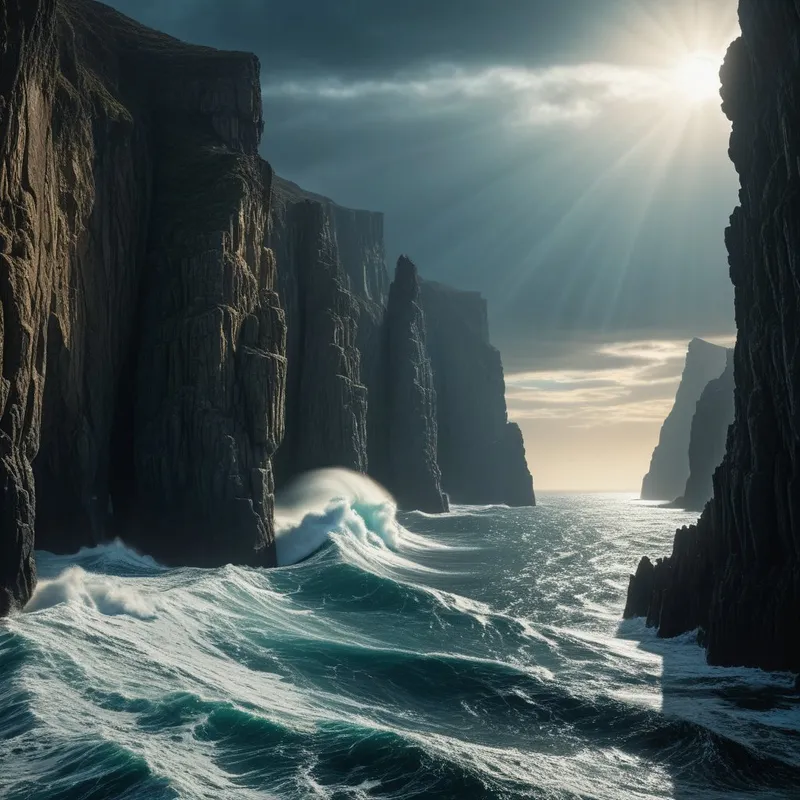
Hear now of the edge of [the world](/myths/the-world “Myth from Tarot culture.”/), where the wine-dark sea of the Middle Sea grows restless and whispers of the great outer dark. Here, at the farthest reach where the sun plunges each evening, stood not a gate of iron or bronze, but a wall of living stone. The mountains of Abila and Calpe were once joined, a single, unbroken jaw of [the earth](/myths/the-earth “Myth from Hindu culture.”/) clenched tight against the unknown ocean beyond. It was a divine decree, a boundary set by the old titans of the deep and upheld by the will of Zeus himself. Beyond lay the realm of [Oceanus](/myths/oceanus “Myth from Greek culture.”/), a chaotic, formless abyss that was not for the race of men.
Then came the son of Zeus, [Heracles](/myths/heracles “Myth from Greek culture.”/), his breath still hot from the stench of the Lernaean [Hydra](/myths/hydra “Myth from Greek culture.”/), his spirit burning with the fire of his ten labors. His tenth task, the most impossible yet: to journey to the western edge of the world, to the island of Erytheia, and steal the golden apples from the orchard of the gods. But the path was barred. The monolithic wall of stone stood impassable, its cliffs echoing with the roar of the frustrated sea.
Heracles stood before the barrier. He did not pray for a key, nor seek a hidden path. He planted his feet upon the shore, the salt spray stinging his eyes, the weight of divine opposition pressing upon his shoulders. He placed his hands, still scarred from [the Nemean Lion](/myths/the-nemean-lion “Myth from Greek culture.”/)’s pelt, against the warm rock. He did not push as a man pushes a door, but as a force of nature reshapes the land. A groan, deep as the earth’s core, shuddered through the stone. Cracks, like lightning frozen in rock, raced upwards. With a roar that drowned the thunder of the surf, Heracles sundered the mountain. Rock screamed, [the sky](/myths/the-sky “Myth from Persian culture.”/) darkened with dust, and the two halves of the world were torn asunder.
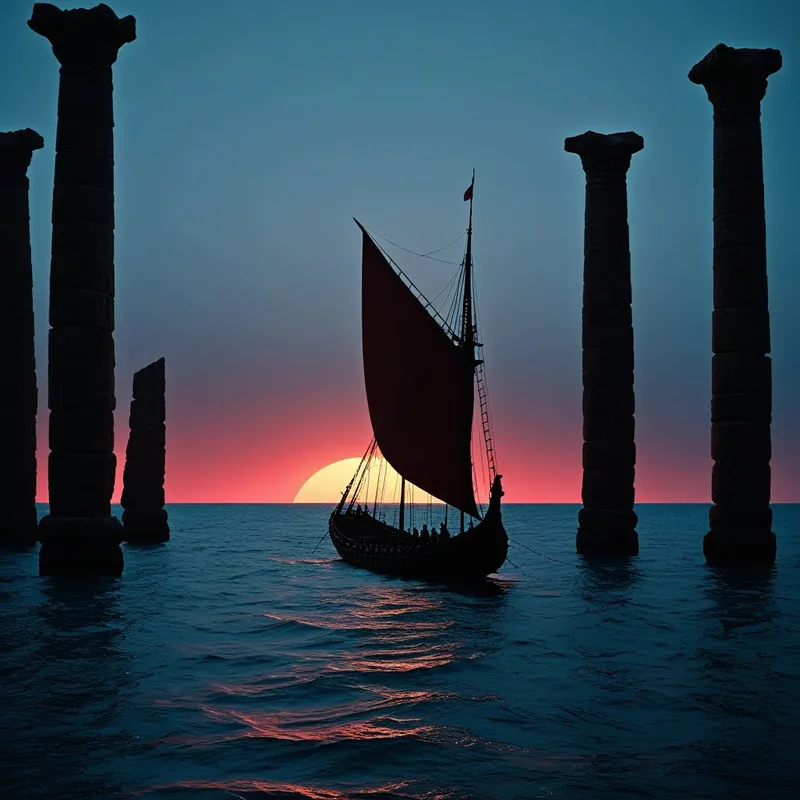
Where there was wall, now there was a passage. The pent-up waters of the Mediterranean met the cold, wild Atlantic in a tumultuous embrace. Two pillars, the shattered bones of the mountain, stood sentinel on either shore. Heracles had not merely opened a path; he had created a gateway. He passed through, leaving behind him not a closed frontier, but a marked threshold—a testament that a limit, even one set by gods, could be transformed by heroic will into a beginning.
Cultural Origins & Context
The myth of the Gates, or Pillars, of [Hercules](/myths/hercules “Myth from Greek culture.”/) is less a single narrative and more a geographical mythologizing, a story born from the edge of the known. Its origins are tangled with early Phoenician and Greek exploration. For the maritime cultures of the ancient Mediterranean, the Strait of Gibraltar was the ultimate ne plus ultra—“nothing further beyond.” The terrifying currents, the sudden fog, and the vast, unfamiliar Atlantic Ocean confirmed it as a cosmic boundary.
The story was codified into the cycle of Heracles’ labors, likely as a way to mythically explain and claim this formidable geographical feature. By attributing its creation to their greatest culture hero, the Greeks psychologically domesticated the terrifying frontier. It transformed from a mere dangerous strait into a monument to human (or semi-divine) achievement. The phrase “[Pillars of Hercules](/myths/pillars-of-hercules “Myth from Greek culture.”/)” became proverbial, stamped on coins and echoed by philosophers and historians like Herodotus and Aristotle, to denote the extreme limit of the inhabited world. It functioned as both a warning and an invitation, encapsulating the ancient tension between the safety of the ordered world (cosmos) and the terrifying allure of the chaotic unknown.
Symbolic Architecture
The Gates are the ultimate [symbol](/symbols/symbol “Symbol: A symbol can represent an idea, concept, or belief, serving as a powerful tool for communication and understanding.”/) of the [limen](/myths/limen “Myth from Roman culture.”/), [the threshold](/myths/the-threshold “Myth from Folklore culture.”/). They represent the concrete manifestation of a psychological and existential [boundary](/symbols/boundary “Symbol: A conceptual or physical limit defining separation, protection, or identity between entities, spaces, or states of being.”/).
The Pillars are not a wall but a definition. They do not say “you shall not pass,” but “beyond here lies the nature of your being.”
The joined mountains symbolize a pre-conscious, undifferentiated state—a world where possibilities are latent but inaccessible, bounded by parental or societal dictates (the will of Zeus/Oceanus). Heracles’ act of [separation](/symbols/separation “Symbol: A spiritual or mythic division between realms, states of being, or consciousness, often marking a transition or loss of connection.”/) is the primal act of [consciousness](/symbols/consciousness “Symbol: Consciousness represents the state of awareness and perception, encompassing thoughts, feelings, and experiences.”/) itself: the [differentiation](/symbols/differentiation “Symbol: The process of distinguishing or separating parts of the self, emotions, or identity from a whole, often marking a developmental or psychological milestone.”/) of self from other, the known from the unknown. The resulting [strait](/symbols/strait “Symbol: A narrow, often treacherous passage of water connecting two larger bodies, symbolizing transition, constraint, and critical choices.”/) is the channel of [life](/symbols/life “Symbol: The symbol of ‘Life’ represents a journey of growth, interconnectedness, and existential meaning, encompassing both the joys and challenges that define human experience.”/), the necessary narrows through which [energy](/symbols/energy “Symbol: Energy symbolizes vitality, motivation, and the drive that fuels actions and ambitions.”/) and exploration must flow. The two pillars, thereafter, stand for duality: known/unknown, order/[chaos](/symbols/chaos “Symbol: In Arts & Music, chaos represents raw creative potential, uncontrolled expression, and the breakdown of order to forge new artistic forms.”/), Mediterranean civilization/Atlantic [wilderness](/symbols/wilderness “Symbol: Wilderness often symbolizes the untamed aspects of the self and the unconscious mind, representing a space for personal exploration and discovery.”/), even the conscious ego and the vast unconscious.
Psychologically, Heracles at the Gates embodies the [moment](/symbols/moment “Symbol: The symbol of a ‘moment’ embodies the significance of transient experiences that encapsulate emotional depth or pivotal transformations in life.”/) of supreme [effort](/symbols/effort “Symbol: Effort signifies the physical, mental, and emotional energy invested toward achieving goals and personal growth.”/) required to break a foundational complex or a lifelong limitation. It is not a gentle negotiation but a cataclysmic expenditure of psychic energy to create a new [structure](/symbols/structure “Symbol: Structure in dreams often symbolizes stability, organization, and the framework of one’s life, reflecting how one perceives their environment and personal life.”/) in the [psyche](/myths/psyche “Myth from Greek culture.”/).
The Dreamer’s Resonance
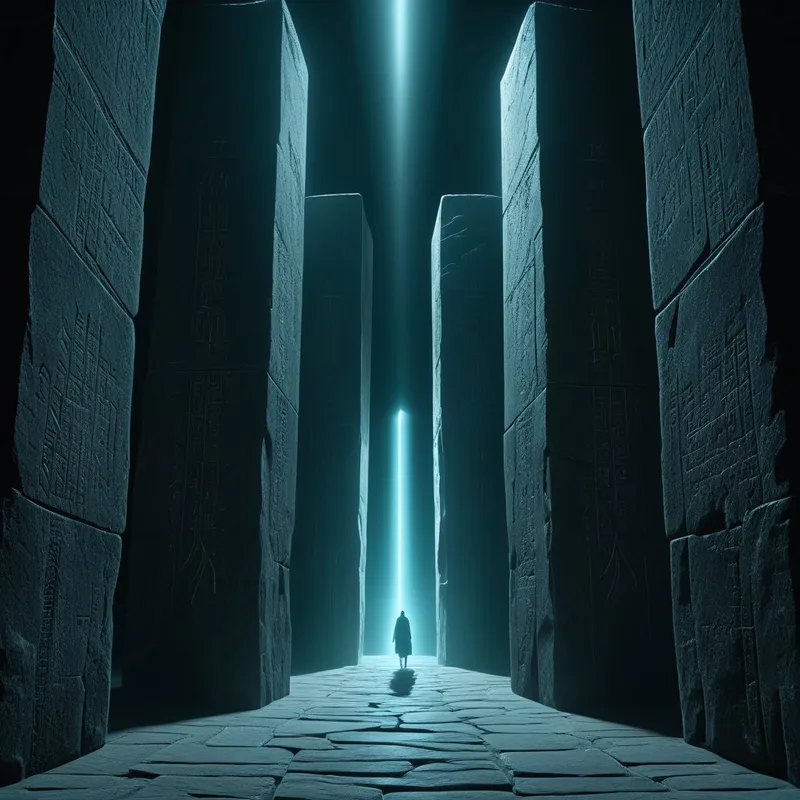
When this myth stirs in the modern dreamer, it rarely appears as a classical hero at a geographic strait. Instead, it manifests somatically and symbolically. One might dream of standing before a massive, ornate door they cannot bring themselves to open, feeling a literal weight in the chest. Or of a narrow, terrifying bridge over an abyss, with pillars of light or stone marking its entrance. The dream environment is often a liminal space: an airport terminal leading to an unknown gate, a hallway ending in a double doorway, or the shore of a familiar lake that abruptly drops into a starless ocean.
The somatic resonance is key: a feeling of immense pressure, of being “up against” something immovable. This is the psyche signaling a critical impasse. The dream is presenting the boundary itself. The psychological process underway is the confrontation with a personal ne plus ultra—a self-imposed or internalized limit that feels absolute. It could be a career ceiling, the edge of a relationship pattern, or the frontier of a repressed trauma. The dream does not show the solution (Heracles’ strength), but highlights the architecture of the blockage, asking the dreamer to locate their own heroic agency.
Alchemical Translation
The alchemical journey is one of successive separations and conjunctions ([solve et coagula](/myths/solve-et-coagula “Myth from Alchemical culture.”/)). The myth of the Gates models the initial, violent [separatio](/myths/separatio “Myth from Alchemical culture.”/) necessary for all transformation.
The labor is not the journey beyond, but the creation of the passage. The first gold is not the apples, but the space between the pillars.
For the individual seeking individuation, the “joined mountain” is the unconscious identification with family, culture, or [persona](/myths/persona “Myth from Greek culture.”/)—a solid, seemingly unbreakable mass. The alchemical work is the application of focused, disciplined will (the hero archetype) to this mass. This is not aggression, but the necessary force of conscious differentiation. The resulting “strait” is the newly opened channel between the conscious ego and the contents of the personal and collective unconscious. The waters that mix are the known self and the unknown Self.
The Pillars, once established, become permanent fixtures in the psyche’s landscape. They are the markers of [the ego](/myths/the-ego “Myth from Jungian culture.”/)’s furthest reach, the point from which all further exploration into the unconscious must be conscious and intentional. The modern individual’s “apples of the [Hesperides](/myths/hesperides “Myth from Greek culture.”/)“—their unique wholeness or treasure—lies always beyond this self-created gate. Thus, the myth teaches that the ultimate boundary is not an external prohibition, but the very structure we must ourselves break and redefine to begin our most authentic journey. The gateway is not found; it is forged in the crisis of limitation.
Associated Symbols
Explore related symbols from the CaleaDream lexicon: