Freyja Myth Meaning & Symbolism
Freyja, the Vanir goddess of love, war, and seidr magic, embodies the unapologetic union of fierce desire, sacred grief, and transformative power.
The Tale of Freyja
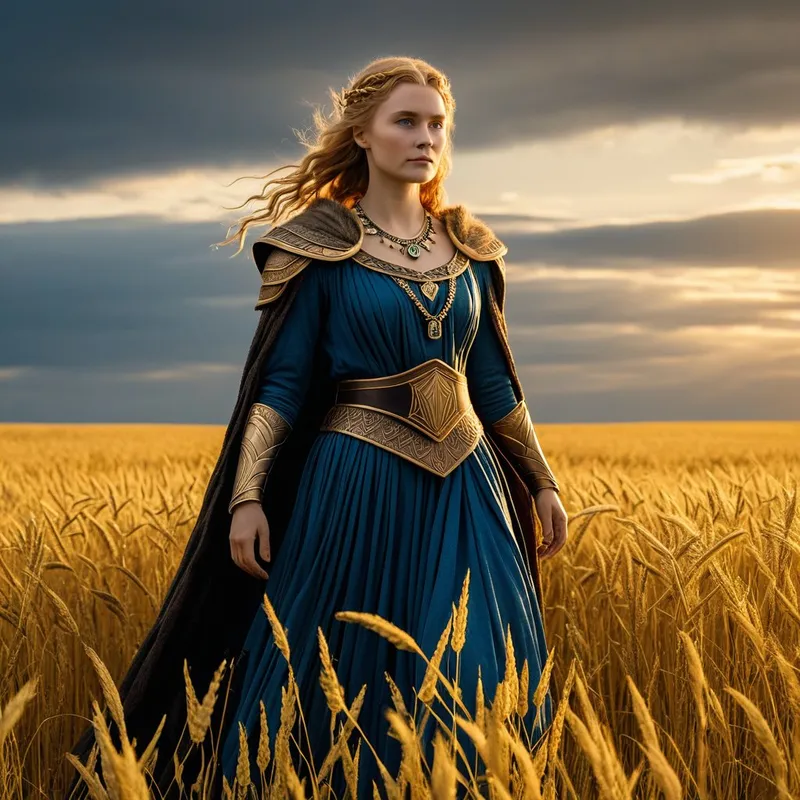
Listen, and hear the tale of she whose name is whispered in the sigh of lovers and the cry of ravens. In the dawn of the world, when the Vanir and the Æsir sealed their peace with spittle, there came among them Freyja, daughter of Njörðr. She was not gentle. She was totality. Her hair was the color of ripe wheat and spilled gold, and her eyes held the deep knowing of the Norns.
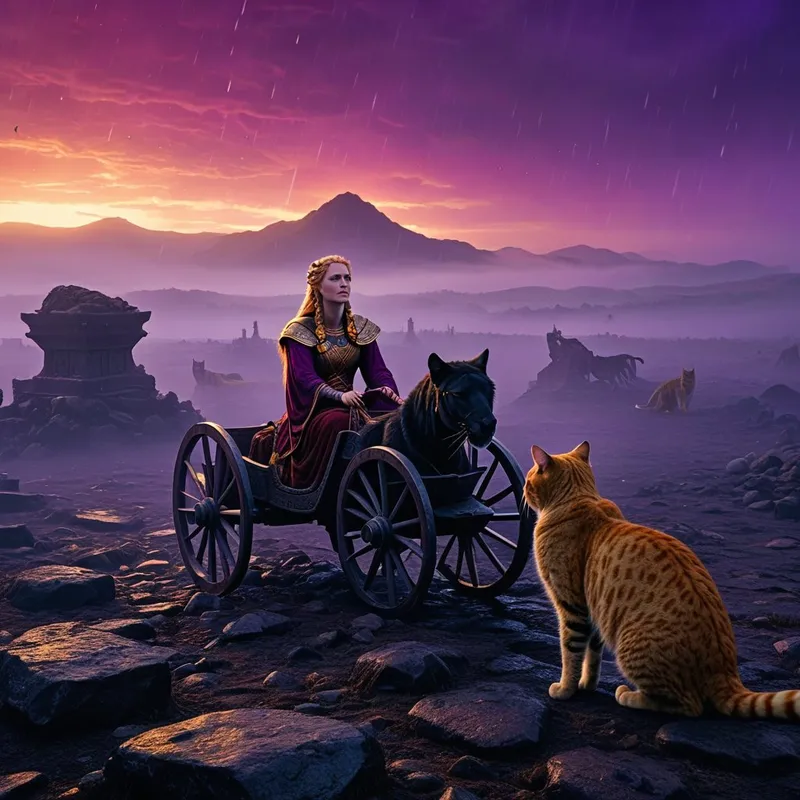
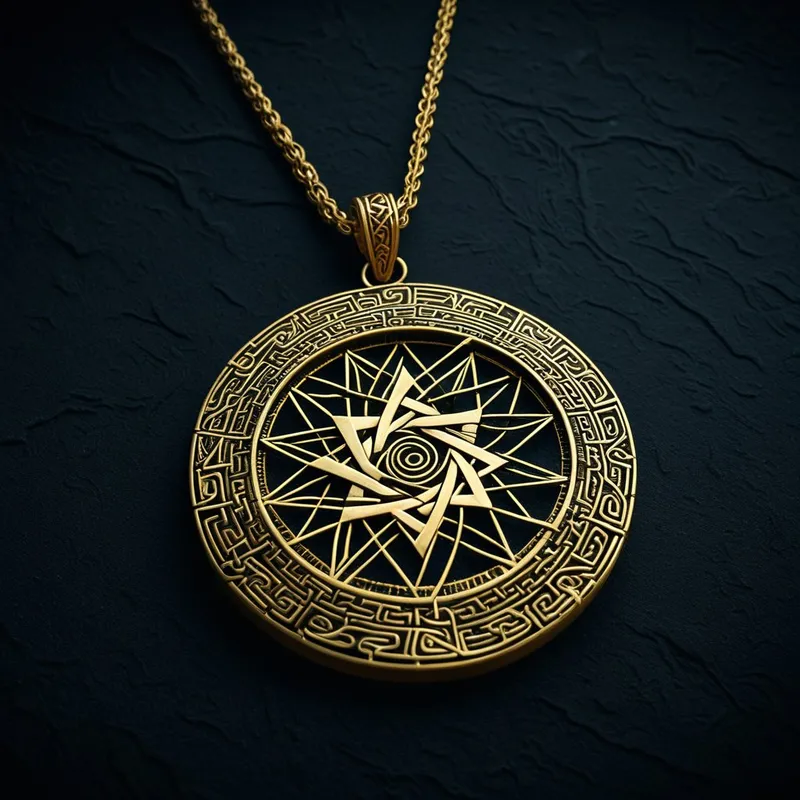
She dwelled in Sessrúmnir, a hall that welcomed half the slain from every battle, for she was a chooser of the slain as much as Odin. Her chariot was drawn not by steeds, but by two great cats, their eyes like molten amber. And around her throat rested the Brísingamen, a torque of such craftsmanship that it sang a low, humming song of desire and belonging. It was said she won it from four dwarf-smiths, paying a price only she knew.
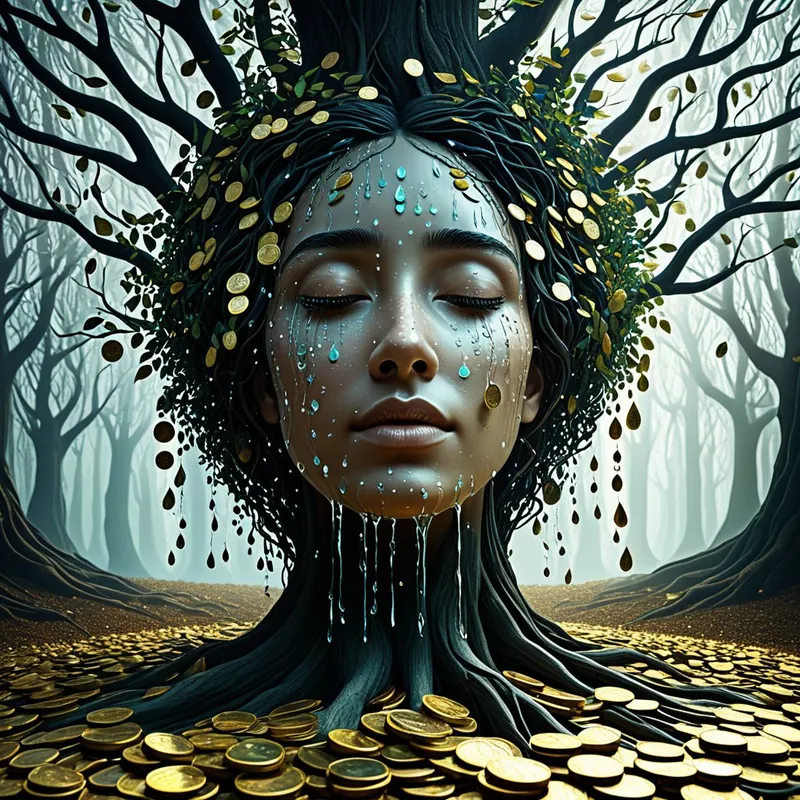
But her heart was a vast chamber, and in its deepest vault lay a grief that shaped the world. Her husband, Óðr, the ecstatic one, had wandered away into the wild places of the world. And so Freyja too would wander. She would cloak herself in a mantle of falcon feathers and fly across the nine worlds, her tears falling to earth. Where they struck stone, they became gold—red gold, the color of longing and of blood. Her search was endless, a rhythm as constant as the tides her father commanded. She sought him in every face, in every distant firelight, her sorrow a fertile rain that seeded the earth with precious metal.
Yet, in her hall, she was sovereign. Warriors prayed to her for favor in love and in the fray. She taught the sacred, dangerous art of seidr to the gods themselves, a magic that required looking into the fabric of fate and daring to tug its threads. She was contradiction made flesh: a goddess of lush fertility who claimed the battle-dead, a weaver of spells who wept tangible gold, a being of immense passion anchored by an abiding loss.
Cultural Origins & Context
The stories of Freyja come to us primarily through the Poetic Edda and the later Prose Edda, texts compiled in Iceland centuries after the Viking Age. She is a deity of the Vanir, a tribe of gods associated with fertility, prosperity, and the natural world, whose integration with the warrior-focused Æsir speaks to the complex Norse worldview where abundance and conflict were intertwined realities.
Her worship was not confined to temple rites but woven into the fabric of life and death. As a goddess of love and sexuality, she presided over matters of the heart and household. As a master of seidr, she represented a form of magic that, while powerful, carried a social stigma for men, highlighting her connection to realms of knowledge and power outside conventional structures. Most strikingly, her claim to half the warriors slain in battle positions her not as a passive figure of beauty, but as a sovereign with equal claim to the heroic dead as Odin, reflecting a culture where the spiritual authority of the feminine in matters of life, death, and fate was profoundly recognized.
Symbolic Architecture
Freyja is not a symbol of a single virtue, but of a potent and challenging wholeness. She represents the psyche's refusal to be fragmented into acceptable categories.
To embrace Freyja is to accept that the heart that loves profoundly is the same heart that can grieve eternally, and that both states are sources of ultimate power.
Her tears of gold are the alchemical key. Grief, often seen as a wasteful dissolution, is here revealed as the very process that creates value. Her sorrow is not passive; it is a generative force, transmuting raw emotion (tears) into the world's most sought-after substance (gold). The Brísingamen necklace, won through a mysterious pact, symbolizes the hard-won integration of one's deepest desires and the shadowy negotiations of the unconscious required to claim them. It is the embodied self, forged in the dark (by dwarves) and worn in the light.
Her dual role—goddess of love and chooser of the slain—shatters the illusion of separation between Eros and Thanatos, between the life-giving and life-taking forces. She does not choose between them; she holds both as essential aspects of sovereignty. Finally, her mastery of seidr magic represents the ability to work with the unseen threads of cause, effect, and possibility—the psychological capacity for introspection, pattern recognition, and conscious intervention in one's own fate.
The Dreamer's Resonance
When the archetype of Freyja stirs in the modern dreamer, it often signals a profound confrontation with the depths of one's own capacity for feeling and power. To dream of searching endlessly for a lost beloved in shifting landscapes may not be about a person, but a lost part of the self—one's passion, creativity, or vitality (Óðr). The dreamer is in the state of the wanderer, feeling a fundamental absence that compels a journey.
Dreams of weeping tears that transform into jewels, coins, or seeds point directly to the alchemy of Freyja's grief. The psyche is processing a deep loss or longing and is in the active, if painful, stage of transmuting that emotional raw material into something of value: wisdom, compassion, or a new creative direction. To dream of a magnificent necklace that must be claimed, defended, or is stolen speaks to the struggle for self-possession and integration. The dreamer is negotiating with inner "dwarves"—perhaps repressed drives, skills, or shadow aspects—to claim their full identity. The presence of cats or falcons as guides or companions suggests the awakening of an independent, fierce, and perceptive instinctual nature, ready to carry the dreamer into new psychic territories.
Alchemical Translation
The myth of Freyja provides a potent map for the process of individuation—becoming the undivided, authentic self. It begins with the acknowledgment of the wound of absence: the feeling that something essential (Óðr) is missing. This is not a flaw, but the catalyst. The modern individual must, like Freyja, don the falcon cloak—the ability to gain perspective, to survey the entirety of their life landscape from above—and embark on the search. This is the journey of introspection.
The alchemical work is in the weeping. One must learn to stay present with the profound grief, the longing, the unfulfilled desire, not to drown in it, but to let it perform its transmutation. This is the red gold.
The next stage is the dwarven bargain. To claim one's Brísingamen—one's unique essence and power—one must descend into the unconscious (the dwarven forge) and engage with the shadow. This may involve confronting repressed desires, acknowledging costly truths, or sacrificing old, comfortable identities. The price is always paid in self-knowledge.
Finally, the process culminates in holding the paradox. The individuated self does not choose between love and strength, between vulnerability and sovereignty, between nurturing and claiming. It learns, like Freyja, to reside in Sessrúmnir, the hall of many seats, welcoming all slain aspects of the old self and integrating them. One becomes the chooser of one's own fate, wielding the seidr of conscious choice, having transmuted the base metal of fragmented experience into the gold of a whole being. The search for Óðr becomes less about finding something external and more about realizing that the ecstasy (Óðr) is the energy generated by the fully inhabited, contradictory, and glorious self.
Associated Symbols
Explore related symbols from the CaleaDream lexicon: