Folk Gatherings Myth Meaning & Symbolism
A myth where the community's gathered spirit, the Folk, heals a fractured land by weaving memory, song, and story into a living, protective presence.
The Tale of Folk Gatherings
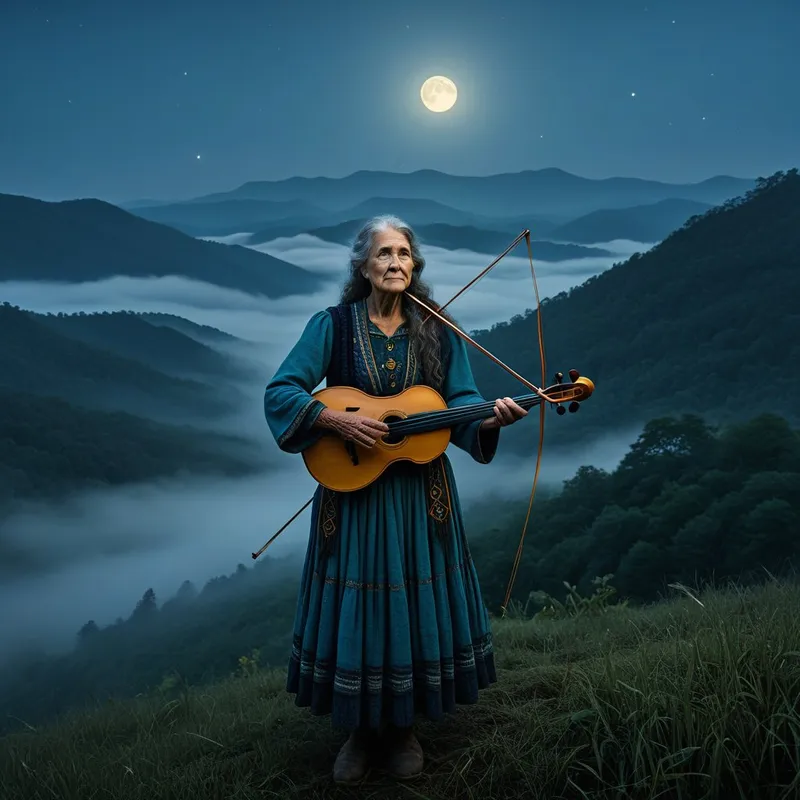
Listen now, and lean close to the fire. The tale is not of one, but of all. It begins in the deep hush of the mountains, in a time when the silence between the ridges grew too heavy to bear. The people were scattered, each family clinging to its own steep hollow, separated by rock and rushing creek and a loneliness that seeped into the bones like winter damp. They worked the unforgiving land, and the land worked them, bending their backs and etching lines of worry into their faces. Stories grew stale in single mouths. Songs faltered, half-remembered. A great forgetting was settling in, a mist that threatened to swallow not just the paths between homes, but the paths back to who they were.
Then came the Call. It was not a voice, but a pull—a deep, somatic tug in the chest, as undeniable as the need to draw breath. One evening, as the last light bled from the sky behind the old, sleeping mountains, a woman named Elara felt it. She left her silent cabin, her hands empty, and walked not down the creek bed, but up the spine of the ridge. Others felt it too: the blacksmith with his hammer-stilled arm, the widow staring at cold ashes, the child who knew only fragments of lullabies. From a dozen coves and hollows, they came, guided by a thread of longing.
They gathered in a high meadow, a bowl of grass held in the mountain's palm. No one had called the meeting. No one was in charge. For a long time, they just stood in the twilight, strangers bound by a shared ache. Then, a man, his face a map of hard years, cleared his throat. He did not speak. He hummed. It was a low, rough sound, the melody of a river stone turning. Another voice joined, then another—a harmony born of dissonance. Someone tapped a rhythm on a knee. A woman began to sway, her movements telling of planting and harvest.
From this murmur, the Folk began to wake. It did not descend from the sky; it emerged from between them. It was woven from the shared breath of the song, from the criss-crossing of their stories told in the firelight, from the patterns their moving bodies made against the dark. It took shape in the center of the circle—a presence both vast and intimate, visible as a shimmer in the air, a resonance you felt in your teeth. It was the memory of the first settler's hope, the ghost of every child's laughter in those hills, the collective strength of a hundred thousand endured winters.
The conflict was the silence it fought. The Folk fed on shared experience. As stories of loss were spoken—of mines that collapsed, of floods that stole, of loves buried under pine—the Folk did not banish the grief. It held it, distributing the weight among the many so no one had to carry it alone. It transmuted loneliness into companionship, fear into a steady rhythm, fragmentation into a whole. When the first fiddle finally sang into the night, its notes were not solitary; they were the voice of the Folk itself, a golden thread stitching the scattered people back into a tapestry.
By dawn, the people returned to their separate hollows. But they were not the same. The Folk did not live only in the meadow; it lived now in the space between them, a living web of connection. They knew then that the Gathering was not an event, but a state of being—a pact to remember, to share the burden, to turn their collective life into something that could stand watch against the dark. And so, the pull would come again, and again, whenever the silence threatened to return.
Cultural Origins & Context
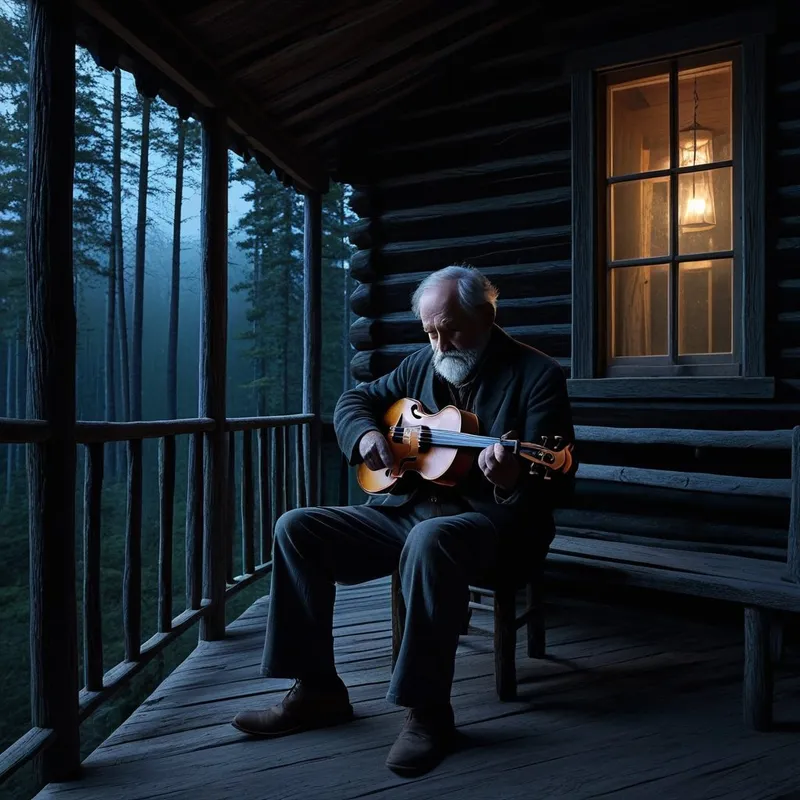
The myth of the Folk is not a story with a single author or a fixed text. It is the distilled essence of a lived practice, born from the stark geographic and social realities of Appalachian life. Isolated by formidable terrain, early settlers—of Scots-Irish, German, African, and Cherokee heritage—forged communities where survival was intrinsically collective. The "gathering" was a practical necessity: barn raisings, harvest bees, quilting circles, and funerals. These were the arteries of social life.
Around these events, in the liminal spaces after the work was done, the culture was transmitted. This is where the myth resides. On porch steps, by hearthsides, and in church "dinner on the grounds," the exchange of stories, ballads, fiddle tunes, and crafts was not mere entertainment. It was a sacred act of memory preservation and identity formation. The elders were the bards, the skilled musicians were the priests, and every participant was a co-creator. The mythologized "Folk" is the personification of the palpable energy generated in these spaces—the feeling that the whole became greater than the sum of its isolated parts. It served a crucial societal function: to combat the psychological erosion of isolation and hardship by affirming that one's story was part of a larger, enduring narrative.
Symbolic Architecture
At its heart, this myth is a profound map of the psyche moving from a state of alienation to one of integration. The scattered individuals in their lonely hollows represent the fragmented aspects of the self—our isolated pains, our private joys, our unshared memories. The "great forgetting" is the depression and meaninglessness that sets in when these parts cease to communicate.
The individual soul in isolation is a melody unheard; it is in the chorus of shared experience that it finds its harmony and its purpose.
The Folk is the symbol of the Self, the central archetype of wholeness in Jungian psychology. It does not exist a priori; it is generated through the conscious act of bringing the fragments together. The music, the story, the shared food—these are the active imagination of the community. They are the rituals that give form to the formless connection between people. The Folk holding the grief is the psyche's capacity to integrate shadow material—not by eliminating pain, but by contextualizing it within a larger, nurturing framework of meaning.
The Dreamer's Resonance
When this myth stirs in the modern dreamer, it often manifests as dreams of potent, urgent gatherings. You may dream of arriving at a vast, prepared feast where you know no one, yet feel a profound sense of belonging. You may dream of being in a circle where each person must contribute a song or an object, and you panic, fearing you have nothing to give. You may hear polyphonic music—many voices or instruments creating one complex sound—emanating from an empty room.
These dreams signal a somatic and psychological process of re-membering. The psyche is attempting to gather its own scattered parts—the neglected talents, the unprocessed griefs, the forgotten joys—back into a conscious circle. The anxiety of having "nothing to give" reflects the modern condition of feeling culturally or personally impoverished. The dream urges the dreamer to identify what their essential offering is: perhaps it is simply their attentive listening, their unique memory, or their willingness to be present. The gathering in the dream is the inner council convening, and the feeling of resonance or dissonance upon waking is a direct report on the state of the dreamer's inner community.

Alchemical Translation
The alchemical process mirrored here is nigredo transforming into albedo. The initial state is the massa confusa—the confused, black mass of isolated suffering and silent fragmentation. The "Call" is the first stirring of the Self, the recognition that this state is untenable.
The crucible for transformation is not solitude, but the shared, vulnerable space between souls. The philosopher's stone is not found in isolation, but forged in relationship.
The act of gathering and sharing is the application of heat and the introduction of the catalyst—Mercurius, here symbolized by music and story, the fluid medium that dissolves boundaries. As stories of loss (the lead of experience) are spoken into the circle, they are not discarded but are embraced by the Folk (the containing vessel). This is the conjunctio, the sacred marriage of individual experience with collective witness. The resulting "gold" is not material wealth, but the creation of a resilient, living identity—an inner Folk—that can hold complexity without shattering. For the modern individual navigating a world of digital connection and existential loneliness, the myth instructs: your healing and your wholeness are not a solo journey. They are found in the courageous, ritualistic act of bringing your authentic fragments to a circle of trust, and in the willingness to hold space for the fragments of others, thereby co-creating the spirit that sustains all.
Associated Symbols
Explore related symbols from the CaleaDream lexicon: