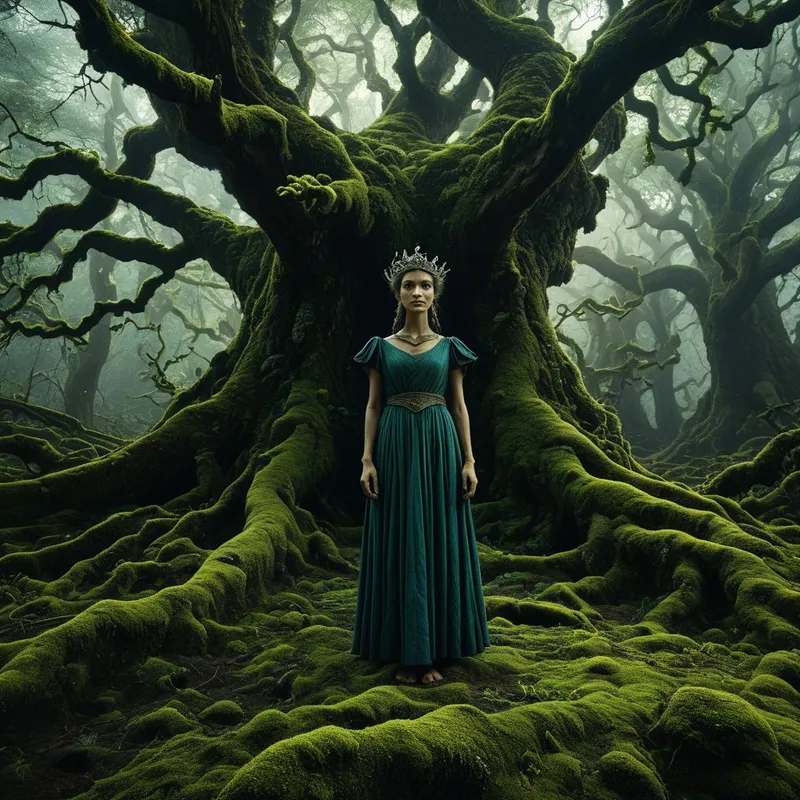
Fjörgyn Myth Meaning & Symbolism
The ancient, personified Earth, mother of Thor and consort of Odin, embodying the raw, fertile, and unyielding ground of being.
The Tale of Fjörgyn
Listen. Before the clang of Valhalla, before the first rune was carved, there was the deep, silent breath of the ground. It was not empty. It was full. It was her.
She did not stride or shout. She was. Fjörgyn was the sigh of the mountain as it settled, the patient grip of the root in the cliff-face, the dark, wet secret held beneath the winter frost. The wind, Odin, who knew all secrets, swept across her vastness. He did not conquer her; he listened. He heard in her stillness the echo of storms yet unborn, felt in her solidity a counterpoint to his endless wandering. From their union—the relentless seeker and the immutable ground—came not a whisper, but a thunderclap. A son whose first cry was the crack of lightning on a basalt plain: Thor.
She did not raise him in golden halls. His cradle was a hollow of stone, his lullaby the grinding of continental plates. She fed him the iron strength of ore veins, the enduring patience of granite. When he learned to walk, his footsteps did not patter; they sank, leaving prints that would become fjords. She taught him that true strength is not just in the swing of the hammer, but in the anvil that withstands it. She was the anvil of the world.
Her story is not one of battles, but of presence. While gods schemed and giants roared, Fjörgyn endured. She received the ashes of Baldr's pyre and the blood of countless conflicts, transmuting grief and violence into silent, slow fertility. She was the first mother and the final tomb, the womb and the barrow. Her tale is the slow, un-narrated epic of the land itself—receiving, holding, transforming, forever.
Cultural Origins & Context
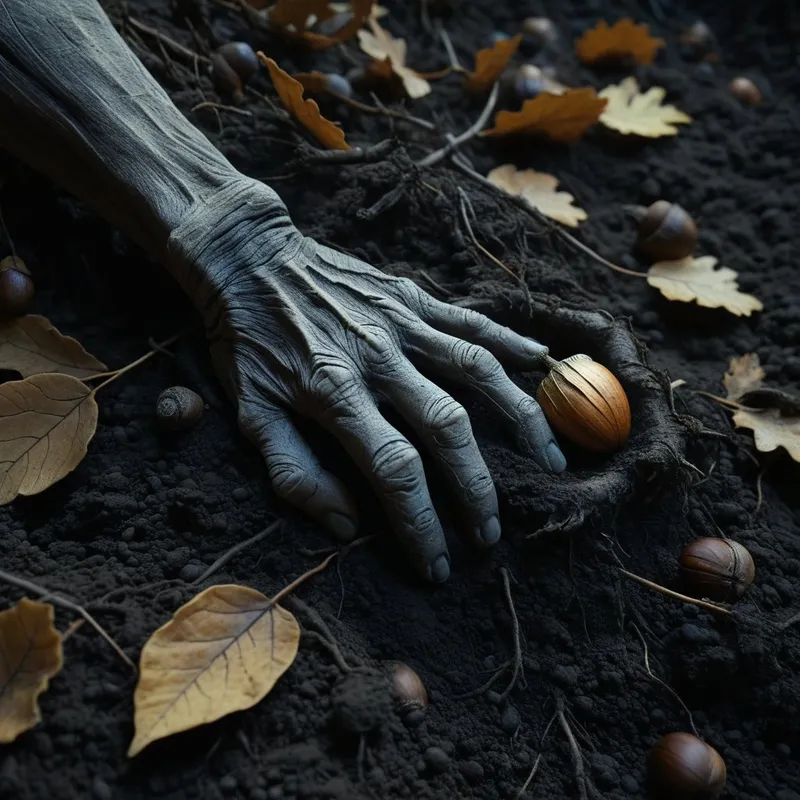
The figure of Fjörgyn emerges from the sparse, potent verses of the Poetic Edda, notably in the Lokasenna and Hárbarðsljóð, where she is named as the mother of Thor. Her name is linguistically rooted in a Proto-Indo-European word for "oak" or "mountain," linking her directly to the most solid, enduring aspects of the natural world. Unlike the dramatic sagas of the Aesir, her myth was likely not told around the fire as a sequential narrative. Instead, it was known.
She was a foundational assumption, a personification so intrinsic to the Norse worldview that she required little elaboration. For a culture whose survival was intimately tied to the land—its fertility for crops, its solidity for shelter, its harshness as a constant adversary—Fjörgyn represented the ultimate "given." She was the stage upon which the drama of gods and men played out. Her primary societal function was symbolic anchoring. In a cosmology filled with cosmic wolves, world-spanning serpents, and ephemeral gods, she was the literal ground of being. To invoke her was to invoke stability, fecundity, and the raw, maternal power of nature itself—a power that was neither kindly nor cruel, but fundamentally necessary.
Symbolic Architecture
Fjörgyn is the archetype of the Ground. She symbolizes the unconscious foundation of the psyche—that which is taken for granted, supportive, and often overlooked until it cracks. She is not the glittering persona or the heroic ego (represented by Thor), but the dark, rich soil from which such forces grow.
The ego thunders across the sky, but it is born from the silent, enduring earth.
Psychologically, she represents the somatic and instinctual base of consciousness. She is the body's wisdom, the gut feeling, the ancestral memory encoded in our bones and sinew. In a patriarchal pantheon of sky gods and conscious striving, Fjörgyn is the essential feminine principle—not as a lover or a witch, but as the Mother in her most chthonic, elemental form. She is the principle of containment and nourishment at the most fundamental level. Her "concealment" is not deception, but the nature of foundations; they are buried, supporting all that is visible. Her fertility is not just biological, but the psyche's capacity to generate life (ideas, feelings, actions) from the raw material of experience.

The Dreamer's Resonance
When the pattern of Fjörgyn stirs in the modern dreamer, it often manifests not as a clear image of a goddess, but as a profound somatic or environmental theme. The dreamer may find themselves in vast, empty landscapes—endless plains, deep caves, or at the base of an immense, silent mountain. There is a feeling of profound solitude, but also of immense solidity and support.
Common motifs include digging in dark, rich soil with bare hands; discovering a hidden, underground spring; or feeling the ground tremble not with threat, but with a deep, resonant power. The dreamer might be a seed, buried and waiting, or a tree whose roots they can feel spreading deep into the dream-earth. These dreams signal a psychological process of grounding. The conscious mind may be over-extended, filled with lightning-bolt anxieties or whirlwind pursuits (a modern "Thor-complex"). The psyche, through the Fjörgyn archetype, is calling the dreamer back to their foundation—to the body, to instinct, to the slow, patient processes of being over doing. It is an invitation to reconnect with what is solid, nourishing, and real beneath the surface noise of life.
Alchemical Translation
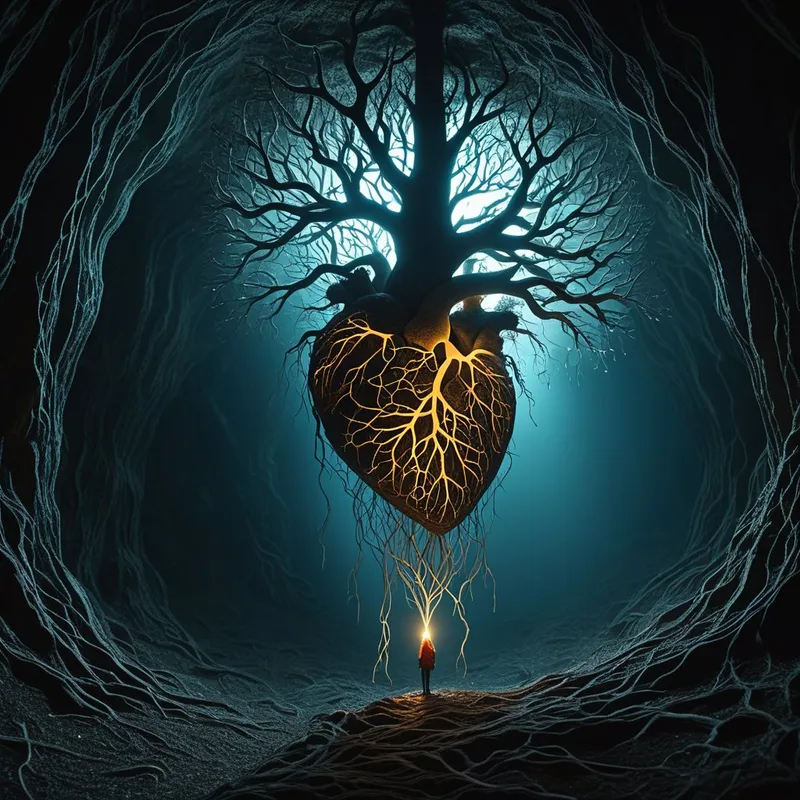
The alchemical work modeled by Fjörgyn is the opus contra naturam in its most fundamental sense: the work of becoming conscious of one's own nature. For the modern individual hurtling through a digital, disembodied age, individuation often begins not with a quest for the golden treasure, but with a return to the black earth.
The first transmutation is not of lead into gold, but of neglect into acknowledgment—of the ground beneath our feet.
The "hero's journey" here is an inward descent, a conscious planting of oneself in the fertile darkness of the unconscious. It is the labor of building a conscious relationship with one's physical being, one's inherited patterns, and one's instinctual life. This is the prima materia—the raw, often rejected stuff of our existence. Fjörgyn teaches that this base material is not to be transcended, but to be honored as the source of all strength and creativity. To integrate this archetype is to perform a psychic earthing. It is to find one's stability not in external achievements or identities (Thor's hammer), but in the unshakable knowledge of one's own foundational being. From this grounded center, true power—creative, resilient, and enduring—can rise. The thunder god is mighty, but he is nothing without the earth that bore him and that ultimately receives him. Our conscious triumphs are fleeting without the silent, sustaining ground of the soul from which they spring.
Associated Symbols
Explore related symbols from the CaleaDream lexicon: