Firefly Myth Meaning & Symbolism
A story of a humble creature who, through great sacrifice, steals a piece of the sun's fire to bring light and hope to a world plunged into darkness.
The Tale of Firefly
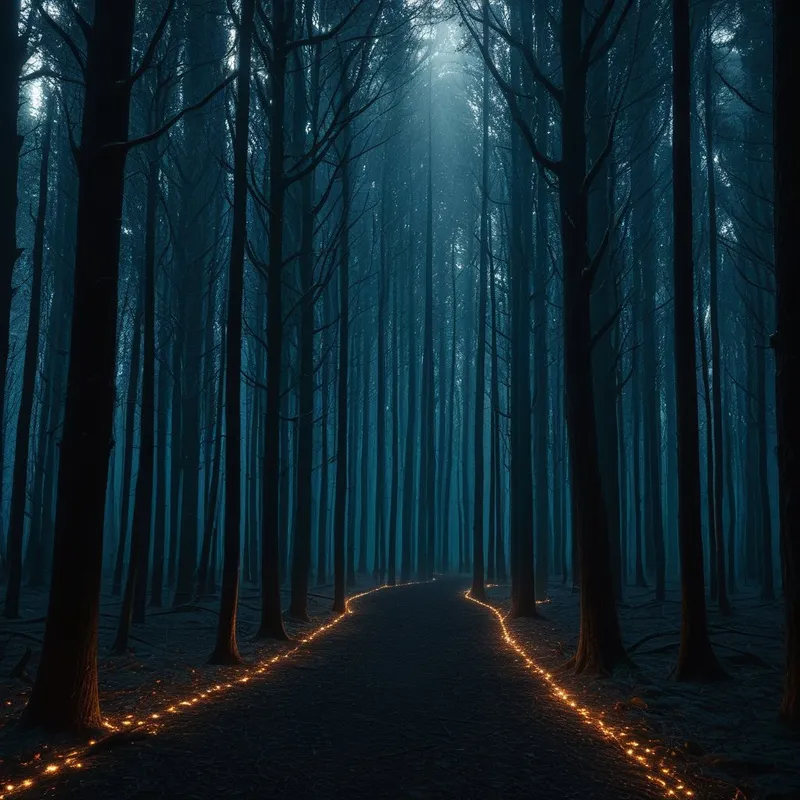
In the First Days, when the world was still soft and new, the People lived in a gentle twilight. The sun, Unelanvhi, traveled across the sky each day, but when he retired to his lodge beyond the western mountains, a profound and absolute darkness fell. It was a darkness that swallowed sound and shape, a blanket so thick it pressed upon the chest. The People huddled in their homes, fearful of the creatures that moved unseen, and the long nights were a time of stillness and dread.
They pleaded with the animals, the great and the swift. "Who will bring us light for the dark time?" they asked. The proud Uktena, with its jeweled scales and terrible horn, scoffed. The task was beneath it. The cunning Ji-Stu tried to weave a net of briars to catch a sunbeam, but it slipped through. The mighty bear simply slept through the problem. Despair began to root itself in the hearts of the People.
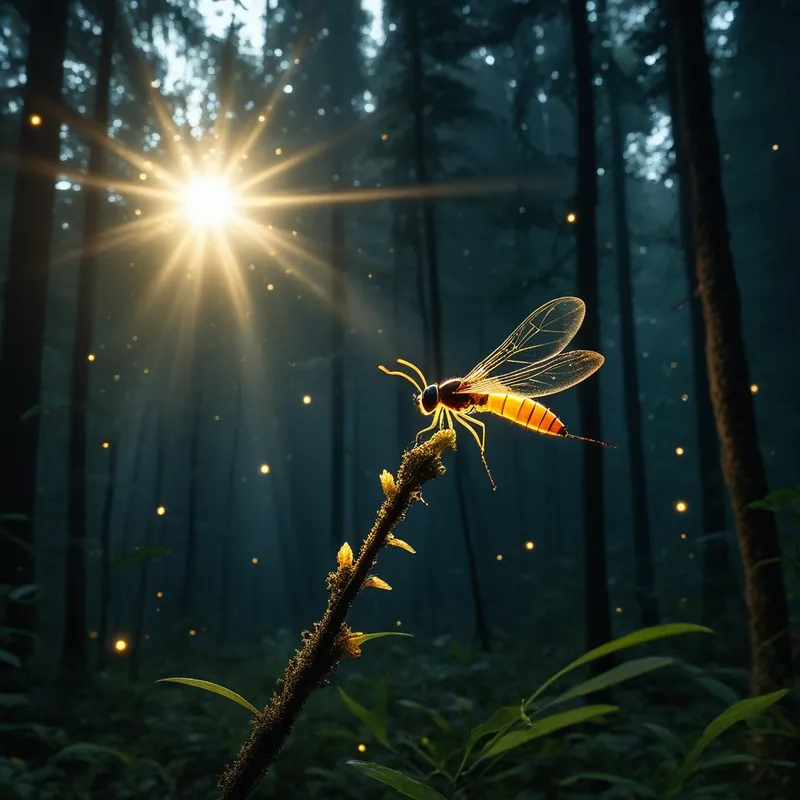
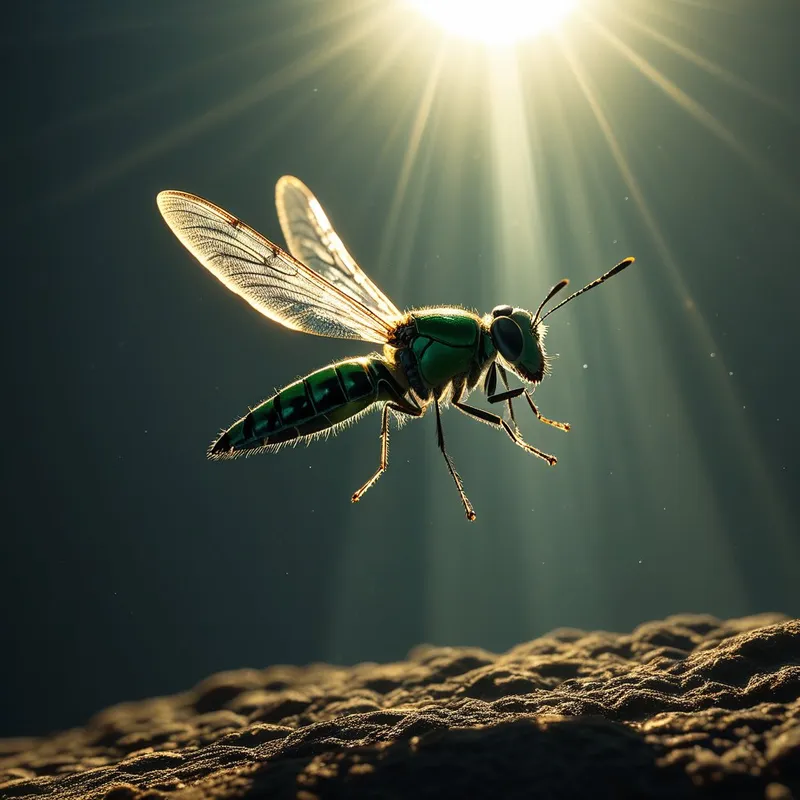
Then, from the humblest corner of creation, a voice spoke. It was a tiny, almost imperceptible sound. "I will try." All turned to see who had spoken. It was Walela, the firefly. A creature so small it was often overlooked, with wings of finest membrane and a body no larger than a pea. Laughter rippled through the council, but Walela did not waver. In its heart was a memory of warmth, a longing for the light it had only ever seen from a vast, impossible distance.
The journey was a pilgrimage of pure will. Walela flew higher than any insect had ever flown, leaving the familiar scent of damp earth and leaf mold far below. The air grew thin and cold, biting at its delicate wings. The great arch of the sky became a crushing dome. Yet, on it flew, drawn by the terrible, beautiful glow on the horizon. Finally, it reached the lodge culture.") of Unelanvhi. The heat was a physical wall, a roar of pure energy that threatened to incinerate it on the spot. The light was so brilliant it was a kind of blindness.
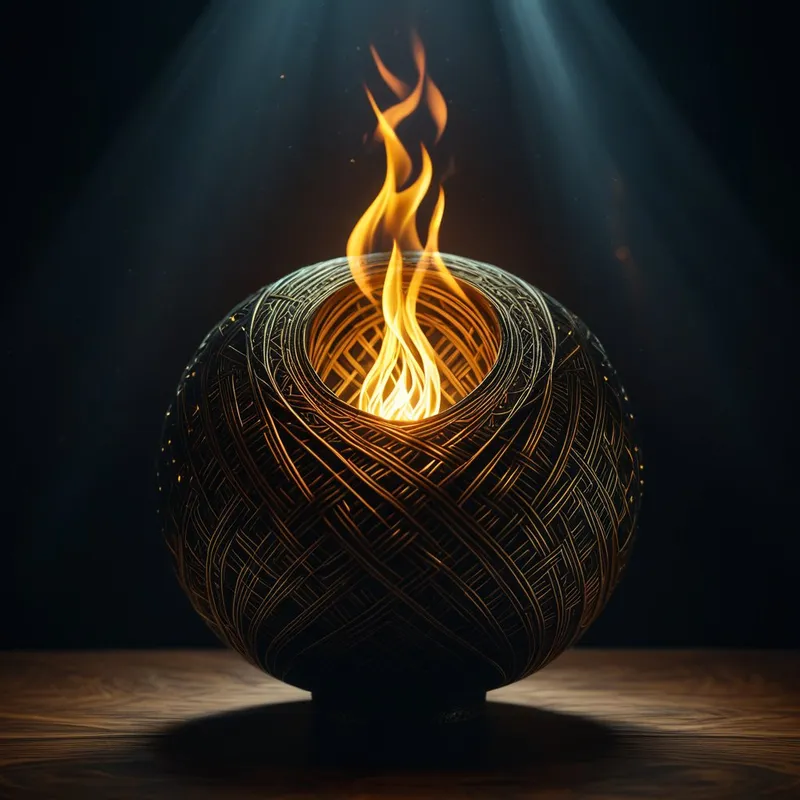
Walela did not hesitate. It saw a fragment of burning bark, a tiny, fallen ember from the great fire of the sun, glowing at the lodge's edge. With a courage born of necessity, it dove. The searing heat was agony. Its wings were scorched, its body felt aflame. But it clasped the ember close, tucking the blazing coal against its own belly. The pain was immense, a fire burning it from the inside out. Yet, it turned and began the long, agonizing flight back down to the world, now a trail of smoke and determination against the darkening sky.
As Walela descended, the People saw a miracle. A tiny, brave star was falling from the heavens. It landed among them, not with a crash, but with a soft, pulsing glow. The ember had not consumed Walela; it had transformed it. The light was now a part of its very being, shining from within its abdomen in a gentle, rhythmic pulse. That night, for the first time, the darkness was not absolute. Little Walela, and soon its children and their children after them, flew through the black, each carrying a tiny, sacred piece of the sun's own fire, a promise written in light against the void: you are not alone; the light remembers.
Cultural Origins & Context
This story belongs to the rich oral tradition of the Ani-Yunwiya, the Principal People. It was not a tale told merely for entertainment around the winter fire, but a foundational narrative with deep societal function. Told by elders and storytellers, it was embedded within a larger cosmological understanding that emphasized balance, reciprocity, and the inherent value of all beings within the web of life.
The myth served multiple purposes. On a practical level, it was an etiological story, explaining the origin of the bioluminescent fireflies that illuminate Southern Appalachian evenings. On a deeper, cultural level, it reinforced core Cherokee values: humility over arrogance, courage in the face of overwhelming odds, and the profound responsibility of service to the community. It taught that heroism is not the sole province of the strong or the cunning, but often emerges from the most unexpected and humble places. The story was a moral compass, reminding listeners that even the smallest member of creation has a vital role to play in maintaining the harmony of the world.
Symbolic Architecture
At its heart, the myth of Walela is a masterclass in symbolic paradox. The firefly represents the ultimate underdog, the insignificance that becomes significant through an act of radical self-alteration.
The greatest light is often found not in the brilliant source, but in the brave fragment that chooses to journey into the darkness.
The Primordial Darkness symbolizes more than mere absence of light; it is the psychological state of despair, ignorance, fear, and isolation. It is the unformed chaos of the psyche before consciousness dawns. The Unelanvhi represents the source of consciousness itself—distant, powerful, almost impersonal in its brilliance. It is the archetypal Father Light, the unattainable ideal.
Walela’s journey is the hero's journey in its most essential form: answering a call the mighty refuse, undertaking a perilous quest to the source of power (the Solar Lodge), seizing the treasure (the ember/fire), and returning transformed to bestow the boon upon the community. The critical, alchemical moment is the internalization of the fire. The ember is not carried in its paws; it is taken into its very body, changing its fundamental nature. The light is no longer an external object; it becomes an innate, biological truth. Walela becomes a living lantern.
The Dreamer's Resonance
When this mythic pattern stirs in the modern dreamer, it often signals a profound inner process of seeking illumination in a time of personal darkness. To dream of being a small, fragile creature in a vast, impenetrable night is to feel one's own insignificance or powerlessness in the face of a life crisis, depression, or a period of confusion.
The somatic sensation is often one of constriction—a tight chest, a feeling of being pressed upon by the dark. The psychological process is the initial spark of agency. The dream-ego, like Walela, makes a choice: I will try. This is the nascent emergence of the hero archetype from within the orphan archetype. The dream may then progress to the sensation of flight, of ascending away from the familiar (though dark) ground, into the terrifying but necessary realm of the unknown. The final, transformative dream image is the moment of ignition—feeling a painful but empowering heat in one's core, and looking down to see oneself glowing from within. This is the dream-body integrating a new piece of consciousness, a hard-won truth that now defines you.
Alchemical Translation
The psychic transmutation modeled here is the individuation of light. For the modern individual, the "sun" is often a distant ideal: wholeness, enlightenment, self-actualization, or creative genius. It feels impossibly far, the province of "other" people—the geniuses, the saints, the exceptionally brave. We, like the People, wait in the dark, believing we are not equipped for the journey.
Individuation is not about becoming the sun. It is about having the courage to secure your own ember and let it transform your very structure.
The alchemical operation is threefold. First, Calcination: The humble acknowledgment of one's starting point—the "smallness," the limitations, the perceived inadequacy. This is not self-pity, but the clear-eyed assessment Walela makes before taking flight. Second, Solutio: The dissolution of the old form through the perilous journey. The ego's certainties are scorched away by the heat of direct engagement with the unconscious (the solar realm). It is painful, destabilizing, and feels like annihilation. Third, Coagulatio: The new formation. This is the critical phase where the captured "fire"—a new insight, a healed trauma, a reclaimed passion—is not just held as a concept, but is metabolized. It is woven into the fabric of the personality. The scar of the burn becomes the organ of the light.
You are left not as a miniature sun, but as a firefly. Your light is intermittent, soft, and tied to the rhythms of your own life. It does not banish all darkness, but it makes the path navigable. And in doing so, you perform the ultimate service: you become a signal to other seekers in their own dark nights, a proof that the light can be carried, that the spark can be stolen, and that the transformation, though painful, grants a luminosity that can never be fully extinguished.
Associated Symbols
Explore related symbols from the CaleaDream lexicon: