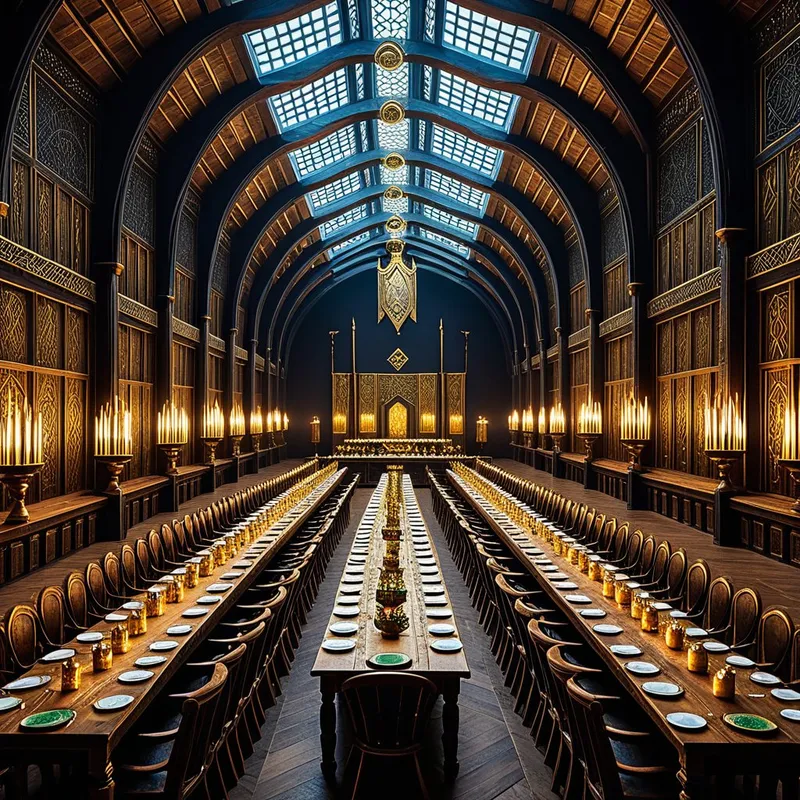
Feast in Valhalla Myth Meaning & Symbolism
A myth of fallen warriors feasting and fighting in Odin's hall, awaiting the final battle, embodying a paradox of eternal glory and inevitable doom.
The Tale of Feast in Valhalla
Hear now of the hall that stands not in the lands of the living, but in the realm of the slain. Listen to the wind that carries not the scent of pine, but the iron tang of blood and the sweet, heavy perfume of endless mead. This is the story of Valhalla.
The All-Father, Odin, sits upon his high seat, Hliðskjálf. His single eye, a well of storm and memory, sees across the nine worlds. He sees the threads of ørlǫg spun by the Norns at the foot of the Yggdrasil. He sees the great serpent Jörmungandr stirring in the deep, and the wolf Fenrir straining at his bonds. He knows the twilight of the gods, Ragnarök, is woven into the tapestry’s end. And so, he prepares.
From every field of battle where swords clash and shields splinter, his chosen maidens, the Valkyries, ride. Their armor gleams like ice, their spears are lightning. They do not fight; they watch. And when a warrior falls, not with a whimper but with a cry of defiance on his lips, a sword in his hand, and courage in his heart, they descend. With a touch that is both gentle and final, they lift the einherjar—the chosen one—from the mud and gore. His mortal pain vanishes, his wounds seal into silver scars, trophies of his end.
He is carried on winds that smell of ozone and ash to a place of impossible grandeur. The gates, Valgrind, swing open before him. Inside, the hall stretches beyond sight, its roof thatched with golden shields that cast a perpetual, warm light. The rafters are spears, and mail coats are strewn upon the benches. A roar fills the air—not of fear, but of fierce joy. It is the sound of five hundred and forty doors, each wide enough for eight hundred warriors to march through shoulder to shoulder.
Here, his new life begins. By day, on the vast plain of Idavoll, they fight. They clash with the fury of their final moments, hewing limbs, striking down comrades, dying anew. But with the setting of a sun that never truly sets, the fallen rise again, whole and hale. The wounds are gone, and with a great laugh, they clasp arms and return to the hall.
And then, the feast. The great boar Sæhrímnir is cooked in the cauldron Eldhrímnir, and its meat feeds all, endlessly. From the udder of the goat Heiðrún, who feeds on the leaves of Yggdrasil, flows not milk, but rivers of the finest mead. It is served by the Valkyries themselves, who pour it into horns and skulls. The hall echoes with the songs of skalds, the boasts of heroes, the deep-throated laughter of gods. Odin drinks too, but he does not feast on meat; he sips only wine, for his feast is the gathering of strength, the amassing of an army of spirit against the coming dark.
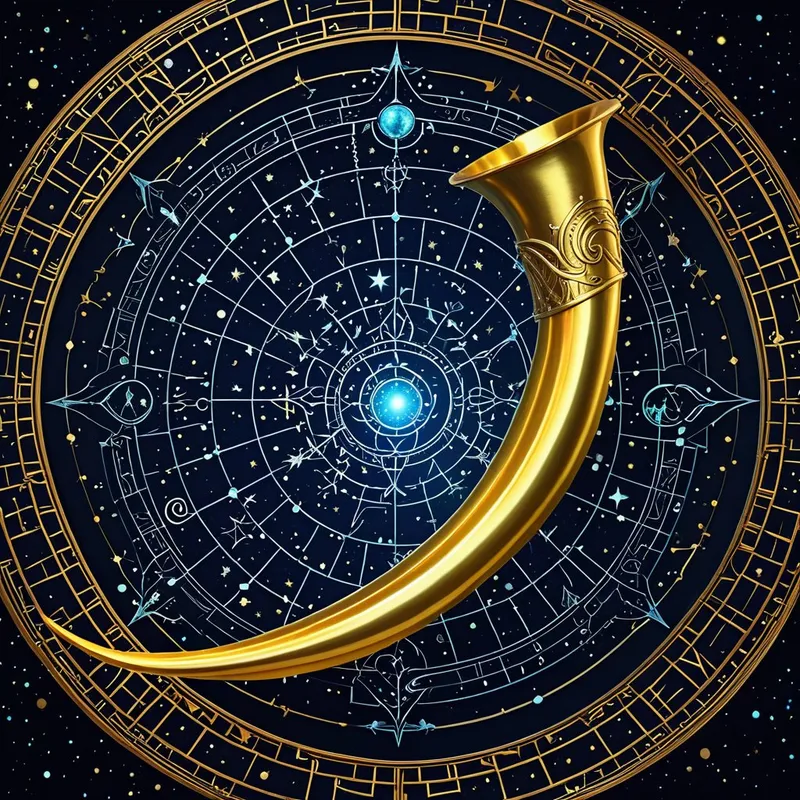
This is the cycle: fight, die, rise, feast. An eternal rehearsal for the one battle that will not end in resurrection. They wait, these glorious dead, their hearts burning with the memory of mortal courage, their souls tempered in daily doom, for the day the Gjallarhorn sounds and the long twilight begins.
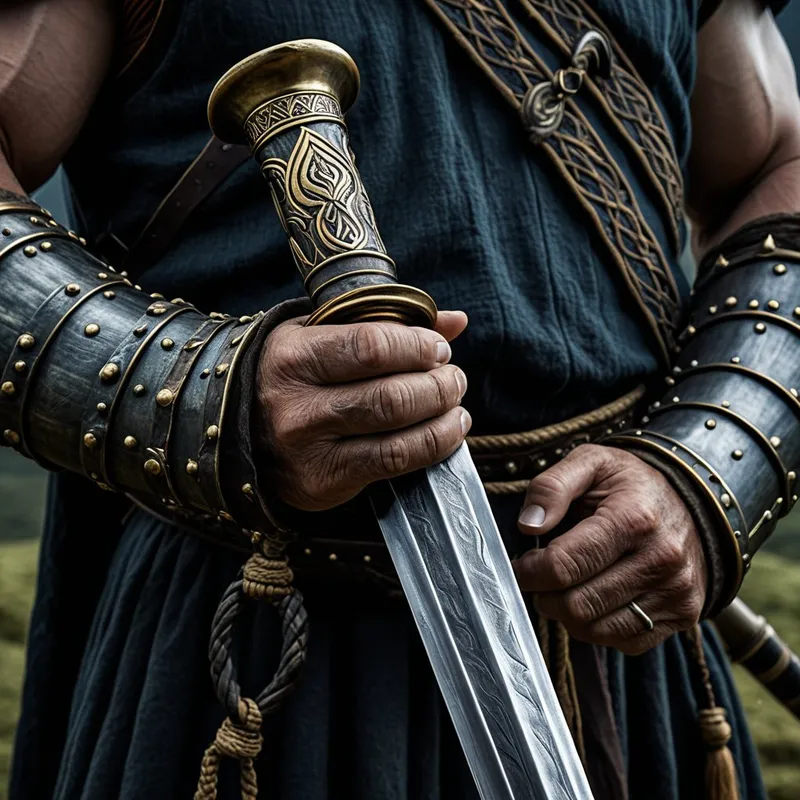
Cultural Origins & Context
This myth was not a promise of peaceful afterlife, but a narrative forged in the harsh realities of the Viking Age (c. 793–1066 CE). It was preserved primarily in two 13th-century Icelandic texts, the Poetic Edda and the Prose Edda, compiled by scholar Snorri Sturluson. These texts codified oral traditions that had circulated for centuries among skalds (poets) and storytellers.
The myth functioned as a powerful societal engine. In a culture where death in battle was a constant possibility, the vision of Valhalla provided a framework for understanding and embracing a warrior’s fate. It transformed a seemingly meaningless, brutal death into a purposeful selection by the highest god. This was not a myth for the old who died in bed (who went to Hel), but for the young and the brave. It encouraged the very behaviors—courage, loyalty, ferocity in the face of odds—that the society depended upon for survival and expansion. The feast was not mere reward; it was the communal binding of the war-band, the comitatus, projected into eternity, ensuring that the bonds of loyalty forged in life would hold in the face of cosmic annihilation.
Symbolic Architecture
At its core, the Feast in Valhalla is a profound paradox: it is a myth of glorious, chosen immortality that exists solely to serve an inevitable, collective death. This is its central, haunting symbol.
The ultimate courage is to know the end, to prepare for it with every fiber of your being, and to feast in its shadow.
Valhalla represents the ego’s ultimate aspiration—to be chosen, to be special, to have one’s struggles validated by the highest authority (Odin as the archetypal Father/Self). The daily battle and resurrection symbolize the endless process of psychological conflict and renewal we undergo to build a strong, resilient psyche. We are wounded, we “die” to old ways of being, and we must integrate those experiences to rise again.
The feast symbolizes the necessary celebration of life and vitality (libido) even amidst this struggle. The mead from Heiðrún, fed from the World Tree, represents the nourishing sap of the unconscious itself, the wisdom and energy that flows when one is connected to the greater whole. Yet, the entire endeavor is framed by the knowledge of Ragnarök. This is the acceptance of the ultimate limitation: the death of the ego-consciousness. The einherjar do not train to avoid fate; they train to meet it with perfected skill and unwavering presence.
The Dreamer's Resonance
When this myth stirs in the modern dreamer, it rarely appears as a literal Viking hall. Instead, one may dream of:
- An Endless Preparation: Recurring dreams of studying for a final exam that never comes, or training for a championship game that is perpetually postponed. There is a sense of being chosen for a great, undefined task, coupled with somatic anxiety—a tightness in the chest, a feeling of relentless readiness.
- The Cyclical Battle: Dreams of fighting the same opponent or facing the same obstacle repeatedly, each time “dying” or failing, only to wake with the unshakable knowledge you must face it again. This mirrors the daily battles on Idavoll.
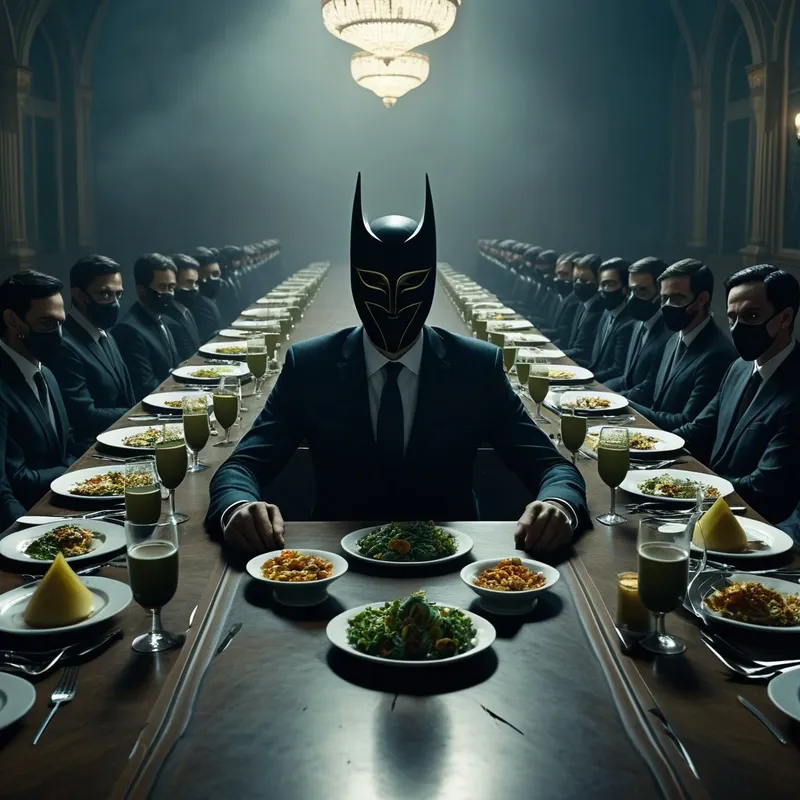
- The Shadow Feast: Dreaming of a grand party or celebration where you feel profoundly out of place, or where the festivities have a manic, desperate edge. This can indicate a psyche that is attempting to “feast”—to enjoy life’s pleasures—but is doing so under the unacknowledged shadow of a looming psychological “end” (a life transition, a repressed fear, a necessary sacrifice).
These dreams point to a psyche caught in a heroic but potentially exhausting paradigm: the belief that one must constantly prove one’s worth through struggle, earning one’s place through ceaseless effort, all while sensing a fateful reckoning on the horizon.
Alchemical Translation
The alchemical journey modeled by Valhalla is not about achieving a static state of bliss, but about the opus contra naturam—the work against nature—of consciously preparing for one’s own dissolution. In Jungian terms, it is a supreme metaphor for the later stages of individuation.
The first step is the mortificatio: the “death” on the battlefield, the surrender of the mortal, small self to a larger pattern (being chosen by the Valkyrie/the Self). This is the painful but necessary death of outdated identities. Then comes the solutio and coagulatio: the daily dissolution in battle and re-formation at the feast. This is the ongoing process of confronting unconscious contents (shadow, anima/animus) and reintegrating the insights, building a more complex, durable consciousness.
The goal is not to avoid Ragnarök, but to become the warrior who can stand at the fore when it arrives, fully conscious.
The final and most critical transmutation is the integration of the paradox itself. The modern individual must learn to hold both the feast (the joyful, engaged participation in life, creativity, and relationship) and the battle (the necessary conflicts, inner work, and sacrifices) in full awareness of their fate (personal mortality, limitations, and the ultimate unknown). One learns to “feast in Valhalla”—to live with passion and purpose—not in denial of the end, but precisely because of it. The courage cultivated is not for an external war, but for the ultimate inner confrontation with the Self, where the ego must finally yield, not in defeat, but in conscious, willing alignment with the totality of the psyche. The horn that is raised in the golden hall, then, is a toast to the whole, terrible, beautiful process of being.
Associated Symbols
Explore related symbols from the CaleaDream lexicon: