Fate's Tapestry Myth Meaning & Symbolism
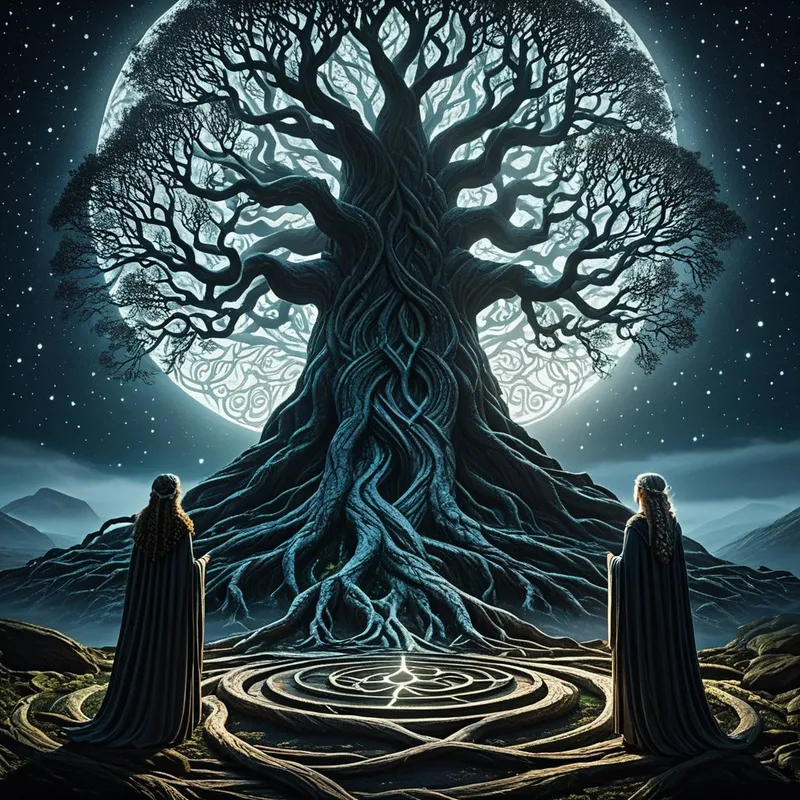
Three cosmic weavers at the root of the world tree spin the threads of fate for all beings, gods and mortals alike, into an unfathomable tapestry.
The Tale of Fate's Tapestry
Listen, and hear the whisper from the roots of the world. Not a song of thunder, but the soft, ceaseless sound of thread drawn through thread. Beneath the third and deepest root of the great Yggdrasil, where the well of Urd holds the waters of memory and origin, they sit. Three figures, neither fully of the Æsir nor the Jötnar. They are the Norns.
The first is Urd, her face a map of all that has been, etched with the wisdom of deep time. Her hands are gnarled like the roots she tends, yet their movement is sure. The second is Verdandi, her gaze fixed on the point where thread meets loom, her expression one of fierce, present-tense concentration. The third is Skuld, veiled and inscrutable, holding a shears whose blade gleams with cold, final light.
Their loom is not of wood, but of space itself, strung between the roots of the Tree and the pillars of the worlds. From the well, Urd draws the threads—glistening strands spun from the dew of Yggdrasil, from the breath of newborns, from the last sigh of the dying, from the oaths sworn and broken. Verdandi takes them, her fingers flying, weaving the complex, ever-changing now. Skuld measures the length yet to be woven, her shears resting but never still.
They weave the ørlög of all things. A golden thread for a king’s triumph, a stout hemp cord for a farmer’s steadfast life, a frayed, delicate silk for a child’s brief joy. They weave the fate of the gods themselves: the shining strength of Thor, the deep cunning of Odin, the beautiful doom of Baldr. The tapestry grows, a living, breathing image of all existence, its patterns so vast no single eye, not even Odin’s, can comprehend it whole.
Sometimes, a thread snaps. A hero falls unexpectedly. A kingdom vanishes. The Norns do not start; they simply take the broken end and weave it into the new pattern, integrating the rupture. Sometimes, a thread of a new, impossible color appears—the result of a great sacrifice, a moment of transcendent courage, a choice that echoes through the layers of being. They weave that in, too. The work is eternal, the rhythm hypnotic. The only sounds are the whisper of the well, the rustle of the great Tree, and the soft, fateful shush-shush of the weave. It is not a story with an end, but an ongoing song of becoming, sung in the language of thread and knot, under the shadow of the waiting shears.
Cultural Origins & Context
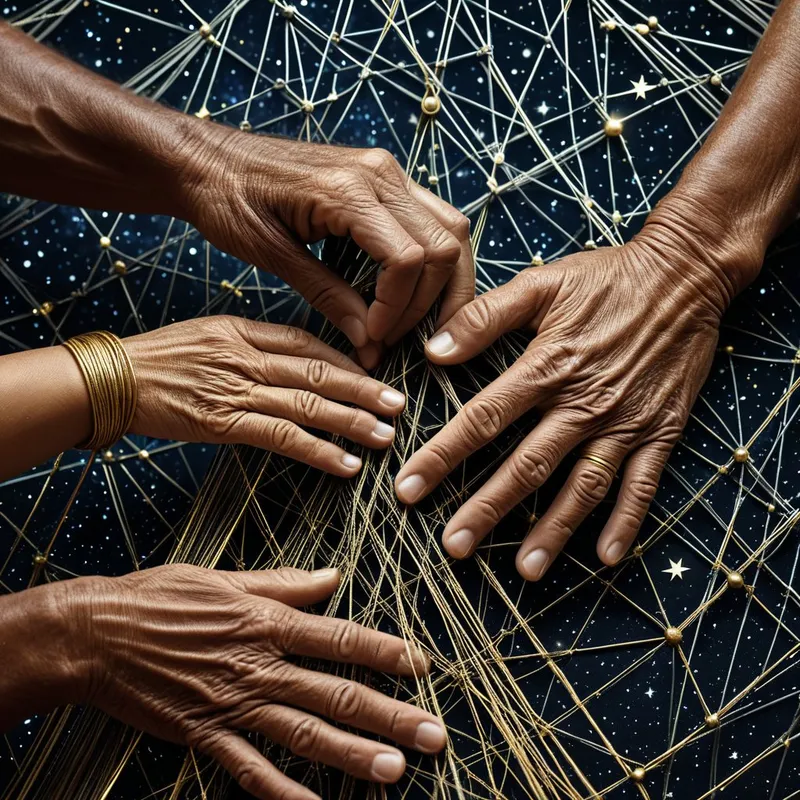
This powerful imagery of cosmic weaving is not contained in a single, canonical saga. Instead, it is woven throughout the poetic and prose sources of Old Norse literature, primarily in the Poetic Edda (particularly the Völuspá and Helgakviða Hundingsbana I) and Snorri Sturluson’s later Prose Edda. The myth was not a formal doctrine but a pervasive metaphor understood by the skalds (poets) and their audiences.
The societal function was profound. In a worldview where even the gods were subject to a pre-ordained doom (Ragnarök), the concept of the Norns provided a framework for understanding destiny, luck, and the limits of agency. It answered the haunting question of "why?"—why does the brave warrior fall, why does the crop fail, why is a child born under a lucky star? The answer lay not in a capricious god, but in a vast, impersonal, and intricate web of cause and effect spun from the very wellspring of existence. It fostered a cultural attitude of fatalistic courage: one’s ørlög was set, but one’s honor in facing it was the only true possession.
Symbolic Architecture
The Tapestry is the ultimate symbol of the interconnected, patterned nature of reality. The Norns represent the triune nature of time—Past (Urd, the source), Present (Verdandi, the act of creation), and Future (Skuld, the necessary limit)—not as a linear line, but as a simultaneous, interwoven process.
The thread is the individual life, but the pattern is the collective destiny. To see only your thread is to know your path. To perceive the pattern is to glimpse the divine.
The Well of Urd symbolizes the unconscious, the deep past, the pool of all potential and memory from which our present circumstances are drawn. Yggdrasil, the loom, is the structure of reality itself, the axis upon which all possibilities are stretched. Skuld’s shears represent the inevitability of death and ending, the necessary counterpart to creation, without which the tapestry would become a formless, endless tangle. Crucially, the myth suggests that while the broad material of the thread—its length, its strength—may be set, the way it is woven, the knots, the twists, the relationships it forms with other threads, is the dynamic, living expression of a life.
The Dreamer's Resonance
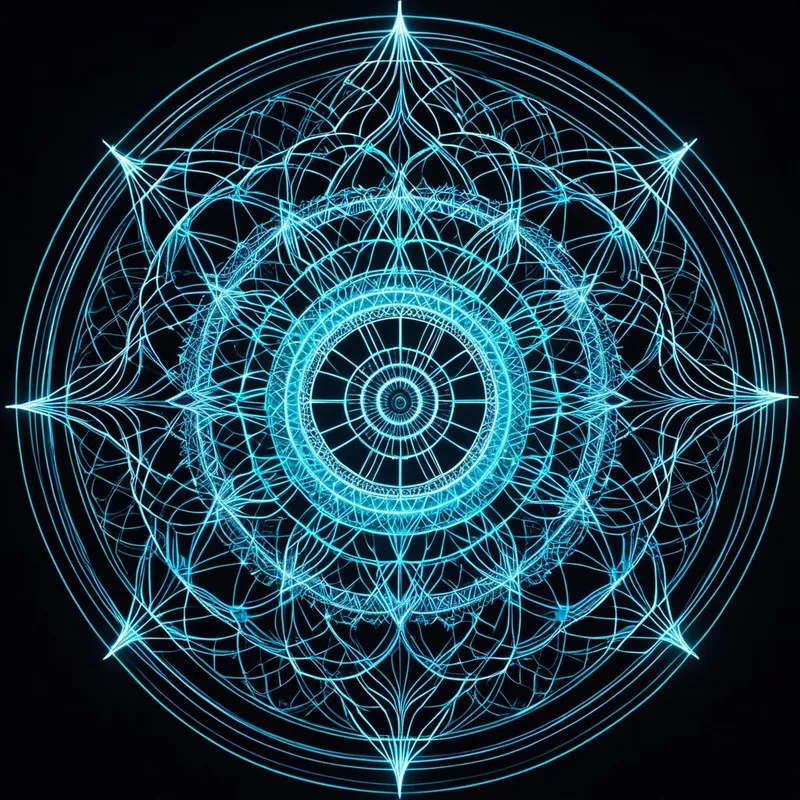
When the imagery of Fate’s Tapestry appears in modern dreams, it often signals a profound engagement with the psyche’s relationship to destiny, choice, and personal history. Dreaming of weaving, or of finding oneself in a vast, incomprehensible web, can indicate a somatic feeling of being "part of a larger plan," often during life transitions—births, deaths, career shifts, or the onset of illness.
To dream of cutting a thread is a powerful motif of active choice, of severing a karmic or psychological tie, often with a mix of terror and liberation. Conversely, dreaming of a broken thread can reflect a felt sense of disruption, failure, or trauma that the dream-ego is struggling to integrate. Finding a new, unique-colored thread to weave suggests the emergence of a new identity, talent, or perspective that feels fated or deeply authentic. These dreams ask the dreamer: Where do you feel fated? Where do you feel free? What old patterns are you woven into, and what new design is your soul attempting to create?
Alchemical Translation
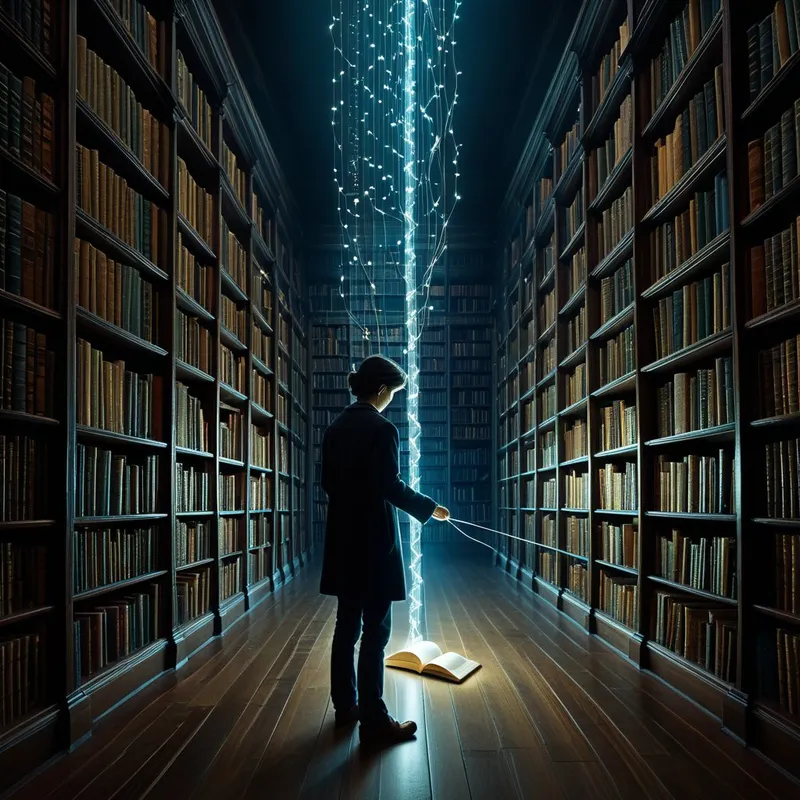
Psychologically, the process of individuation—becoming the unique, integrated Self—mirrors the Norns’ work. Our personal history (Urd) provides the raw threads: our genetics, childhood experiences, and cultural conditioning. Our present consciousness (Verdandi) is the active weaver at the loom of daily life, making choices, forming relationships, and creating meaning from that material.
The alchemical work is not to escape the loom, but to become a conscious collaborator with the weaver within.
The future (Skuld) represents the telos, the pull of the Self toward wholeness, which often requires the "cutting" of outgrown identities, dependencies, and complexes. The modern individual’s struggle is to move from being a passive strand in a pattern woven by unconscious forces (family, society, trauma) to taking up the shuttle themselves. This is the "alchemical translation": to drink from your own Well of Urd (confront your personal and ancestral past), to respect the integrity of your thread (honor your innate nature), and to engage courageously with the weaving of your present, knowing that each choice contributes to a pattern whose full beauty may only be visible from a perspective beyond the ego. We do not choose our threads, but we are forever responsible for the weaving.
Associated Symbols
Explore related symbols from the CaleaDream lexicon: