Einherjar Myth Meaning & Symbolism
The chosen slain who feast and fight each day in Valhalla, awaiting the final battle. A myth of eternal readiness and the alchemy of conflict.
The Tale of Einherjar
Listen. The wind does not just blow across the northern fjords; it carries whispers from the field where choices are made final. It is the day’s last light, a red smear on the shield-rim of the world. The battle is done. The ravens, Huginn and Muninn, wheel on silent wings, their eyes missing nothing. Below, on the blood-soaked earth, a warrior draws his final breath. His eyes, clouded with the mist of death, do not see the sky, but a figure approaching.
She is not walking. She is choosing. The Valkyrie is clad in light that is not sunlight and armor that sings a faint, metallic hum. She kneels, a gesture both tender and utterly final. Her touch is not of this middle-earth. With a sound like a sword being drawn from a stone, she lifts the warrior’s spirit from its clay.
And then—flight. Not as a bird flies, but as a thought flies from one mind to another. The world streaks below: forests like fur, rivers like silver scars, the great arch of the Bifröst a trembling, impossible road. They pass into Asgard, and before them, its roof speared with countless gilded spears, its walls formed from the shields of the greatest to fall, stands Valhalla. The doors, tall enough for giants, swing open without a hand touching them.
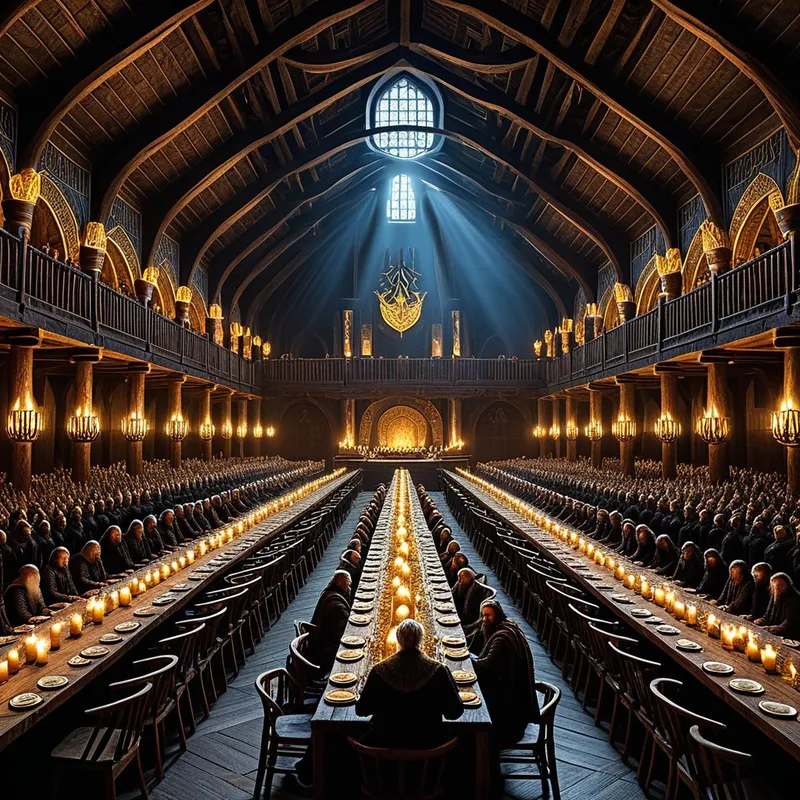
Inside is a roar that is not chaos, but order of a terrible kind. The hall is endless. The fires in the great hearths never die. At tables that stretch into the smoky distance, warriors feast. These are the Einherjar. They drink mead that flows from the udder of the goat Heiðrún, and they eat the flesh of the boar Sæhrímnir, who is whole again each morning. Their wounds, grievous and fatal mere hours before, are healed. Their eyes are clear, fierce, and waiting.
Their lord, the one-eyed Odin, sits upon his high seat, Hliðskjálf. He does not smile. His gaze is heavy with the weight of foresight. He knows the final page of the saga. He knows of Ragnarök. The Einherjar are his answer to that knowing.
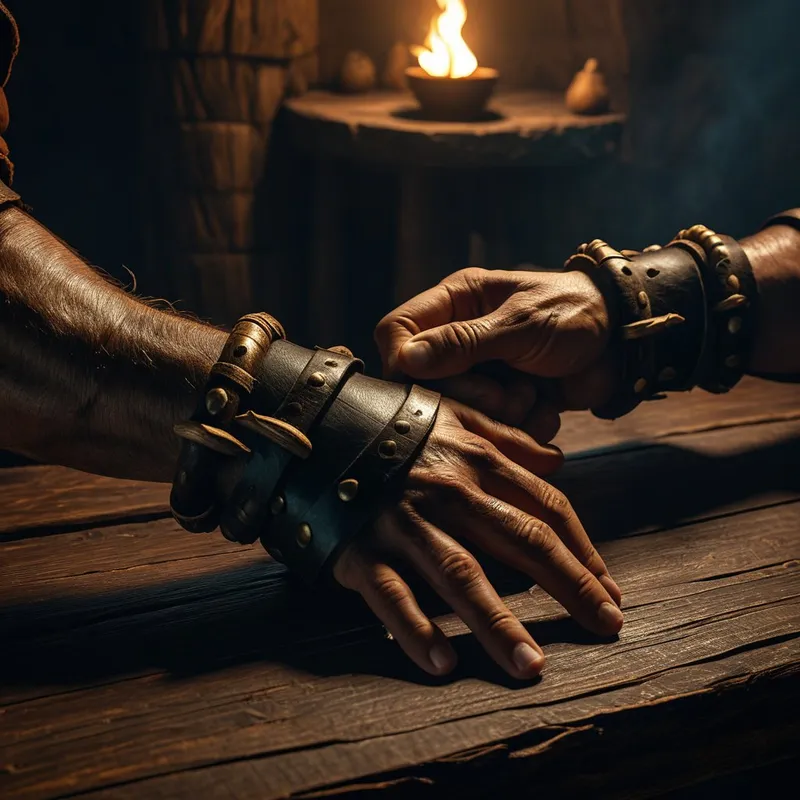
For when the feasting is done, a different sound fills the air: the shriek of iron on iron, the thunder of blows, the war-cries of men who cannot truly die. They pour from the hall onto the field of Idavollr. There, they turn their weapons upon each other. Swords clash, axes bite into shields, and bodies fall. But when the sun begins to fail, a horn sounds. All strife ceases. The fallen rise, whole once more. The slain help their slayers to their feet. They clasp arms, laugh with voices like cracking ice, and return to the hall, their fellowship forged anew in daily, sacred violence. They fight, die, and rise, day after day, preparing for the one battle where the rising will cease.
Cultural Origins & Context
This myth was not a comforting bedtime story. It was the hard, glittering core of a worldview shaped by a harsh environment, constant tribal conflict, and a profound acceptance of inevitable endings. The primary sources are the Poetic Edda and the later Prose Edda, compiled in 13th-century Iceland but drawing on oral traditions centuries older.
The myth functioned as a powerful social and psychological engine. For the warrior aristocracy, it provided a cosmic rationale for a life of bravery and fatalism. To die in bed of old age was a weak, inglorious end. To die with a sword in hand was to be chosen, to be granted purpose beyond the grave. The Valkyrie was not a psychopomp leading to rest, but a divine recruiter for the ultimate army. This narrative transformed individual death from a meaningless cessation into a promotion in a cosmic hierarchy.
Furthermore, it reinforced social bonds. The Einherjar feast and fight together eternally. This reflected the vital importance of the comitatus, the warrior band bound by oath to their lord—a bond so sacred it transcended death. The myth told them that the fellowship of the hall, the sharing of mead and song, and the reliance on your shield-brother were not merely mortal pleasures but echoes of a divine, eternal pattern.
Symbolic Architecture
Beneath the saga of battle and mead lies a profound symbolic architecture, not of mere warfare, but of conscious preparation and the alchemy of the self through conflict.
The Einherjar do not train for victory; they train for fate. Their daily death is not a failure, but a ritual of integration.
First, they represent the chosen complex. Not every fallen warrior goes to Valhalla; only those selected by Odin and his Valkyries. Psychologically, this speaks to those core aspects of ourselves—our skills, our courage, our capacity for discipline—that we must "choose" to bring into the service of a larger, guiding consciousness (the Self, symbolized by Odin). These are the parts we recruit from the "battlefield" of our daily struggles and inner conflicts.
Second, the eternal cycle of battle-feast-battle is a symbol of individuation through opposition. The Einherjar fight their own kind. This is the internal process of confronting the shadow, the unlived parts of ourselves, the contradictions within our own psyche. Each "death" on Idavollr is the temporary dissolution of an old attitude or identification. The subsequent healing and return to the feast represents the assimilation of that conflict, leading to a stronger, more integrated psyche. The foe is a brother; the conflict is sacred because it forges wholeness.
Finally, they embody the paradox of purposeful waiting. Their entire existence is preparation for Ragnarök, an end they know is coming. This mirrors the human condition of living with the knowledge of our own mortality. The Einherjar myth proposes that the worthy response is not despair or hedonism, but rigorous, daily preparation—honing the self, enjoying the fellowship of the journey, and standing ready to meet the ultimate challenge with skill and courage.
The Dreamer's Resonance
When this myth stirs in the modern unconscious, it rarely appears as Vikings in a hall. Its resonance is more subtle, a pattern felt in the bones of the dream.
To dream of being in vast, impersonal training facilities, endless gyms, or repeating the same complex task over and over with a sense of grave importance points to the Einherjar energy. The dreamer may be in a life phase of intense skill acquisition, professional preparation, or internal discipline, feeling they are "in training" for a future, undefined climax. There is a somatic quality of repetitive strain, of muscles being worked to exhaustion only to be restored—a psychic conditioning.
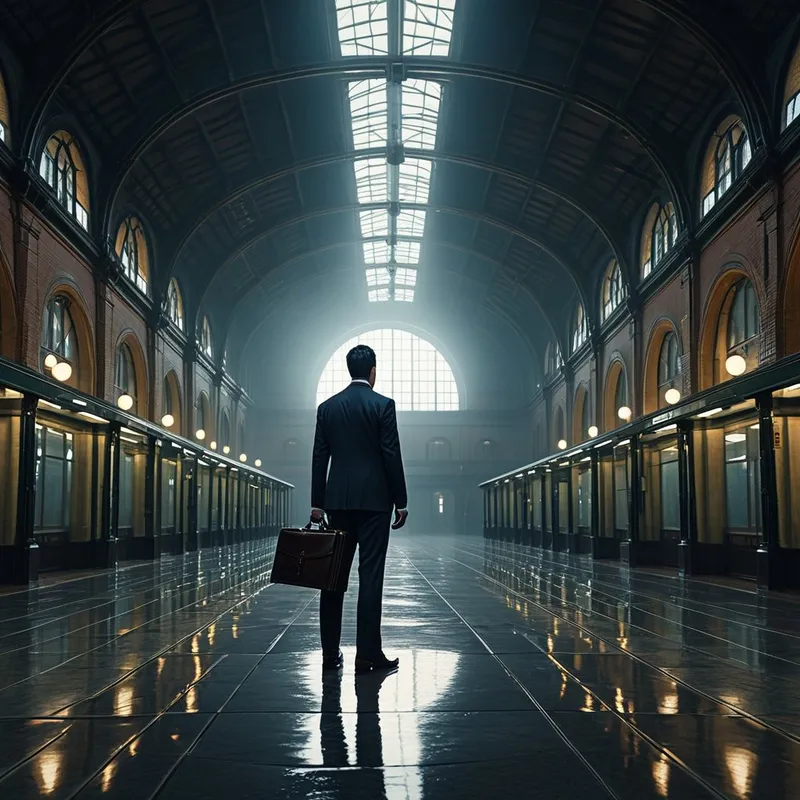
Dreams of ritualized, non-lethal combat with colleagues or friends, where the conflict ends in laughter and camaraderie, directly mirror the Idavollr dynamic. This suggests the dreamer is healthily engaging with competitive or adversarial energies in their waking life, using conflict as a tool for growth rather than destruction. Conversely, dreams of waiting in immense, crowded anterooms or stations for a transport that never comes may signal the "waiting" aspect turned stagnant, where preparation has lost its connection to purpose, becoming empty routine.
Alchemical Translation
The alchemical journey modeled by the Einherjar is not about obtaining a prize, but about achieving a state of readiness. The prima materia is the raw, unselected self, dying on various "battlefields" of life—failure, loss, conflict.
The first operation is selection (the Valkyrie's choice). We must discern which of our experiences, which wounds, which triumphs, are sacred data for our development. Not every battle scar is relevant; only those chosen for the hall of the evolving self.
The second is the nigredo of daily conflict on Idavollr. This is the confrontational stage of analysis, therapy, or simply honest self-assessment, where we willingly engage our inner oppositions. We allow our attitudes to "die" in these controlled, ritualized engagements. The albedo is the healing feast that follows—the integration, the understanding, the compassion we show ourselves and our inner "opponents" after the insight. The warrior helps his slayer up. The ego integrates the shadow.
The final transmutation is the state of being fully forged. The Einherjar, by the time of Ragnarök, are not merely brave warriors; they are beings whose every fiber is the product of endless cycles of rupture and repair. They are resilience incarnate. For the modern individual, this is the achievement of a personality that is not brittle, but tempered. It is the self that has made its inner conflicts sacred, that prepares daily not for a specific external battle, but for the ultimate encounter with life's inherent limitations and endings—meeting them not with terror, but with the focused presence of one who has practiced this moment every single day.
Their ultimate purpose is to fight a battle they know they cannot, in the old sense, "win." They fight it because it is what they were made to do. In that alignment of purpose and action, regardless of outcome, lies the myth's deepest alchemy: the transformation of existential dread into dignified, resolute action.
Associated Symbols
Explore related symbols from the CaleaDream lexicon: