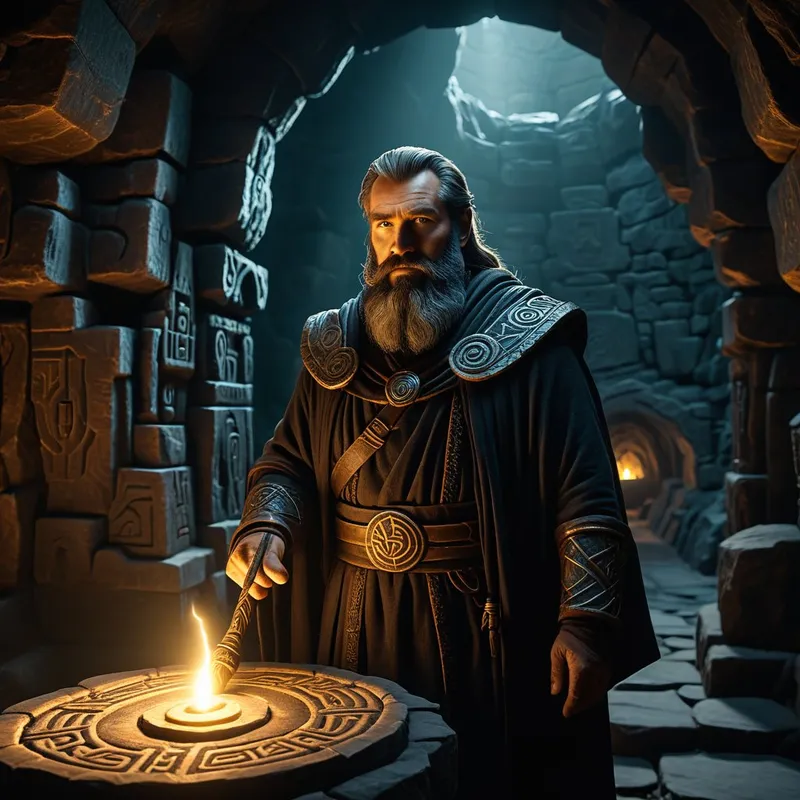
Dvergar Myth Meaning & Symbolism
The myth of the Dvergar, the masterful smiths of stone and shadow, who forge the treasures of the gods from the dark, forgotten marrow of the world.
The Tale of Dvergar
Listen, and hear the song of the stone. Not the song of the wind in the high branches of Yggdrasil, nor the crash of the sea against the shores of Midgard. This is a deeper melody, a slow, tectonic rhythm felt in the roots of mountains and the bones of the earth. It is the hammer-song of the Dvergar.
In the beginning, they were maggots. When the gods Ymir was slain, his flesh became the earth, his blood the seas, and his skull the sky. And in the dark, rich soil of that flesh, writhed the maggots. But the Æsir looked upon them and saw not corruption, but potential. They granted them wit and shape, and sent them deep, deep into the dark places. To Svartálfheim</ab they went, into the labyrinthine halls of stone.
And there, in the absolute dark, they learned the language of ore. They became the masters of the hidden. Their forges were not lit by sun or moon, but by the secret fires that burn at the world's core. They did not work with haste, for time, in the deep places, is a different substance—slow, patient, and heavy.
It was to these hidden lords that the gods came when they needed that which could not be found in the light. When Loki</ab title="The god of mischief and strife">Loki, through his own cunning folly, sheared the golden hair of Sif, it was to the Dvergar that he slunk. He found the sons of Ivaldi, and they, with hands that could feel the soul of metal, spun new hair of living gold, finer than silk, that would grow upon Sif's head as her own.
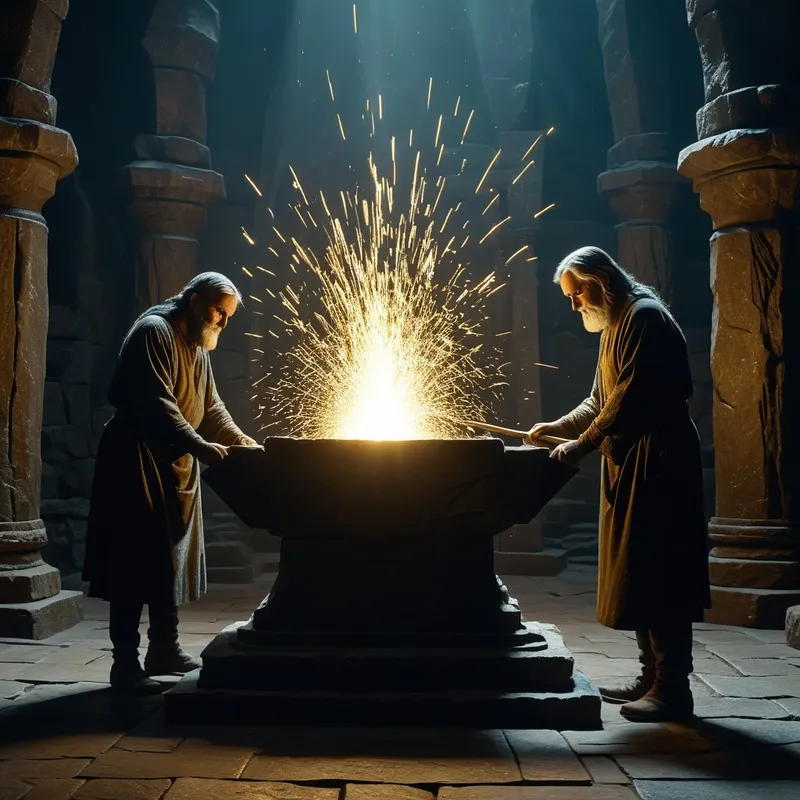
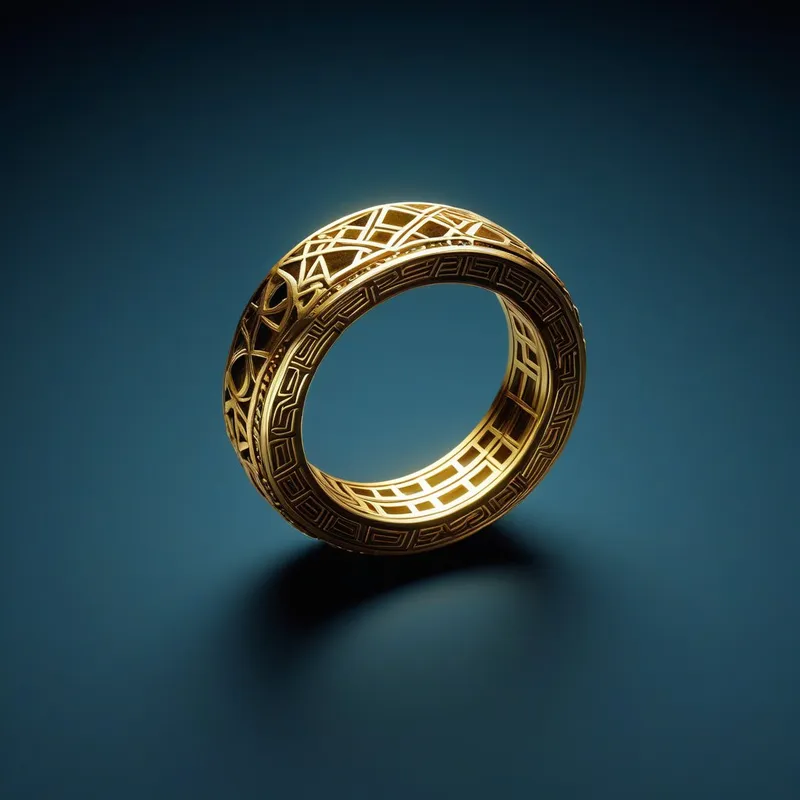
But this was only the beginning of their trial. Loki, boastful and competitive, wagered his head with another master, Sindri (or Eitri), and his brother Brokkr who worked the bellows. Into the roaring forge went three treasures. First, a boar of gold with bristles that shone like the day, Gullinbursti. Then, a ring of red gold, from which eight new rings of equal weight would drip every ninth night, Draupnir. And finally, the mightiest work: a hammer. Its head was short, for the bellows-blower Brokkr was distracted by a biting fly (Loki in disguise), yet its power was absolute. No wall, no giant, no mountain could stand before it, and when thrown, it would always return to the hand that cast it. This was Mjölnir.
The gods judged the hammer the greatest treasure, for it would be the protector of Asgard. Brokkr claimed his prize: Loki's head. But the trickster argued the head did not include the neck. Enraged yet bound by logic, the dwarf took an awl and sewed the wretch's lips shut—a temporary, yet profound, silence imposed upon chaos by craft. The treasures were dispersed, forged in darkness to uphold the light, each a masterpiece born from the marriage of immense pressure, divine need, and cunning skill.
Cultural Origins & Context
The myths of the Dvergar come to us primarily through the Poetic Edda and the later Prose Edda of Snorri Sturluson. They were not the subjects of widespread cult worship, but were essential figures in the cosmological narrative. Their stories were likely told by skalds and storytellers, often as explanatory tales for the origins of the gods' most powerful artifacts.
In the harsh, material world of the Norse, craft was sacred. A well-forged sword, a finely carved ship, a sturdy ring—these were not mere objects but concentrations of skill, luck (hamingja), and sometimes inherent spirit. The Dvergar personified this principle to a supernatural degree. They represented the profound understanding that the most vital things—from the tools of survival to the symbols of power—are born from engaging with the raw, often dark, materials of existence. They were the necessary shadow to the Aesir's shining order, the technicians of fate whose work in the depths made the triumphs in the light possible.
Symbolic Architecture
The Dvergar are not mere fantasy laborers. They are profound psychological symbols of the creative power latent within the unconscious, particularly the shadow.
The treasure is not found in the sunlit meadow, but forged in the sunless deep. The most potent aspects of the self are often those we have sent into exile, deemed ugly or "maggot-like."
They are the denizens of Svartálfheim, the realm of personal and collective shadow. Their origin as maggots in the primal giant's flesh is key: they are born from the discarded, decomposed matter of a prior state of being (the chaotic, undifferentiated world of Ymir). Psychologically, this represents how our deepest skills, talents, and transformative powers can initially present as something we find repulsive—a nagging thought, a raw emotion, a "base" instinct or desire.
Their masterpieces—Mjölnir (focused will and destructive/creative force), Draupnir (self-regenerating abundance and cyclicality), Gullinbursti (instinctual power guided by light)—are not created from nothing. They are transmutations. They take the "ore" of primal, unconscious content (greed, aggression, lust, envy) and, through the disciplined "forge" of conscious attention and effort (the hammering, the bellows), reshape it into a tool for the ego (the gods). Loki, the trickster, acts as the necessary provocateur who forces this alchemy by creating the crisis (Sif's shorn hair) and the wager.
The Dreamer's Resonance
When the pattern of the Dvergar stirs in modern dreams, it signals a profound engagement with the shadow's creative potential. One might dream of:
- Discovering a hidden, beautifully furnished room or workshop in the basement of a familiar house.
- Finding intricate, ancient, and powerful-looking tools or mechanisms in a cave or underground space.
- Being guided by a small, sturdy, and intensely focused figure to work on a complex task in dim light.
- Hearing a rhythmic, metallic knocking sound coming from behind a wall or from under the ground.
Somnatically, this process can feel like a deep, persistent pressure—not necessarily anxious, but potent and dense. It is the feeling of something substantial taking form. Psychologically, the dreamer is likely in a phase where latent talents, long-buried memories, or ignored aspects of their personality are demanding to be "brought up" and integrated. There is a call to stop seeking solutions in the external, "sunlit" world of persona and convention, and instead descend into one's own depths to do the slow, patient, often solitary work of forging a new capability or understanding.
Alchemical Translation
The myth of the Dvergar is a masterclass in the alchemical opus, the great work of individuation. It maps the process of psychic transmutation with stunning clarity.
*First, the Nigredo:* The initial state is one of darkness and "putrefaction." The raw material (the maggots, the unconscious content) is base and unformed. This is the necessary first step of confronting the shadow in its raw state—acknowledging the anger, the grief, the primal drives we'd rather ignore.
Then, the Albedo and Citrinitas: The application of conscious discipline. The gods grant "wit and shape"—the spark of discriminating consciousness. The Dvergar then apply their craft: the relentless hammer (focused effort), the searing forge (the heat of emotional engagement), the skillful hand (applied knowledge). This is the long, often frustrating work of therapy, artistic practice, or deep introspection, "whitening" and "yellowing" the material, purifying it.
The masterpiece—the integrated complex, the new attitude, the creative work—is always a collaboration between the conscious ego (the god who commissions) and the unconscious (the Dvergar who forge). The ego must provide the need and the respect; the unconscious provides the raw power and genius.
*Finally, the Rubedo:* The red gold of the finished treasure. This is the fully integrated aspect, now a functioning part of the psychic economy. Mjölnir defends Asgard; Draupnir generates abundance; the golden hair becomes part of Sif's divine beauty. The once-repulsive shadow content has been transformed into a source of strength, resilience, and generative power for the entire personality.
For the modern individual, the myth instructs: do not flee your depths. Your most formidable gifts are being shaped there, in the dark, under pressure, by the ancient, skilled hands of your own unseen self. The call is not to become a dwarf, but to honor the Dvergar within—to descend, to learn the language of your own rough ore, and to participate in the sacred hammer-song that forges a soul.
Associated Symbols
Explore related symbols from the CaleaDream lexicon: