Dead Sea Scrolls Myth Meaning & Symbolism
A community hides sacred texts in desert caves, preserving wisdom through an age of crisis, awaiting a future generation to uncover their lost voices.
The Tale of the Dead Sea Scrolls
Listen, and hear a story whispered on the dry wind that sighs through the cliffs above the Salt Sea. It is a tale not of gods walking the earth, but of hands—human hands—trembling in the face of a coming storm.
In the days when empires clashed like rams upon the heights, a people of the book dwelled in the stark wilderness. They were the Essenes, seekers of a purer way. Their home was a fortress of solitude called Qumran, a cluster of white buildings clinging to a barren plateau. To the east lay the sea that bore no life, its waters heavy and still. To the west, the world seethed with the legions of Rome.
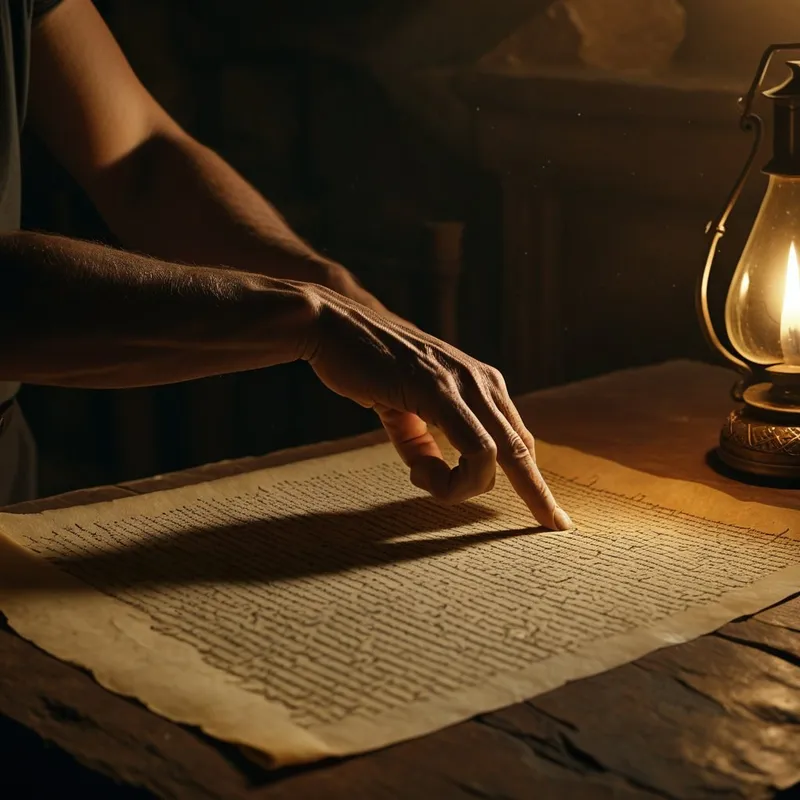
Their life was ink and parchment, prayer and ritual bath. In a scriptorium open to the sky, scribes bent over their work, their styli scratching the silence, copying the sacred words of prophets and poets, of law and vision. These were not mere copies; each letter was a breath, a prayer made permanent. They wrote of a Messiah who would come, of a final war between the Children of Light and the Children of Darkness, of a temple not made with hands.
But a shadow grew on the horizon. The thunder of marching boots echoed in the hills. The smell of smoke, not from altar fires but from razed villages, tainted the air. The community knew their time of peace was ending. The world was coming to burn their solitude.
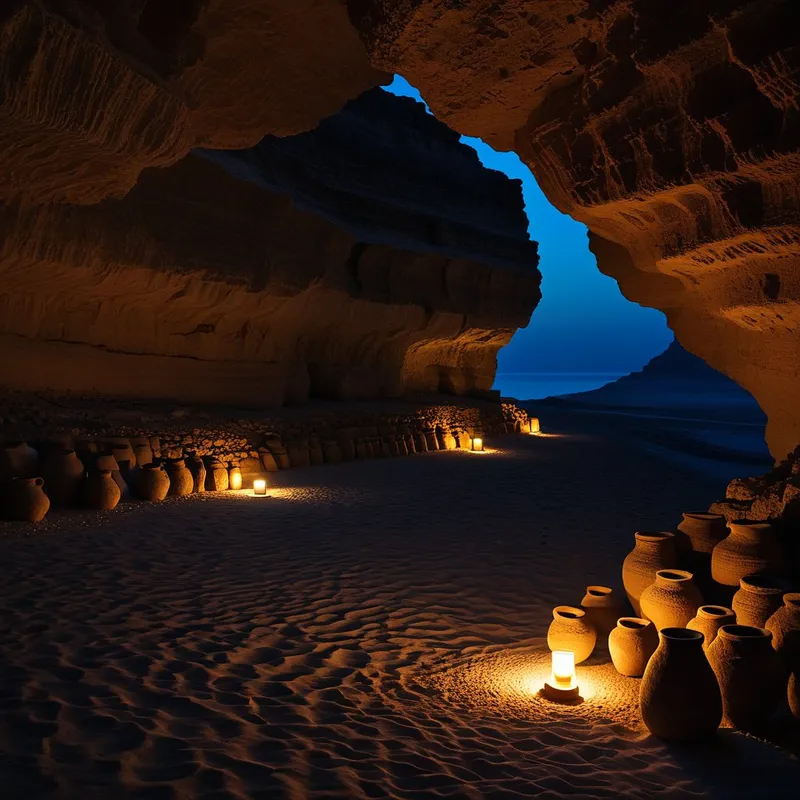
And so, in the deep of night, by the light of shielded lamps, they undertook their most sacred duty: not creation, but preservation. With great care, they wrapped their most precious scrolls—the Great Isaiah Scroll, the mysterious War Scroll, the haunting Hodayot—in linens. They placed them inside jars of clay, sealing them with pitch against the damp. Then, silently, they climbed the treacherous limestone cliffs, their burdens heavy with the weight of a world’s memory.
Into the dark mouths of caves they crept, places known only to goats and the wind. They nestled the jars into crevices, covering them with dust and stone. It was a burial. A hiding. A desperate act of faith cast into the future. They whispered a final blessing over the sealed knowledge and returned to their fate. Soon, the fire came. The community was scattered, the scriptorium fell silent. The scrolls slept. For two thousand years, they slept in the absolute dark, while empires rose and fell, and the world forgot the whispers of Qumran.
Their awakening came not with a trumpet, but with the tossed stone of a Bedouin boy seeking a lost goat. A shard of pottery, a strange smell of old leather and time. The jars were found. The linens, brittle as autumn leaves, were unfolded. And the voices, silent for centuries, began to speak again, not to the ones who hid them, but to us.
Cultural Origins & Context
This is not a myth of the distant, fog-shrouded past, but a historical event of the Second Temple period, crystallized into a modern foundational narrative. The "myth" of the Dead Sea Scrolls is the story we tell about their discovery and meaning. It emerged in the mid-20th century, a time itself shadowed by war and the search for identity, making the tale of texts surviving cataclysm profoundly resonant.
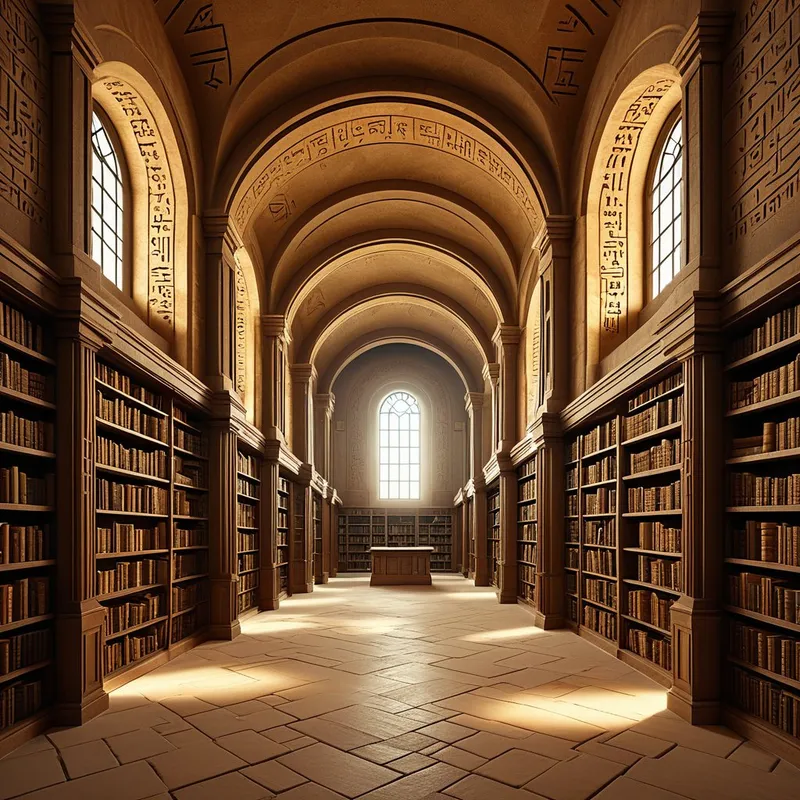
The original custodians were likely the Essenes, a sect existing on the margins of Second Temple Judaism. They saw themselves as the true inheritors of Israel’s covenant, living in self-imposed exile to maintain ritual purity and await an apocalyptic renewal. The Scrolls were their library, containing biblical texts, sectarian rules, and apocalyptic literature. Their societal function was to define and sustain a community against what they perceived as a corrupt religious mainstream and a threatening pagan world.
The modern "myth" is passed down through archaeologists, scholars, and journalists—our contemporary bards. Its function is multifaceted: it validates textual history, fuels religious curiosity, and serves as a powerful metaphor for the recovery of lost heritage and the fragility of knowledge. It answers a deep cultural need for continuity, proving that the most sacred words can endure the collapse of worlds.
Symbolic Architecture
At its core, the myth is a profound drama of the Shadow and the Coniunctio—the separation and ultimate reunion of consciousness with its buried foundations.
The Cave is the ultimate symbol of the unconscious psyche. It is a place of protection, secrecy, and potential. To hide something in a cave is to entrust it to the depths of the earth and the self, beyond the reach of the ravaging light of conscious upheaval (Rome).
The Clay Jar represents the vessel of tradition, the fragile, earthly container (the community, the dogma, the human body) that holds the ethereal spirit (the text, the wisdom). The jar must be sealed, creating a hermetic vessel—an alchemical vas—where the contents can undergo a transformative "sleep" without disintegrating.
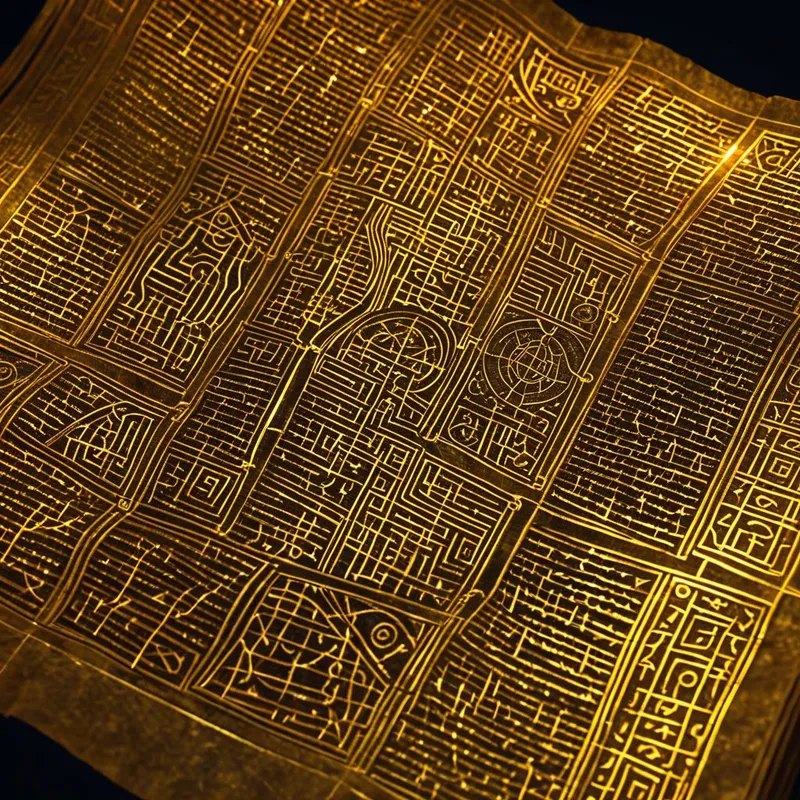
The Scroll itself is the Self in coded form. It is the complete, but hidden, blueprint of identity and meaning. It is knowledge in a state of potential, waiting to be unfurled and read.
The act of hiding is not an act of fear, but an act of sowing. The community buries a seed of spirit in the womb of the world, trusting in a season they will never see.
The Two Thousand Year Sleep is the necessary period of incubation. In the dark, outside of time, the wisdom is not lost; it is marinating in the collective unconscious, its meaning deepening, awaiting the precise moment in the psychic evolution of humanity when it can be understood anew.
The Bedouin Boy symbolizes the trickster impulse of the unconscious, the chance event (synchronicity) that bridges the deep past and the present. Discovery is never purely intellectual; it is always stumbled upon, a gift from the irrational.
The Dreamer's Resonance
To dream of finding ancient scrolls or hidden texts in a cave, attic, or wall is to be in the midst of a profound psychological process of retrieval. Somatically, one might feel a sense of thrilling discovery mixed with sacred dread—a quickening heartbeat, a holding of breath.
Psychologically, this dream pattern signals that contents of the personal or collective unconscious are seeking to surface. The "scrolls" often represent:
- Forgotten Talents or Callings: An old passion or skill you "buried" for safekeeping during a personal "crisis" (a demanding career, a relationship).
- Family Secrets or Histories: Hidden truths about your lineage or childhood that are now seeking integration.
- Neglected Aspects of Your Value System: Core beliefs or spiritual intuitions you set aside to conform to the "Rome" of your social or professional world.
The fragility of the scrolls in the dream mirrors the fragility of this emerging knowledge. The dreamer is the Bedouin boy and the scholarly translator simultaneously—the one who stumbles upon the mystery and the one who must carefully, respectfully, work to understand it. Resistance in the dream (the scroll crumbles, the text is illegible) shows fear of what this integration might demand.
Alchemical Translation
The myth models the complete arc of Individuation. The Essene community represents a psyche that has consciously differentiated itself (the separatio) from the dominant conscious attitude (mainstream Jerusalem). It has gone into the "desert" of introspection.
The crisis (approaching Roman armies) is the necessary nigredo—the darkening, the confrontation with annihilation. This forces the decisive alchemical operation: the mortificatio and putrefactio of hiding. The conscious ego-identity (the community) must "die" or be scattered, but not before it consciously preserves its deepest essence (the scrolls) in the unconscious.
The long sleep in the cave is the albedo—the whitening, the silent purification and incubation in the lunar realm of the unconscious. Here, the buried content is stripped of its outdated, time-bound contexts and reduced to its essential, eternal meaning.
The treasure is never found where it was lost, but is always transformed in the finding. What returns from the cave is not what was hidden, but what has become possible.
The discovery is the rubedo—the reddening, the return of the treasure to the light of a new day, a new consciousness. The modern scholar/reader is the new, more complex psyche that can now integrate this ancient wisdom. The scrolls are no longer sectarian property; they become part of humanity's shared inheritance. The process completes the Great Work: that which was hidden and lost (the personal and ancestral gold) is recovered, not to restore a dead past, but to inform and enrich a living present. The individual who undergoes this process moves from being a member of a besieged sect to becoming a citizen of a deeper, timeless history, carrying forward a scroll of meaning unique to their own life's journey.
Associated Symbols
Explore related symbols from the CaleaDream lexicon: