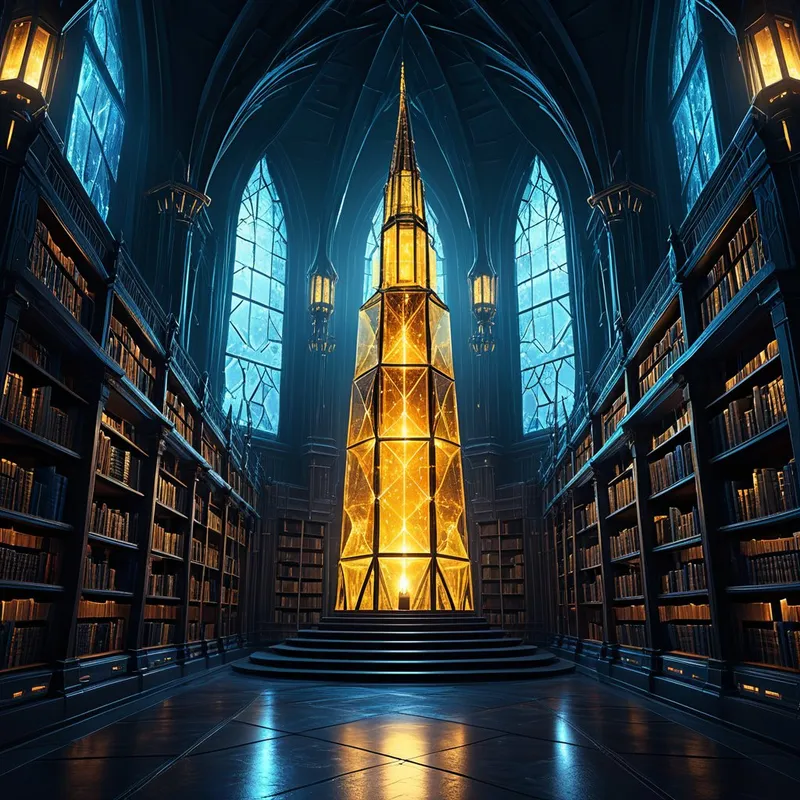
The Sanctuary of the Self: The Dream Theme of Preservation
The Somatic Echo
Before the image forms, the body knows. It is a deep, cellular clenching—not the panic of fight-or-flight, but the profound, stilling grip of a hand closing protectively around a fledgling bird. The breath becomes shallow, held in the chest as if to make less noise, to take up less space. There is a tightening in the solar plexus, a gathering of energy inward, a drawing of the psychic perimeter close. The muscles of the jaw and shoulders lock into a silent vigil. This is the physiology of the vault, the somatic signature of the sanctuary. It is the feeling of being the last guardian of a sacred, flickering flame in a vast and windy dark. The mind will later furnish dreams of sealed rooms, hidden boxes, and frozen moments, but the body’s first language is this: Something precious must not be lost.
The Dreamer's Log
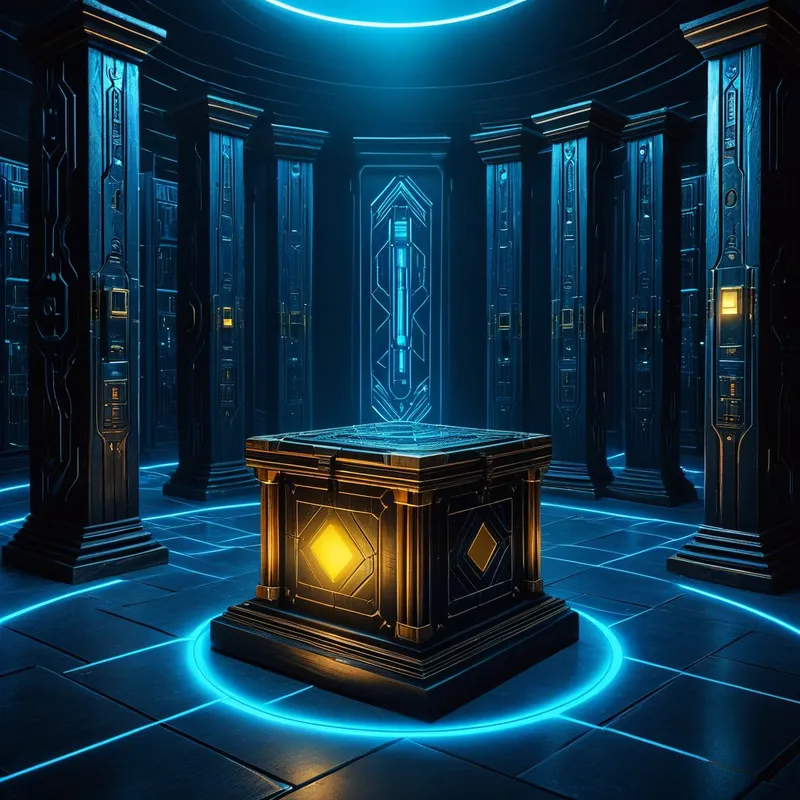
The dreamer finds themselves in the heart of a cavernous, futuristic server farm, all cold blue light and the hum of machines. Among the towering black monoliths, they are drawn to a single, anachronistic wooden chest. Their task, given by no one and everyone, is to keep its simple, brass-hinged lid closed, though from within, a palpable, warm light threatens to spill out. This is the alchemy of containment: the conscious self, amidst the complex systems of modern identity, tasked with guarding the unprocessed, radiant core of being from premature exposure or dissolution.
The False Lead
Preservation is not hoarding. It is not the fearful accumulation of the Shadow Caregiver, who smothers to feel needed, nor the rigid control of the Shadow Ruler, who locks things away to maintain power. To mistake preservation for mere stagnation or cowardice is to misunderstand its sacred contract. This theme does not signal a refusal to grow, but a recognition that some transformations require a period of profound incubation. It is the difference between a seed held dormant in the winter earth and a stone sealed in a tomb. One is a silent, potent waiting; the other is a finality. The terror in preservation dreams is not of change, but of violation—of a truth, a memory, a potential being seen, taken, or shattered before it has finished becoming itself.
Psychological Architecture
The work of Preservation is the architecture of the inner sanctum. In the language of internal family systems, it is the emergence of a profound Protector, not one that battles external threats, but one that creates a bounded, hallowed space for the most exiled and vulnerable parts of the self—the child holding a secret, the artist with a fragile vision, the lover with a grief too tender to touch. This is shadow work of the deepest order: the conscious agreement to stay with what is fragile, to resist the psyche’s own impulsive drives to either explode it into expression or bury it in oblivion.
The individuation process here is one of becoming a competent custodian of your own soul’s artifacts. It demands a brutal honesty: What, within me, is so essential that its loss would mean a kind of death? Often, it is not a happy memory, but a raw, unintegrated pain—the seed of a future strength. To preserve it is to hold the tension between the memory of the wound and the blueprint of the healing. You are building a psychological temenos, a sacred district where the old rules of engagement are suspended, and the soul is allowed its own, slow time.
Mythic Resonance
We see this eternal firmware in the myth of Demeter and Persephone. When Hades steals her daughter, Demeter does not wage a futile war on the Underworld. Instead, she withdraws her generative power from the world, preserving her grief and her fury in a global winter. She creates a sanctuary of barrenness, a psychic holding cell where life itself is paused until her sacred bond is honored. Her preservation is an act of immense, terrible power, forcing a renegotiation of cosmic order. Similarly, in many cultural hero journeys, the protagonist is often given a sacred object to guard—a sword, a ring, a chalice. The test is seldom in its use, but in its keeping, in resisting the temptation to abandon it, sell it, or use it frivolously before the appointed hour.
Symbolic Nodes
- Vaults, Safes, Hidden Rooms: The psyche’s secure containment units.
- Amber, Ice, Resin: Suspension of a moment, a life, a feeling in timeless substance.
- Archives, Libraries, Seed Banks: Systems of organized, intentional saving.
- Wombs, Eggs, Cocoons: Biological containers for latent potential.
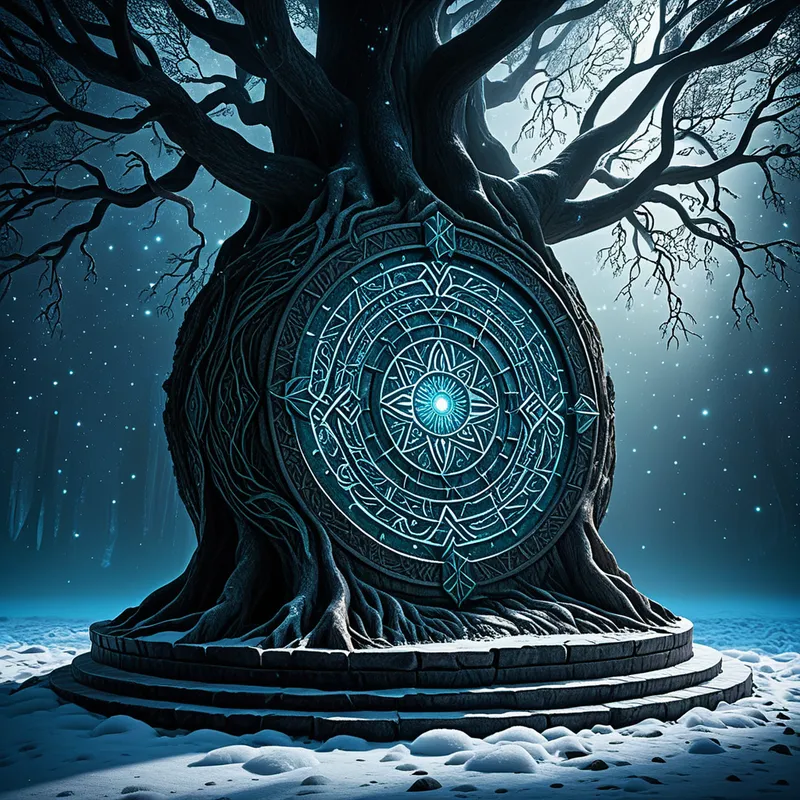
- Stillness, Silence, Frozen Landscapes: The environmental condition of preservation.
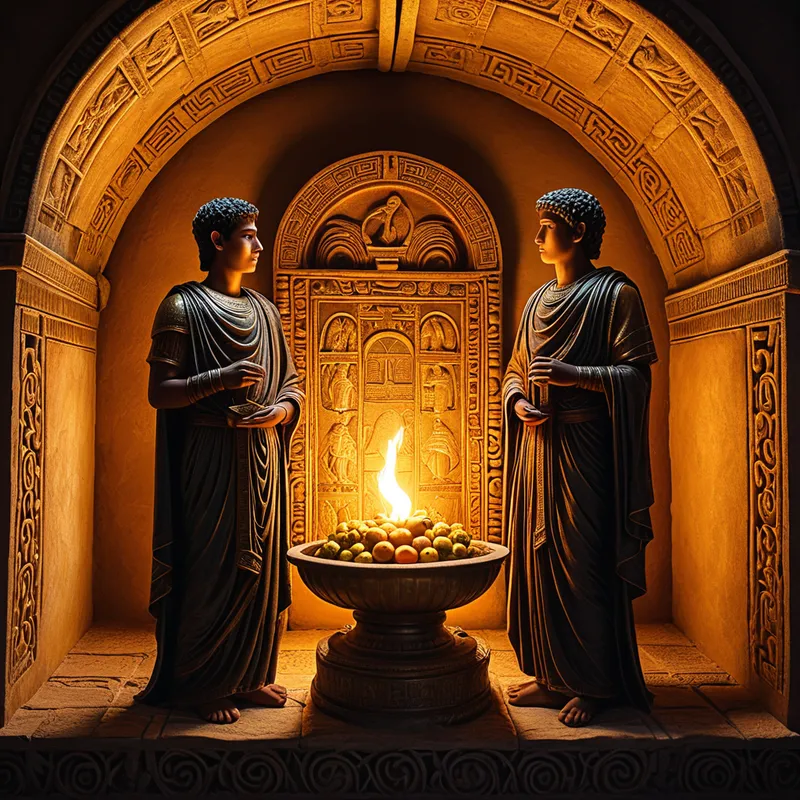
- A Single Candle in a Vast Darkness: The focused, fragile point of guarded light.
Archetypal Resonance
The energy of Preservation resonates most powerfully with The Caregiver Archetype. This is not the Caregiver in its outward-facing, nurturing mode, but in its most profound, interiorized expression: the Guardian. The somatic echo—the clenching, the vigilant stillness—is the Caregiver’s body preparing to shield. Its core energy is not about giving life, but about honoring and protecting the sanctity of life-in-potential. The alchemical potential here is immense: by learning to preserve the fragile inner truth, one transforms from a passive holder into a sovereign curator of the self. The shadow risk is the Martyr, who confuses sacred keeping with lonely imprisonment, and the Smotherer, who preserves to the point of stagnation, fearing any change as a loss.
The Alchemical Process
The alchemical stage corresponding to Preservation is Coagulatio—the fixing of the volatile into a solid, substantial form. But the psychic heat required for this is not the fire of forge, but the absolute zero of deep space. It is the pressure of silence, the vacuum of non-action. The terror to be transmuted is the grief of potential loss; the grief of watching the world move on while you stand vigil over something invisible to others.
The process demands you become a vessel that can withstand immense internal tension. You must hold the longing to release against the wisdom to wait. You must feel the fear of decay alongside the faith in durability. This pressure cooks the soul. It separates the essential from the ephemeral. What emerges is not the preserved thing unchanged, but you, changed. You gain the sovereignty of one who knows what is truly theirs to guard—the unassailable, inner citadel where meaning is minted. The fragile light in the box is not just preserved; it slowly, over the vigil, illuminates the guardian.
The Integration Protocol
Question 1: In my waking life, what feels like the "fragile, glowing thing in the box"—a memory, a creative spark, a vulnerable emotion, a nascent identity—that I am instinctively drawing inward to protect?
Question 2: Where does my preservation instinct tip from sacred guardianship into fearful control or stagnant hiding? What am I truly afraid will happen if I relax my guard for a moment?
Question 3: If this preserved element within me were to one day emerge, fully integrated, what quality would it bring to my life? What would its "light" allow me to see or do?
Action 1 (Sanctuary Scan): For one week, practice noticing the somatic "clench" of preservation in your body when it arises in daily life—during a difficult conversation, when feeling inspired, or when touched by beauty. Do not change it. Simply place a hand where you feel it and breathe into the sensation, acknowledging its protective intent.
Action 2 (Vessel of Expression): Find or create a physical container—a small box, a lidded jar, a sealed envelope. Into it, place a word, a sketch, or an object that symbolically represents the "thing" you feel called to preserve. Do not analyze it. Let the act of choosing the vessel and placing the item inside be a conscious, ritualized enactment of your inner guardian's work.
Action 3 (Mapping the Temenos): Create an abstract drawing or digital collage that represents your inner sanctuary. Let shapes denote boundaries (walls, fields, energy barriers). Use color, texture, or light to represent the preserved essence at the center. This is not art to be judged, but a cartography of your psychic architecture, making the unconscious sanctuary a little more visible to the conscious mind.
Final Validation
The vigil is lonely. The work is invisible. To stand guard over a truth the world does not yet see, or a pain it does not acknowledge, is an act of profound courage that receives no applause. It is easy to mistake this sacred stillness for passivity, this deep containment for fear. Do not mistake it. You are not stuck. You are stationed. You are performing the essential, alchemical labor of coagulation—of making spirit substantial enough to survive in the world. The pressure you feel is the pressure of creation in its most vulnerable phase. Trust the clench. Honor the silence. You are not just keeping something safe. You are, through the fierce and focused act of preservation, slowly becoming the sanctuary itself.