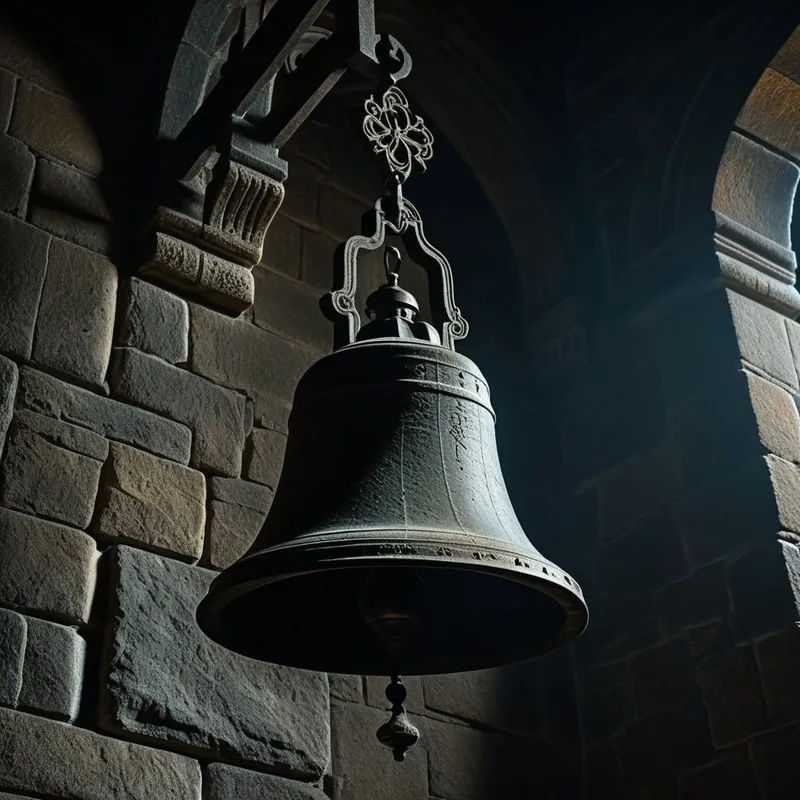
Church Bells Myth Meaning & Symbolism
The myth of sacred bronze forged to speak with a divine voice, casting a circle of sound against chaos and calling the soul home.
The Tale of Church Bells
Listen. Before the first word, there was a silence. Not an empty silence, but a waiting one, thick with the murmur of unseen things. In the villages of men, dusk would fall, and with it came a creeping quiet from the woods, a whispering from the crossroads, a chill that had no source. The people huddled by their hearths, feeling the weight of the dark, a domain where the unhallowed held sway.
Then came the makers, the smiths who knew the secrets of earth and fire. They did not dig for common ore. They sought the sacred bronze, metal that remembered the sun. In roaring furnaces, they melted it down, and into the molten flow, they cast holy relics—a splinter from the <abbr title="The cross upon which Jesus Christ was crucified."">True Cross, a medallion of a saint, a fragment of a martyr’s bone. The liquid metal became a prayer. They poured it into the great clay womb, shaped like a monstrous, inverted cup, and let the earth cool it.
What emerged was not merely a tool. It was a <abbr title="A physical object believed to hold and convey sacred power."">vessel. They lifted it, this titan of toned metal, into the highest tower, the place between heaven and earth. There it hung, a dormant giant over the sleeping world.
The bell-ringer, often a man of simple faith, would climb the winding stair as the last light bled from the sky. His was not a casual task. He would grasp the rough hemp rope, feel the immense weight at its end, and pull with his whole body, not just his arms, but with a lungful of breath offered as a plea.
And then—the Voice.
It began not as a sound, but as a vibration in the very stone of the tower. Then it broke free: a deep, golden BONG that rolled out over the fields like a tangible wave. It did not ask to be heard; it commanded. It struck the air and the air became different. In the forest, the whispering ceased. At the crossroads, the chill retreated. The sound was a <abbr title="A sacred boundary, often circular, intended to define and protect holy space from profane or chaotic forces."">consecrated circle, drawn not in chalk or salt, but in pure, radiating tone. It marked the hours, yes, but more vitally, it marked the territory of the sacred. It called the faithful to prayer, it tolled for the departing soul, it pealed in triumph for a wedding. Its voice was the community’s heartbeat, a rhythmic assertion of order against the formless dark, a reminder that they were not alone in the vast and silent night.
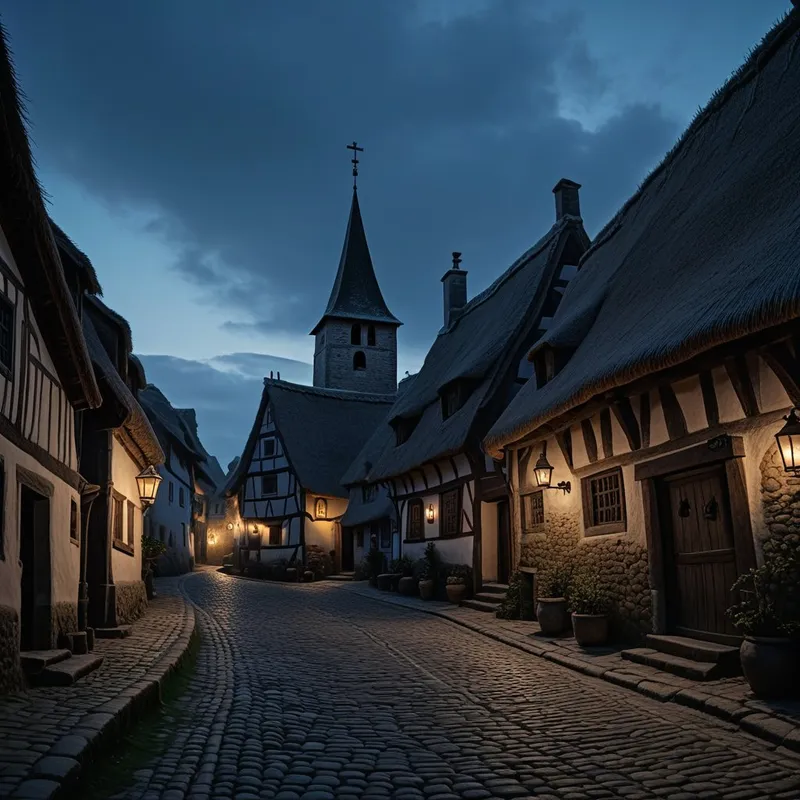
Cultural Origins & Context
The myth of the church bell is woven into the very fabric of medieval European Christendom. Its story was not written in one sacred text but enacted daily, passed down through ritual and sensory experience. The tellers of this myth were the entire community—the blacksmith who forged the “sacred” bronze alloy (often with a significant tin content for its sonorous quality), the priest who blessed it, often christening it with a saint’s name, and the bell-ringer who gave it voice.
Its societal function was multifaceted and profound. On a practical level, it was the town clock and broadcast system, marking the <abbr title="The eight canonical periods of the day for prayer in Christian monastic tradition."">Divine Offices, signaling emergencies, and calling people to Mass. But its deeper function was cosmological. In a worldview where the physical and spiritual worlds interpenetrated, the bell served as a sonic bulwark. Beliefs held that its sound could disperse storm clouds, thwart witches’ spells, and drive away demons and pestilence. The “Passing Bell” tolled for the dying was thought to comfort the soul and ward off evil spirits seeking to claim it. Thus, the bell was a technology of spiritual ecology, actively maintaining the health and sanctity of the communal space.
Symbolic Architecture
At its core, the bell is a symbol of the mediated voice of the divine. It is matter—earthly bronze—forged and sanctified to carry a transcendent message. It represents the human capacity to create instruments that channel something greater than themselves.
The bell does not speak for itself. It is the instrument through which the silence is given a sacred shape.
Its hollow body symbolizes the receptive soul, the void that must be empty to resonate fully. The clapper is the activating spirit, the divine impulse or the courageous human act that strikes the vessel into speech. The sound wave itself is the emanating influence of the sacred, expanding to fill all available space, defining a realm of order. The tower is the axis mundi, the connecting point between the mundane and the celestial. The myth encapsulates the struggle against formlessness (chaos, silence, the unconscious) through the imposition of a meaningful pattern (sound, time, community).
Psychologically, the bell represents the function of consciousness itself. It is the act of attention that “strikes” the amorphous material of the psyche, bringing a defining thought, a moment of clarity, or a call to action into being. It is the ego’s necessary, though partial, role in creating temporal order and psychic boundaries against the overwhelming sea of the unconscious.
The Dreamer's Resonance
To dream of a church bell is to encounter a profound call from the depths of the psyche. The specific quality of the dream holds the key.
Dreaming of a distant, beautiful tolling often signifies a summons from the Self—the central, organizing archetype of the total personality. It is a call to awaken to a deeper purpose or a forgotten aspect of one’s being. The dreamer may be in a period of spiritual slumber or moral confusion, and the unconscious is sounding an alarm to consciousness.
Conversely, a loud, jarring, or incessant bell clanging close by can indicate a psychic emergency. It may represent an inner critic become tyrannical, a traumatic memory clamoring for attention, or a life situation that can no longer be ignored. The somatic experience is often one of being startled awake, a vibration in the dream body. This is the shadow aspect of the bell: not a wise call, but a frantic alarm, demanding immediate engagement with a repressed or avoided conflict.
A silent bell, or a bell one cannot ring, speaks to a feeling of spiritual impotence or a blocked connection to one’s inner authority. The dreamer may feel they have lost their voice or their capacity to make an impact on their world.
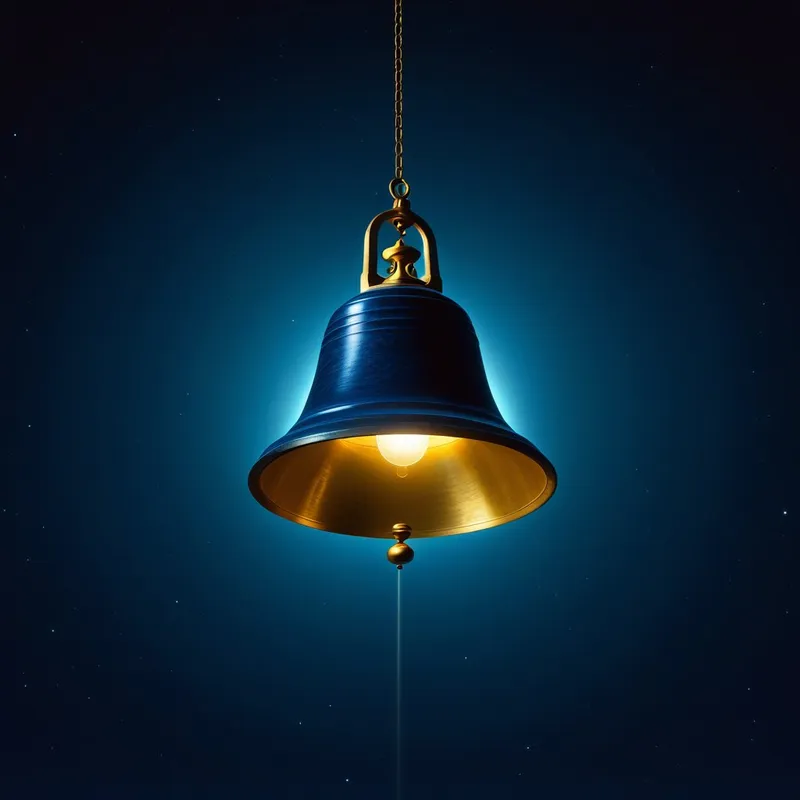
Alchemical Translation
The alchemical journey mirrored in the bell myth is the process of vitalization: transforming dead, latent matter (the prima materia of unconscious contents) into a living, speaking spirit. The ore in the earth is the unrefined mass of our instincts, complexes, and potentials. The furnace of the smith is the heat of conscious suffering, engagement, and effort—the nigredo.
The sacred relic cast into the melt is the conscious intention, the core value or image around which the transformation must crystallize.
The casting of the bell is the coagulatio, the giving of a definite form to this transformed material. The lifting into the tower is the sublimatio, the elevation of this new structure into a position of guiding authority within the psyche. Finally, the ringing is the multiplicatio, the emission of this integrated truth outward, where it influences the entire psychic landscape, creating order and calling other disparate elements (thoughts, feelings, impulses) into a harmonious relationship.
For the modern individual, the myth models the individuation process. We must gather our raw experiences (the ore), subject them to the fire of reflection and analysis (the forge), impress our deepest values upon them (the relic), and shape them into a functional part of our identity (the cast bell). Then, we must install this new understanding in a high place of awareness (the tower) and allow it to “sound,” to actively inform our decisions and interactions. The goal is not to drown out all other sounds, but to provide a regular, resonant tone that gives rhythm, meaning, and a sense of sacred boundary to the journey of a life.
Associated Symbols
Explore related symbols from the CaleaDream lexicon: