Chunhyang Myth Meaning & Symbolism
A gisaeng's daughter and a nobleman's son defy social hierarchy with a secret marriage, tested by tyranny and redeemed by unwavering fidelity and justice.
The Tale of Chunhyang
Listen, and hear a story woven from the very soul of the land. It begins not in a palace, but in the fragrant, earthy realm of Jeolla, where the tal hangs silent and the wind carries the scent of pine and possibility.
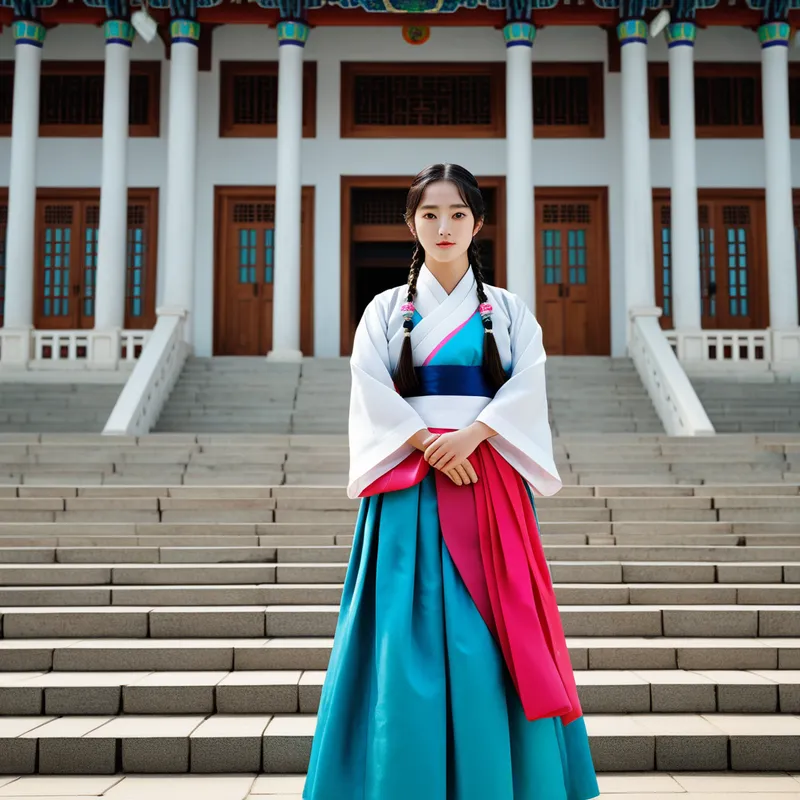
Here lived Chunhyang, whose name was her essence: the fragrance of spring itself. Daughter of a retired gisaeng, her beauty was not of the court but of the mountains and streams—a wildflower grace that drew the eye of Lee Mongryong, the son of the newly arrived magistrate. He was a scholar, his mind full of Confucian texts, yet his heart was captured by a melody sung not in a lecture hall, but beneath the boughs of an old willow.
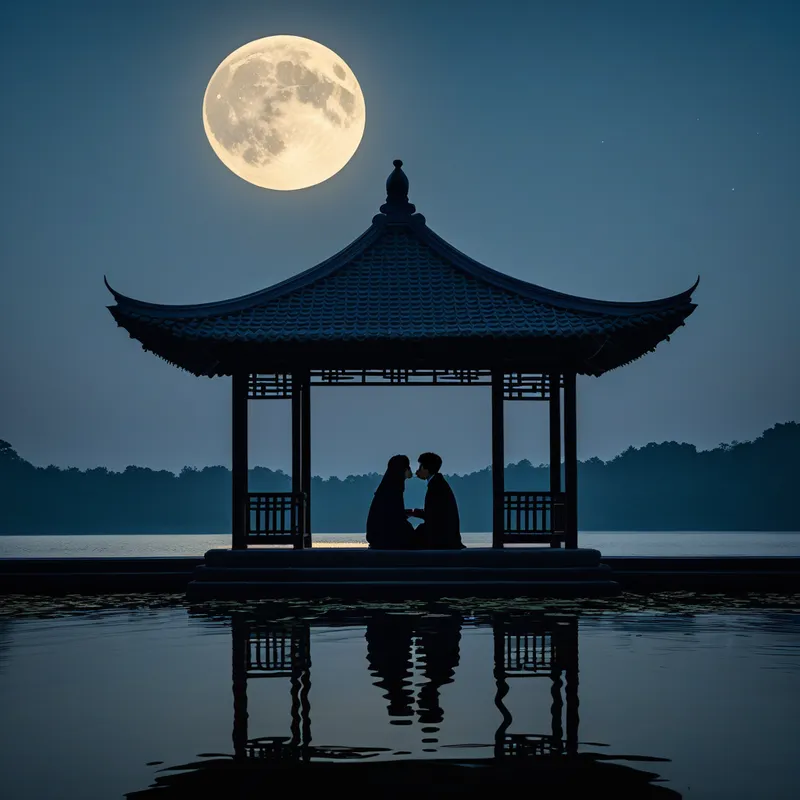
Their world was a secret garden. They met by moonlight at the pavilion, their vows whispered over cups of wine, sealed not with contracts but with the raw sincerity of youthful hearts. They performed a private marriage, binding themselves with a maedeup of promise, a knot that sought to tie two worlds that the rigid laws of society declared must remain apart.
But seasons turn. Mongryong’s father was summoned to the capital. The young lover, bound by filial duty and the pursuit of scholarly honor, had to follow. The parting was an agony of tears and pledges. "I will pass the state examinations," he swore, his voice thick with emotion. "I will return for you. Wait for me, no matter what." Chunhyang stood on the riverbank, the wind whipping at her skirts, watching his boat become a speck on the horizon, her heart a lodestone pointing only north, toward Seoul.
Then came the winter of the soul. A new magistrate, Byeon Hakdo, arrived. A man of grotesque appetite and cruel whims, he demanded the most beautiful woman in the province be brought to him. His servants named Chunhyang. Summoned to his court, she stood before his leering gaze, a single blossom in a hall of gnarled wood. His command was an obscenity: forsake her husband, become his concubine.
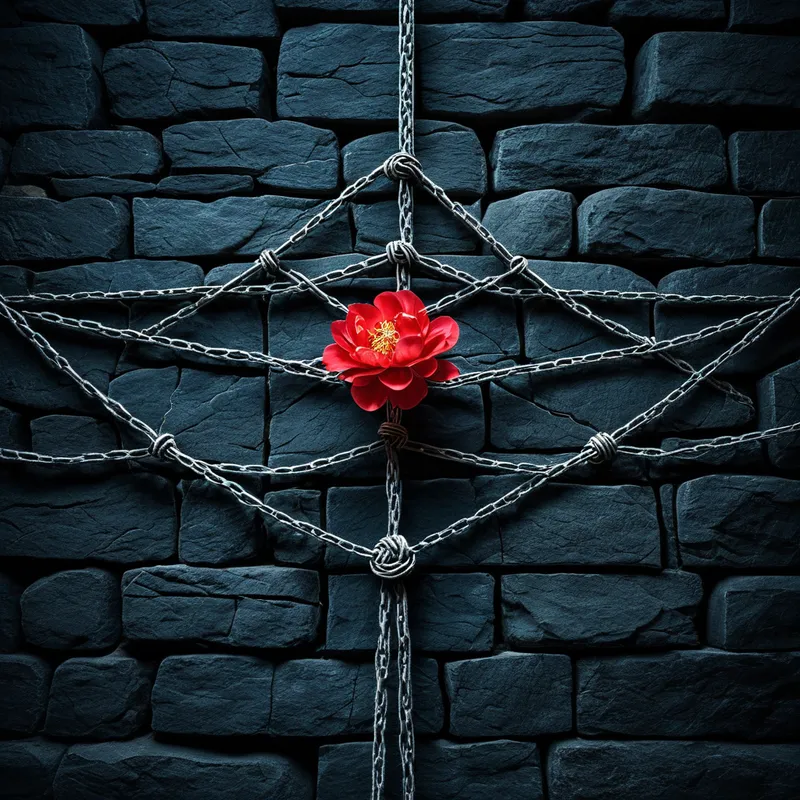
Her refusal was not a shout, but a clear, cold bell toll in the oppressive air. She spoke of fidelity, of a bond stronger than death, of integrity that no power could purchase. Enraged, Byeon Hakdo had her bound, beaten, and thrown into the filthy darkness of the prison. Yet, with each lash of the cane, her spirit seemed to grow brighter, her resolve hardening like diamond in the crushing earth. She became a song of defiance that the common people hummed in the markets, a secret flame in the province’s heart.
Meanwhile, Mongryong, now a Secret Royal Inspector, returned. Disguised as a ragged beggar, he walked the streets of his hometown and heard the ballads of Chunhyang’s suffering. His scholarly heart, once soft with poetry, turned to steel. He witnessed the magistrate’s depravity firsthand.
The final act unfolded in the courthouse. Byeon Hakdo, in the midst of his debauched birthday feast, ordered the broken Chunhyang dragged before him once more for public humiliation. As he raised his cup to force her to serve him, a beggar in the crowd threw off his rags. The silver insignia of the Inspector flashed in the torchlight. The music died. In that thunderous silence, justice descended swift and absolute. The tyrant was stripped of his rank and bound with the very chains he had used to oppress others.
From the prison’s shadows, Chunhyang emerged, not broken, but tempered. The lovers reunited, not as star-crossed youths, but as sovereign individuals forged in separate fires of endurance and purpose. Their private vow, tested to its absolute limit, was now recognized by heaven and the state itself. The spring fragrance, once nearly crushed, bloomed eternal.
Cultural Origins & Context
The Story of Chunhyang is not a myth of gods, but a pansori—a epic narrative song performed by a vocalist and a drummer. Born in the Joseon period, it is a folk creation that lived in the breath and voice of performers, evolving with each telling. It belongs squarely to the world of the common people, not the aristocratic yangban class who documented official history.
Its societal function was multifaceted. For the oppressed, it was a fantasy of righteous justice, where a corrupt official gets his due from a disguised hero. For women, particularly those of the cheonmin (lowborn) class like Chunhyang, it was a powerful narrative of agency and moral superiority. Her integrity outshines the corruption of the high-born. The story also subtly critiques the rigid social hierarchy, suggesting that true virtue is not born of status but of character. It was passed down not in books first, but in the communal, cathartic space of performance, where the singer’s wrenching cries and the drummer’s urgent beats made Chunhyang’s suffering and triumph viscerally real.
Symbolic Architecture
At its core, Chunhyang is a myth of the Eros principle in mortal combat with the dead literalism of the Law. Chunhyang herself is not just a faithful woman; she is the archetypal embodiment of the Soul’s Promise.
The promise made in the secret garden of the heart is the most binding law of all, superseding all societal contracts.
Mongryong represents the transformative journey of the conscious mind (the scholar) who must integrate his inner world of feeling (his love) with his outer world of action and duty. His disguise as a beggar is a classic motif of the humble inspection—the ego must descend into shadow and powerlessness to truly see and rectify injustice.
Byeon Hakdo is the Shadow of the ruling order: authority devoid of humanity, power reduced to raw appetite. The prison is the crucible of the psyche, where the soul’s values are tortured by the demands of a tyrannical reality. Chunhyang’s refusal to break is the ultimate assertion of individual sovereignty.
The integrity of the soul is a fortress that, when besieged, does not surrender its banner; it transforms the siege into its defining legend.
The Dreamer's Resonance
When this myth stirs in modern dreams, it signals a profound somatic and psychological process: the Trial of Fidelity. Not necessarily to a person, but to a promise made to one’s own essence—a creative calling, a core value, an authentic way of being that is under threat.
The dreamer may find themselves in a situation where they are pressured to betray a deeply held inner truth for external security, social approval, or mere survival (the corrupt magistrate’s demand). The prison in the dream is not made of stone, but of anxiety, depression, or the feeling of being trapped in a life that denies one’s true nature. The beating is the psychic assault of shame, guilt, or fear.
To dream of enduring this, as Chunhyang does, indicates the psyche is in a necessary, albeit painful, phase of consolidation. The ego is being tested to see if it will hold the line for the soul’s promise. The absence of the lover (Mongryong) in the dream may feel like abandonment, but it symbolizes the necessary solitude of this trial—the part of us that must suffer the darkness alone to prove its mettle.
Alchemical Translation
The alchemical process modeled here is the transmutation of personal love into impersonal integrity. The initial conjunctio (union) of Mongryong and Chunhyang is the naive, beautiful merging of opposites—the conscious and the unconscious, the high and the low, in a secret pact. The subsequent separatio (separation) is brutal but essential. Each must undergo their own nigredo (blackening).
Mongryong’s is the descent into the underworld of study, disguise, and investigation—the intellectual and moral refining fire. Chunhyang’s is the mortificatio (mortification) of the flesh and spirit in prison—the emotional and ethical refining fire.
The soul’s gold is not found in the easy union, but forged in the solitary, stubborn resistance to all that would alloy it with baser metals.
Their eventual reunion is not a return to the initial bliss, but an alchemical wedding of a higher order. He returns not just as a lover, but as an agent of divine justice (the King’s authority). She is freed not just as a victim, but as a vindicated sovereign of her own being. The private vow is now public truth. The personal fidelity has been alchemized into a cosmic principle of right order restored. For the modern individual, this myth instructs that our deepest commitments must be willing to endure the prison of worldly opposition, trusting that the part of us tasked with our salvation (the inner Inspector) is, even in disguise, already on the journey home.
Associated Symbols
Explore related symbols from the CaleaDream lexicon:
- Love — The central, transformative force that initiates the vow and sustains Chunhyang through her ordeal, representing both personal devotion and the soul's commitment to its own truth.
- Promise — The secret marriage vow acts as the unbreakable psychic contract, the internal law that supersedes external social law and becomes the axis of the entire drama.
- Prison — Represents the crucible of suffering and isolation where the soul's integrity is tested and ultimately tempered, a necessary darkness for the forging of will.
- Justice — Embodied by Mongryong's return as the Secret Royal Inspector, it symbolizes the psyche's inherent drive to correct inner and outer tyranny and restore balance.
- Integrity — Chunhyang's unwavering refusal to betray her vow, symbolizing the indomitable core of the Self that cannot be purchased or broken by external force.
- Shadow — Manifest in the corrupt magistrate Byeon Hakdo, representing the abusive, appetitive, and tyrannical potential of power and social authority when devoid of conscience.
- Mask — Mongryong's disguise as a beggar, representing the necessary descent and concealment of the conscious ego to perceive truth and enact transformation from a place of humility.
- Journey — Mongryong's physical and scholarly journey to Seoul, paralleling the soul's necessary departure and quest for empowerment before it can return to redeem what was left behind.
- Heart — The emotional and moral center of the story, the seat of Chunhyang's fidelity and the source of the courage that defies rational self-preservation.
- Rebirth — Chunhyang's emergence from prison and reunion with Mongryong, symbolizing the renewal of the spirit and the vindication of the soul's promise after a period of near-destruction.