Charon's Boat Myth Meaning & Symbolism
The myth of the grim ferryman who carries souls across the river Styx, demanding a coin for passage into the underworld.
The Tale of Charon's Boat
Listen, and hear the tale of the final crossing.
The light of the sun is a memory. The warmth of the living world is a story told in a forgotten tongue. Here, at the edge of all things, there is only the sigh of endless grey mist and the slow, cold lap of water against a barren shore. This is the bank of the Acheron, though some poets, in their dread, name it the Styx. The air is thick with the whispers of countless others who have stood here, their forms barely more than a pale shimmer in the gloom.
They wait. They are the newly severed, the un-moored, still clutching the echoes of their lives. Before them stretches the water, black and profound, a liquid oblivion. And on the far shore, invisible but felt in the marrow, lies the realm of Hades, the Unseen One.
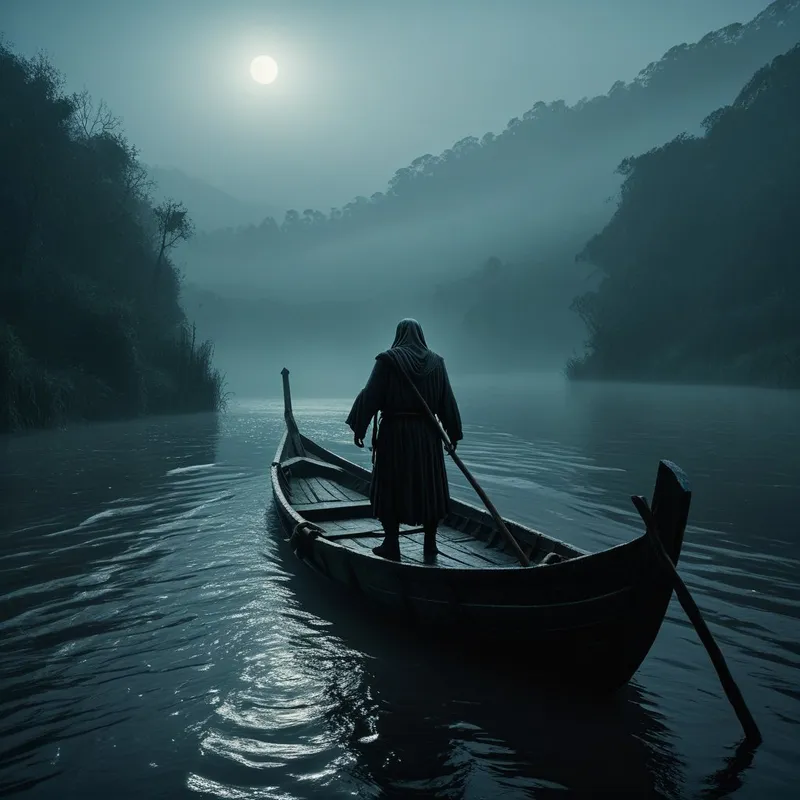
Then, a sound cuts the silence—not a splash, but a deep, wooden groan, the sound of age and immense weight. From the mist, it emerges: a boat, low and dark, hewn from timber that has never known the sun. And within it, a figure. He is not a god of Olympus, but something older, more elemental. This is Charon. His cloak is the color of mud and shadow. His face is often hidden, but when glimpsed, it is a landscape of grim patience, his eyes like chips of flint reflecting the dead water. In his hands is a long pole, which he drives into the unseen depths with a weary, eternal rhythm.
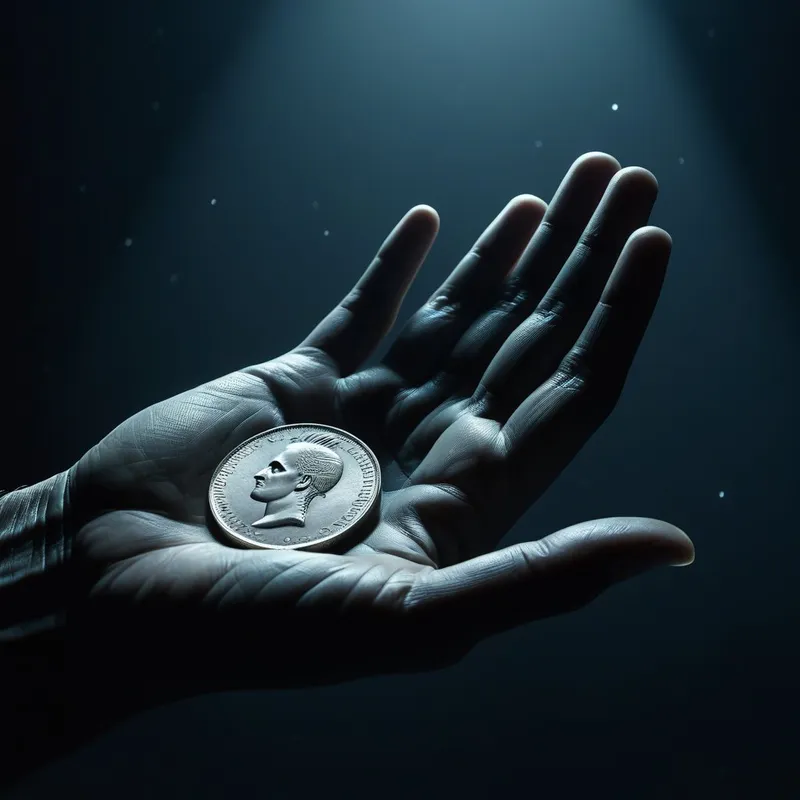
The boat grinds against the gravel shore. Charon does not speak. He only waits, his gaze passing over the gathered shades. This is the moment of truth, the first and most critical test of the afterlife. Each soul must search the memory of their burial. Did the living remember? Were the rites observed? With trembling, insubstantial hands, they must produce it: the obol, the single coin for the ferryman.
A soul steps forward, coin held out—a tiny glint in the perpetual twilight. Charon’s hand, gnarled and strong, closes over it. A silent transaction. The soul is permitted to board, to huddle in the damp hull with others who passed the test. The pole pushes off. The journey begins, a slow traverse across the waters of forgetting, toward the gates where the three-headed hound, Cerberus, waits.
But woe to the soul who has no coin. Charon’s gaze passes over them as if they are not there. The boat, with its paid passengers, pulls away. The unburied, the unmourned, are left on that desolate shore. For a hundred years, they are said to wander the banks, listening to the receding groan of the ferry, their whispers joining the chorus of the hopeless, until the ferryman, in his own unknowable time, may perhaps grant them passage. The conflict is stark, resolved not by bravery or wit, but by a simple, profound preparation: the ritual that bridges the world of the living and the dead.
Cultural Origins & Context
The myth of Charon is not merely a story of the afterlife; it was a social and religious imperative woven into the fabric of ancient Greek life. Its primary sources are the epic poetry of Homer, who first gives Charon his defining role in the Iliad, and the vivid, haunting descriptions in Virgil’s Roman Aeneid. However, it was the Athenian playwrights and the work of poets like Pindar that cemented his place in the popular imagination.
The myth functioned as a powerful piece of social technology. It enforced the sacred duty of prothesis (the laying out of the body) and ekphora (the funeral procession). To fail to place the obol in the mouth of the deceased was not just negligence; it was to condemn your loved one to a century of torment. This belief transformed grief into actionable ritual, giving the living a crucial role in the fate of the dead. Charon’s fee was the final, necessary tax, the last connection between the community and the individual, ensuring their proper integration into the cosmic order. The myth was passed down not just by bards, but by mothers preparing burial shrouds and fathers placing coins on their sons' eyes, making the archetype of the Ferryman a household truth.
Symbolic Architecture
At its core, Charon’s boat is the ultimate symbol of transition. It represents the liminal space—the threshold—that must be crossed in any profound change. The river is not just a body of water; it is the boundary between states of being: life and death, conscious and unconscious, known and unknown.
The coin is the weight of a life lived in the world of matter, the single, condensed token of value that proves you were here, and that your passage is warranted.
Charon himself is the archetypal Janus-figure, the guardian of the threshold. He is impersonal, unwavering, a force of nature rather than a judge. His demand is absolute. Psychologically, he represents the non-negotiable conditions of the psyche for crossing from one state to another. You cannot argue, charm, or fight your way past him. You must have made the necessary preparation. The coin symbolizes that preparation: the integration of one’s experiences, the acknowledgment of one’s debts and connections (the payment), and the conscious acceptance of the end of a cycle. To be coinless is to be psychically unprepared, stuck in a previous identity, unable to move forward.
The Dreamer's Resonance
When this myth surfaces in modern dreams, the dreamer is almost always at a precipice of profound internal change. The dream may not feature a literal boat or a cloaked ferryman. Instead, one might dream of missing a crucial train or plane, of being unable to pay a toll on a bridge, or of standing helplessly before a locked door for which they have lost the key.
The somatic feeling is one of stuckness, anxiety, and existential dread. The “coin” in the dream could be anything the psyche deems necessary for passage: a forgotten apology (a debt paid), a completed project (a duty fulfilled), or the simple, painful acknowledgment of a truth they have been avoiding (the acceptance of an ending). The dream is a message from the unconscious: you are at the riverbank. You see the boat. But you have not yet gathered what is required to board. The process underway is the soul’s urgent inventory, searching for the psychic obol that will allow it to leave an old self behind and cross into new, unknown territory.

Alchemical Translation
In the alchemical journey of individuation—the process of becoming whole—Charon’s myth models the nigredo stage, the blackening, the necessary descent into the underworld of the unconscious. The conscious ego, having outgrown its old form, must “die” to be reborn. But this death is not passive.
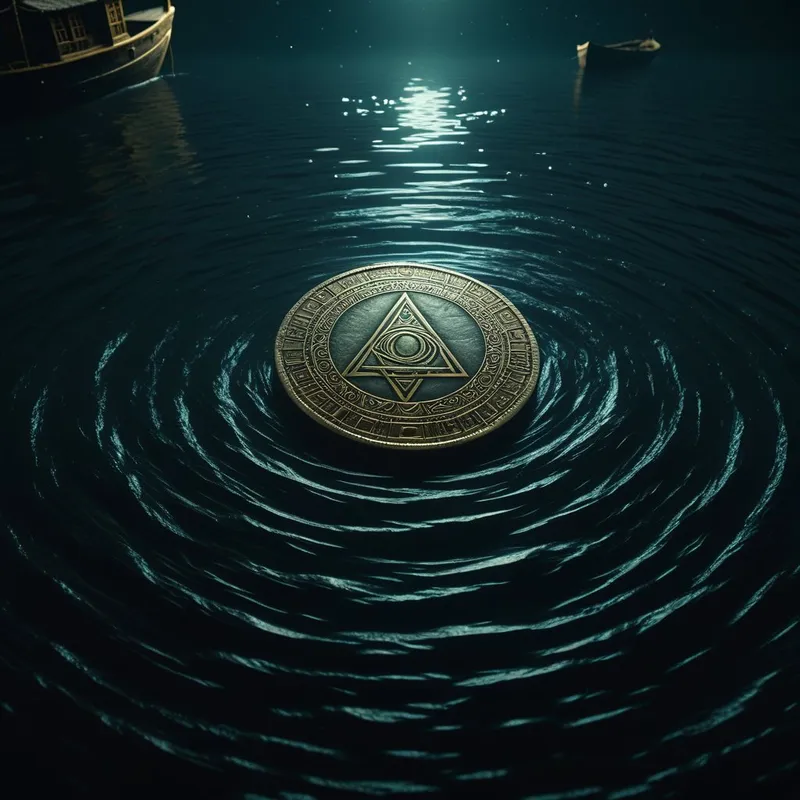
The alchemical work is the minting of the coin. It is the conscious labor of refining the raw ore of life experience into a single, pure token of self-knowledge.
The “living” who place the coin are the integrated parts of the psyche that have done the work of reflection and acceptance. The ego that approaches Charon unprepared is one that has skipped this work, hoping to transit without payment. The myth teaches that transformation has a cost. You must pay with your old identity, your illusions, your unresolved attachments. The ferryman accepts nothing else.
The triumphant crossing, then, is not a victory over death, but a sacred transaction with it. It is the moment when the individual, having paid the full price of their experience, is permitted to leave the shore of what was and journey toward the integration that awaits in the deep, unseen realms of the self. Charon is not the enemy; he is the severe, indispensable sage who ensures the journey is earned, and therefore, real.
Associated Symbols
Explore related symbols from the CaleaDream lexicon: