
Charon Myth Meaning & Symbolism
The ancient ferryman who guides souls across the river Styx, demanding a coin for passage, embodying the final threshold between life and death.
The Tale of Charon
Listen, and hear the whisper of the reeds along a shore no living foot has touched. Feel the chill that is not of wind, but of absence. Here, at the final margin of the world, the river Styx flows, black and deep and silent.
Upon its banks gather the shades, the eidola—the insubstantial images of who they once were. They are drawn here by a pull as inevitable as the moon on the tide, a final forgetting of the sun. The air is thick with the murmur of lost names and unfinished sighs. And there, waiting, is the Boatman.
He is Charon. He does not speak. His face is shadowed within his hood, but you see the glint of eyes that have reflected only darkness for eternity. His hands, gripping the pole of his skiff, are like old roots. The boat itself is a thing of sorrow, wood bleached grey, smelling of damp and deep earth.
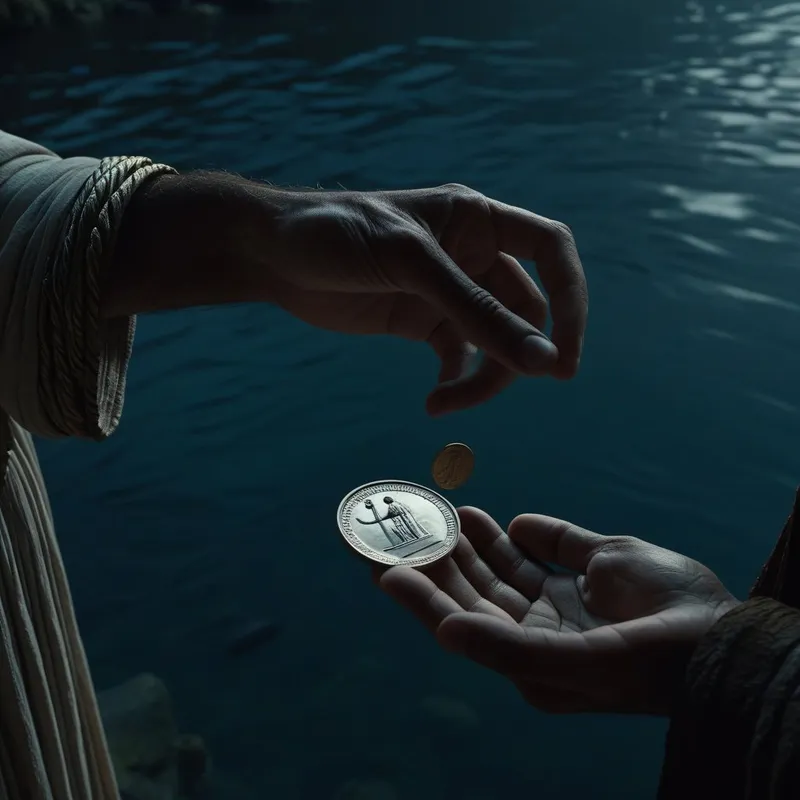
A shade steps forward. It is the ritual. From between pale lips, or placed there by loving hands upon their pyre, the shade produces the token: a single obol. The coin catches no light, for there is no light here, but Charon sees it. His hand extends, palm upturned. The coin is placed. It is the only sound: a faint, metallic whisper of acceptance.
Then, the silent gesture. The shade boards the fragile craft. Charon pushes off, his pole sinking into the unfathomable dark of the Styx. The water makes no ripple against the hull; it is a river of memory and oath, too heavy for splash or wave. The living world recedes, not in distance, but in substance, fading like a dream upon waking.
They cross. The far shore is not a place of description, but of arrival. It is the gates, the judges, the fields of asphodel. Charon does not deliver them there. He delivers them to the threshold. His work is the crossing itself. When the shade disembarks onto that other, silent bank, Charon does not linger. He turns his empty boat back toward the murmuring crowd of new shades, back to the eternal transaction. The coin is paid. The passage is made. The river flows on.
Cultural Origins & Context
The figure of Charon is woven deeply into the fabric of Greek eschatology—the myths concerning the soul's fate. He is not a god of Hades' Olympian stature, but a daimon, a spirit of the place, as intrinsic to the underworld as its rivers and shadows. His most vivid portrayals come from epic poetry, like Homer's Odyssey, where he is part of the stark geography of the dead, and later, from Virgil's Aeneid, which formalizes the imagery of the coin and the crowded bank.
This myth was not mere entertainment; it was a psychopompic guide for the living, providing a concrete ritual to navigate the ultimate unknown. The practice of placing the obol in the mouth of the deceased was a widespread funerary custom. It was an act of profound love and duty, ensuring a loved one's safe passage. To die unburied and without coin was a terrifying prospect, condemning the soul to wander the near shore for a hundred years. Thus, Charon’s myth enforced social bonds and ritual obligations, making the mystery of death something one could actively, if symbolically, prepare for and influence.
Symbolic Architecture
Charon is the archetypal guardian of the final threshold. He is not death itself, but its necessary agent, the operator of the mechanism that separates one state of being from another. His symbolism is stark and profound.
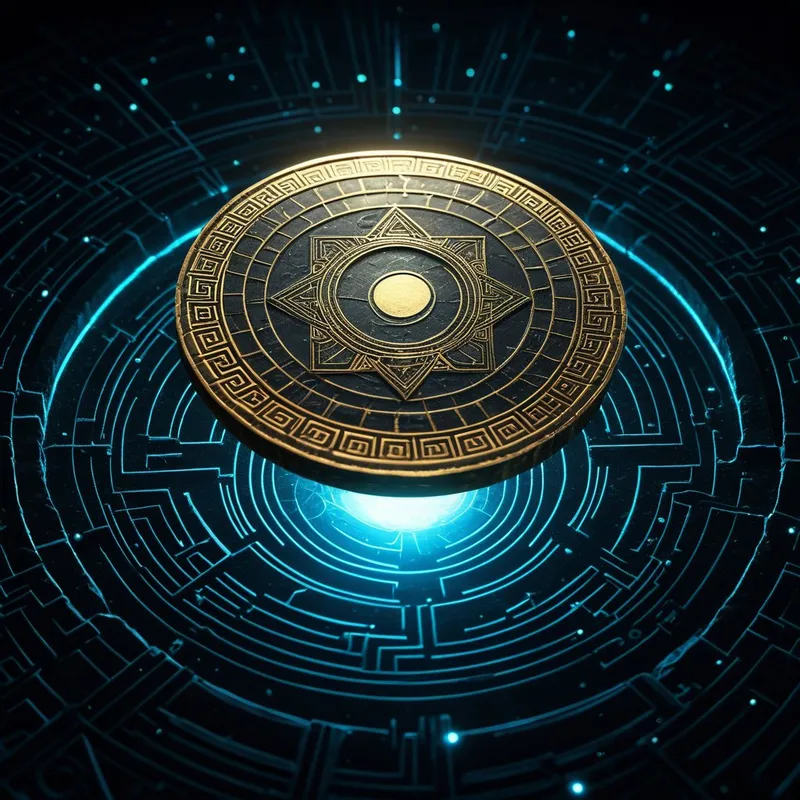
The coin is not a bribe, but a recognition. It is the final, concrete token of a life lived in the world of matter and exchange, offered for entry into the world of spirit and memory.
The river Styx represents the uncrossable divide, the transformative medium that dissolves one form to make way for another. It is the liquid boundary between consciousness and the unconscious, between the ego and the vast, unknown self. Charon’s ferry is the vehicle of transition—the fragile structure of ritual, belief, or psychological process that carries us across inner abysses we cannot swim.
His silence is critical. He offers no comfort, no explanation, no judgment. He is pure process. This reflects a deep psychological truth: the core transitions of the psyche—death of a self-image, the end of a major life chapter, profound grief—often feel impersonal, mechanical, and inevitable. They happen to us, according to laws we do not fully control, demanding a price we must pay.
The Dreamer's Resonance
When Charon appears in the modern dreamscape, he rarely comes in classical garb. He is the feeling of standing before an irrevocable decision. He is the faceless official processing your paperwork for a journey you didn't choose. He is the toll booth on a dark, empty highway at night; the silent conductor on a train heading into a tunnel.
To dream of Charon is to dream of a non-negotiable transition. The somatic feeling is often one of cold dread, weight, and solemnity. There is no battle here, only submission to a process. The psychological work is the gathering of the "coin"—integrating what value from the past phase of life is necessary for the next. What must you acknowledge, what debt must you settle, what token of your old identity must you willingly surrender to move on? The dream may highlight anxiety about being unprepared, of having no coin, symbolizing a feeling of being psychologically or spiritually "unburied," stuck in a liminal space because something has been left unresolved.

Alchemical Translation
In the alchemy of the soul, Charon models the separatio and mortificatio stages—the necessary separation and symbolic death that precede renewal. The journey of individuation requires that we repeatedly ferry parts of ourselves across the Styx of our own consciousness.
The obol is the purified essence of a completed life phase. It is the insight earned through suffering, the wisdom carved from experience, the one truth you can carry forward from a relationship, a career, or a version of yourself that is dying.
To approach Charon is to consciously engage with an ending. It is to ritualize the letting go. The "payment" is the active work of grief, the honest review, the acceptance of finality. We must place our coin in our own mouth—speak the truth of the ending, taste its metallic finality.
Charon’s ultimate gift is passage, not paradise. He does not promise the Elysian Fields; he only guarantees you will not be stranded forever on the shore of what was. His alchemical role is to enforce the law of transition, teaching that every beginning is predicated on an ending that has been fully paid for and completed. In submitting to his silent authority, we are not defeated; we are aligned with the deepest currents of psychic transformation, crossing from the known self into the mystery of what we must become next.
Associated Symbols
Explore related symbols from the CaleaDream lexicon:
- Pier
- Quarter
- Metro
- Toll
- Ferry
- Pay
- Rusted Bridge
- Ferry Boat
- Taxi Cab
- Twisted Ferryman's Oar
- Rowing Boat
- Sunset Cruise
- Tuk-Tuk
- Hearse
- Paddle Boat
- Abandoned Train Station
- Public Bus Stop
- Metro Station Entrance
- Water Taxi
- Bridge Underpass
- Bridge of Reflection
- River Crossing
- Gorge
- Muddy River Crossing
- Jeoseung Saja
- Digital Limbo
- Fee
- Terminal