
Caer Arianrhod Myth Meaning & Symbolism
A hero's quest to win a goddess of fate, navigating a fortress of shifting forms to claim his name, arms, and destiny.
The Tale of Caer Arianrhod
Listen, and let [the mist](/myths/the-mist “Myth from Celtic culture.”/) of Annwn gather around you. In a time when [the world](/myths/the-world “Myth from Tarot culture.”/) was younger and [the veil](/myths/the-veil “Myth from Various culture.”/) between realms was thin, there lived a hero born of a curse. His name was Lleu Llaw Gyffes, and his mother, the great goddess [Arianrhod](/myths/arianrhod “Myth from Celtic culture.”/), had sworn [three fates](/myths/three-fates “Myth from Greek culture.”/) upon him at his birth: he would have no name unless she gave it, he would bear no arms unless she granted them, and he would never have a wife of the race of men.
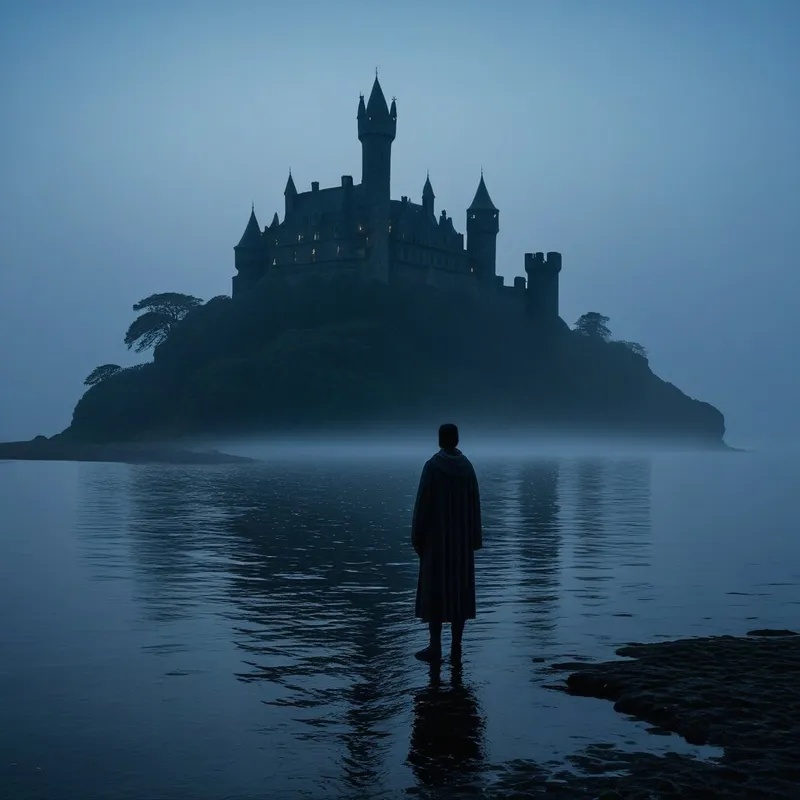
Raised in secrecy by his uncle, the great enchanter Gwydion, Lleu grew to manhood, a prince without a kingdom, a warrior without weapons, a man without a name. Gwydion, whose heart was both cunning and kind, could not abide this injustice. He fashioned a ship from seaweed and enchanted dead flowers, and with Lleu disguised as a shoemaker, they sailed to the impregnable fortress of Arianrhod, Caer Arianrhod.
The fortress was not of this earth. It stood upon a sea that was a mirror to [the sky](/myths/the-sky “Myth from Persian culture.”/), its silver-white towers reaching into the [constellations](/myths/constellations “Myth from Various culture.”/), its walls shimmering like the path of [the Milky Way](/myths/the-milky-way “Myth from Greek culture.”/). From its heights, Arianrhod surveyed the wyrd of all things. Gwydion, through a brilliant ruse of crafting enchanted shoes, lured the goddess to the shore. As she stepped onto the beach, a wren—a shape-shifted Lleu—flew from the rigging and struck a stone at her feet with such skill that she cried out, “The bright one with the skillful hand strikes!”
With those words, the first fate was broken. He had a name: Lleu of the Skillful Hand. Enraged, Arianrhod retreated to her fortress. Undeterred, Gwydion returned years later, conjuring the sound of war-horns and an phantom army on [the horizon](/myths/the-horizon “Myth from Various culture.”/). Panicked, Arianrhod armed the two youths she saw—again, Gwydion and Lleu in disguise. Thus, she herself placed weapons in her son’s hands, breaking the second fate.
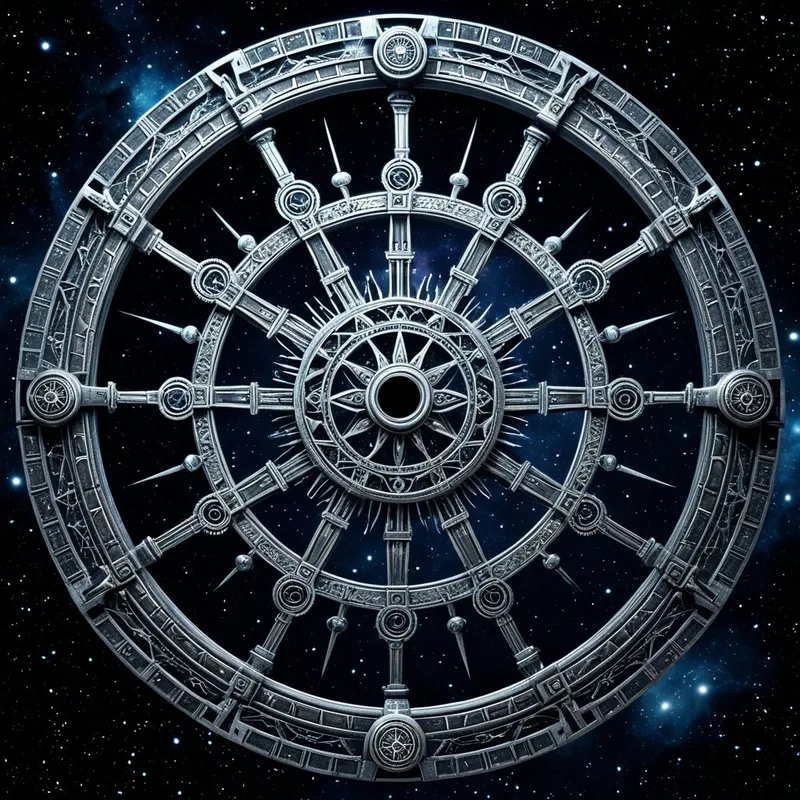
For the third, Gwydion and the king of the land, Math, performed the deepest magic. From the flowers of the oak, the broom, and the meadowsweet, they conjured a woman of unsurpassed beauty and grace: [Blodeuwedd](/myths/blodeuwedd “Myth from Celtic culture.”/). She was Lleu’s wife, not of the race of men, but of [the earth](/myths/the-earth “Myth from Hindu culture.”/) itself. Yet this final breaking of the curse would sow the seeds of its own tragic fulfillment, a tale for another telling. For now, know that the hero, through cunning, patience, and a touch of divine trickery, had stormed the unassailable castle not with force, but with fate’s own logic, claiming his birthright from the goddess of [the silver wheel](/myths/the-silver-wheel “Myth from Celtic culture.”/).
Cultural Origins & Context
This myth is preserved in the Mabinogion, specifically in the Fourth Branch, Math fab Mathonwy. While recorded in Middle Welsh manuscripts of the 12th-14th centuries, its roots dig deep into the pre-Christian, oral traditions of the Brittonic Celts. It is a story told not around campfires for mere entertainment, but by [bards](/myths/bards “Myth from Celtic culture.”/) and fili to encode profound truths about sovereignty, kingship, and the relationship between humanity and the divine.
The societal function was multifaceted. On one level, it explained the proper, if convoluted, path to legitimate power: sovereignty (represented by Arianrhod and her gifts) cannot be taken by brute force; it must be won through cleverness, perseverance, and by meeting its own impossible conditions. It also served as a mythogram for the initiatory trials of the warrior and ruler class. The acquisition of a true name, sacred arms, and a fitting partner were the essential components of a whole and functional identity in the Celtic world-view, marking the transition from boyhood to acknowledged manhood and leadership.
Symbolic Architecture
At its [heart](/symbols/heart “Symbol: The heart symbolizes love, emotion, and the core of one’s existence, representing deep connections with others and self.”/), Caer Arianrhod is not merely a castle; it is the citadel of [the Self](/myths/the-self “Myth from Jungian culture.”/), presided over by the archetypal [Mother](/symbols/mother “Symbol: The symbol of ‘Mother’ represents nurturing, protection, and the foundational aspect of one’s emotional being, often associated with comfort and unconditional love.”/) who is also the Weaver of [Fate](/symbols/fate “Symbol: Fate represents the belief in predetermined outcomes, suggesting that some aspects of life are beyond human control.”/). Arianrhod represents the ultimate, impersonal [source](/symbols/source “Symbol: The origin point of something, often representing beginnings, nourishment, or the fundamental cause behind phenomena.”/) of our being and our [destiny](/symbols/destiny “Symbol: A predetermined course of events or ultimate purpose, often linked to spiritual forces or cosmic order, representing life’s inherent direction.”/). She is not a nurturing [mother](/symbols/mother “Symbol: The symbol of ‘Mother’ represents nurturing, protection, and the foundational aspect of one’s emotional being, often associated with comfort and unconditional love.”/), but the Cosmic Mother, cold as [starlight](/symbols/starlight “Symbol: Starlight represents distant guidance, celestial inspiration, and the connection between cosmic order and human creativity, often symbolizing hope, beauty, and artistic vision.”/), who sets the conditions for existence itself.
The curse is not a punishment, but the initial shape of the soul’s contract with the world—the raw, unformed potential that must be consciously claimed and crafted.
Lleu is the nascent ego-[consciousness](/symbols/consciousness “Symbol: Consciousness represents the state of awareness and perception, encompassing thoughts, feelings, and experiences.”/), born under a star of limitation. His three fates are the fundamental questions of [identity](/symbols/identity “Symbol: Identity represents the sense of self, encompassing personal beliefs, cultural background, and social roles.”/): Who am I? (Name), What is my power? (Arms), and How do I relate? ([Bride](/symbols/bride “Symbol: A bride symbolizes new beginnings, commitment, and the transition into a partnership or a new phase in life.”/)). Gwydion, [the magician](/myths/the-magician “Myth from Tarot culture.”/)-[uncle](/symbols/uncle “Symbol: An uncle in a dream often symbolizes masculine guidance, family dynamics, and the influence of male role models in one’s life.”/), symbolizes the guiding force of [intuition](/symbols/intuition “Symbol: The immediate, non-rational understanding of truth or insight, often described as a ‘gut feeling’ or inner knowing that bypasses conscious reasoning.”/), cunning, and the transformative power of art and illusion—the psychic function that can navigate the symbolic [realm](/symbols/realm “Symbol: The symbol of ‘Realm’ often signifies the boundaries of one’s consciousness, experiences, or emotional states, suggesting aspects of reality that are either explored or ignored.”/) to reshape [reality](/symbols/reality “Symbol: Reality signifies the state of existence and perception, often reflecting one’s understanding of truth and life experiences.”/). The [fortress](/symbols/fortress “Symbol: A fortress symbolizes security and protection, representing both physical and psychological safety from external threats.”/) itself, Caer Arianrhod, symbolizes the labyrinthine, [multi](/symbols/multi “Symbol: Multi signifies multiplicity and diversity, often representing various aspects of life or identity in dreams.”/)-layered [nature](/symbols/nature “Symbol: Nature symbolizes growth, connectivity, and the primal forces of existence.”/) of the [psyche](/myths/psyche “Myth from Greek culture.”/) and fate, which must be approached not directly, but through [trickster](/symbols/trickster “Symbol: A boundary-crossing archetype representing chaos, transformation, and the subversion of norms through cunning and humor.”/) wisdom and symbolic [action](/symbols/action “Symbol: Action in dreams represents the drive for agency, motivation, and the ability to take control of situations in waking life.”/).
The Dreamer’s Resonance
When this myth stirs in the modern unconscious, it often manifests in dreams of impossible tasks, elusive identities, or fortified, beautiful places that are just out of reach. You may dream of taking a test for which you haven’t studied, yet knowing you must pass to claim something vital. You may find yourself at [the threshold](/myths/the-threshold “Myth from Folklore culture.”/) of a radiant, crystalline building, but the door vanishes when you approach.
Somatically, this can feel like a constriction in the throat (the unnamed self), a weakness in the arms (disowned power), or a profound loneliness amidst potential partners (the unclaimed [anima/animus](/myths/animaanimus “Myth from Jungian culture.”/)). Psychologically, you are in the phase where the inherited conditions of your life—family curses, societal expectations, self-imposed limitations—are felt as absolute barriers. The dream is pointing to the necessity of the “Gwydion” function: the need to stop trying to batter the gate and start using creativity, strategy, and a willingness to be “in disguise”—to approach your problem from a completely unexpected angle.
Alchemical Translation
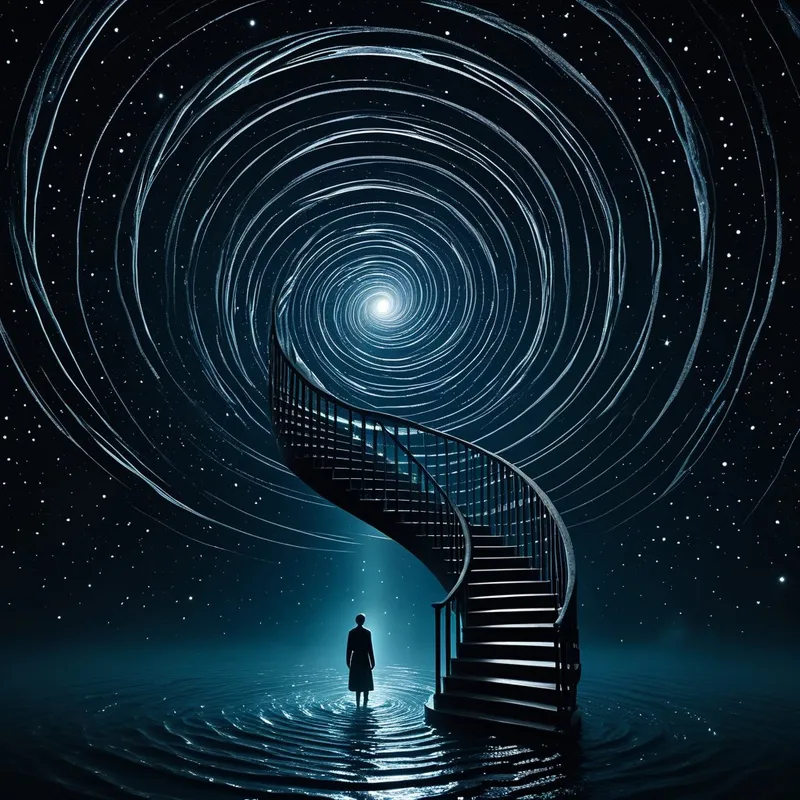
The journey of Lleu is a perfect map for the alchemical process of individuation. The [prima materia](/myths/prima-materia “Myth from Alchemical culture.”/), the raw lead of the soul, is the hero born under a curse—our sense of innate flaw or lack. The threefold operation is the transmutation:
- Naming ([Albedo](/myths/albedo “Myth from Alchemical culture.”/), the Whitening): The first illumination. To gain your true name is to separate from the collective identity imposed by the “mother” (family, culture) and to consciously define your essence. It is the dawn of self-awareness.
- Arming (Citrinitas, the Yellowing): The empowerment of that nascent self. To receive your arms from the source of your limitation is to integrate your shadow and your power. The goddess who cursed you must also bless you; the very source of your wound holds the medicine. This is claiming your will and capacity for action.
- Bridal ([Rubedo](/myths/rubedo “Myth from Alchemical culture.”/), the Reddening): The final union, the creation of the hieros gamos. Blodeuwedd, made from flowers, represents the soul’s connection to life, beauty, and the instinctual realm—the anima conjured into relationship. This completes the psychic structure.
The castle is not conquered; it is understood. The Self is not seized from fate; it is earned through a dialogue with fate, using fate’s own language of symbol, riddle, and paradox.
For the modern individual, this myth teaches that wholeness is not given, but won through a series of initiatory ordeals that require us to outgrow our own stories. We must have the courage to sail to the fortress of our deepest conditioning, to engage our inner Arianrhod—the cold, fateful aspect of our own psyche—and, through creative cunning (Gwydion) and persistent action (Lleu), compel it to grant us the tools of our own sovereignty. The goal is not to escape [the spiral](/myths/the-spiral “Myth from Celtic culture.”/) castle, but to realize you are its rightful inhabitant.
Associated Symbols
Explore related symbols from the CaleaDream lexicon: