Bernardo Carpio Myth Meaning & Symbolism
A legendary giant is trapped between two clashing mountains, holding them apart to prevent a cataclysm, becoming a symbol of eternal burden and silent strength.
The Tale of Bernardo Carpio
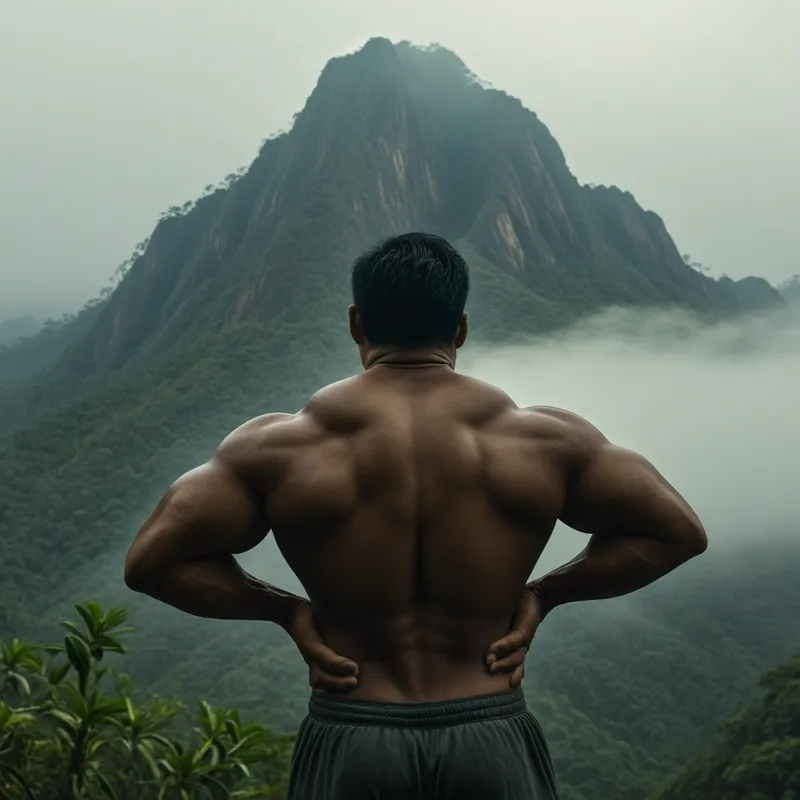
Listen, and hear the story of the mountain’s heartbeat. In the ancient, mist-wreathed folds of the Sierra Madre, where eagles are born from thunderclouds, there lived a man who was more than a man. His name was Bernardo Carpio, and his strength was the strength of the earth itself. He was a giant among men, born of a mortal woman and a spirit of the highlands, his destiny written not on parchment, but in the bedrock.
From his first breath, a prophecy hung over him like the mountain haze: he would be the cause of a great cataclysm, or he would be its only barrier. He grew, and with him grew a restless power, a force that shook the very ground when he walked. He sought his fate, climbing into the cloud-piercing peaks, drawn by a rumble deeper than any storm.
There, in a sacred pass, he found the truth of his doom. Two colossal mountains, ancient siblings named Montalban and Suso, were alive. They groaned in a slow, eternal dance, grinding towards each other. With each movement, the earth trembled; rivers changed course, and villages below held their breath. Their final embrace would crush the world between them.
And in that moment of horrific revelation, the mountains moved. With a sound that tore the sky, they lurched inward. Bernardo did not think. His body, a vessel of that prophesied power, acted. He threw himself into the narrowing gap, his back against one sheer cliff, his mighty hands and shoulders braced against the other. The impact was a shockwave of stone and will. He held.
He holds still. The mountains press with the weight of epochs, but Bernardo Carpio stands firm. His feet are rooted in the deep places of the world. His muscles are cords of stone, his breath the wind in the pass. He is the living keystone in an arch of impending ruin. Some say on quiet nights, you can hear his heartbeat, a slow, deep drum echoing through the rock. He does not sleep. He does not falter. He is the holder of the world’s tension, the eternal sentinel in the dark, keeping two titans from their fatal kiss. His struggle is the price of our peace.
Cultural Origins & Context
The myth of Bernardo Carpio is a folk narrative deeply rooted in the oral traditions of the Tagalog regions, particularly around the areas of Rizal province and the very real Montalban Gorge (now Rodriguez, Rizal). Unlike the formalized pantheons of other mythologies, Bernardo exists in the liminal space between legend, folklore, and localized belief. He is a folk hero, a figure whose story was told not in temples but in homes, during pasiyam (novena gatherings) or by community storytellers.
His tale likely evolved as a etiological myth, providing a majestic, human-scale reason for the earthquakes that frequently shake the archipelago and the dramatic, seemingly unstable geology of the mountain passes. He gave a face and a purpose to the terrifying, impersonal forces of tectonics. Furthermore, scholars like Damiana Eugenio note the potential influence of Spanish colonial-era corridos (metrical romances), where Bernardo’s name and some chivalric elements may have been grafted onto a much older, indigenous core story of a geological titan. This syncretism made him a resilient figure, surviving cultural shifts by absorbing new layers of meaning.
Symbolic Architecture
Bernardo Carpio is the archetypal image of the burden-bearer. His myth is not one of quest and conquest, but of static, monumental endurance. He represents the individual who carries a fate they did not choose, a responsibility that isolates and defines them utterly.
The greatest sacrifice is not to die for a cause, but to live forever as its instrument.
The clashing mountains symbolize opposing forces—tradition and change, duty and desire, the collective need and the individual’s will. Bernardo is the psychic tension made flesh. He does not reconcile these opposites; he prevents their catastrophic collision by containing their energy within his own being. His entrapment is also his purpose. The cave or pass he occupies is a temenos, a confined space where a world-preserving act of individuation occurs in eternal stasis.
He is the human spirit confronted with an impossible task: to hold the universe together through sheer, unwavering will. His silence—for legends rarely quote him—speaks of a suffering beyond words, a destiny so total it has become his identity.

The Dreamer's Resonance
When the pattern of Bernardo Carpio stirs in the modern dreamer, it often manifests as dreams of immense physical strain or paralyzing responsibility. You may dream of holding up a collapsing ceiling, of being stuck in a narrow tunnel as the walls close in, or of being tasked with preventing a disaster that only you can see coming.
Somatically, this can correlate with chronic tension in the shoulders, neck, and back—the literal bodily seat of carrying burdens. Psychologically, this dream motif signals a confrontation with one’s shadow destiny or a fate complex. The dreamer is experiencing a life phase where they feel trapped by a role—the reliable child, the steadfast leader, the family pillar—a role that grants identity but at the cost of freedom. The dream asks: What mountains are you holding apart? Whose world are you preserving at the expense of your own? The feeling is not of active battle, but of eternal, exhausting maintenance.

Alchemical Translation
The alchemical process modeled by Bernardo Carpio is not the solve et coagula (dissolve and coagulate) of dramatic transformation, but the enduring mortificatio—the stage of blackening, putrefaction, and steadfast endurance. It is the process of holding the tension of opposites within the vas of the self, without rushing to a premature solution.
Individuation often requires a long, static vigil in the dark, where the ego’s task is not to act, but to withstand.
For the modern individual, the “Bernardo phase” occurs when one must consciously bear an unbearable tension—between a soul-crushing job and financial necessity, between family obligations and personal calling, between who you are and who you must be to survive. The triumph here is not escape, but the profound realization that in this act of holding, you are performing a sacred function. Your endurance is the transformation. You become the mountain pass. The goal is to find meaning in the stance itself, to recognize that this silent, straining vigil is not a failure of life, but a deep, if painful, mode of being. Liberation may not come from the mountains moving, but from the discovery that you are, and have always been, strong enough to stand between them.
Associated Symbols
Explore related symbols from the CaleaDream lexicon:
- Mountain — The primary symbol of immovable obstacle, eternal burden, and the massive, impersonal forces of fate or the collective that the individual must confront.
- Hero — Bernardo embodies the hero archetype not through active conquest, but through infinite endurance, sacrificing his freedom for the stability of the world.
- Sacrifice — The core theme of the myth; the eternal offering of one’s life and autonomy to a cause greater than oneself, with no expectation of release or reward.
- Destiny — The inescapable fate that defines Bernardo’s existence, representing how some life patterns or burdens feel pre-ordained and unchangeable.
- Cave — The narrow pass between the mountains is a cave of initiation, a confined space where a solitary, world-altering psychological process occurs in darkness and pressure.
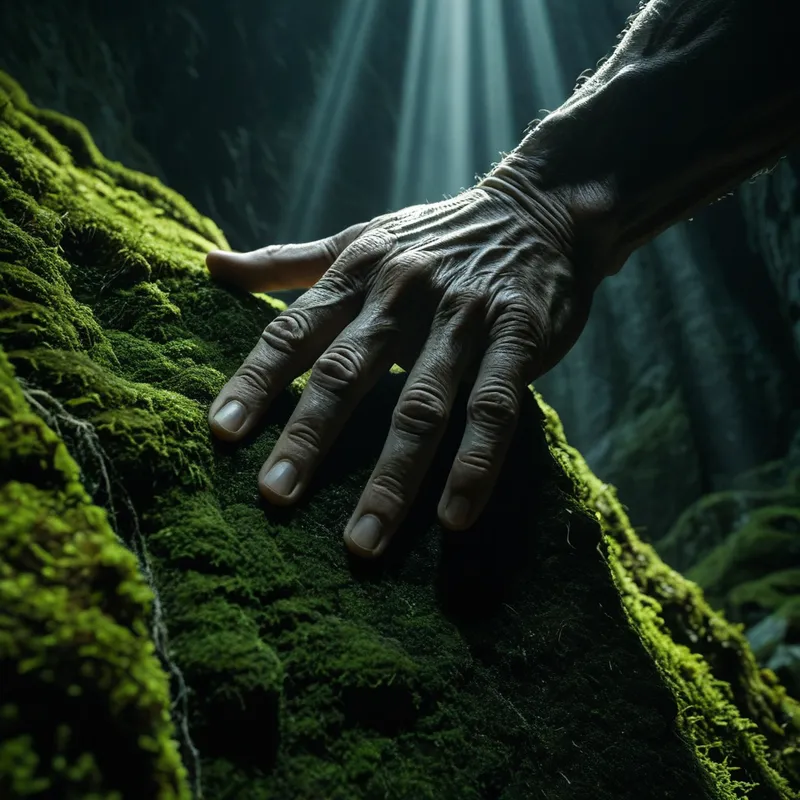
- Stone — Symbolizes Bernardo’s petrification into his role, his body becoming as enduring and unyielding as the rock he holds back, representing solidified will and trapped vitality.
- Tension — The palpable, dynamic force between the clashing mountains, representing the psychological strain of holding opposites—duty and desire, self and other—in balance.
- Burden — The physical and metaphysical weight Bernardo carries, symbolizing the personal and ancestral responsibilities that can feel like a crushing, eternal load.
- Strength — Not aggressive force, but the resilient, unwavering fortitude required to maintain a stance against overwhelming pressure, often invisible to the outside world.
- Earth — The elemental realm of the myth; Bernardo’s struggle is with the body of the earth itself, connecting his fate to the stability of the land and the people upon it.
- Silence — The profound quiet of the trapped giant speaks of a suffering beyond language, the isolation of a burden that cannot be fully communicated or shared.