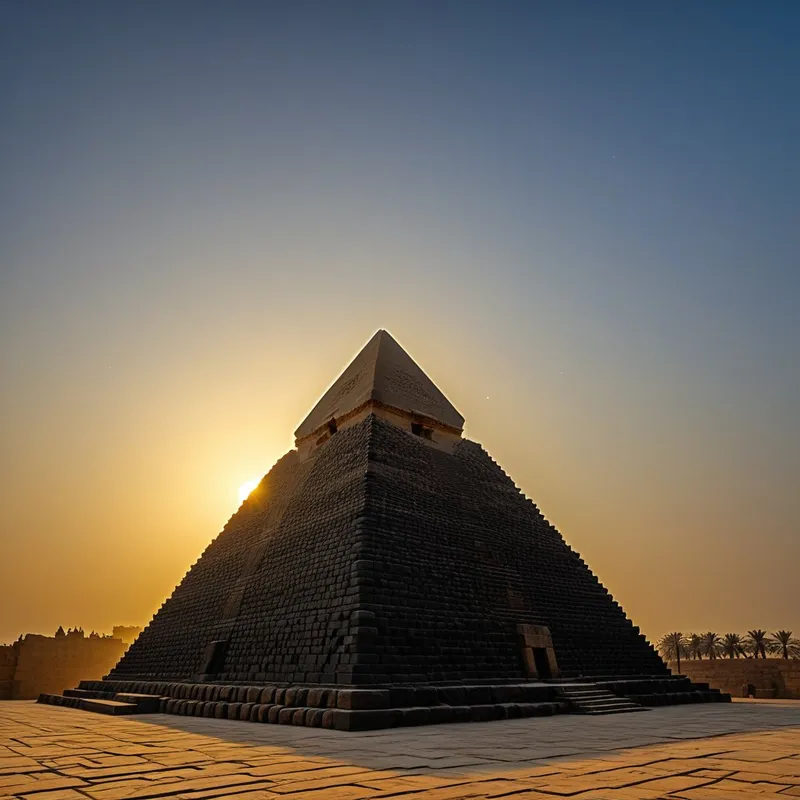
Benben Stone Myth Meaning & Symbolism
The primordial mound that rose from the cosmic waters, the first solid ground where the sun god Atum alighted to begin the act of creation.
The Tale of the Benben Stone
In the beginning, there was only Nun. A dark, boundless, silent ocean, without shore or sky, without time or form. It was the potential of everything and the substance of nothing. A profound stillness, heavy with unspoken dreams.
Then, a disturbance. A subtle intention, a gathering of will within the endless deep. From the heart of Nun itself, a mound began to rise. It was not pushed, but called. It emerged slowly, a single point of resistance against the featureless wet dark. This was the Benben. It was not yet stone, but the idea of stone; not yet land, but the promise of land. Its surface was slick and dark, the only thing that was not water in all existence.
Upon this tiny, trembling island of matter, a presence coalesced. It was Atum, the All. He did not arrive from elsewhere, for there was no elsewhere. He became upon the Benben. His first sensation was the solidity beneath him, the first differentiation: here is not there. The cold, wet chaos of Nun lapped at the edges of his being, but the mound held firm.
Standing upon this pinnacle, Atum felt a tremendous loneliness, a completeness that yearned for company. He looked out upon the undifferentiated dark and knew he must act, or all would slip back into the silent, dreaming waters. He brought his hand to his own mouth and, in a supreme act of self-generation, spat. From his spittle, born of his own essence, came Shu, the god of air. He then vomited forth Tefnut, the goddess of moisture. The first pair, the first duality, swirled into being around the Benben.
And as Shu and Tefnut embraced, they gave birth to the sky, Nut, and the earth, Geb. The mound was no longer alone. It was the axis, the fixed point from which the world unfurled. The Benben became the foundation stone of all that is, the place where light first knew itself as separate from dark, where order first drew a line in the face of chaos. Every sunrise thereafter was a re-enactment of this first moment, the sun god alighting once more upon the sacred mound, reaffirming creation against the ever-present night.

Cultural Origins & Context
The myth of the Benben Stone was the central creation narrative of Heliopolis, one of the most influential theological centers of ancient Egypt. It was not merely a story for priests, but the foundational cosmology that informed kingship, architecture, and the Egyptian understanding of cosmic order, or ma'at. The myth was preserved in texts like the Pyramid Texts and the Book of the Dead, recited in rituals to magically reactivate the power of creation for the benefit of the deceased pharaoh and, by extension, the stability of the world.
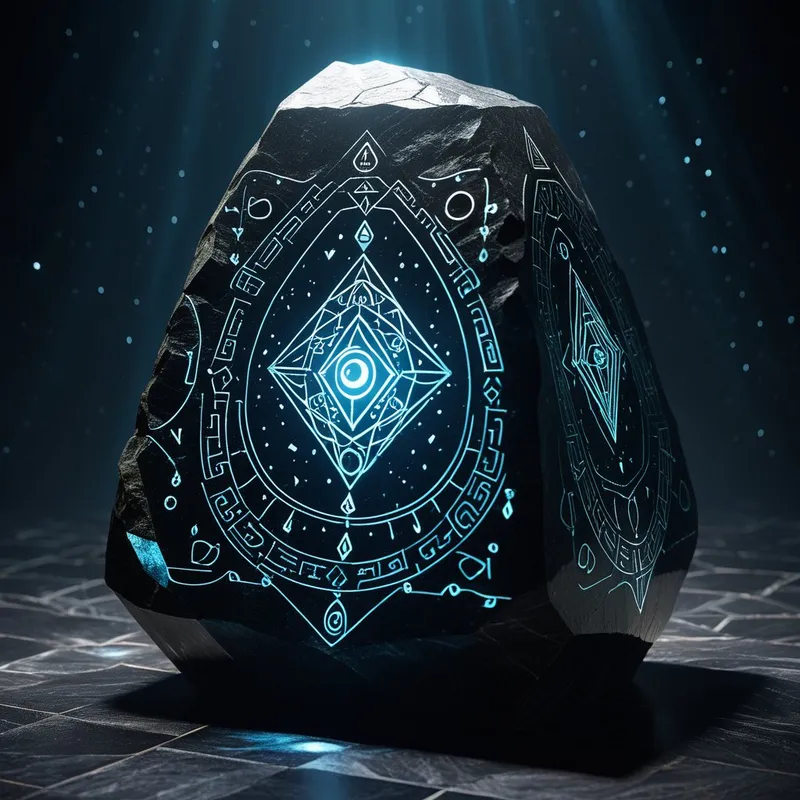
The physical Benben was a sacred object housed in the temple at Heliopolis. It was likely a meteoric stone—a "stone from heaven"—which was later stylized into the pyramidal capstone, or pyramidion, that crowned obelisks and pyramids. Thus, the myth was made manifest in stone: every pyramid was a gigantic, eternal Benben, a machine for resurrection, channeling the sun's rays to lift the pharaoh's soul back to the point of origin.
Symbolic Architecture
The Benben is the ultimate symbol of the punctum saliens—the salient point. It is the first thought that emerges from the unconscious, the first spark of consciousness in the sleeping mind, the first solid conviction in a sea of doubt.
It is not the size of the mound that matters, but its thereness. It is the assertion of "I am" against the void of "I am not."
Psychologically, it represents the nascent ego, the first fragile structure of self-awareness that differentiates itself from the undifferentiated waters of the collective unconscious (Nun). It is the foundation upon which all subsequent psychic structure—the "world" of the individual personality—is built. The act of Atum standing upon it signifies the moment this consciousness becomes active and self-reflective, capable of generating its own psychic contents (the gods Shu and Tefnut as thought and feeling).
The Dreamer's Resonance
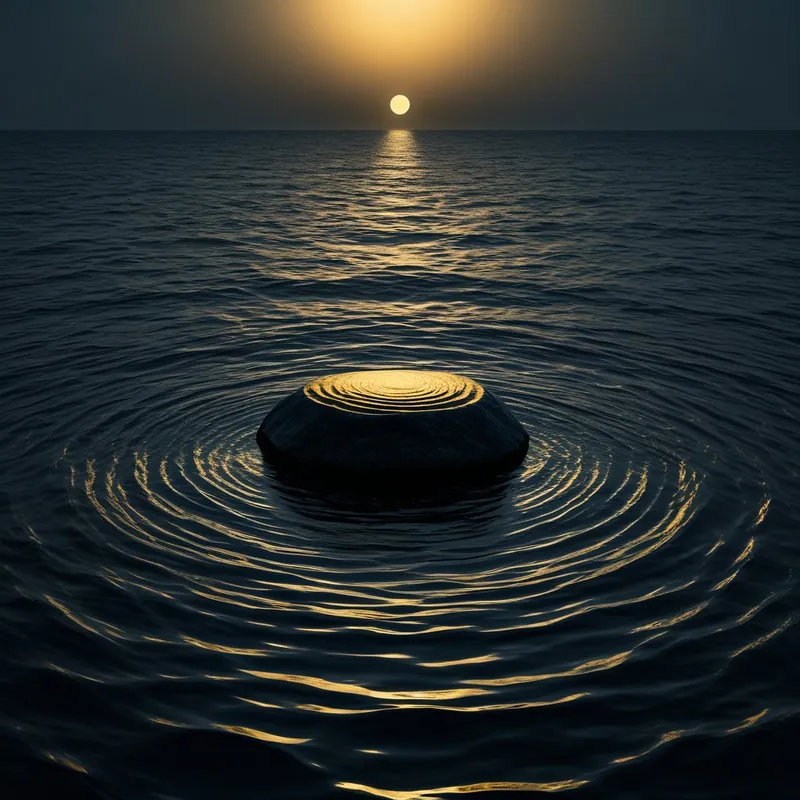
To dream of the Benben is to dream of beginnings. It may appear as a single, smooth stone in a vast body of water, a small hillock in a featureless plain, or the peak of a mountain piercing a blanket of fog. The somatic sensation is one of profound grounding and terrifying isolation simultaneously. You are the only solid thing in a liquid universe.
This dream pattern emerges during life transitions where the old psychic structures have dissolved or are no longer relevant—a career change, the end of a relationship, a spiritual crisis. The dreamer is in their personal Nun, a state of potential rich with anxiety. The appearance of the mound is the psyche's first move toward re-creation. It signals the unconscious mobilization of the creator archetype, the innate drive to build a new center, a new "I," from the raw material of the self.
Alchemical Translation
The alchemical process mirrored in the Benben myth is the coagulatio—the making solid. It is the transition from the solve (dissolution into the unconscious, the waters of Nun) to the creation of the philosopher's stone, the indestructible, enlightened Self.
For the modern individual, the journey is inward. The chaotic waters are our own unprocessed history, our shadow, our swirling emotions and conflicting drives. The work is not to calm the sea, but to find, or more accurately, to will into being, that first point of solidity within it. This is the core of individuation: the conscious decision to stand upon one's own truth, however small it may seem.
The mound does not rise by accident. It is called forth by the latent god within the deep. Your conscious attention is that call.
This "stone" might be a core value, a hard-won insight, or a simple, unwavering commitment to self-knowledge. Upon this tiny, personal Benben, you become your own Atum. From this center, you generate the dualities of your conscious life (thought and feeling, judgment and perception) and slowly structure your inner sky and earth. The myth teaches that creation is not a one-time event, but a daily ritual. Each morning, we must find that stone again, stand upon it, and choose to create our world anew.
Associated Symbols
Explore related symbols from the CaleaDream lexicon: