
Axomamma Potato Goddess Myth Meaning & Symbolism
The myth of Axomamma tells of a goddess who sacrificed her body to become the first potato, offering eternal sustenance and deep connection to the earth.
The Tale of Axomamma Potato Goddess
Listen. Before the sun learned its precise path, when the world was cold and the bellies of the people were hollow echoes in the thin mountain air, there was a time of great hunger. The Inti shone, but his light alone could not fill the stone-lined stomachs of the children of Tahuantinsuyo. The wind, Wayra, carried only the scent of frost and stone.
In this time, there lived a goddess not of thunder or conquest, but of the quiet, deep places. Her name was Axomamma. She was a daughter of Pachamama herself, and her compassion was as vast as the high plains. She walked among the people, her feet leaving prints of soft loam, and felt their suffering as a chill in her own spirit. She saw the gaunt faces, the eyes that had forgotten how to sparkle, the hands that trembled not from the cold but from emptiness.
One night, beneath a blanket of stars so close you could taste their icy light, Axomamma went to the sacred lake. She saw her reflection—not as a goddess, but as a potential vessel. The conflict was not with a monster, but with the very nature of eternity. To remain as she was, a being of spirit who could only witness decay, or to become something else entirely. The rising action was a silent, profound decision that shook the roots of the mountains. She did not call for a grand battle; she whispered to the earth.
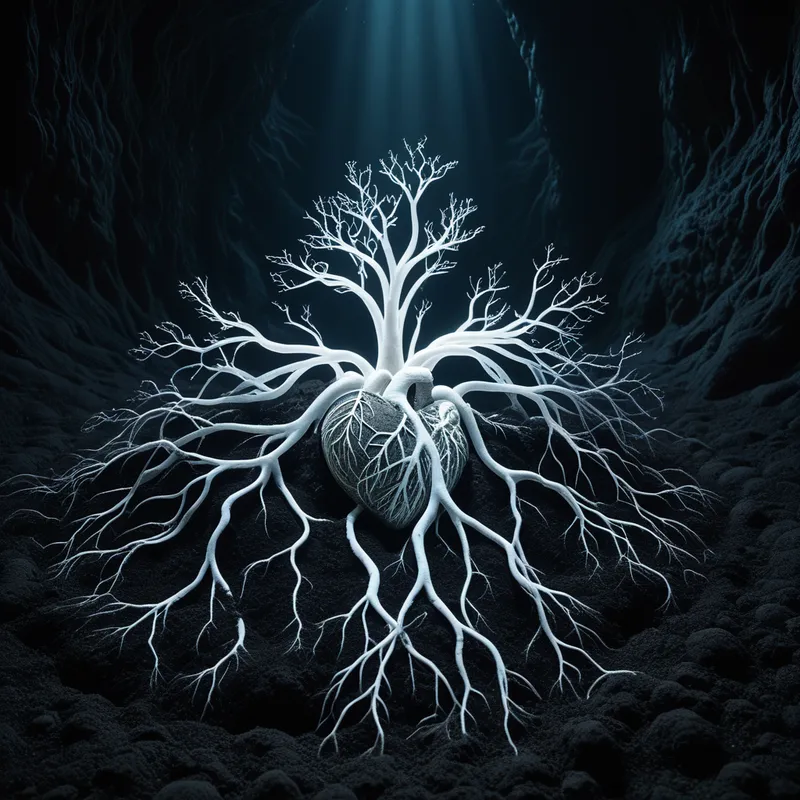
She lay down upon the barren, rocky slope of a mountainside, her body merging with the soil. Her flesh did not vanish but transmuted. Her skin became the rough, protective hide of the tuber. Her blood became the vital sap within. Her bones became the sturdy stems seeking the sun, and her dark, knowing eyes became the "eyes" from which new life would sprout. The resolution was not a shout, but a slow, green unfurling. Where the goddess had lain, the first plants pushed through the stone. Their flowers were modest, white and purple stars against the green. And beneath, in the welcoming darkness of the earth she had become, grew the first potatoes—lumpy, humble, and filled with a sustaining power that could withstand frost and famine. The people, guided by a dream from the earth, found them. They tasted not dirt, but a deep, sustaining sweetness—the very substance of a goddess’s compassion made edible. Hunger retreated, and in its place grew gratitude, and the knowledge that the divine was not only above, but below, waiting to be unearthed.

Cultural Origins & Context
This myth originates from the heart of the Incan Empire, a civilization masterfully adapted to the extreme vertical geography of the Andes. The potato was not merely a crop; it was the cornerstone of survival and empire. Able to thrive at altitudes where maize would fail, and capable of being freeze-dried into chuño for long-term storage, the potato was literal life. Axomamma’s story was likely passed down orally by the Amautas and the farming communities themselves, told during planting and harvest rituals.
Its societal function was multifaceted. On a practical level, it encoded respect for the crop and the knowledge of its cultivation. On a spiritual level, it explained the origin of this vital food as a direct divine gift, framing agriculture as a sacred covenant with the earth. It reinforced the Incan worldview of a reciprocal relationship with the natural and divine world—a concept known as ayni. By honoring Axomamma through ritual and proper stewardship of the crop, the people maintained the cycle of nourishment she initiated. The myth situated abundance not as a right, but as the result of sacred sacrifice and ongoing reverence.
Symbolic Architecture
At its core, the myth of Axomamma is a profound map of nourishment that originates in dissolution. The goddess represents the archetypal principle that true, sustainable sustenance requires a descent, a breaking of one form to create another.
The deepest nourishment is not given from a distance, but is born from a sacred surrender into the very fabric of need.
Psychologically, Axomamma symbolizes the transformative capacity of the Great Mother archetype, not in its birthing aspect, but in its self-sacrificing, sustaining aspect. The potato itself is a perfect symbol: it grows in the dark, unseen, its value hidden until the moment of harvest. It is resilient, able to weather harsh conditions, and contains within its unassuming form the potential for endless regeneration (each "eye" a new beginning). The act of Axomamma becoming the potato is the ultimate expression of empathy—the erasure of the boundary between the healer and the hungry, the giver and the gift. She does not bestow life from on high; she becomes life from below.

The Dreamer's Resonance
When this myth stirs in the modern unconscious, it often surfaces in dreams of profound personal nourishment or its lack. Dreaming of digging in dark earth and finding strange, luminous tubers may signal a process of "unearthing" one's own inner resources—a latent talent, a buried memory, or a capacity for self-care that feels primordial and sustaining. Conversely, dreams of rotten, hollow, or poisoned potatoes may point to a "famine" within, where one’s sources of emotional or spiritual sustenance feel corrupted or depleted.
Somatically, this myth resonates with processes in the gut—the "second brain." It speaks to issues of digestion, assimilation, and what we take in from the world to build our substance. The psychological process is one of moving from a state of psychic hunger—feeling unsupported, ungrounded, spiritually malnourished—towards finding sustenance within one’s own depths. It is the dream of turning one’s own history, even the dark and rocky parts, into something that can feed the future.
Alchemical Translation
The alchemical journey modeled by Axomamma is the opus of incarnation for the sake of nourishment. For the modern individual striving toward individuation, this myth does not champion the heroic ego ascending to the light. Instead, it champions the ego’s sacred descent into the dark, fertile ground of the body, the unconscious, and the earthly realm.
The ultimate transmutation is not of lead into gold, but of spirit into substance, and of personal suffering into communal sustenance.
The first stage (nigredo) is the recognition of hunger—in oneself and in the world. The conflict and dissolution (mortificatio) is the conscious, willing sacrifice of a detached, "spiritual" identity. The modern seeker must allow a part of their self-concept to "die" and be buried—perhaps the ideal of perfection, the persona of independence, or the spiritual bypassing of earthly needs. The planting (solutio) is the vulnerable act of placing this sacrificed part into the soil of daily life, relationships, and humble work. The long, hidden growth (albedo and citrinitas) is the patient, often unseen, internal work of transformation, where what was surrendered slowly reorganizes into a new, nourishing structure. The harvest (rubedo) is the moment this inner work bears fruit: the discovery that one’s own wounds, struggles, and "rooted" experiences have become a source of genuine sustenance, resilience, and healing—not just for the self, but capable of feeding others. One becomes, in a sense, both the gardener and the crop.
Associated Symbols
Explore related symbols from the CaleaDream lexicon:
- Goddess — The divine feminine principle in its aspect of self-sacrificing nourishment, representing the transformation of spiritual essence into tangible, life-sustaining matter.
- Earth — The receptive, dark, and fertile ground of being where transformation occurs, symbolizing the physical body, the unconscious, and the realm of manifested reality.
- Sacrifice — The voluntary dissolution of one form of existence to generate a new, more vital form of life and sustenance for the whole community.
- Root — The hidden, anchoring source of nourishment and identity that draws sustenance from the dark, connecting the individual to ancestral and instinctual depths.
- Seed — The latent potential for infinite regeneration contained within a seemingly inert form, symbolizing the "eyes" of the potato and the promise of cyclical rebirth.
- Mother — The archetypal source of unconditional nourishment and containment, who gives of her own substance to ensure the survival and growth of her children.
- Harvest — The culmination of the cycle of sacrifice, growth, and patience, representing the moment when inner work yields tangible, nourishing results.
- Transformation — The core alchemical process of changing state from spirit to earth, from hunger to fullness, and from individual being into communal sustenance.
- Nourishment — The ultimate gift and theme, representing physical, emotional, and spiritual sustenance that is deeply connected to the sacred and the soil.
- Death — Not as an end, but as a necessary phase of dissolution and composting, required for new, more resilient forms of life to emerge.