Atrium of the Roman Domus Myth Meaning & Symbolism
The myth of the atrium reveals the Roman home as a living cosmos, where the family soul is forged under the open sky and the gaze of ancestors.
The Tale of the Atrium of the Roman Domus
Hear now of the first room, the beating heart of stone and sky. It was not built, but consecrated. Before the first brick was laid, the augur walked the land, reading the flight of birds, seeking the nod of Jupiter. The chosen plot was a sacred clearing in the chaos of the world, a templum under the open heavens.
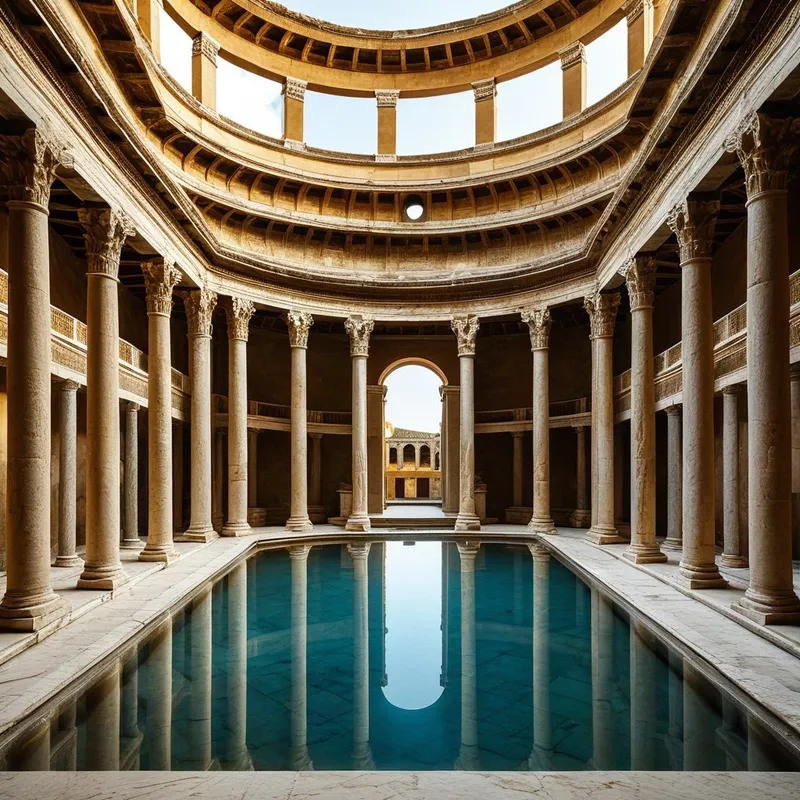
The builders raised the walls, but they left a mouth open to the sky—the compluvium. This was no mere hole, but a covenant. It was the eye of the house, forever turned upward to witness the passage of Sol and the tears of the heavens. Beneath this watchful eye, they carved a shallow bowl in the earth and lined it with stone—the impluvium. This was the house’s cupped hand, waiting.
On the day of dedication, the paterfamilias, the father of the family, stood in the empty, dusty space. He carried not a tool, but an earthenware jug. His wife, the materfamilias, stood beside him, holding a sprig of laurel. In silence, they waited as the sun climbed to its zenith. Then, as the first drop of rain fell through the compluvium, or as a libation was poured, it struck the center of the impluvium. That sound—a single plink on stone—was the first heartbeat of the domus.
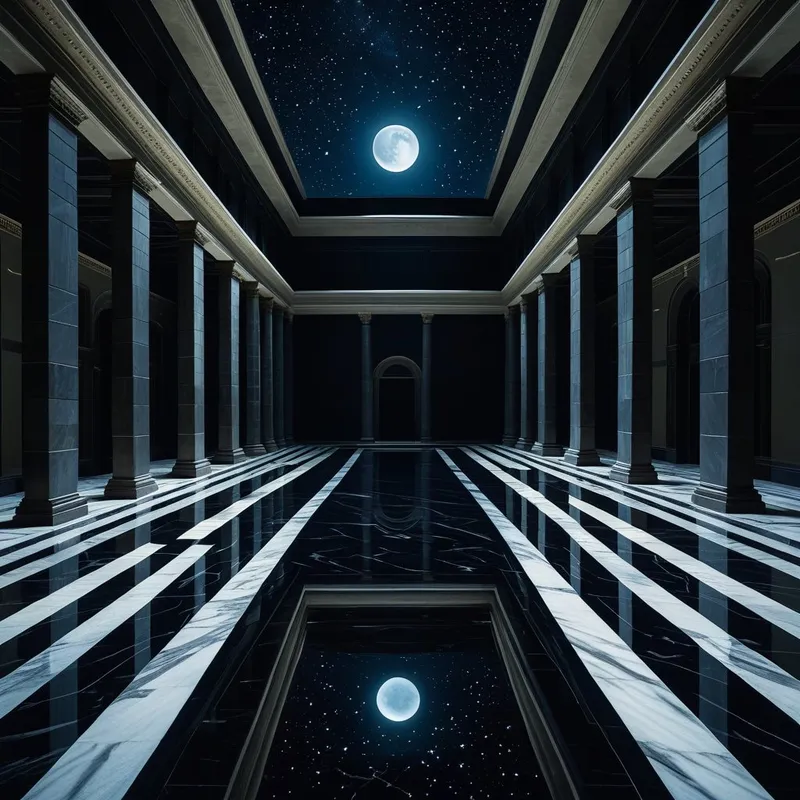
From that moment, the atrium lived. Rain was not weather; it was Juturna’s gift, channeled from the sky-vault of Jupiter to the earthly vessel. The water gathered, not as a flood, but as a sacred reserve, cool and clear. It mirrored the sky by day and the stars by night, binding the household to the cosmos.
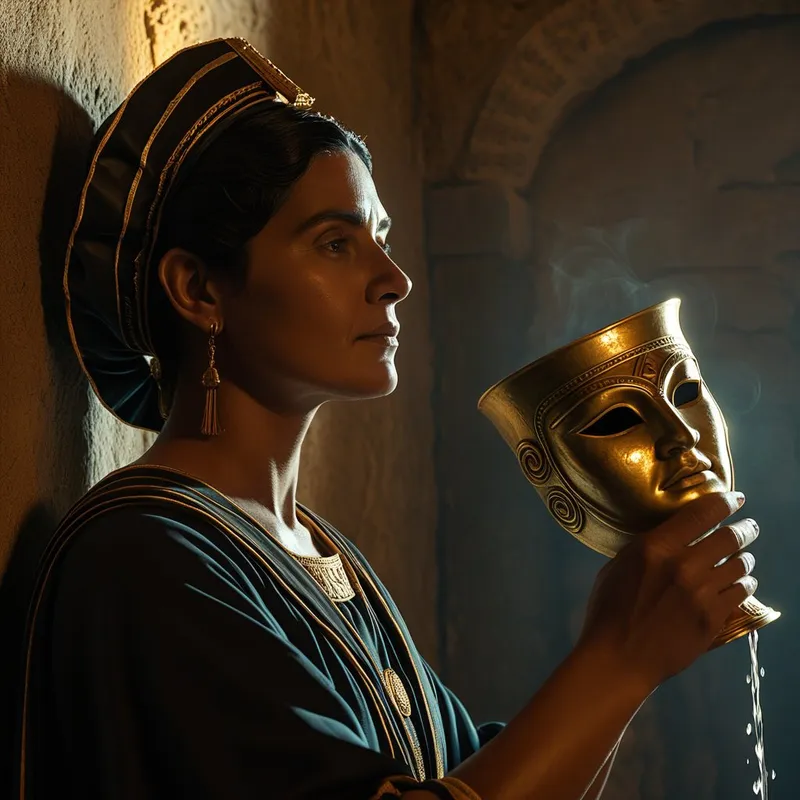
Along the walls, in niches called the lararium, small figures of the Lares were placed. Their watchful eyes saw all comings and goings. And in the alcove, the tablinum, the waxen faces of ancestors—the imagines maiorum—stood in solemn rows. They did not haunt; they witnessed. They were the memory of the house, its depth in time.
The conflict of this space was not of monsters, but of forgetting. The threat was the dry impluvium, the choked compluvium, the dusty lararium. The rising action was the daily ritual: the greeting of the dawn light on the water, the offering of salt and grain at the hearth, the murmured prayer to the Lares. The resolution was continuity itself—the sound of children playing by the pool, the smoke of the hearth rising through the oculus, the lineage secure under the benevolent gaze of sky and stone. The atrium was not a room one entered; it was a reality one joined.
Cultural Origins & Context
This was not a myth told in epic verse, but one enacted in daily life. Its “storytellers” were every Roman citizen who crossed the threshold of their home. The atrium’s symbolism was embedded in the very fabric of Roman identity—the mos maiorum, the way of the ancestors. It was a domestic religion, a civic duty, and a psychological anchor.
The function was profound and multifaceted. Socially, it was the public face of the private home, where the paterfamilias would receive clients at dawn, conducting business under the eyes of his lineage, demonstrating his worthiness to continue it. Religiously, it was a microcosm of the Roman world order: the heavens (compluvium) nourishing the earth (impluvium), watched over by protective spirits (Lares) and guided by tradition (imagines). Psychologically, it provided a fixed center in a mobile and often brutal world. The legionary on the windswept border of Britannia carried the imago of his atrium within him—a psychic template of order, belonging, and sacred duty.
Symbolic Architecture
The atrium is a master symbol of the individuation process, representing the foundational, containing structure of the psyche.
The compluvium is the opening to the transcendent, the Self. The impluvium is the conscious ego, which must be shaped to receive and hold what falls from above.
The open roof signifies the necessary vulnerability of the psyche to influences beyond its control—divine inspiration, unconscious contents, fate, or grace. The impluvium is the vessel of consciousness. It must be properly constructed (a developed ego) to contain the waters of the unconscious (the rain) without being flooded. This collected water is not stagnant, but a resource—the stored wisdom and emotional depth that can be drawn upon in times of drought.
The Lares symbolize the innate, guiding structures of the psyche—instincts, patterns, and the protective, organizing principles that maintain psychic homeostasis. The imagines maiorum are the internalized ancestors: personal and cultural complexes, the voice of tradition, the weight of history, and the blueprint of one’s inherited personality. They are not to be worshiped blindly, but integrated consciously, their strengths acknowledged and their limitations seen.

The Dreamer's Resonance
To dream of an atrium is to dream of the foundational space of the Self. A modern dreamer encountering this motif is often navigating a process of psychic grounding and recollection.
Dreaming of a bright, clean, sunlit atrium with clear water suggests a period of alignment. The ego (the house) is in right relationship with the Self (the sky), and the dreamer may be integrating personal history (ancestors) in a healthy way. Dreaming of a dark, dilapidated atrium with a dry or cracked impluvium points to a spiritual or emotional drought. The connection to inner resources, inspiration, or familial roots may feel severed. A choked compluvium might symbolize a blockage in receiving new insights or accepting help from “above.”
The most potent dreams involve interaction with the space: cleaning the pool, repairing the roof, or confronting the ancestor masks. These are somatic metaphors for psychological work—clearing repressed emotions, opening up to new perspectives, or coming to terms with one’s personal and familial past. The dream asks: What is the condition of your innermost sanctuary? What are you allowing in, and what are you holding?
Alchemical Translation
The myth of the atrium models the alchemical vas, the sacred vessel in which transmutation occurs. The entire domus, with the atrium at its heart, is this vessel for the family soul. For the modern individual, the process is internal.
The first operation is Consecratio: defining one’s sacred space. This is the establishment of ego boundaries, values, and a conscious attitude—laying the foundation of the “house” of personality.
The second is Apertio: cutting the compluvium. This is the courageous act of making oneself open and vulnerable to the unconscious, to mystery, to the non-rational. It is the end of psychic inflation and the beginning of true dialogue.
The third is Receptio: the formation of the impluvium. This is the development of a conscious capacity to hold, without shattering, the powerful affects, images, and insights that fall from the unconscious (the rain). It is emotional resilience and reflective ability.
The final, ongoing process is Collegio: the gathering of the Lares and Imagines. This is the work of shadow integration and ancestor work—acknowledging the internalized voices, patterns, and spirits that inhabit us, arranging them not as tyrants, but as honored counsel within the sanctified space of the Self.
The goal is not a sealed, perfect fortress, but a living, breathing templum—a place where inner and outer, past and present, individual and transpersonal, can meet in a pool of reflected light. The water in the impluvium, once merely rain, becomes aqua permanens, the permanent water of wisdom, because it was consciously received and contained. In this way, the individual becomes both the paterfamilias and the domus itself—the caretaker and the sacred dwelling of a soul that is both uniquely one’s own and eternally connected to the sky.
Associated Symbols
Explore related symbols from the CaleaDream lexicon: