
Atlas bearing the celestial sp Myth Meaning & Symbolism
The Titan Atlas, condemned for his rebellion, bears the celestial sp—the cosmic axis—eternally separating sky from earth, a symbol of ultimate burden and cosmic order.
The Tale of Atlas bearing the celestial sp
Listen. Before the laughter of the Olympians echoed in the halls of [the world](/myths/the-world “Myth from Tarot culture.”/), there was a groaning. A deep, tectonic sound that was not of [the earth](/myths/the-earth “Myth from Hindu culture.”/), nor of [the sea](/myths/the-sea “Myth from Greek culture.”/), but of the very structure of reality being tested.
It was the age of the Titans, beings of raw, elemental force. Among them stood [Atlas](/myths/atlas “Myth from Global/Universal culture.”/), whose name means “the Endurer,” whose shoulders were as broad as mountain ranges and whose will was forged in the first fires of creation. He fought alongside his kin in the great Titanomachy, a war that shook the pillars of the cosmos, a rebellion against the new order of Zeus.
They lost.
The vengeance of the victors was not mere imprisonment in the murky pit of [Tartarus](/myths/tartarus “Myth from Greek culture.”/). For Atlas, Zeus devised a punishment that was both poetic and perpetual. His immense strength, once used to challenge the heavens, would now be conscripted to uphold them forever. He was led to the western edge of the world, to a place where the land met the primordial river that encircled all things.
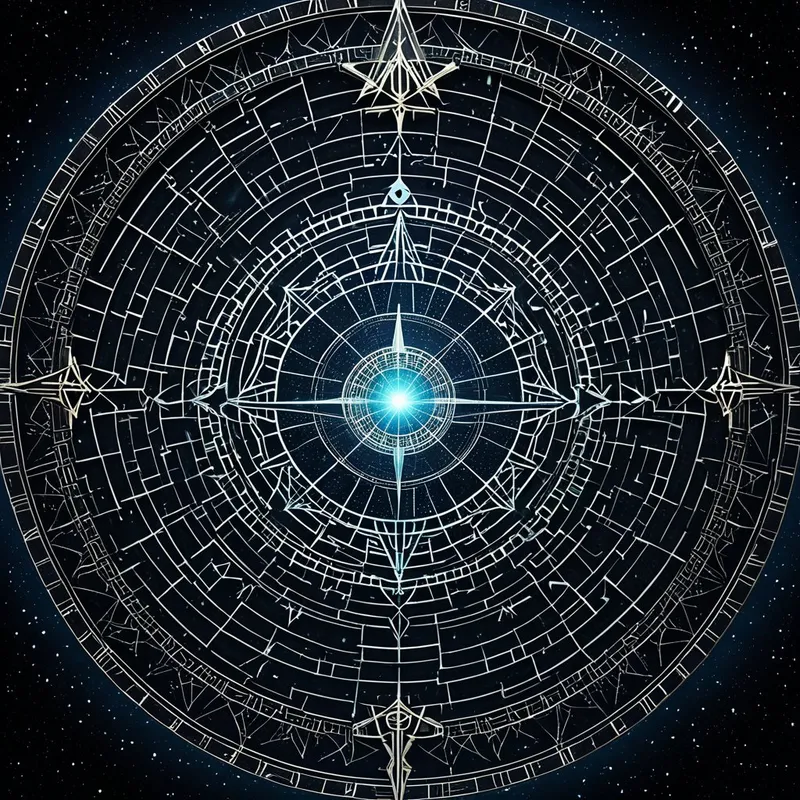
There, he was made to kneel. Not in submission, but in preparation for a burden no other could conceive. [The sky](/myths/the-sky “Myth from Persian culture.”/), the starry vault of [Uranus](/myths/uranus “Myth from Greek culture.”/), was a tangible, crushing weight. But it was not the dome of heaven alone he was given. At the command of Zeus, [the cosmic axis](/myths/the-cosmic-axis “Myth from Various culture.”/) itself—the celestial sp—was placed upon his back. This was the pivot of the universe, the spindle around which the [constellations](/myths/constellations “Myth from Various culture.”/) turned. His task was to keep it upright, to prevent [the sky](/myths/the-sky “Myth from Persian culture.”/) from collapsing onto the earth, to maintain the sacred separation that allowed life to breathe.
And so, Atlas took the weight. The moment it settled, his bones became the foundations of mountains. His breath became [the mist](/myths/the-mist “Myth from Celtic culture.”/) that shrouded the peaks. His eternal labor was the price of the world’s stability. He does not hold a globe of the earth; he bears the axis of the cosmos. His is the silence that holds [the music of the spheres](/myths/the-music-of-the-spheres “Myth from Greek culture.”/) in place. He stands at [the threshold](/myths/the-threshold “Myth from Folklore culture.”/), the living column between [chaos](/myths/chaos “Myth from Greek culture.”/) and order, his suffering the invisible architecture of a functioning world.

Cultural Origins & Context
The figure of Atlas is primarily rooted in the mythological tradition of ancient Greece, with his most definitive literary appearances in Hesiod’s Theogony and later in the works of poets and playwrights. However, the archetype of the world-bearing figure is a near-universal motif, a “Global” pattern in the human [psyche](/myths/psyche “Myth from Greek culture.”/). We see it in the Lokapāla elephants, in the Norse giant Ymir whose body forms the world, and in countless creation myths where a primordial being is dismembered or tasked with upholding cosmic layers.
In the Greek context, the myth served multiple functions. It was an etiological tale explaining why the sky remains aloft. It was a political allegory for the absolute power of the new Olympian order over the old Titanic one. And, crucially, it was a moral and psychological parable. Told around fires and in symposia, the story of Atlas was a meditation on the consequences of rebellion, the nature of eternal punishment, and the concept of a burden so fundamental it becomes synonymous with existence itself. He was not just a prisoner; he was a necessary component of the cosmos, a dreaded but respected pillar of reality.
Symbolic Architecture
Atlas and his burden represent the foundational principle of [structure](/symbols/structure “Symbol: Structure in dreams often symbolizes stability, organization, and the framework of one’s life, reflecting how one perceives their environment and personal life.”/). The celestial sp is the [axis](/symbols/axis “Symbol: A central line or principle around which things revolve, representing stability, orientation, and the fundamental structure of reality or consciousness.”/) mundi, the world pillar, the central [pole](/symbols/pole “Symbol: A pole in dreams often symbolizes stability, support, or a point of reference in life.”/) that connects and stabilizes different realms of being—[heaven](/symbols/heaven “Symbol: A symbolic journey toward ultimate fulfillment, spiritual transcendence, or connection with the divine, often representing life’s highest aspirations.”/), [earth](/symbols/earth “Symbol: The symbol of Earth often represents grounding, stability, and the physical realm, embodying a connection to nature and the innate support it provides.”/), and the [underworld](/symbols/underworld “Symbol: A symbolic journey into the unconscious, representing exploration of hidden aspects of self, transformation, or confronting repressed material.”/). Atlas is the embodied [condition](/symbols/condition “Symbol: Condition reflects the state of being, often focusing on physical, emotional, or situational aspects of life.”/) of that [connection](/symbols/connection “Symbol: Connection symbolizes relationships, communication, and bonds among individuals.”/).
To bear the axis is to become the interface between the transcendent and the immanent, the ideal and the real. The weight is the responsibility of consciousness itself.
Psychologically, Atlas represents the part of the psyche that carries the unbearable load of existential [awareness](/symbols/awareness “Symbol: Conscious perception of self, surroundings, or internal states. Often signifies awakening, insight, or heightened sensitivity.”/). He is [the ego](/myths/the-ego “Myth from Jungian culture.”/) tasked with holding up the “sky” of our ideals, responsibilities, and the sheer [weight](/symbols/weight “Symbol: Weight symbolizes burdens, responsibilities, and emotional loads one carries in life.”/) of a meaningful [life](/symbols/life “Symbol: The symbol of ‘Life’ represents a journey of growth, interconnectedness, and existential meaning, encompassing both the joys and challenges that define human experience.”/), preventing it from crushing the “earth” of our instinctual, bodily existence. His [punishment](/symbols/punishment “Symbol: A dream symbol representing consequences for actions, often tied to guilt, societal rules, or internal moral conflicts.”/) is also a [promotion](/symbols/promotion “Symbol: A symbol of advancement, recognition, and increased responsibility in social or professional hierarchies.”/): he is transformed from a rebel into a [cornerstone](/myths/cornerstone “Myth from Biblical culture.”/). The myth speaks to the [alchemy](/symbols/alchemy “Symbol: A transformative process of purification and creation, often symbolizing personal or spiritual evolution through difficult stages.”/) of burden, where a [curse](/symbols/curse “Symbol: A supernatural invocation of harm or misfortune, often representing deep-seated fears, guilt, or perceived external malevolence.”/) of endless labor becomes the very definition of one’s [purpose](/symbols/purpose “Symbol: Purpose signifies direction, meaning, and intention in life, often reflecting personal ambitions and core values.”/) and [identity](/symbols/identity “Symbol: Identity represents the sense of self, encompassing personal beliefs, cultural background, and social roles.”/). He is the ultimate [caregiver](/symbols/caregiver “Symbol: A spiritual or mythical figure representing nurturing, protection, and unconditional support, often embodying divine or archetypal parental energy.”/) [archetype](/symbols/archetype “Symbol: A universal, primordial pattern or prototype in the collective unconscious that shapes human experience, behavior, and creative expression.”/), but on a cosmic scale—caring for the structure of [reality](/symbols/reality “Symbol: Reality signifies the state of existence and perception, often reflecting one’s understanding of truth and life experiences.”/) itself through his own perpetual sacrifice.
The Dreamer’s Resonance
When this myth surfaces in modern dreams, it rarely appears as a Titan in a classical landscape. Instead, the dreamer becomes Atlas. They dream of their own spine as a creaking column, of shoulders permanently hunched under an invisible, crushing pressure. The “celestial sp” manifests as the glowing, oppressive latticework of a career, the dense, dark cloud of familial duty, or the sheer, blank weight of an undefined anxiety.
The somatic experience is key: a profound feeling of compression in the chest and shoulders, a difficulty breathing, a sense of being eternally braced. This is the psyche signaling that a foundational structure—perhaps a belief, a role, or a responsibility—has become pathological. The dream asks: What axis are you holding up? What sky are you preventing from falling, and at what cost to your own inner earth? The dream of Atlas is a crisis of support, revealing where the dreamer feels they, and they alone, are the sole pillar preventing total collapse.

Alchemical Translation
The individuation process modeled by Atlas is not one of escape, but of relationship to the burden. The first, unconscious state is to be like the other Titans: to rebel against any weight, any structure (the Titanomachy). The second, ego-conscious state is to be condemned Atlas: to identify wholly with the burden, to believe “I alone must hold this up forever” (the punishment).
The alchemical translation—the psychic transmutation—occurs in the mythical space around Atlas. It is [Heracles](/myths/heracles “Myth from Greek culture.”/) temporarily taking the weight, allowing Atlas a moment of reprieve to fetch [the apples of the Hesperides](/myths/the-apples-of-the-hesperides “Myth from Greek culture.”/). It is the [Mnemosyne](/myths/mnemosyne “Myth from Global/Universal culture.”/) in some interpretations, sharing the load.
The goal is not to drop the sky, but to discover that you are not the only pillar. Individuation involves finding the inner and outer “Heracles”—the strength of spirit or supportive relationships—that can temporarily relieve the ego, allowing it to perform its necessary tasks (fetch the golden apples of insight) before returning to its post with renewed perspective.
The ultimate integration is to realize that the burden and the bearer are in a sacred dialogue. The weight shapes the strength; the endurance defines the soul. One does not overcome the celestial sp; one learns to stand in right relation to it, transforming a sentence of torture into a posture of cosmic stewardship. The axis you bear is not your punishment, but your point of connection to the whole. The task is to stop groaning under its weight, and begin to listen to the [music of the spheres](/myths/music-of-the-spheres “Myth from Various culture.”/) it allows to turn.
Associated Symbols
Explore related symbols from the CaleaDream lexicon: